शास्त्र विंग · वाद्य-पट्टिका · Instrument Plate
एलत्ताळम्
Elathalam
अन्य नामइलत्ताळम् · ഇലത്താളം (Malayalam) · Ilathalam · Ilatalam
परिचय
Overviewएलत्ताळम् — काँसे से ढली दो मोटी, छोटी तश्तरियाँ — केरल की मंदिर-वाद्य परंपरा का लय-रक्षक है। बायें हाथ की तश्तरी पर दायीं तश्तरी टकराकर वादक पंचवाद्यम्, चेंडा मेलम, थायम्बका और कथकली की समूची लय को साधे रखता है। यह कभी अगुआ नहीं बनता, फिर भी इसके बिना कोई मेलम खड़ा नहीं होता; त्रिशूर पूरम् जैसे महोत्सवों में जब दर्जनों एलत्ताळम् एक साथ बजते हैं, तो वही पूरे वाद्य-वृंद की घड़ी बन जाते हैं।
अंग्रेज़ी में पढ़ें · Read in English
The elathalam — two thick, small discs cast from bronze — is the timekeeper of Kerala's temple percussion tradition. Clashing the right disc against the left, the player holds together the entire rhythm of Panchavadyam, chenda melam, Thayambaka and Kathakali. It never becomes a lead, yet without it no melam can stand; at festivals like Thrissur Pooram, when dozens of elathalams sound at once, they become the clock of the whole ensemble.
वर्गीकरण
ClassificationNatya Shastra Category
घन (Ghana - solid idiophones / struck metal)
एलत्ताळम् नाट्यशास्त्र के 'घन वाद्य' वर्ग में आता है — वे ठोस धातु वाद्य जो बिना किसी झिल्ली या तार के, केवल अपने पदार्थ के आघात से ध्वनि उत्पन्न करते हैं और जिन्हें अलग से 'सुर' में मिलाने की आवश्यकता नहीं होती। यह ताल (झांझ/मंजीरा) परिवार का ही एक भारी, मोटा रूप है।
The elathalam belongs to the 'Ghana vadya' (solid idiophone) class of the Natya Shastra — solid metal instruments that produce sound by the vibration of their own body when struck, without any membrane or string, and which require no tuning. It is a heavier, thicker member of the cymbal (jhanjh/manjira) family.
Western Category
Idiophone — struck concussion cymbals
Western Family
Cymbal family (like crash/hand cymbals, but thick, small-diameter and heavy-walled)
Sub Classification
बनावट
PhysicalDescription Hindi
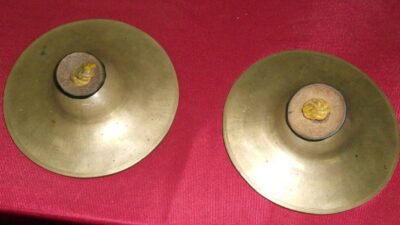
एलत्ताळम् काँसे (ब्रॉन्ज़) से पूरी तरह ढाला हुआ एक छोटा किंतु मोटा झांझ-युग्म है। यह साधारण मंजीरे या झांझ से देखने में छोटा दिखता है, पर इसकी दीवारें कहीं अधिक मोटी और भारी होती हैं, जिससे इसमें एक तीखी, स्पष्ट और दूर तक जाने वाली 'चिन्' ध्वनि बनती है। दोनों तश्तरियों के बीच में उभरा हुआ भाग (गुम्बद) होता है, जिसके शिखर पर छेद कर के डोरी बाँधी जाती है ताकि वादक इन्हें पकड़ सके।
Description English
The elathalam is a small but thick pair of cymbals cast entirely from bronze. Though smaller in diameter than an ordinary manjira or jhanjh, its walls are far thicker and heavier, giving it a sharp, clear, far-carrying chime. Each disc has a raised central dome pierced at the top so a cord can be threaded through, by which the player grips the pair.
Body
Pair of shallow domed discs (miniature cymbals)
दो उथली गुम्बददार तश्तरियाँ (लघु झांझ-युग्म)
Solid bronze / bell metal (an alloy of copper and tin)
ठोस काँसा / घंटा-धातु (ताँबे और टिन की मिश्र धातु)
Approx. 8-15 (small, hand-sized)
None — the metal disc is itself the resonating body; the raised central dome concentrates and prolongs the ring
Strings
एलत्ताळम् में कोई तार नहीं होते — यह एक घन (आघात) वाद्य है, तंतु वाद्य नहीं।
The elathalam has no strings — it is a struck idiophone, not a chordophone.
A short cloth or leather cord passes through the pierced dome of each disc, letting the player hold one cymbal firmly in each hand
Playing Parts
Held relatively still in the left hand; the right disc is struck against it
Swung and clashed against the base disc to sound the beat
Tuning Pegs
एलत्ताळम् को 'सुर' में नहीं मिलाया जाता; इसकी ध्वनि इसकी धातु की मोटाई और ढलाई से तय होती है, अतः इसमें कोई खूँटी या ट्यूनिंग नहीं होती।
The elathalam is not tuned to a pitch; its sound is fixed by the thickness and casting of the metal, so it has no pegs or tuning mechanism.
Frets
यह एक ताल-वाद्य है, इसमें फ्रेट या स्वर-स्थान नहीं होते — यह केवल लय और आघात-बिंदु देता है, स्वर नहीं।
As a rhythm instrument it has no frets or pitch positions — it marks beat and stroke, not melody.
ध्वनि-चरित्र
SoundTonal Character Hindi
एलत्ताळम् की ध्वनि तीखी, धात्विक और उज्ज्वल है — एक स्पष्ट 'चिन्-चिन्' जो ढोल-चेंडा की गहरी गड़गड़ाहट के ऊपर एक चमकती रेखा की तरह तैरती है। इसकी मोटी दीवार के कारण ध्वनि साधारण झांझ से अधिक देर तक गूँजती है और बड़े मंदिर-प्रांगण में दूर तक पहुँचती है।
Tonal Character English
The elathalam's tone is sharp, metallic and bright — a clear 'chin-chin' that floats like a shining line over the deep thunder of the chenda drums. Because of its thick walls the ring sustains longer than an ordinary cymbal and carries across a large temple courtyard.
Timbre
Bright, ringing, penetrating; a high-pitched shimmer with a long metallic sustain
Range
Non-pitched / indefinite pitch — a single bright timbre rather than a melodic range
Dynamic Range
From a soft, controlled tap to a full ringing clash; players damp against the body to cut the ring short and mark crisp beats
Techniques
सुनने का मार्गदर्शन
The Listening Guideएलत्ताळम् को समझना हो तो किसी पंचारि या पांडि मेलम को सुनिए और चेंडा की गड़गड़ाहट के ऊपर तैरती तीखी धात्विक 'चिन्' को अलग से पकड़िए — वही सबको एक लय में बाँधे रखती है। फिर कथकली-गायन में देखिए, जहाँ दूसरा गायक एलत्ताळम् बजाते हुए गाता है और शब्द-भाव की लय थामता है।
अंग्रेज़ी में पढ़ें · Read in English
To understand the elathalam, listen to a recording of a Panchari or Pandi melam and try to pick out, above the deep thunder of the chenda, that sharp, clear metallic 'chin' — it is counting the beat, it is what binds everyone together. Then listen to Kathakali singing, where the second vocalist sings while playing the elathalam — watch how his stroke holds the rhythm of word and emotion.
अन्य विवरण
More DetailsTimbre
Bright, ringing, penetrating; a high-pitched shimmer with a long metallic sustain
रोचक तथ्य
Margin Notesअगुआ नहीं, पर अपरिहार्य — एलत्ताळम् केरल के लगभग हर पारंपरिक वाद्य-वृंद में मौजूद है, फिर भी यह कभी 'सोलो' या अगुआ वाद्य नहीं बनता। इसकी शक्ति चुपचाप, अचूक लय थामने में है — यही इसे मेलम की अदृश्य रीढ़ बनाती है।
The elathalam is present in nearly every traditional Kerala ensemble, yet it never becomes a 'solo' or lead instrument. Its power lies in quietly, unerringly holding the beat — which makes it the invisible spine of the melam.
त्रिशूर के काँसा-शिल्पी — एलत्ताళम् आज भी हस्तनिर्मित है — काँसे को गलाकर, ढालकर, हथौड़े से पीट-पीटकर और घिसकर तश्तरियाँ बनाई जाती हैं, और तब उनकी मोटाई व 'चिन्' ध्वनि की परीक्षा की जाती है। त्रिशूर क्षेत्र के धातु-शिल्पी इस परंपरा को जीवित रखे हुए हैं।
The elathalam is still hand-made — bronze is melted, cast, hammered and ground into discs, and then tested for the right thickness and 'chin'. Metal artisans of the Thrissur region keep this craft alive.
पंचवाद्यम् के पाँच में से एक — पंचवाद्यम् ('पाँच वाद्य') केरल का एक भव्य समवेत है जिसमें तिमिल, मद्दलम्, इडक्क, कोम्बु और शंख के साथ लय-रक्षक के रूप में एलत्ताळम् बजता है। इसके सुनिश्चित आघात के बिना यह पिरामिड-नुमा तालवृद्धि संभव नहीं।
Panchavadyam ('five instruments') is a grand Kerala ensemble in which, alongside the timila, maddalam, idakka, kombu and conch, the elathalam plays as timekeeper. Without its exact stroke, its pyramid-like rhythmic build-up would not be possible.
सवाल-जवाब
Questions & Answersएलत्ताळम् क्या है?
एलत्ताळम् (इलत्ताळम्) केरल का एक ताल-वाद्य है — काँसे से पूरी तरह ढला हुआ एक छोटा किंतु मोटा झांझ-युग्म। एक तश्तरी को बायें हाथ में स्थिर रखकर दूसरी को उस पर टकराया जाता है, जिससे तीखी धात्विक 'चिन्' ध्वनि बनती है। यह पंचवाद्यम्, चेंडा मेलम, थायम्बका और कथकली में लय-रक्षक की भूमिका निभाता है।
एलत्ताळम् किस चीज़ से बनता है?
एलत्ताळम् पूरी तरह काँसे (घंटा-धातु — ताँबे और टिन की मिश्र धातु) से ढाला जाता है। यह साधारण झांझ से छोटा किंतु कहीं अधिक मोटा और भारी होता है, जिससे इसकी ध्वनि तीखी और दूर तक जाने वाली होती है।
एलत्ताळम् किन वाद्य-वृंदों में बजाया जाता है?
एलत्ताळम् कभी अगुआ वाद्य नहीं होता, पर केरल के अनेक पारंपरिक वाद्य-वृंदों में लय-रक्षक के रूप में बजता है — पंचवाद्यम्, चेंडा मेलम (पांडि व पंचारि मेलम), थायम्बका, कैलासवातियम्, कथकली, तथा कुष़ल-पाट्टु व कोम्बु-पाट्टु।
कथकली में एलत्ताळम् कौन बजाता है?
कथकली में एलत्ताळम् दूसरा गायक (शिंकिटि) बजाता है, जो गाते हुए साथ-साथ लय भी थामता है, जबकि प्रमुख गायक (पोन्नानि) चेंगिला (काँसे का घंटा) बजाता है।
एलत्ताळम् और मंजीरा में क्या अंतर है?
दोनों काँसे की झांझ-तश्तरियाँ हैं और लय देती हैं, किंतु एलत्ताळम् मंजीरे से कहीं मोटा और भारी होता है, जिससे उसकी ध्वनि अधिक तीखी और दूर तक पहुँचने वाली होती है। एलत्ताळम् केरल की मंदिर-मेलम परंपरा से जुड़ा है, जबकि मंजीरा उत्तर-भारतीय भजन-कीर्तन में प्रचलित है।
नमूना-पट्टी
The Specimen Table| नाम | एलत्ताळम् · Elathalam |
|---|---|
| अन्य नाम | इलत्ताळम् · ഇലത്താളം (Malayalam) · Ilathalam · Ilatalam · Elathaalam |
| प्रकार | वाद्य · Instruments |
साझा कीजिए · Share this Plate