कहानियाँ विंग · कहानी · Recording History · 1916
कुत्ता, भोंपू और लड़ाई का बाज़ार
The Dog, the Horn and a Wartime Market: His Master's Voice Arrives in India
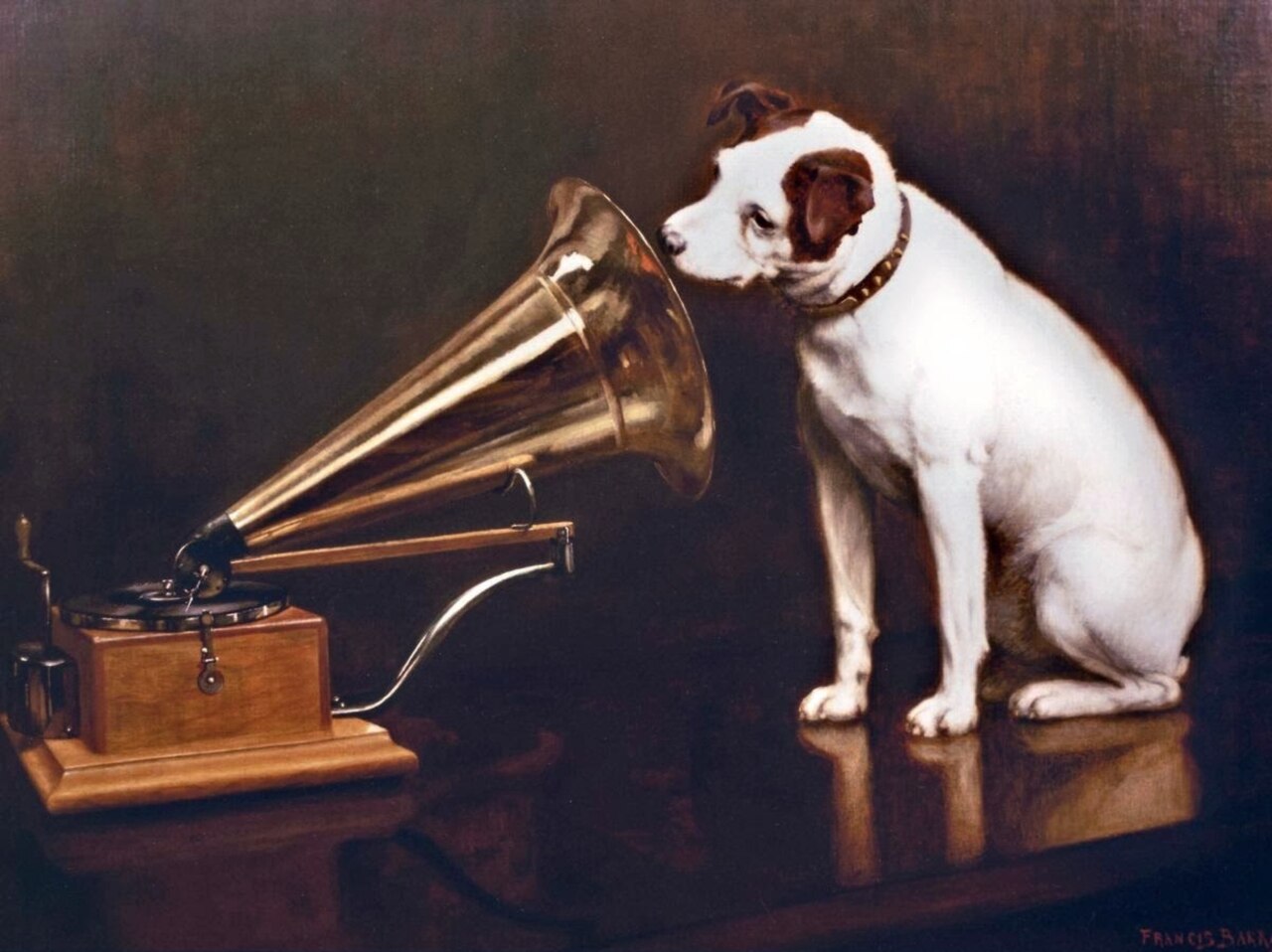
1916 के आसपास हिंदुस्तानी तवों पर एक नया निशान छपने लगा — भोंपू में झाँकता निपर नाम का कुत्ता। विश्वयुद्ध ने जर्मन कंपनियों को बाज़ार से बाहर कर दिया था, चपड़ा सोने के भाव था, और इसी उथल-पुथल में 'हिज़ मास्टर्स वॉइस' हिंदुस्तान के संगीत-उद्योग का दूसरा नाम बन गया।
प्रकाशित19 June 2026 पाठ८ मिनट का पाठ
आमुख
कैसे पहले विश्वयुद्ध ने भारतीय रिकॉर्ड-बाज़ार का नक़्शा बदला — बेका और ओडियन जैसे जर्मन लेबलों का निष्कासन, ग्रामोफ़ोन कंपनी का एकछत्र राज, चपड़े (शेलैक) की युद्धकालीन किल्लत, सियालदह कारख़ाने की बढ़ी हुई अहमियत, और 1916 के आसपास भारतीय तवों पर 'हिज़ मास्टर्स वॉइस' लेबल और निपर के आगमन की कहानी।
अंग्रेज़ी में पढ़ें · Read in English
How the First World War redrew the Indian record market — the expulsion of German labels like Beka and Odeon, the Gramophone Company's resulting monopoly, the wartime shellac squeeze, the new importance of the Sealdah factory, and the arrival of the His Master's Voice label and Nipper on Indian discs around 1916.
जब लड़ाई ने बाज़ार साफ़ किया
The War Clears the Field1914 से पहले हिंदुस्तान का रिकॉर्ड-बाज़ार मेले जैसा था। ग्रामोफ़ोन कंपनी की बादशाहत थी, पर जर्मन चुनौती हर गली में थी — बेका के तवे, ओडियन के तवे, कार्ल लिंडस्ट्रॉम की मशीनें; एजेंट कलाकारों को ऊँचे दाम देकर तोड़ते थे और शौक़ीन सस्ते जर्मन तवों पर वही ठुमरियाँ सुनते थे। फिर अगस्त 1914 में यूरोप में तोपें चलीं, और ब्रिटिश भारत में 'शत्रु-व्यापार' क़ानूनों ने रातोंरात वह सारा मेला उजाड़ दिया। जर्मन फ़र्मों का माल ज़ब्त, एजेंसियाँ बंद, ट्रेडमार्क निलंबित। जो प्रतिद्वंद्विता 1905 से कलाकारों की फ़ीस बढ़ा रही थी, वह एक झटके में ख़त्म हो गई। मैदान में अकेली खड़ी रह गई ग्रामोफ़ोन कंपनी — और उसके सामने खुला पड़ा था एक ऐसा बाज़ार जिसमें अब कोई दूसरा बोली लगाने वाला नहीं था। युद्ध ने जो एकाधिकार रचा, वह अगले दो दशक हिंदुस्तानी संगीत की क़िस्मत तय करता रहा।
अंग्रेज़ी में पढ़ें · Read in English
Before 1914 the Indian record market was a fairground. The Gramophone Company wore the crown, but the German challenge was in every lane — Beka discs, Odeon discs, Carl Lindström's machines; agents poached artists with higher fees, and enthusiasts heard the same thumris on cheaper German pressings. Then in August 1914 the guns opened in Europe, and in British India the trading-with-the-enemy laws wrecked the whole fair overnight. German firms' stock was seized, agencies shuttered, trademarks suspended. The competition that had been raising artists' fees since 1905 ended at a stroke. The Gramophone Company stood alone on the field — facing a market in which nobody else could now bid. The monopoly the war created would shape the fate of Hindustani music for the next two decades.
निपर हिंदुस्तान पहुँचता है
Nipper Reaches Indiaतस्वीर पुरानी थी — फ्रांसिस बैरॉड ने 1899 में अपने दिवंगत भाई के फ़ॉक्स-टेरियर निपर को भोंपू में झाँकते हुए चित्रित किया था: 'हिज़ मास्टर्स वॉइस', अपने मालिक की आवाज़। ब्रिटेन में यह चित्र कंपनी की पहचान बन चुका था, पर हिंदुस्तानी तवों पर बरसों तक 'रिकॉर्डिंग एंजेल' — क़लम से तवा कुरेदती परी — ही छपती रही। क़रीब 1916 में बदलाव आया: भारतीय रिलीज़ों पर 'हिज़ मास्टर्स वॉइस' लेबल छपने लगा, और परी की जगह कुत्ते ने ले ली। यह सिर्फ़ छपाई का फेरबदल नहीं था। एक तो युद्धकालीन पुनर्गठन था — एकाधिकार को एक ही, अचूक पहचान चाहिए थी; दूसरे, यह उस नाम का जन्म था जो हिंदुस्तान में संगीत-उद्योग का पर्याय बनने वाला था: एचएमवी। आने वाली पीढ़ियाँ कंपनी का असली नाम भूल गईं; याद रहा तो बस वह कुत्ता, वह भोंपू, और तवे पर घूमती अपने उस्ताद की आवाज़।
अंग्रेज़ी में पढ़ें · Read in English
The picture was old — Francis Barraud had painted his late brother's fox terrier Nipper peering into a horn in 1899: His Master's Voice. In Britain the image had long since become the company's identity, but Indian discs carried the 'Recording Angel' — a seraph inscribing a disc with a quill — for years more. The change came around 1916: Indian releases began appearing under the His Master's Voice label, and the dog replaced the angel. This was more than a printing change. It was wartime consolidation — a monopoly wants one unmistakable identity — and it was the birth of the name that would become a synonym for the music industry in India: HMV. Later generations forgot the company's legal name; what remained was the dog, the horn, and the master's voice turning on the disc.
चपड़े की जंग
The Shellac Warविडंबना देखिए: जिस चीज़ से दुनिया भर के तवे बनते थे — चपड़ा, यानी शेलैक — वह हिंदुस्तान की ही देन थी। बंगाल-बिहार के जंगलों की लाख से बना शेलैक कलकत्ता के रास्ते दुनिया के हर रिकॉर्ड-कारख़ाने तक जाता था। पर युद्ध ने इस देसी माल को भी मोर्चे पर भेज दिया — गोला-बारूद की सीलबंदी से लेकर हवाई जहाज़ों के रोग़न तक चपड़े की सैन्य माँग आसमान छू गई, दाम चढ़ गए, और जहाज़ों की क़िल्लत ने रही-सही कसर पूरी कर दी। 1908 में खुला सियालदह (कलकत्ता) का दबाई-कारख़ाना अब कंपनी की जान था — यूरोप के कारख़ाने युद्ध में उलझे थे, और भारतीय तवे घर पर ही दबाए जा रहे थे। फिर भी कैटलॉग दुबला होता गया: नई रिकॉर्डिंग कम, आज़माए सितारों की दोबारा दबाई ज़्यादा; मौसम के पक्के बिकाऊ तवे — सावन की कजरी, फागुन की होरी, भजन — दुकानों की रीढ़ बन गए। संगीत के इतिहास में शायद पहली बार धुनों का चयन गोदाम की तंगी तय कर रही थी।
अंग्रेज़ी में पढ़ें · Read in English
Note the irony: the substance from which the world's discs were made — shellac — was India's own gift. Refined from the lac of the Bengal-Bihar forests, shellac travelled via Calcutta to every record factory on earth. But the war drafted this homegrown material to the front — military demand, from munitions sealing to aircraft varnish, sent prices soaring, and the shortage of shipping finished the job. The pressing factory at Sealdah, Calcutta, opened in 1908, was now the company's lifeline — Europe's plants were entangled in the war, and Indian discs were pressed at home. Even so the catalogue thinned: fewer new recordings, more re-pressings of proven stars; the guaranteed seasonal sellers — Sawan kajris, Phagun horis, bhajans — became the backbone of the shops. Perhaps for the first time in music's history, warehouse arithmetic was deciding which melodies survived.
अकेली आवाज़ की क़ीमत
The Price of a Single Voiceएकाधिकार का संगीत पर असर दोधारी था। कलाकारों के लिए सौदेबाज़ी का ज़माना लद गया — 1905 में जो गायिका बेका और ग्रामोफ़ोन को आपस में लड़ाकर दूनी फ़ीस पाती थी, वह अब एक ही दरवाज़े पर खड़ी थी। नई आवाज़ों के लिए दरवाज़ा और भी भारी हो गया; कैटलॉग गौहर जान, जानकी बाई, पीरा साहब जैसे सिद्ध नामों पर सिमटता गया। पर इसी सिमटन में एक उलट धारा भी थी: सस्ते ज़ोनोफ़ोन लेबल ने मध्यवर्ग के नए ख़रीदार जोड़े, मराठी नाट्यगीत और भक्ति-तवों ने नए प्रांत और नए घर खोले, और महामारी-युद्ध से ख़ाली होती महफ़िलों की जगह बैठकों में ग्रामोफ़ोन ने ले ली। 1918 में जब हथियार थमे, तब हिंदुस्तान के पास एक ही बड़ा लेबल था, अपना कारख़ाना था, और करोड़ों कानों की आदत — यही तिकड़ी अगले दशक के विस्फोट की बुनियाद बनी। और तवों पर बैठा वह कुत्ता आज तक नहीं उठा।
अंग्रेज़ी में पढ़ें · Read in English
The monopoly's effect on music cut both ways. For artists, the age of bargaining was over — the singer who in 1905 had played Beka and the Gramophone Company against each other for double fees now stood at a single door. For new voices the door grew heavier still; the catalogue contracted around proven names — Gauhar Jaan, Janki Bai, Peara Saheb. Yet inside that contraction ran a counter-current: the budget Zonophone label recruited new middle-class buyers, Marathi natya-geet and devotional discs opened new provinces and new homes, and as war and pandemic emptied the mehfils, the gramophone took their place in the parlour. When the guns stopped in 1918, India had one great label, its own factory, and the listening habit of millions — the trinity on which the next decade's boom would stand. And the dog on the discs has never got up since.
परिचय
IdentityEpithet
1916 के आसपास हिंदुस्तानी तवों पर एक नया निशान छपने लगा — भोंपू में झाँकता निपर नाम का कुत्ता। विश्वयुद्ध ने जर्मन कंपनियों को बाज़ार से बाहर कर दिया था, चपड़ा सोने के भाव था, और इसी उथल-पुथल में 'हिज़ मास्टर्स वॉइस' हिंदुस्तान के संगीत-उद्योग का दूसरा नाम बन गया।
Around 1916 a new mark began appearing on Indian discs — a dog called Nipper peering into a horn. The World War had swept the German labels from the market, shellac was at famine prices, and in that upheaval His Master's Voice became the second name of India's music industry.
अन्य विवरण
More Details- परी की जगह कुत्ते ने ले ली — और 'एचएमवी' हिंदुस्तान में संगीत का दूसरा नाम बन गया। · The dog replaced the angel — and 'HMV' became music's second name in India.
- निपर
- गौहर जान
- जानकी बाई इलाहाबाद
- ग्रामोफ़ोन कंपनी
- Michael Kinnear, 'The 78 R.P.M. Record Labels of India'
- The Record News — journal of the Society of Indian Record Collectors (Suresh Chandvankar et al.)
- Vikram Sampath, 'My Name Is Gauhar Jaan!' (Rupa, 2010)
- Histories of the Gramophone Company's Sealdah factory (opened 1908)
Pull Quotes
Key Figures
References
कहानी-नमूना
The Story Specimen| शीर्षक | कुत्ता, भोंपू और लड़ाई का बाज़ार · The Dog, the Horn and a Wartime Market: His Master's Voice Arrives in India |
|---|---|
| श्रेणी | Recording History |
| प्रकार | विशेष लेख |
| पाठ-समय | ८ मिनट का पाठ |
| प्रकाशित | 19 June 2026 — admin |
| वर्ष | 1916 |
| टैग | his_masters_voice · hmv · nipper · world_war_one · shellac · gramophone_company · calcutta · 1916 · record_industry |
और कहानियाँ
More Stories from the Atlas
साझा कीजिए · Share this Plate