कलाकार विंग · कलाकार-पट्टिका · Artist Plate
रवींद्रनाथ ठाकुर
Rabindranath Tagore · Robindronath Thakur
बंगाल के महाकवि
जन्म7 May 1861 — Calcutta, Bengal, India
निधन7 August 1941 — Calcutta, Bengal, India
जीवन-पट्टी
The Life Specimen| नाम | रवींद्रनाथ ठाकुर · Rabindranath Tagore |
|---|---|
| जन्म नाम | रोबिंद्रनाथ ठाकुर · Robindronath Thakur |
| उपनाम | बंगाल के महाकवि · गुरुदेव · महामास्टर |
| जन्म | 7 May 1861 — Calcutta, Bengal, India |
| निधन | 7 August 1941 — Calcutta, Bengal, India |
| भूमिकाएँ | कवि · रचनाकार · गायक · Playwright · Painter · Philosopher · Music Reformer |
| राष्ट्रीयता | Indian |
| विधाएँ | Rabindra Sangeet · Raga-based vocal music · Bengali folk · भक्ति · Philosophical songs |
| भाषाएँ | Bengali · Hindi · Hindustani · English |
| पिता | Debendranath Tagore (Brahmo Samaj reformer) |
| माता | Sarada Devi |
| भाई-बहन | 14 brothers and sisters, including the artist Abanindranath Tagore |
| पत्नी | Mrinalini Devi |
| बच्चे | 5 children |
हस्ताक्षर-पंक्ति · The Signature
हस्ताक्षर-पंक्ति
बंगाल के महाकवि · गुरुदेव
In EnglishEvery song composed by Tagore contained philosophical depth — he saw music as a vehicle for expressing universal truths about love, nature, mortality, and human dignity.
पट्टिका-लेख
The Monographजीवनी Biography
रवींद्रनाथ ठाकुर (7 मई 1861 – 7 अगस्त 1941) एक बहुमुखी प्रतिभा के धनी थे जिन्होंने भारतीय संगीत, साहित्य, कला और दर्शन में क्रांति लाई। कलकत्ता के प्रसिद्ध ठाकुर परिवार में जन्मे, वे ब्रह्मो समाज सुधारक देबेंद्रनाथ ठाकुर के पुत्र थे। रवींद्रनाथ ठाकुर के संगीत की विशेषता यह थी कि उन्होंने हिंदुस्तानी शास्त्रीय संगीत के परिष्कृत राग ढाँचे को बंगाली लोक संगीत की परंपराओं के साथ मिलाया और पश्चिमी संगीत सिद्धांतों को जोड़ा। 1905-1909 में, ठाकुर ने ग्रामोफोन कंपनी ऑफ इंडिया के लिए रिकॉर्डिंग की। 1901 में, ठाकुर ने शांतिनिकेतन की स्थापना की, जो बाद में विश्व-भारती विश्वविद्यालय के रूप में विकसित हुआ। यह रवींद्र संगीत प्रशिक्षण का एक प्रमुख संस्थान बन गया। भारत का राष्ट्रगान 'जन गण मन' रवींद्रनाथ ठाकुर द्वारा रचित है।
अंग्रेज़ी में पढ़ें · Read in English
Rabindranath Tagore (7 May 1861 – 7 August 1941) was a Bengali polymath who pioneered a reformation in Indian music, literature, art, and philosophy. Born into the prominent Tagore family of Calcutta, son of the Brahmo Samaj reformer Debendranath Tagore, Rabindranath inherited an environment steeped in intellectual ferment and social reform.
Tagore's musical genius lay in his unique synthesis: he took the sophisticated raga structures of Hindustani classical music, interwove them with the melodic traditions of Bengali folk music, harmonized them with Western compositional techniques he had absorbed, and married all this to deeply philosophical Bengali lyrics of his own composition. The result was Rabindra Sangeet — a new musical form that became the soul of modern Bengal.
In 1905-1909, during his peak years, Tagore recorded for the Gramophone Company of India, joining his elder contemporary Gauhar Jaan in establishing that recorded music was a legitimate artistic medium. While Gauhar Jaan's recordings showcased classical brilliance, Tagore's recordings demonstrated that modern, composed music could carry philosophical weight.
Beyond music, Tagore was a prolific writer — his novel 'Gora' and play 'Chitrangada' are among the greatest works in Bengali literature. His poetry collection 'Gitanjali' (Song Offerings), originally written in Bengali and translated to English by Tagore himself, won him the Nobel Prize in Literature in 1913 — making him Asia's first Nobel laureate.
In 1901, Tagore founded Shantiniketan (literally 'Abode of Peace'), which grew into Visva-Bharati University — an institution dedicated to the synthesis of Eastern and Western knowledge, with music and visual arts at its core. It became a sanctuary for artists and thinkers from across the world and remains a premier institution for Rabindra Sangeet training.
In his later years (1920s-1930s), Tagore took up visual art with surprising mastery, creating over 3,000 paintings that reflected his philosophical worldview. He also traveled extensively, bringing Indian culture to the West and engaging in dialogue with world leaders.
Tagore's music was revolutionary because it democratized high art — he showed that profound spiritual and philosophical truths could be expressed in accessible, emotionally resonant melodies. His 2,000+ songs span themes of love, nature, duty, spirituality, social justice, and human dignity. India's national anthem, 'Jana Gana Mana' (Thou Art the Lord of the Minds of All People), was composed by Tagore and officially adopted in 1950.
सांस्कृतिक प्रभाव Cultural Impact
रवींद्रनाथ ठाकुर ने भारतीय संस्कृति को मौलिक रूप से रूपांतरित किया। उन्होंने दिखाया कि स्वदेशी परंपराओं में निहित कला सार्वभौमिक महत्व प्राप्त कर सकती है। रवींद्र संगीत ने सिद्ध किया कि दार्शनिक गहराई वाला संगीत शास्त्रीय परंपरा के बराबर हो सकता है।
अंग्रेज़ी में पढ़ें · Read in English
Rabindranath Tagore fundamentally transformed Indian culture by demonstrating that art rooted in indigenous traditions could achieve universal significance. His Rabindra Sangeet proved that composed music with philosophical depth could rival classical tradition. His writings, especially Gitanjali, introduced Indian philosophical thought to the Western world. His founding of Visva-Bharati created a model for education that integrates arts, nature, and spirituality — a vision that influenced UNESCO's understanding of cultural heritage. Tagore showed that one artist could master multiple disciplines (music, literature, visual art, philosophy) and that the artist's role was to illuminate universal human truths.
तालीम, विधाएँ और भाषाएँ
Training · Genres · Languagesतालीम · Training
Self-taught primarily
Synthesis of Bengali folk, Hindustani classical, and Western musical traditions
Studied European classical music
Exposure to Western harmonic structures and compositional forms
Influenced by Brahmo Samaj reformers
Devotional and philosophical music
विधाएँ · Genres
भाषाएँ · Languages Sung
जीवन-रेखा
Career Highlights- मील-पत्थर नोबेल पुरस्कार विजेता (1913) — साहित्य में एशिया के पहले नोबेल विजेता Nobel Prize winner (1913) — Asia's first Nobel laureate in Literature
- मील-पत्थर भारतीय राष्ट्रगान 'जन गण मन' के संगीतकार Composer of the Indian national anthem 'Jana Gana Mana'
- मील-पत्थर रवींद्र संगीत के निर्माता — 2,000+ मौलिक रचनाएँ Creator of Rabindra Sangeet — composed 2,000+ original songs
- मील-पत्थर 1905-1909 में ग्रामोफोन कंपनी के लिए रिकॉर्डिंग की Recorded for the Gramophone Company of India (1905-1909)
-
मील-पत्थर
शांतिनिकेतन विश्वविद्यालय की स्थापना (1901) — संगीत शिक्षा का केंद्र
Founded Visva-Bharati University / Shantiniketan (1901) — center for music education
-
मील-पत्थर
बंगाली साहित्य में पुनर्जागरण लाए — कविता, नाटक, उपन्यास, निबंध सभी में मास्टर
Brought Renaissance to Bengali literature — master of poetry, drama, novels, essays
- मील-पत्थर दृश्य कला में भी कुशल — 3,000+ चित्र बनाए (1920s-1930s में) Also accomplished visual artist — created 3,000+ paintings (1920s-1930s)
- मील-पत्थर UNESCO की विश्व सांस्कृतिक विरासत सूची में शामिल Recognized as UNESCO Memory of the World
पुरस्कार एवं सम्मान
Awards & Recognition- 1913 साहित्य में नोबेल पुरस्कार Nobel Prize in Literature एशिया के पहले नोबेल विजेता। 'गीतांजलि' के लिए पुरस्कृत
- 1915 नाइटहुड Knighthood (Knight Bachelor) ब्रिटिश राज द्वारा प्रदान किया गया (1919 में जलियाँवाला बाग नरसंहार के विरोध में त्याग दिया)
- 1901 विश्व-भारती विश्वविद्यालय के संस्थापक Founder of Visva-Bharati University शांतिनिकेतन की स्थापना कला, संगीत और दर्शन के केंद्र के रूप में
- 1950 भारतीय राष्ट्रगान के संगीतकार Indian National Anthem Composer 'जन गण मन' को भारत के राष्ट्रगान के रूप में आधिकारिक रूप से अपनाया गया
अन्य विवरण
More Details- Birth Year
- 1861
- Death Year
- 1941
- Raag Sangit (Instrumental Raga)
- Prarthana (Prayer)
Notable Recordings
अभिलेख-सार
Discography Summary| संग्रह में गीत | 5 — नीचे जुड़े हुए पन्नों में सूचीबद्ध |
|---|---|
| कुल ज्ञात रिकॉर्डिंग | ~40 (from 1905-1909 sessions, many now lost) |
| रिकॉर्डिंग-काल | · पहला सत्र 1905, Calcutta / London sessions |
| रिकॉर्ड लेबल | The Gramophone & Typewriter Ltd. · HMV (His Master's Voice) |
अभिलेख व संदर्भ
Archives & References| विकिपीडिया | Wikipedia |
|---|---|
| संदर्भ | Rabindranath Tagore: The Myriad-Minded Man — Krishna Dutta & Andrew Robinson (1995) · Gitanjali (Song Offerings) — Rabindranath Tagore (1912) · The Life and Times of Rabindranath Tagore — Prabhat Ranjan Sarkar · Wikipedia |
| अभिलेख संसाधन | Archive Of Indian Music · Gramophone Company India Records |
जुड़े हुए पन्ने
Connected Plates · The Graph Made Visibleअटलस में कोई पन्ना अकेला नहीं — रवींद्रनाथ ठाकुर से उनके गीत, फ़िल्में, घराना, समकालीन और युग, सब यहाँ से खुलते हैं।
हस्ताक्षर-गीत · Signature Songs
फ़िल्में · The Films
साझा कीजिए · Share this Plate
यह पन्ना आगे बढ़ाइए
सवाल-जवाब
Questions & AnswersWho was Rabindranath Tagore?
Rabindranath Tagore (1861-1941) was an Indian polymath — poet, composer, painter, and philosopher. He won the Nobel Prize in Literature in 1913 and composed India's national anthem.
What is Rabindra Sangeet?
Rabindra Sangeet is the body of 2,000+ songs composed by Tagore, blending Hindustani classical music, Bengali folk traditions, and philosophical lyrics about nature, love, and spirituality.
Did Tagore record for the gramophone?
Yes, Tagore recorded for the Gramophone Company of India between 1905-1909, though few recordings survive today.
Why is Tagore called the 'Bard of Bengal'?
Tagore's revolutionary impact on Bengali literature, music, and philosophy earned him the title 'Bard of Bengal' and 'Gurudev' (Great Teacher) in Indian culture.
जुड़ी हुई दुनिया
Explore ConnectionsSongs Written · लिखे गीत
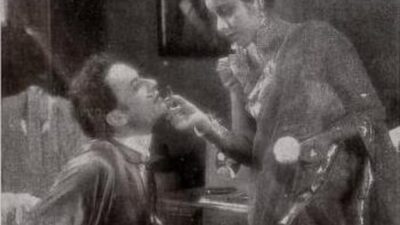 मुक्ति1937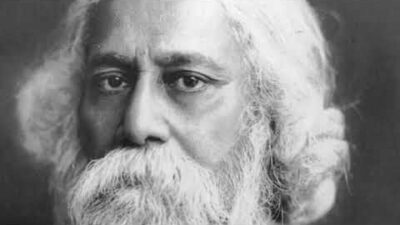
 आज़ाद भारत2026
जन गण मन (आज़ाद भारत से)
Jana Gana Mana (from Azad Bharath)
अमृता फडणवीस, Gautham Srivatsa · Azad Bharath
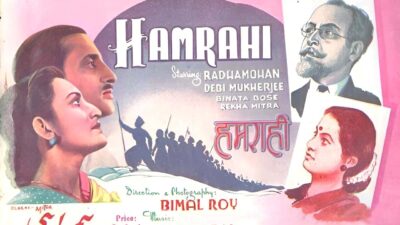 हमराही1945