गीत विंग · गीत-पट्टिका · Song Plate
मधु गंधे भरा
Madhu Gandhe Bhara
हिंदी फ़िल्म के भीतर बांग्ला में ही रखा गया ठाकुर का एक गीत — और युवा हेमंत कुमार की हिंदी सिनेमा में सबसे आरंभिक उपस्थितियों में से एक।
भावपुरानी यादें · शांत · रोमांटिक
भाषाbengali गतिधीमी स्वरूपयुगल
श्रेय
The Creditsसूत्र-वाक्य · The Hook
सूत्र-वाक्य
हिंदी फ़िल्म के भीतर बांग्ला में ही रखा गया ठाकुर का एक गीत — और युवा हेमंत कुमार की हिंदी सिनेमा में सबसे आरंभिक उपस्थितियों में से एक।
In EnglishA Tagore song kept in Bengali inside a Hindi film — and one of the earliest Hindi-cinema appearances of the young Hemant Kumar.
पट्टिका-लेख
The Monographपरिचय Overview
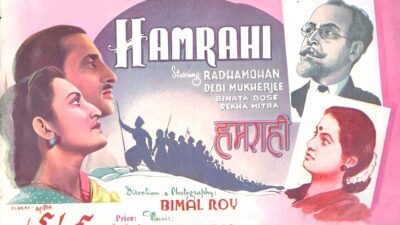
'हमराही' का इकलौता युगल, और फ़िल्म का सबसे असामान्य फ़ैसला: एक रवींद्र संगीत रचना, बांग्ला में गाई हुई, बिना अनुवाद के हिंदी फ़िल्म में रख दी गई। इसे फ़िल्म की गोपा — बिनोता बोस — ने पचीस वर्ष के हेमंत कुमार के साथ गाया, जो उस समय बंबई का नाम नहीं, कलकत्ता के रेडियो और ग्रामोफ़ोन के गायक थे। 'अतुल्स सॉन्ग अ डे' के अनुसार यह वही एक गीत है जो बांग्ला मूल से नहीं लिया गया: 'मधु गंधे भरा' 'उदयेर पथे' (1944) में नहीं है और तब जोड़ा गया जब बिमल रॉय ने फ़िल्म को हिंदी में दोबारा बनाया।
अंग्रेज़ी में पढ़ें · Read in English
The one duet in Hamrahi, and the film's most unusual programming decision: a Rabindra Sangeet number, sung in Bengali, dropped into a Hindi picture without translation. Binota Bose — the film's Gopa — sings it with the twenty-five-year-old Hemant Kumar, then a Calcutta radio and gramophone singer rather than a Bombay name. It is also, per Atul's Song A Day, the one song that was NOT carried over from the Bengali original: 'Madhu Gandhe Bhara' does not appear in Udayer Pathey (1944) and was added when Bimal Roy remade the film in Hindi.
संगीत The Music
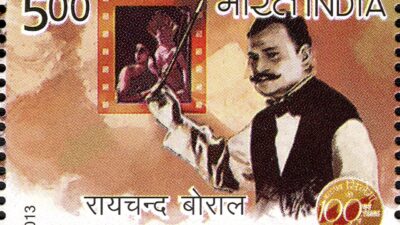
शब्द और धुन दोनों ठाकुर के हैं, इसलिए यहाँ आर.सी. बोराल का काम रचना नहीं, संयोजन था — और संयोजन संयत है, जो रवींद्र संगीत के साथ सही प्रवृत्ति है, जहाँ स्वर-पंक्ति को शुरुआती बिंदु नहीं, नियत माना जाता है। लय धीमी है और वाक्यांश लंबे तथा घुमावदार, ठीक ठाकुर के ऋतु-गीतों की तरह; दोनों आवाज़ें बारी-बारी आती हैं और फिर मिल जाती हैं — होड़ नहीं करतीं। पचीस की उम्र में भी गहरा और बिना ज़ोर लगाए निकलता हेमंत कुमार का बैरिटोन इस भंडार के लिए स्वाभाविक रूप से उपयुक्त है — आगे का पूरा जीवन वे इसी के सबसे जाने-माने व्याख्याकारों में से एक के रूप में बिताने वाले थे — और बिनोता बोस का हल्का, आगे बढ़ता स्वर उसके ऊपर साफ़ बैठता है।
अंग्रेज़ी में पढ़ें · Read in English
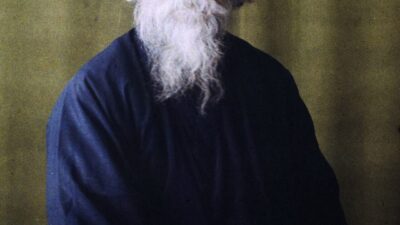
Tagore wrote both the words and the tune, so R.C. Boral's job here was arrangement rather than composition — and the arrangement is restrained, which is the correct instinct with Rabindra Sangeet, where the melodic line is treated as fixed rather than as a starting point. The tempo is slow and the phrases long and curved, in the manner of Tagore's seasonal songs; the two voices trade and then join rather than compete. Hemant Kumar's baritone, already dark and unforced at twenty-five, is a natural fit for this repertoire — he would spend the rest of his life as one of its best-known interpreters — and Binota Bose's lighter, forward tone sits above it cleanly.
काव्य The Poetry
पूरा बांग्ला शीर्षक है 'मधु गंधे भरा मृदु स्निग्ध छाया', और यह ठाकुर के 'गीतबितान' के प्रकृति-खंड — ऋतु और प्रकृति के गीतों — का हिस्सा है। इसकी सामग्री पूरी तरह इंद्रियगम्य है: हवा में मधु-गंध, कोमल और शीतल छाया, वर्षा से पहले की उत्तर-भारतीय दोपहर का वह विशेष भारीपन। न कोई कथा है, न कोई ऐसा संबोधित जिसे मनाना हो; गीत एक वर्णन है जो धीरे-धीरे भाव बन जाता है। जिस फ़िल्म के बाक़ी गीत दाग़ों, हड़तालों और भारत के भाग्य-विधाता के बारे में हैं, उसमें रखे जाने पर इसका किसी बात पर बहस न करना ही अभिव्यंजक हो जाता है — 'हमराही' में यही एक जगह है जहाँ दो लोगों को बस साथ-साथ किसी सुंदर जगह पर होने की छूट है।
अंग्रेज़ी में पढ़ें · Read in English
The full Bengali title is 'Madhu gandhe bhara mridu snigdha chhaya', and it belongs to the Prakriti — nature and seasons — division of Tagore's Gitabitan. Its material is entirely sensory: honeyed fragrance in the air, a soft and cooling shade, the specific heaviness of a north Indian afternoon before the rains. There is no narrative and no addressee to persuade; the song is a description that becomes a mood. Placed in a film whose other songs are about scars, strikes and the dispenser of India's destiny, its refusal to argue about anything is itself expressive — it is the one place in Hamrahi where two people are allowed to simply be somewhere pleasant together.
कहानी The Story
'हमराही' न्यू थिएटर्स, कलकत्ता ने दो भाषाओं में बनाई: बांग्ला 'उदयेर पथे' पहले 1944 में आई और हिंदी रूपांतर 1945 में, दोनों का निर्देशन तथा छायांकन बिमल रॉय ने किया और दोनों मुख्य कलाकार अपनी भूमिकाओं में बने रहे। इससे यह गीत एक ध्यान देने योग्य अपवाद बन जाता है — हिंदी संस्करण ने बांग्ला संगीत को सिर्फ़ दोहराया नहीं, उसमें जोड़ा भी। और हिंदी रिलीज़ में जोड़े गए इस गीत को बांग्ला में ही रहने देना 1945 में न्यू थिएटर्स की दर्शक-धारणा के बारे में भी कुछ कहता है: स्टूडियो की कलकत्ता-पहचान उसके लिए संपत्ति थी, जिसे छिपाने की उसे कोई वजह नहीं दिखी — और ठाकुर को उपशीर्षक की ज़रूरत नहीं थी।
अंग्रेज़ी में पढ़ें · Read in English
Hamrahi was made as a bilingual by New Theatres, Calcutta: the Bengali Udayer Pathey came first in 1944 and the Hindi remake followed in 1945, with Bimal Roy directing and photographing both and the two leads repeating their roles. That makes this song an exception worth noticing — the Hindi version did not simply reuse the Bengali score, it added to it. Keeping the added number in Bengali in a Hindi release also tells you something about New Theatres' audience assumptions in 1945: the studio's Calcutta identity was an asset it saw no reason to disguise, and Tagore needed no subtitles.
विरासत The Legacy
इस धुन का हिंदी सिनेमा में दूसरा जीवन भी रहा: 'अतुल्स सॉन्ग अ डे' दर्ज करता है कि अनिल बिस्वास ने ठाकुर की इस रचना की पूरी धुन 'अंगुलिमाल' (1960) के एक गीत के लिए इस्तेमाल की — पंद्रह वर्ष बाद। यहाँ दूसरी विरासत ख़ुद हेमंत कुमार का सफ़र है — 1945 में वे एक युवा बंगाली गायक थे जो हिंदी फ़िल्म में बांग्ला गीत गा रहे थे, और 'आनंद मठ' (1952) तथा 'नागिन' (1954) तक आते-आते वे बंबई की केंद्रीय आवाज़ों में से एक और स्वयं संगीतकार भी बन चुके थे। 'हमराही' उन्हें उसी राह की बिलकुल शुरुआत में पकड़ती है — उसी भंडार में, जिसे उन्होंने कभी नहीं छोड़ा।
अंग्रेज़ी में पढ़ें · Read in English
The tune had a second Hindi-cinema life: Atul's Song A Day records that Anil Biswas used the complete melody of this Tagore composition for a song in Angulimaal (1960), fifteen years later. Hemant Kumar's own trajectory is the other legacy here — in 1945 he was a young Bengali singer taking a Bengali song in a Hindi film, and by Anand Math (1952) and Nagin (1954) he was one of Bombay's central voices and a music director in his own right. Hamrahi catches him at the very start of that road, in the repertoire he never left.
वर्गीकरण
Classification- Tempo
- Slow
Genre
अन्य विवरण
More Details- https://en.wikipedia.org/wiki/Hamrahi_(1945_film)
- https://www.hindigeetmala.net/movie/humrahi.htm
- https://www.songsofyore.com/best-songs-of-1945-and-the-winners-are/
- https://www.hindigeetmala.net/song/madhu_gandhe_bhara.htm
- https://atulsongaday.me/2020/05/05/modhu-gandhe-bhara-mridu-snigdho-chhaaya/
- https://en.wikipedia.org/wiki/Hemant_Kumar
References
रोचक तथ्य
Margin Notes'अतुल्स सॉन्ग अ डे' दर्ज करता है कि ठाकुर का यह गीत बांग्ला मूल 'उदयेर पथे' (1944) में नहीं है — इसे केवल हिंदी रूपांतर 'हमराही' के लिए जोड़ा गया।
अंग्रेज़ी में पढ़ें · Read in English
Atul's Song A Day notes that this Tagore song does not appear in the Bengali original Udayer Pathey (1944) — it was added only for the Hindi remake Hamrahi.
अनिल बिस्वास ने बाद में ठाकुर की इस रचना की पूरी धुन 'अंगुलिमाल' (1960) के एक गीत के लिए इस्तेमाल की।
अंग्रेज़ी में पढ़ें · Read in English
Anil Biswas later used the complete melody of this Tagore composition for a song in Angulimaal (1960).
यह 'हमराही' का इकलौता युगल है; विकिपीडिया का संगीत-विवरण एक ऐसे संकलन में 'हेमंत कुमार के साथ एक युगल' दर्ज करता है जिस पर बाक़ी बिनोता बोस के एकल गीतों का क़ब्ज़ा है।
अंग्रेज़ी में पढ़ें · Read in English
It is the only duet in Hamrahi; Wikipedia's soundtrack note records 'one duet by Hemant Kumar' among a set otherwise dominated by Binota Bose solos.
हेमंत कुमार का जन्म 16 जून 1920 को हुआ था, यानी 1945 में उनकी आयु पचीस वर्ष थी — 'नागिन' (1954) के उन्हें हिंदी सिनेमा की अग्रणी आवाज़ों और संगीतकारों में शामिल करने से लगभग एक दशक पहले।
अंग्रेज़ी में पढ़ें · Read in English
Hemant Kumar was born on 16 June 1920, which made him twenty-five in 1945 — nearly a decade before Nagin (1954) turned him into one of Hindi cinema's leading voices and composers.
नमूना-पट्टी
The Specimen Table| शीर्षक | मधु गंधे भरा · Madhu Gandhe Bhara |
|---|---|
| फ़िल्म | हमराही · 1945 |
| वर्ष · युग | 1945 |
| गायक | बिनोता बोस, Hemant Kumar |
| गीतकार | Rabindranath Tagore |
| संगीतकार | Rai Chand Boral |
| स्वरूप | युगल |
| गति | धीमी |
| भाषा | bengali |
| भाव | पुरानी यादें · शांत · रोमांटिक |
| लोकप्रियता | Known |
| बोल-स्थिति | केवल झलक |
जुड़े हुए पन्ने
Connected Plates · The Graph Made Visibleअटलस में कोई पन्ना अकेला नहीं — इस गीत से जुड़े गीत, कलाकार, फ़िल्म, राग-ताल-विधा, सब यहाँ से खुलते हैं।
मिलते-जुलते गीत · Related Songs
कलाकार · The Artists
फ़िल्म · The Film
साझा कीजिए · Share this Plate