गीत विंग · गीत-पट्टिका · Song Plate
जिगर के दाग़ नए गुल खिलाए जाते हैं
Jigar Ke Daag Naye Gul Khilaye Jate Hain
एक ग़ज़ल जो दिल के दाग़ों को मिट्टी मानती है — नए फूल उन्हीं ज़ख़्मों से उगाए जाते हैं।
भावमीठा-कड़वा · तीव्र · उदास
भाषाhindi गतिधीमी स्वरूपएकल महिला
श्रेय
The Creditsसूत्र-वाक्य · The Hook
सूत्र-वाक्य
एक ग़ज़ल जो दिल के दाग़ों को मिट्टी मानती है — नए फूल उन्हीं ज़ख़्मों से उगाए जाते हैं।
In EnglishA ghazal that treats the scars of the heart as soil — wounds are what the new flowers are grown from.
पट्टिका-लेख
The Monographपरिचय Overview
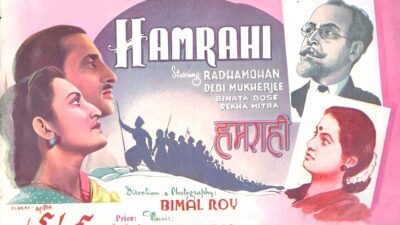
'हमराही' में बिनोता बोस के तीन एकल गीतों में सबसे भारी, और फ़िल्म का इकलौता ऐसा गीत जो सादे भावगीत के बजाय उर्दू ग़ज़ल के मिज़ाज में लिखा गया है। हिंदीगीतमाला इसे 'ज़िगर के दाग़ नए गुल खिलाए जाते हैं' के रूप में दर्ज करती है — गायन बिनोता बोस, बोल ज़ाकिर हुसैन, संगीत आर.सी. बोराल; विकिपीडिया की गीत-सूची में यह संक्षिप्त रूप 'जिगर के दाग़' के नाम से है, गायिका वही बिनोता बोस। 'सॉन्ग्स ऑफ़ यॉर' के 1945 सर्वेक्षण पर एक पाठक-टिप्पणी, जो 'हमराही' के संगीत को गीत-दर-गीत देखती है, इसे सीधे-सीधे 'एक बेहतरीन ग़ज़ल' कहती है — उपलब्ध स्रोतों में यही अकेला है जो इसका रूप बताता है।
अंग्रेज़ी में पढ़ें · Read in English
The heaviest of Binota Bose's three solos in Hamrahi, and the one number in the film written in the register of the Urdu ghazal rather than the plain lyric song. Hindigeetmala lists it as 'Zigar Ke Daag Naye Gul Khilaye Jate Hai' with Binota Bose singing, Zakir Hussain writing and R.C. Boral composing; Wikipedia's soundtrack list carries it in the shortened form 'Jigar Ke Daag', also to Binota Bose. A reader comment on Songs of Yore's 1945 survey, which goes through the Hamrahi soundtrack song by song, describes it simply as 'a fine ghazal' — the only source consulted that names its form.
संगीत The Music
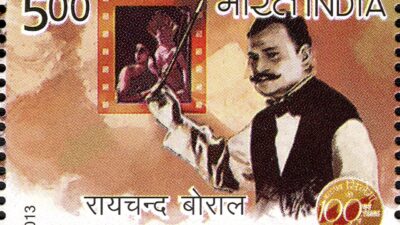
इसी गायिका के लिए आर.सी. बोराल का दूसरा एकल जहाँ उजला और आगे बढ़ता हुआ है, वहीं यह ठहरने के लिए बना है। ग़ज़ल का रूप संगीतकार से धीमी, सम चाल माँगता है ताकि हर शेर अलग से उतर सके, और बोराल — जो न्यू थिएटर्स में आरंभिक सवाक् वर्षों से उर्दू शायरी को स्वरबद्ध कर रहे थे और जिन्होंने के.एल. सैगल को ठीक इसी भंडार में तैयार किया था — उसे अपेक्षित आकार देते हैं: खुली-खुली शुरुआत, पंक्तियों के अंत में लंबे ठहरे स्वर, और मुखड़े की वापसी जो टेक की तरह नहीं, पहुँचने की तरह आती है। बिनोता बोस प्रशिक्षित ग़ज़ल गायिका नहीं, बांग्ला सुगम संगीत की गायिका थीं, और उनका निर्वाह भी उतना ही सादा है — उस दौर का कोई बंबइया ग़ज़ल गायक जो भारी मीड़-मुरकियाँ जोड़ता, वे यहाँ नहीं हैं।
अंग्रेज़ी में पढ़ें · Read in English
Where R.C. Boral's other solo for this singer is bright and forward-moving, this one is built to sit still. The ghazal form asks the composer for a slow, even tread that lets each couplet land separately, and Boral — a composer who had been setting Urdu verse at New Theatres since the early sound years and who trained K.L. Saigal in exactly this repertoire — gives it the expected shape: a spacious opening, long held notes at the end of lines, and a return to the refrain that arrives as arrival rather than as chorus. Binota Bose was a Bengali light-music singer rather than a trained ghazal specialist, and the reading is correspondingly plain, without the heavy melismatic decoration a Bombay ghazal singer of the period would have added.
काव्य The Poetry
शीर्षक पंक्ति ही पूरा भाव कह देती है: नए फूल जिगर के दाग़ों से ही खिलाए जाते हैं। 'दाग़' और 'गुल' उर्दू शायरी की सदियों पुरानी जोड़ी हैं, और ज़ाकिर हुसैन उन्हें परंपरागत ढंग से बरतते हैं — ज़ख़्म का रोना रोने के लिए नहीं, बल्कि यह कहने के लिए कि ज़ख़्म उपजाऊ है, कि कुछ भी नया उगने की शर्त ही चोट है। यह तसल्ली है, पर सख़्त तसल्ली, क्योंकि यह चोट को स्थायी मान लेती है और सिर्फ़ उसे बेकार कहने से इनकार करती है। 'हमराही' की उस कथा के सामने रखकर देखें, जिसमें एक स्त्री अपना परिवार और अपना वर्ग छोड़ती है, तो यह बिंब प्रेम-विषाद से ज़्यादा बदलाव की क़ीमत का बयान लगता है।
अंग्रेज़ी में पढ़ें · Read in English
The title line states the conceit in full: the scars of the heart are what new flowers are made to bloom from. Daag (scar, stain, blemish) and gul (rose, flower) are a paired opposition Urdu poetry has worked for centuries, and Zakir Hussain uses them in the orthodox way — not to complain about the wound but to argue that the wound is productive, that damage is the condition of anything new growing at all. It is a consolation with a hard edge, since it accepts the injury as permanent and only refuses to call it waste. Set against Hamrahi's story of a woman leaving her own family and class, the figure reads less as romantic melancholy than as a statement about the cost of change.
कहानी The Story
'हमराही' न्यू थिएटर्स, कलकत्ता में बिमल रॉय की बांग्ला पहली फ़िल्म 'उदयेर पथे' (1944) के हिंदी रूपांतर के तौर पर बनी, जिसमें राधामोहन भट्टाचार्य और बिनोता बोस अपनी-अपनी भूमिकाओं में लौटे। बिनोता बोस उस उद्योगपति की बहन गोपा हैं, जो अपने भाई के हड़ताली मज़दूरों का साथ देती है और आख़िरकार अपना घर हमेशा के लिए छोड़ देती है। फ़िल्म का अधिकांश आंतरिक जीवन उसके तीन एकल गीत ही उठाते हैं, और यह ग़ज़ल उनमें सबसे गहरी है — संगीत में वही जगह जहाँ फ़िल्म हड़ताल की कहानी होना बंद करके इस बात की कहानी बन जाती है कि छोड़ने वाले को छोड़ना कितना महँगा पड़ता है।
अंग्रेज़ी में पढ़ें · Read in English
Hamrahi was made at New Theatres, Calcutta, as the Hindi version of Bimal Roy's Bengali debut Udayer Pathey (1944), with Radhamohan Bhattacharya and Binota Bose repeating their roles. Binota Bose plays Gopa, an industrialist's sister who sides with her brother's striking workers and finally walks out of her family home for good. Her three solos carry most of the film's interior life, and this ghazal is the darkest of them — the point in the score where the film stops being about a strike and becomes about what leaving costs the person who leaves.
विरासत The Legacy
'हमराही' की ख्याति बिमल रॉय के निर्देशक के रूप में आने पर और इस बात पर टिकी है कि फ़िल्म ने 'जन गण मन' को राष्ट्रगान बनने से कई वर्ष पहले हिंदी परदे पर पहुँचाया — और इन दोनों के आगे उसके अलग-अलग गीत दब गए। यह गीत मुख्यतः सूची-रूप में बचा है — हिंदीगीतमाला इसे श्रोता-रेटिंग के साथ दर्ज करती है, विकिपीडिया की गीत-तालिका में यह मौजूद है — व्यापक प्रचलन में नहीं; फिर भी इसके क़द्रदान हैं: 'सॉन्ग्स ऑफ़ यॉर' के 1945 सर्वेक्षण पर एक पाठक-टिप्पणी फ़िल्म के गीत-दर-गीत ब्यौरे की शुरुआत इसी ग़ज़ल से करती है और इसकी रिकॉर्डिंग का लिंक देती है। यह आर.सी. बोराल के अग्रणी संगीतकार के रूप में करियर के आख़िरी दौर का भी हिस्सा है: जिस व्यक्ति ने 1930 के दशक में पार्श्वगायन और न्यू थिएटर्स की ध्वनि को स्थापित करने में सबसे बड़ी भूमिका निभाई, वह 1945 तक हिंदी फ़िल्म संगीत की अगली क़तार में अपनी पारी के अंत के क़रीब था।
अंग्रेज़ी में पढ़ें · Read in English
Hamrahi's reputation rests on Bimal Roy's arrival as a director and on the film putting 'Jana Gana Mana' on the Hindi screen years before it was adopted as the national anthem, and its individual songs have been overshadowed by both. This one survives mainly in catalogue form — hindigeetmala carries it with a listener rating, Wikipedia's soundtrack table lists it — rather than in wide circulation, though it still has admirers: a reader comment on Songs of Yore's 1945 survey opens its song-by-song account of the film with this ghazal and links a recording of it. It also belongs to the closing stretch of R.C. Boral's career as a leading composer: the man who had done more than anyone to establish playback singing and the New Theatres sound in the 1930s was, by 1945, near the end of his run at the front of Hindi film music.
वर्गीकरण
Classification- Tempo
- Slow
Genre
अन्य विवरण
More Details- https://en.wikipedia.org/wiki/Hamrahi_(1945_film)
- https://www.hindigeetmala.net/movie/humrahi.htm
- http://cinemacorridor.blogspot.com/2013/01/bimal-roys-first-film-new-theatres.html
- https://www.songsofyore.com/best-songs-of-1945-and-the-winners-are/
References
रोचक तथ्य
Margin Notesहिंदीगीतमाला पूरा शीर्षक 'ज़िगर के दाग़ नए गुल खिलाए जाते हैं' दर्ज करती है; विकिपीडिया की गीत-तालिका इसे छोटा करके 'जिगर के दाग़' लिखती है। दोनों गायिका बिनोता बोस को ही मानते हैं।
अंग्रेज़ी में पढ़ें · Read in English
Hindigeetmala lists the full title as 'Zigar Ke Daag Naye Gul Khilaye Jate Hai'; Wikipedia's soundtrack table shortens it to 'Jigar Ke Daag'. Both credit Binota Bose as the singer.
'सॉन्ग्स ऑफ़ यॉर' के 1945 सर्वेक्षण पर एक पाठक-टिप्पणी इसे 'एक बेहतरीन ग़ज़ल' कहती है और 'हमराही' के चार महिला एकल गीतों में गिनती है — तीन बिनोता बोस के और एक रेखा मलिक का।
अंग्रेज़ी में पढ़ें · Read in English
A reader comment on Songs of Yore's 1945 survey calls it 'a fine ghazal' and counts it among four female solos in Hamrahi — three by Binota Bose and one by Rekha Mullick.
यह 'हमराही' में बिनोता बोस के तीन एकल गीतों में से एक है; फ़िल्म के संगीत में उनकी चौथी उपस्थिति हेमंत कुमार के साथ गाया बांग्ला रवींद्र-संगीत युगल है।
अंग्रेज़ी में पढ़ें · Read in English
It is one of three Binota Bose solos in Hamrahi; her fourth appearance in the film's score is the Bengali Tagore duet with Hemant Kumar.
'हमराही' के सातों गीत आर.सी. बोराल ने रचे — एक समवेत राष्ट्रगान, एक कूच-गीत, रवींद्र संगीत, हल्के भावगीत और यह ग़ज़ल।
अंग्रेज़ी में पढ़ें · Read in English
R.C. Boral composed all seven songs of Hamrahi, covering a chorus anthem, a march, Rabindra Sangeet, light lyric solos and this ghazal.
नमूना-पट्टी
The Specimen Table| शीर्षक | जिगर के दाग़ नए गुल खिलाए जाते हैं · Jigar Ke Daag Naye Gul Khilaye Jate Hain |
|---|---|
| फ़िल्म | हमराही · 1945 |
| वर्ष · युग | 1945 |
| गायक | बिनोता बोस |
| गीतकार | मुंशी ज़ाकिर हुसैन |
| संगीतकार | Rai Chand Boral |
| स्वरूप | एकल महिला |
| गति | धीमी |
| भाषा | hindi |
| भाव | मीठा-कड़वा · तीव्र · उदास |
| लोकप्रियता | Known |
| बोल-स्थिति | केवल झलक |
जुड़े हुए पन्ने
Connected Plates · The Graph Made Visibleअटलस में कोई पन्ना अकेला नहीं — इस गीत से जुड़े गीत, कलाकार, फ़िल्म, राग-ताल-विधा, सब यहाँ से खुलते हैं।
मिलते-जुलते गीत · Related Songs
कलाकार · The Artists
फ़िल्म · The Film
साझा कीजिए · Share this Plate