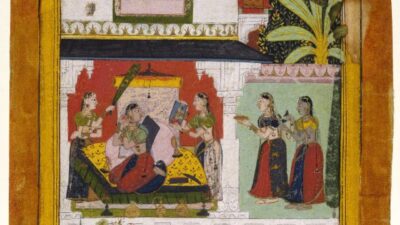
शास्त्र विंग · राग-पट्टिका · Raag Plate
रेवथि
Revathi
एक शांत Carnatic राग · A Peace Carnatic Raag
भावशांतिपूर्ण · ध्यानपूर्ण · प्रशांत · शांत
ऊर्जाधीमी
स्वर-चित्र · The Swara Panel
आरोह — अवरोह · The Ascent and the Descent
आरोह · Aroha
स ऋ१ ग२ म१ प ध१ न२ स्
Sa R1 G2 M1 P D1 N2 Ṡ
अवरोह · Avaroha
स् न२ ध१ प म१ ग२ ऋ१ स
Ṡ N2 D1 P M1 G2 R1 Sa
वादी–संवादी टिप्पणी · Vadi–Samvadi note
Vadi — In the Carnatic tradition, Raag Revathi emphasizes Pancham (Pa) as a key resting note.
Samvadi — Sa (Shadj) serves as the complementary note.
समय और भाव
Time Theory & Moodसमय-सिद्धांत · Time Theory
संध्या काल
परंपरागत रूप से संध्या काल (4:00 PM - 7:00 PM) में गाया जाता है।
Traditionally performed during evening/twilight hours (4:00 PM - 7:00 PM), when day transitions to night.
भाव और गति · Mood & Tempo
शांत · Peace/Tranquility
आंतरिक शांति, सुकून और आध्यात्मिक वैराग्य का रस। शांति, ध्यान और अध्यात्म को जगाता है।
ऊर्जा · Energyधीमी
स्तर · Levelintermediate — राग Revathi के लिए कर्नाटक संगीत सिद्धांत की मजबूत नींव आवश्यक है।
पट्टिका-लेख
The Monographपरिचय Introduction
राग Revathi कर्नाटक शास्त्रीय संगीत परंपरा का एक राग है। इसका प्रमुख रस शांत (Peace/Tranquility) है। यह परंपरागत रूप से संध्या काल (4:00 PM - 7:00 PM) में गाया जाता है। गाया जाता है।
अंग्रेज़ी में पढ़ें · Read in English
Raag Revathi is a complete scale with all 7 notes in both ascent and descent raga in the Carnatic classical music tradition.. With its Sampurna-Sampurna jati structure, this raag creates a distinctive tonal landscape. The predominant rasa is Peace/Tranquility (शांत), making it suitable for compositions that evoke peaceful, meditative emotions. It is traditionally performed during evening hours, and its melodic contour offers rich possibilities for alapana, kalpanaswaram, and creative improvisation.
सांस्कृतिक महत्व Cultural Significance
भारतीय शास्त्रीय संगीत की समृद्ध परंपरा के अंग के रूप में, राग Revathi Carnatic परंपरा को परिभाषित करने वाले स्वर संरचना और भावनात्मक अभिव्यक्ति के बीच गहरे संबंध का प्रतिनिधित्व करता है।
अंग्रेज़ी में पढ़ें · Read in English
As part of the rich tapestry of Indian classical music, Raag Revathi represents the deep connection between melodic structure and emotional expression that defines the Carnatic tradition.
ऐतिहासिक महत्व Historical Significance
राग Revathi कर्नाटक संगीत के 72 मेलकर्ता रागों में से एक है, जो पूरी तरह से शुद्ध स्वरों का राग होने के कारण विशेष स्थान रखता है। इसका नाम नक्षत्र (तारे) 'रेवती' से लिया गया है, जिसे शांत और दिव्य कंपन माना जाता है। राग ने भक्ति और मंदिर संगीत के संदर्भ में महत्वपूर्ण भूमिका निभाई है।
अंग्रेज़ी में पढ़ें · Read in English
Raag Revathi is one of the 72 melakarta ragas in Carnatic music, occupying a special place as a completely shuddha (natural note) raag. Its name derives from the nakshatra (star) Revathi, believed to carry peaceful and celestial vibrations. The raag has been a favorite in devotional and temple music contexts, with numerous classical compositions preserved in the Paduka Sahasram collection.
शिक्षा
Teaching & LearningBegin with slow aalapana to internalize the raag's swaroopa (melodic form)
Practice the arohana and avarohana patterns with a tanpura drone
Listen to recordings by master performers to understand the raag's gamakas (ornamentations)
Work on kalpanaswaram (improvisation) within the raag's framework
Using incorrect gamakas that belong to a different raag
Not maintaining proper swar sthana (note placement)
Rushing through phrases without allowing the raag bhava to develop
तुलना
A Specimen Comparisonनटभैरवी (20वाँ मेलकर्ता) में गंधार (G2), मध्यम (M1), धैवत (D1) और निषाद (N2) रेवथि के समान हैं, किन्तु नटभैरवी में चतुःश्रुति ऋषभ (R2 — दो अर्धस्वर) है जबकि रेवथि में शुद्ध ऋषभ (R1 — एक अर्धस्वर) है। रेवथि का R1 सा और रे के बीच एक असाधारण संकरी, करुण अन्तराल बनाता है जो नटभैरवी के खुले आरोह में नहीं मिलता।
| तुलनाSpecimen | रेवथि | नटभैरवी |
|---|---|---|
| स्वर-अंतर | Revathi: Suddha Rishabham (R1, one semitone above Sa); Natabhairavi: Chatushruti Rishabham (R2, two semitones above Sa). Gandhara, Madhyama, Dhaivata, Nishada identical. | |
हिंदुस्तानी भैरवी के स्वर-समूह (सा, कोमल रे, कोमल ग, शुद्ध म, प, कोमल ध, कोमल नि) रेवथि से एकदम मेल खाते हैं, फिर भी व्यवहार में दोनों भिन्न हैं: भैरवी ठुमरी शैली में अन्य रागों के स्वर भी लेती है और व्यापक लचीलेपन के साथ गाई जाती है, जबकि रेवथि कर्नाटक गमक-परंपरा में अपने निश्चित स्वरों से बँधी रहती है।
| तुलनाSpecimen | रेवथि | भैरवी |
|---|
हनुमतोडी (8वाँ मेलकर्ता) में भी कोमल स्वर हैं, किन्तु प्रति मध्यम (तीव्र म) होने के कारण उसका रंग कहीं अधिक गहरा और उद्वेगपूर्ण है, जबकि रेवथि का शुद्ध मध्यम उसे शांत बनाए रखता है।
| तुलनाSpecimen | रेवथि | हनुमतोडी |
|---|---|---|
| स्वर-अंतर | Revathi uses shuddha Madhyam (M1); Hanumatodi uses prati Madhyam (M2, tivra/sharp Ma). | |
| भाव-अंतर | Hanumatodi: intense, brooding; Revathi: calm, restrained. | |
प्रस्तुति
Performance- Description
- परंपरागत रूप से संध्या काल (4:00 PM - 7:00 PM) में गाया जाता है। Traditionally performed during evening/twilight hours (4:00 PM - 7:00 PM), when day transitions to night.
- Prahar Number
- 5
- Prahar Name
- संध्या काल Sandhya Kaal
- Time Start
- 16:00
- Time End
- 19:00
- Time Flexibility
- flexible
Time
और जानें
More to Know- raag-natabhairavi — Natabhairavi — नटभैरवी — Natabhairavi (the 20th melakarta) shares the same Gandhar (G2/Sadharana Ga), Madhyam (M1), Dhaivat (D1), and Nishad (N2) with Revathi, but Natabhairavi uses Chatushruti Rishabham (R2 — two semitones above Sa) while Revathi uses Suddha Rishabham (R1 — one semitone above Sa). Revathi's R1 creates an unusually narrow, plaintive opening interval between Sa and Re, giving its phrases a quality of gentle restraint absent from Natabhairavi's more open ascent. — नटभैरवी (20वाँ मेलकर्ता) में गंधार (G2), मध्यम (M1), धैवत (D1) और निषाद (N2) रेवथि के समान हैं, किन्तु नटभैरवी में चतुःश्रुति ऋषभ (R2 — दो अर्धस्वर) है जबकि रेवथि में शुद्ध ऋषभ (R1 — एक अर्धस्वर) है। रेवथि का R1 सा और रे के बीच एक असाधारण संकरी, करुण अन्तराल बनाता है जो नटभैरवी के खुले आरोह में नहीं मिलता। — Revathi: Suddha Rishabham (R1, one semitone above Sa); Natabhairavi: Chatushruti Rishabham (R2, two semitones above Sa). Gandhara, Madhyama, Dhaivata, Nishada identical.
- raag-bhairavi — Bhairavi — भैरवी — Hindustani Bhairavi shares an identical note-set with Revathi (Sa, komal Re, komal Ga, shuddha Ma, Pa, komal Dha, komal Ni), yet the two are worlds apart in practice: Bhairavi borrows freely from other raags, tolerates additional ornamental swaras, and is performed in a highly flexible thumri style, whereas Revathi adheres strictly to its own swaras within the Carnatic gamaka tradition. — हिंदुस्तानी भैरवी के स्वर-समूह (सा, कोमल रे, कोमल ग, शुद्ध म, प, कोमल ध, कोमल नि) रेवथि से एकदम मेल खाते हैं, फिर भी व्यवहार में दोनों भिन्न हैं: भैरवी ठुमरी शैली में अन्य रागों के स्वर भी लेती है और व्यापक लचीलेपन के साथ गाई जाती है, जबकि रेवथि कर्नाटक गमक-परंपरा में अपने निश्चित स्वरों से बँधी रहती है।
- raag-hanumatodi — Hanumatodi — हनुमतोडी — Hanumatodi (8th melakarta) also employs komal swaras but introduces a prati Madhyam (tivra/sharp M2), giving it a far more intense, brooding character compared to Revathi's shuddha Madhyam and its resultant sense of calm. — हनुमतोडी (8वाँ मेलकर्ता) में भी कोमल स्वर हैं, किन्तु प्रति मध्यम (तीव्र म) होने के कारण उसका रंग कहीं अधिक गहरा और उद्वेगपूर्ण है, जबकि रेवथि का शुद्ध मध्यम उसे शांत बनाए रखता है। — Revathi uses shuddha Madhyam (M1); Hanumatodi uses prati Madhyam (M2, tivra/sharp Ma). — Hanumatodi: intense, brooding; Revathi: calm, restrained.
In Film Music
Revathi is a pure Carnatic raga and has not established a documented presence in mainstream Hindi film music. Its characteristic note set — all six swaras being komal or shuddha with the unique flattened Rishabham (R1) — places it within the Bhairavi group in Hindustani terms, yet composers in the North Indian film tradition have worked with Bhairavi itself and its janya raags rather than the distinctly Carnatic Revathi. South Indian cinema, particularly Tamil and Telugu films, has occasionally drawn on Revathi's serene and celestial character in devotional song sequences and festival compositions. The raga's primary life remains in the Carnatic concert hall: in kriti renditions, varnam practice, and elaborate alapana where its contemplative shanta rasa can be developed over time without the constraints of a film-song format. Listeners who wish to experience Revathi's full melodic landscape are best directed to recordings by classical Carnatic vocalists rather than popular film songs.
Comparisons
सीखने के लिए
For Learners- Difficulty Level
- intermediate
अन्य विवरण
More Details- Indian_Music_Raga_Encyclopedia_v2.xlsx
- Carnatic Music theory: 72-melakarta system, Revathi nakshatra etymology
- Comparison with Natabhairavi (20th melakarta) and Hanumatodi (8th melakarta)
- M. Balamurali Krishna Carnatic vocal recordings
References
नमूना-पट्टी
The Specimen Table| नाम | रेवथि · Revathi |
|---|---|
| आरोह | स ऋ१ ग२ म१ प ध१ न२ स् |
| अवरोह | स् न२ ध१ प म१ ग२ ऋ१ स |
| जाति | संपूर्ण-संपूर्ण · Sampurna-Sampurna |
| समय | संध्या काल |
| ऊर्जा | धीमी |
| परिवार | Revathi |
| स्तर | intermediate |
| लोकप्रियता | Very popular |
जुड़े हुए पन्ने
Connected Plates · The Graph Made Visibleअटलस में कोई पन्ना अकेला नहीं — इस राग से गीत, प्रस्तुतियाँ, कलाकार, ताल, घराने और मिलते-जुलते राग, सब यहाँ से खुलते हैं।
इस राग के कलाकार · Notable Artists
ताल-साथी · Taal Pairings
श्रवण-कक्ष · The Listening Room
सुनिए — रेवथि · Hear the Raag
Raag Revathi — Classical Performance
प्रश्नोत्तर
Questions & Answersराग Revathi किस संगीत पद्धति का राग है?
राग Revathi कर्नाटक (दक्षिण भारतीय) शास्त्रीय संगीत पद्धति का राग है।
अंग्रेज़ी में पढ़ें · Read in English
Which music system does Raga Revathi belong to? — Raga Revathi belongs to the Carnatic (South Indian) classical music system.
साझा कीजिए · Share this Plate