गीत विंग · गीत-पट्टिका · Song Plate
बंसी वाले श्याम प्यारे कृष्ण
Bansi Wale Shyam Pyare Krishna
बाँसुरी वाले कृष्ण को सीधा संबोधन — ख़ान मस्ताना की आवाज़ में, मंदिर की गायकी नहीं, गाँव के भजन की सादी सामूहिक चाल में।
भावभक्ति · शांत · आध्यात्मिक
भाषाhindi गतिमध्यम स्वरूपएकल पुरुष
श्रेय
The Creditsसूत्र-वाक्य · The Hook
सूत्र-वाक्य
बाँसुरी वाले कृष्ण को सीधा संबोधन — ख़ान मस्ताना की आवाज़ में, मंदिर की गायकी नहीं, गाँव के भजन की सादी सामूहिक चाल में।
In EnglishA direct address to Krishna the flute-player, sung by Khan Mastana in the plain congregational manner of a village bhajan rather than a temple recital.
पट्टिका-लेख
The Monographपरिचय Overview
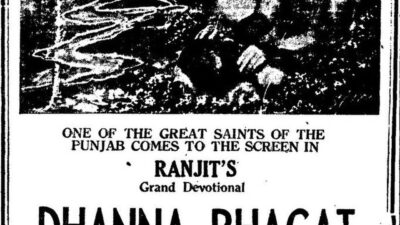
'धन्ना भगत' (1945) में ख़ान मस्ताना के तीन गीतों में से दूसरा। जहाँ 'पंछी पिंजरा हुआ पुराना' निर्गुण पक्ष रखता है — निराकार ईश्वर, उधार का पिंजरा-देह — वहीं यह गीत उस सगुण रूप की ओर मुड़ता है जिसे संत की अपनी परंपरा वस्तुतः पूजती थी: साँवले, बाँसुरी थामे कृष्ण। एक ही संगीत में दोनों गीतों का साथ रहना इस बात का अच्छा सार है कि उत्तर भारतीय भक्ति ने हमेशा दोनों विचारों को एक साथ थामे रखा है।
अंग्रेज़ी में पढ़ें · Read in English
The second of Khan Mastana's three songs in Dhanna Bhagat (1945). Where 'Panchi Pinjra Hua Purana' argues the nirgun case — God without attribute, the body as a borrowed cage — this one turns to the sagun form the saint's own tradition actually worshipped: Krishna, dark-skinned and holding a flute. The pairing of the two songs in one score is a fair summary of how North Indian bhakti practice has always held both ideas at once.
संगीत The Music
खेमचंद प्रकाश इसे चलती हुई लय में बाँधते हैं, स्पष्ट और दोहराने योग्य टेक के साथ — ऐसी धुन जो इसीलिए बनी है कि परदे की भीड़, और फिर सिनेमाघर के दर्शक, दूसरी बार में ही साथ गाने लगें। स्वर-पंक्ति का उत्तर बाँसुरी का टुकड़ा देता है — शीर्षक में नामित वाद्य को ही संगीत-हस्ताक्षर बना दिया गया है; बाक़ी संगत हल्की रहती है, हाथ की ताल और हारमोनियम की ठहरी हुई बुनियाद के साथ।
अंग्रेज़ी में पढ़ें · Read in English
Khemchand Prakash sets it at a walking tempo with a clear, repeatable refrain — the kind of tune designed so that a screen crowd, and then a cinema audience, can join by the second time round. A flute figure answers the vocal line, the literal instrument named in the title used as a musical signature; the rest of the accompaniment stays light, with hand percussion and a sustained harmonium bed.
काव्य The Poetry
यह गीत नाम लेकर काम करता है: बंसी वाले, श्याम, प्यारे, कृष्ण — बाँसुरी वाला, साँवला, प्रिय, कृष्ण। किसी देवता के नामों को एक के बाद एक रखना भारतीय भक्ति-काव्य की सबसे पुरानी युक्तियों में है, क्योंकि भक्ति में नाम देवता का लेबल नहीं, उस तक पहुँचने का साधन है; नाम लेना ही वह क्रिया है जिसकी बात गीत कर रहा है। पंडित इंद्र शब्दावली को पूरी तरह रोज़मर्रा की हिंदी और ब्रज-रंग में रखते हैं, ताकि पंक्तियों को समझने के लिए किसी शिक्षा की ज़रूरत न पड़े — उस फ़िल्म के लिए उपयुक्त, जिसके किसान-संत का पूरा दावा यही है कि भक्ति अनपढ़ के लिए भी खुली है।
अंग्रेज़ी में पढ़ें · Read in English
The lyric works by naming: Bansi-wale, Shyam, Pyare, Krishna — flute-bearer, dark one, beloved, Krishna. Stacking the names of a deity is one of the oldest devices in Indian devotional verse, because in bhakti practice the name is not a label for the god but a means of reaching him; to recite the names is already to be doing the thing the song is about. Pandit Indra keeps the vocabulary entirely within everyday Hindi and Braj colouring, so that nothing in the verse requires education to follow — appropriate for a film about a farmer-saint whose whole claim is that devotion is available to the unlettered.
कहानी The Story
रणजीत मूवीटोन ने 1940 के दशक भर एक भरोसेमंद भक्ति-शृंखला खड़ी की थी — जैसे 'भक्त सूरदास' (1942) — और 'धन्ना भगत' उसी व्यावसायिक तर्क पर चली: एक संत का जीवन, खेमचंद प्रकाश का संगीत, सीमित बजट। ख़ान मस्ताना, जो पूरे दशक गाते और कभी-कभी संगीत भी देते रहे, यहाँ पुरुष भक्ति-स्वर को अपनी अचूक खुले गले की मार से सँभालते हैं; स्टूडियो ने किसी और के बजाय उन्हें ही क्यों चुना, यह कहीं दर्ज नहीं।
अंग्रेज़ी में पढ़ें · Read in English
Ranjit Movietone had built a reliable devotional line through the 1940s — Bhakt Surdas (1942) among them — and Dhanna Bhagat followed the same commercial logic: a saint's life, a Khemchand Prakash score, a modest budget. Khan Mastana, who sang and occasionally composed across the decade, carries the male devotional voice here in an unmistakable open-throated attack; why the studio settled on him rather than another singer is not recorded.
विरासत The Legacy
यह रिकॉर्डिंग आज चलन में बची हुई सामग्री में नहीं है, और किसी बाद के कलाकार द्वारा इसे पुनर्जीवित किए जाने का प्रमाण नहीं मिलता। इसका महत्व दस्तावेज़ी है: यह दिखाता है कि 1945 में एक मुख्यधारा स्टूडियो एक सादे कृष्ण-भजन पर परदे का पूरा हिस्सा ख़र्च करने को तैयार था — यह चलन स्वतंत्रता के बाद हिंदी सिनेमा में काफ़ी पतला पड़ गया।
अंग्रेज़ी में पढ़ें · Read in English
The recording is not among the survivals that circulate today, and no later artist is known to have revived it. Its interest is documentary: it shows a mainstream studio in 1945 still willing to spend a full reel of screen time on an unadorned Krishna bhajan, a practice that thinned considerably in Hindi cinema after Independence.
वर्गीकरण
Classification- Tempo
- Medium
Genre
अन्य विवरण
More Details- https://en.wikipedia.org/wiki/Dhanna_Bhagat_(film)
- https://www.hindigeetmala.net/movie/dhanna_bhagat.htm
- https://en.wikipedia.org/wiki/List_of_Hindi_films_of_1945
- https://en.wikipedia.org/wiki/Dhanna
- https://www.cinemaazi.com/feature/bigger-than-sky-ranjit-studio
- https://en.wikipedia.org/wiki/Khemchand_Prakash
References
रोचक तथ्य
Margin Notesशीर्षक के धन्ना जयपुर के पास चौरू गाँव के पंद्रहवीं सदी के जाट किसान हैं, जिन्हें रामानंद का शिष्य माना जाता है; उनके तीन पद आगे चलकर गुरु ग्रंथ साहिब में सम्मिलित हुए।
अंग्रेज़ी में पढ़ें · Read in English
The Dhanna of the title is a fifteenth-century Jat farmer from Chauru village near Jaipur, counted as a disciple of Ramananda; three of his hymns were later included in the Guru Granth Sahib.
खेमचंद प्रकाश लगभग 1940 में रणजीत मूवीटोन से जुड़े और अगले पाँच वर्षों में इस बैनर की कई फ़िल्मों का संगीत रचा — जिनमें 'तानसेन' (1943) भी है; 'धन्ना भगत' उसी दौर के अंत के पास आई, 'महल' (1949) से चार साल पहले — वही संगीत जिसके लिए वे आज भी सबसे अधिक जाने जाते हैं।
अंग्रेज़ी में पढ़ें · Read in English
Khemchand Prakash was signed by Ranjit Movietone around 1940 and scored a long run of the banner's films over the next five years, Tansen (1943) among them; Dhanna Bhagat came near the end of that run, four years before Mahal (1949), the score he is still best known for.
नमूना-पट्टी
The Specimen Table| शीर्षक | बंसी वाले श्याम प्यारे कृष्ण · Bansi Wale Shyam Pyare Krishna |
|---|---|
| फ़िल्म | धन्ना भगत · 1945 |
| वर्ष · युग | 1945 — Pre-Independence (1931–1947) |
| गायक | Khan Mastana |
| गीतकार | Pandit Indra |
| संगीतकार | Khemchand Prakash |
| स्वरूप | एकल पुरुष |
| गति | मध्यम |
| भाषा | hindi |
| भाव | भक्ति · शांत · आध्यात्मिक |
| लोकप्रियता | Obscure |
| बोल-स्थिति | केवल झलक |
जुड़े हुए पन्ने
Connected Plates · The Graph Made Visibleअटलस में कोई पन्ना अकेला नहीं — इस गीत से जुड़े गीत, कलाकार, फ़िल्म, राग-ताल-विधा, सब यहाँ से खुलते हैं।
मिलते-जुलते गीत · Related Songs
कलाकार · The Artists
फ़िल्म · The Film
साझा कीजिए · Share this Plate