सिनेमा विंग · फ़िल्म-पट्टिका · Film Plate
चाँद चकोरी
Chand Chakori
शैलीDrama · Romance · Social
भाषाhindi प्रकारकथा-चित्र (फ़ीचर)
गीत13 — नीचे पूरी संगीत-सूची
कथा-सार
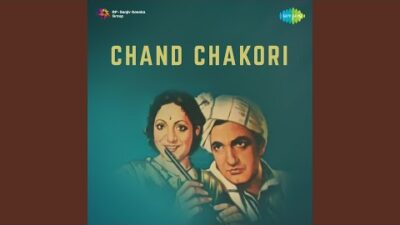
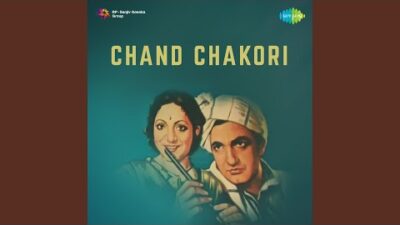
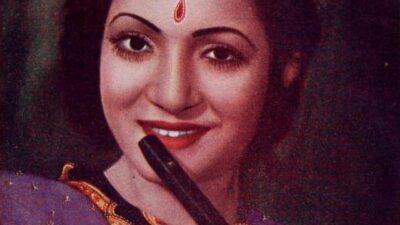
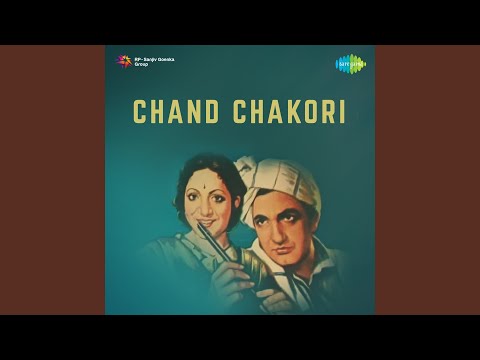
Synopsis'चाँद चकोरी' रणजीत मूवीटोन की एक प्रेम-कथा है, जिसका निर्देशन केदार शर्मा ने किया और जिसके केंद्र में मुमताज़ शांति हैं — उस दौर में, जब 'किस्मत' (1943) की मिली शोहरत अपने शिखर पर थी — और उनके सामने गायक-अभिनेता सुरेंद्र। फ़िल्म का नाम भारतीय काव्य के सबसे पुराने विरह-प्रतीक को पुकारता है: चकोर पक्षी, जिसके बारे में कहा जाता है कि वह सारी रात उस चाँद को निहारता रहता है जिस तक वह कभी पहुँच नहीं सकता — यानी 'चाँद' और 'चकोरी' का यह जोड़ा फ़िल्म का एक फ़ुट भी चलने से पहले ऐसे प्रेम की घोषणा कर देता है जो एक तयशुदा, न पटने वाली दूरी पर टिका है। आज उपलब्ध किसी भी अभिलेखागार में इस फ़िल्म का कथासार सुरक्षित नहीं है — विकिपीडिया की प्रविष्टि एकल-स्रोत वाला अधूरा लेख है, उस दौर की व्यापार-पत्रिकाओं की सामग्री डिजिटल रूप में नहीं है, और फ़िल्म का कोई प्रिंट प्रचलन में नहीं जाना जाता — इसलिए कहानी के बारे में ईमानदारी से केवल उतना ही कहा जा सकता है जितना शीर्षक, कलाकारों का चयन और बचे हुए गीत-शीर्षक संकेत करते हैं: एक स्त्री की निष्ठा, एक बिछोह, और लगभग पूरी तरह प्रतीक्षा पर टिका हुआ संगीत। बाक़ी फ़िल्म रणजीत के अपने कलाकारों से भरी थी — अशरफ़ ख़ान, मारुति, शांता कुमारी, नागेंद्र और बाबूराव पवार इनमें शामिल थे। कहानी जो भी रही हो, दर्शकों पर वह चली: 'बॉक्स ऑफ़िस इंडिया' की पूर्वदृष्टि सूची में 'चाँद चकोरी' 1945 की छठी सबसे अधिक कमाई करने वाली भारतीय फ़िल्म है।
अंग्रेज़ी में पढ़ें · Read in English
Chand Chakori is a Ranjit Movietone romantic drama directed by Kidar Sharma, built around Mumtaz Shanti — then at the height of the fame that Kismet (1943) had given her — opposite the singer-actor Surendra. Its title names the oldest emblem of longing in Indian poetry: the chakor bird, which is said to spend the whole night gazing at a moon it can never reach, so that the pairing of chand and chakori announces a love held at a fixed, unbridgeable distance before a foot of film has run. No plot summary of the picture survives in any archive that can be consulted today — the Wikipedia entry is a one-source stub, the trade-paper coverage is not digitised, and no print is known to circulate — so what can honestly be said about the story is only what the title, the casting and the surviving song titles imply: a woman's devotion, a separation, and a score built almost entirely around waiting. Ranjit's contract players filled out the rest of the picture, among them Ashraf Khan, Maruti, Shanta Kumari, Nagendra and Baburao Pawar. Whatever the story was, it worked with audiences: on Box Office India's retrospective ranking, Chand Chakori was the sixth highest-grossing Indian release of 1945.
संगीत-सूची
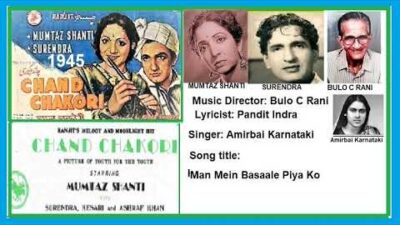
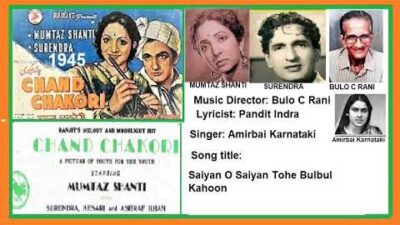
The Soundtrack'चाँद चकोरी' के लिए तेरह गीत दर्ज हैं, सभी बुलो सी. रानी के संगीतबद्ध किए हुए। सात गीतों की गायिका के रूप में अमीरबाई कर्नाटकी दर्ज हैं; देखी गई किसी भी सूची में इस फ़िल्म के लिए यही एकमात्र गायिका नामित है, और बाक़ी छह शीर्षकों के साथ कोई गायक-श्रेय है ही नहीं — यहाँ अनुमान से कोई नाम नहीं जोड़ा गया है। सूचियों के अनुसार तेरह में से बारह गीत पंडित इंद्र ने लिखे और तेरहवाँ — 'डूबती नाव को तिनके का सहारा' — वली साहब ने; केदार शर्मा फ़िल्म के गीतकारों में गिने जाते हैं, पर उनके नाम कोई एक गीत दर्ज नहीं है। शीर्षक बार-बार बिछोह और दूरी के इर्द-गिर्द इकट्ठे होते हैं — प्रीतम के जाने से जोगन बनी स्त्री, संदेश ले जाने को कही गई हवा, डूबती नाव और तिनके का सहारा, और चाँद की दूरी नापती चकोरी — यानी ठीक वही भावभूमि जिसका वादा फ़िल्म का नाम करता है।
अंग्रेज़ी में पढ़ें · Read in English
Thirteen songs are catalogued for Chand Chakori, all of them composed by Bulo C. Rani. Amirbai Karnataki is documented as the singer on seven; she is the only singer any consulted catalogue names for this film, and the remaining six titles carry no singer credit at all — none has been supplied here by inference. As the catalogues record them, Pandit Indra wrote twelve of the thirteen and Wali Saheb the thirteenth, 'Doobti Naav Ko Tinke Ka Sahara'; Kidar Sharma is credited as a lyricist on the film without any individual song being assigned to him. The titles cluster hard around separation and distance — a woman turned into a jogan by her lover's leaving, a wind asked to carry a message, a sinking boat and its straw, a chakori measuring how far the moon is — which is exactly the emotional weather the film's name promises.
- जोगन बना के पिया छोड़ गया Jogan Bana Ke Piya Chhod Gaya स्वर: Amirbai Karnataki
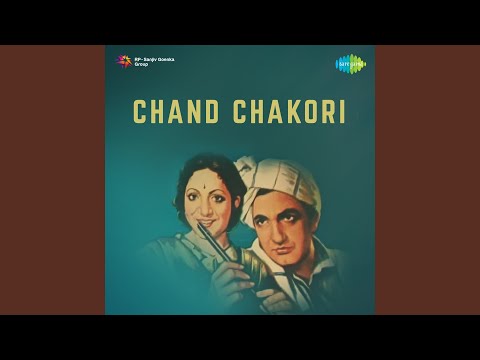
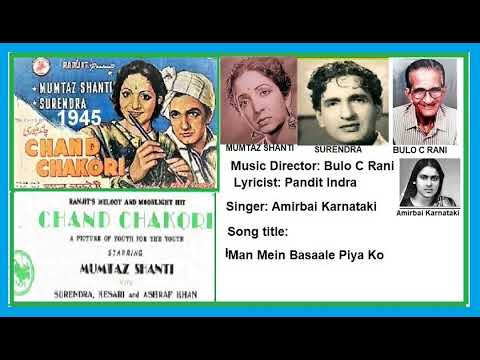
- मन में बसा ले Man Mein Basa Le स्वर: Amirbai Karnataki
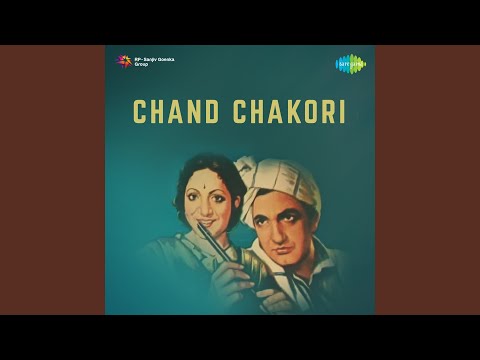
- चकोरी चाँद है कितनी दूर Chakori Chand Hai Kitni Door
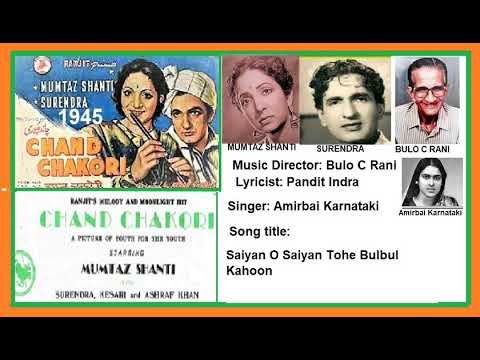
- हवा तुम क़ासिद बन कर Hawa Tum Kasid Ban Kar स्वर: Amirbai Karnataki
- सैयाँ तोहे बुलबुल कहूँ Saiyya Tohe Bulbul Kahu स्वर: Amirbai Karnataki
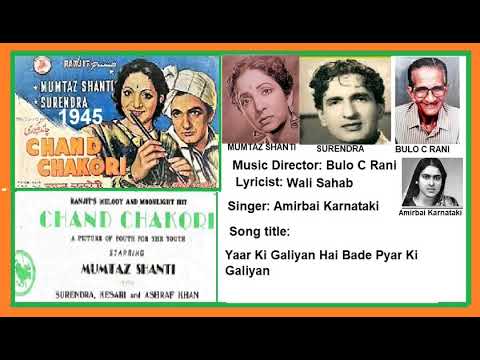
- यार की गलियाँ हैं Yaar Ki Galiyan Hai स्वर: Amirbai Karnataki
- आओ मेरे बाबू Aao Mere Babu
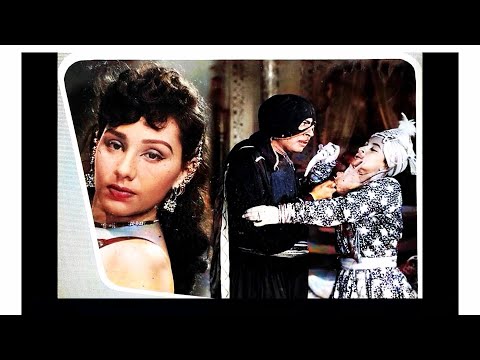
- अब याद न कर Ab Yaad Na Kar

- बहार आई चमन में झूम कर Bahar Aayi Chaman Mein Jhoom Kar
- डूबती नाव को तिनके का सहारा Doobti Naav Ko Tinke Ka Sahara स्वर: Amirbai Karnataki
- जिस रंग में तोहे Jis Rang Mein Tohe
- मोहे फूलों के गजरे ने Mohe Phoolon Ke Gajre Ne स्वर: Amirbai Karnataki
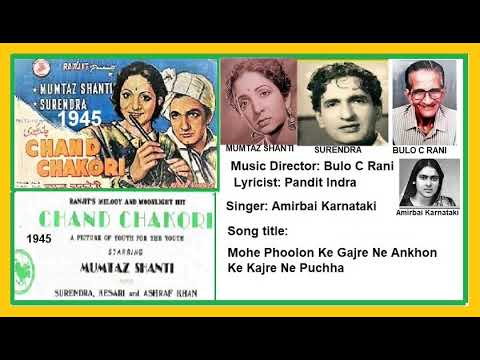
- सजाई किसलिए जा रही है Sajayi Kisliye Ja Rahi Hai
पट्टिका-लेख
The Monographपर्दे के पीछे Behind the Scenes
केदार शर्मा ने 'चाँद चकोरी' अपने रणजीत-काल के बीचोबीच बनाई — 'मुमताज़ महल' (1944) और 'धन्ना भगत' (1945) के बीच, और उन दो वर्षों पहले जब उन्होंने अपनी संस्था खड़ी करके 'नील कमल' (1947) में अनजान राज कपूर और अनजान मधुबाला को पहला मौक़ा दिया। वे सिनेमा में निर्देशक के रूप में नहीं, लेखक के रूप में आए थे — 1936 की हिंदी 'देवदास' के संवाद और गीत ही उनका पहला बड़ा अवसर थे — इसीलिए उनका नाम निर्देशक के साथ-साथ इस फ़िल्म के तीन गीतकारों में भी दर्ज है। बुलो सी. रानी तब पच्चीस के थे और स्वतंत्र रूप से संगीत देते हुए मुश्किल से एक साल हुआ था। श्रेय-सूची में एक और रिश्ता छिपा है: मुमताज़ शांति पर विकिपीडिया का लेख उनके पति के रूप में वली साहब को पहचानता है — वही लेखक-निर्देशक जिनके साथ वे 1950 के दशक के आरंभ में पाकिस्तान चली गईं — और वली साहब इस फ़िल्म के उस गीत के दर्ज गीतकार हैं जिसे अमीरबाई कर्नाटकी ने गाया।
अंग्रेज़ी में पढ़ें · Read in English
Kidar Sharma made Chand Chakori in the middle of his Ranjit years, between Mumtaz Mahal (1944) and Dhanna Bhagat (1945), and two years before he set up on his own and cast an unknown Raj Kapoor and an unknown Madhubala in Neel Kamal (1947). He had come into films as a writer rather than a director — his dialogue and lyrics for the Hindi Devdas of 1936 were his first break — which is why his name appears among this picture's three lyricists as well as in the director's chair. Bulo C. Rani was twenty-five and barely a year into composing on his own account. One further connection runs through the credits: Wikipedia's article on Mumtaz Shanti identifies her husband as Wali Sahab, the writer-director with whom she moved to Pakistan in the early 1950s — and Wali Sahab is the credited lyricist of one of the songs Amirbai Karnataki sings in this film.
महत्व Significance
आज 'चाँद चकोरी' का महत्व उसकी कहानी में नहीं है — वह तो खो चुकी है — बल्कि उन दो चीज़ों में है जिन्हें यह फ़िल्म दर्ज करती है। यह बुलो सी. रानी के आरंभिक पूर्ण संगीत-संकलनों में से एक है; वे 1939 में खेमचंद प्रकाश के सहायक के रूप में रणजीत मूवीटोन से जुड़े थे और स्वतंत्र संगीतकार के रूप में 'कारवाँ' (1944) से ही काम कर रहे थे — इस फ़िल्म के तेरह गीत असल में एक स्टूडियो-संगीतकार के रूप में उनकी शिक्षुता हैं, 'जोगन' (1950) से पूरे पाँच साल पहले। दूसरे, यह अमीरबाई कर्नाटकी को उनके पार्श्वगायन-करियर के शिखर पर दर्ज करती है — 'किस्मत' (1943) के आठ में से छह गीत उन्होंने गाए थे और उस फ़िल्म की नायिका भी यही अभिनेत्री थीं; उनकी आवाज़ इस संकलन के अधिकांश हिस्से में फिर सुनाई देती है — उन वर्षों में, जब 1947 के बाद लता मंगेशकर के उभार ने महिला पार्श्वगायन का नक़्शा बदलना अभी शुरू नहीं किया था। और व्यावसायिक दृष्टि से यह 1945 की उन गिनी-चुनी फ़िल्मों में है जिन्होंने सचमुच कमाई की — जिससे अभिलेख से इसका लगभग पूरा लोप और भी खटकता है।
अंग्रेज़ी में पढ़ें · Read in English
Chand Chakori matters today less for its narrative, which is lost, than for two things it documents. It is one of the earliest complete scores by Bulo C. Rani, who had joined Ranjit Movietone in 1939 as an assistant to Khemchand Prakash and had been composing independently only since Caravan (1944); the thirteen songs written for this picture are effectively his apprenticeship as a studio house composer, five years before Jogan (1950) made his name. It is also a record of Amirbai Karnataki at the height of her playback career — she sang six of the eight songs of Kismet (1943), whose female lead was this film's star, and her voice is heard again across most of this soundtrack, in the years before Lata Mangeshkar's rise after 1947 redrew the map of female playback singing. And commercially it belongs to the small group of 1945 releases that genuinely made money, which makes its near-total disappearance from the record all the more conspicuous.
विरासत Legacy
'चाँद चकोरी' का लगभग कुछ भी प्रचलन में नहीं बचा। इसका कोई प्रिंट सार्वजनिक रूप से उपलब्ध नहीं जाना जाता, इसकी मुट्ठी भर रिकॉर्डिंग ही कभी ऑनलाइन सामने आई हैं, और जैसा कि गीत-ब्लॉग 'अतुल्स सॉन्ग अ डे' के लेखक ने 2011 में उनमें से एक गीत पोस्ट करते हुए लिखा था — अधिकांश डेटाबेस पर इस फ़िल्म का पन्ना पूर्णता का दावा करते हुए भी असल में ख़ाली है। बचा है तो केवल गीत-सूची, जो 'हिंदी फ़िल्म गीत कोश' की परंपरा और उस पर बनी सूचियों के ज़रिए सुरक्षित रही, और साथ में एक-दो ऑडियो प्रति — इतना ही, जिससे बुलो सी. रानी की आरंभिक शैली अभिलेख में दर्ज हो सके और 1945 की एक सच्ची व्यावसायिक सफलता चिह्नित हो सके। अपने वर्ष में छठे स्थान पर रही फ़िल्म के लिए यह इस बात का कड़ा उदाहरण है कि विभाजन-पूर्व बंबई का अभिलेख कितनी पूरी तरह लुप्त हो चुका है — और यही कारण है कि एक सावधान सूची-प्रविष्टि बनाना अपने आप में सार्थक है।
अंग्रेज़ी में पढ़ें · Read in English
Almost nothing of Chand Chakori survives in circulation. No print is known to be publicly available, only a handful of its recordings have ever surfaced online, and as the writer of the song blog Atul's Song A Day observed in 2011 while posting one of them, the film's page on most databases is effectively blank while claiming to be complete. What is left is the song list itself, preserved through the Hindi Film Geet Kosh tradition and the catalogues built on it, plus one or two audio transfers — just enough to put Bulo C. Rani's early manner on record and to mark a genuine 1945 box-office success. For a film that finished sixth in its year, that is a stark illustration of how completely the pre-Partition Bombay archive has been lost, and it is the reason a careful catalogue entry is worth making at all.
नमूना-पट्टी
The Specimen Table| शीर्षक | चाँद चकोरी · Chand Chakori |
|---|---|
| वर्ष · युग | 1945 — Pre Independence |
| निर्देशक | केदार शर्मा · Kidar Sharma |
| संगीत-निर्देशक | बुलो सी. रानी · Bulo C. Rani |
| गीतकार | पंडित इंद्र · Pandit Indra · वली साहब · Wali Saheb · केदार शर्मा · Kidar Sharma |
| कलाकार-मंडली | मुमताज़ शांति · Mumtaz Shanti · सुरेंद्र · Surendra · मारुति · Maruti · अशरफ़ ख़ान · Ashraf Khan · शांता कुमारी · Shanta Kumari · नागेंद्र · Nagendra · बाबूराव पवार · Baburao Pawar |
| निर्माण-गृह | Ranjit Movietone, Bombay |
| शैली | Drama · Romance · Social |
| भाषा | hindi |
| प्रकार | कथा-चित्र (फ़ीचर) |
| गीत | 13 गीत — ऊपर पूरी संगीत-सूची |
जुड़े हुए पन्ने
Connected Plates · The Graph Made Visibleअटलस में कोई पन्ना अकेला नहीं — 'चाँद चकोरी' से उसके गीत, कलाकार, राग और युग, सब जुड़े हैं।
इस फ़िल्म के गीत · Songs of this Film
कलाकार · Cast & Crew
युग · The Era
साझा कीजिए · Share this Plate