गीत विंग · गीत-पट्टिका · Song Plate
मोहे फूलों के गजरे ने
Mohe Phoolon Ke Gajre Ne
इल्ज़ाम फूलों की लड़ी पर — गजरा ही वह चीज़ है जिसने यह सब किया।
भावचुलबुला · रोमांटिक
भाषाhindi स्वरूपएकल महिला
श्रेय
The Creditsसूत्र-वाक्य · The Hook
सूत्र-वाक्य
इल्ज़ाम फूलों की लड़ी पर — गजरा ही वह चीज़ है जिसने यह सब किया।
In EnglishA string of flowers gets the blame - the gajra as the thing that did it to her.
पट्टिका-लेख
The Monographपरिचय Overview
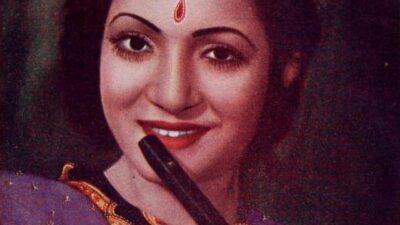
बुलो सी. रानी के इस गीत की गायिका के रूप में अमीरबाई कर्नाटकी दर्ज हैं, शब्दों का श्रेय पंडित इंद्र को। दिलचस्प हिस्सा शीर्षक की बनावट है: 'मोहे ... ने' उस वाक्य का ढाँचा है जिसमें वक्ता के साथ कुछ किया जाता है, और जिसे कर्ता बताया गया है वह है 'गजरा' — फूलों की वह लड़ी, प्रायः चमेली या मोगरे की, जो स्त्री की कलाई पर या चोटी में गूँथी जाती है। व्याकरण के हिसाब से फूल कर्ता हैं और स्त्री वह जिस पर क्रिया हुई — और यही उस पूरे हिंदी फ़िल्मी गीत-परिवार का छोटा-सा हास्य-शृंगारिक इंजन है। इस गीत की कोई रिकॉर्डिंग नहीं मिली।
अंग्रेज़ी में पढ़ें · Read in English
Amirbai Karnataki is credited as the singer of this Bulo C. Rani number, the words attributed to Pandit Indra. The title's construction is the interesting part: mohe ... ne is the frame of a sentence in which something is done to the speaker, and the agent named is a gajra - the string of flowers, usually jasmine or mogra, worn around a woman's wrist or wound into her braid. Grammatically the flowers are the doer and the woman is the one acted upon, which is the small comic and erotic engine of a whole family of Hindi film songs. No recording of this one has been located.
संगीत The Music
रिकॉर्डिंग सामने नहीं आई और यहाँ इसके संगीत का वर्णन नहीं है। शीर्षक की शब्दावली — 'मुझे' नहीं बल्कि 'मोहे', और पंक्ति का लोकगीत जैसा भार — संकलन के उसी हल्के, ब्रज-रंगे सिरे की ओर संकेत करती है जहाँ 'सैयाँ तोहे बुलबुल कहूँ' बैठता है; और ऐसे साउंडट्रैक के लिए यह समझ में आता है जिसे अपने बिछोह-गीतों के बीच राहत चाहिए थी। यह शब्दावली का पाठ है, किसी प्रस्तुति का नहीं — और लय या संयोजन इसलिए दर्ज नहीं किया गया कि वह कहीं प्रलेखित नहीं है।
अंग्रेज़ी में पढ़ें · Read in English
The recording has not surfaced and its music is not described here. The title's diction - mohe rather than mujhe, the folk-song weighting of the line - points to the same lighter, Braj-inflected end of the score that Saiyya Tohe Bulbul Kahu occupies, which would make sense of a soundtrack that needed relief between its songs of separation. That is a reading of vocabulary, not of a performance, and no tempo or arrangement is entered because none is documented.
काव्य The Poetry
गजरा हिंदी फ़िल्मी गीत की उन गिनी-चुनी वस्तुओं में से है जिन्हें कर्तापन दिया जाता है। वह पहना जाता है, इसलिए आत्मीय है; वह महकता है, इसलिए पहनने वाली के आने से पहले ही उसकी घोषणा कर देता है; और वह एक ही दिन में मुरझा जाता है, इसलिए अपने भीतर एक घड़ी लिए चलता है। जो गीत उसे वाक्य का कर्ता बनाते हैं वे ये तीनों गुण एक साथ बरतते हैं, और नतीजा यह होता है कि स्त्री अपने ही रूपांतरण का वर्णन कर पाती है, पर उसका श्रेय अपने से बाहर की किसी चीज़ को देकर — यह वह घुमाव है जिसे उस दौर की रूढ़ियों ने आवश्यक बनाया और जिसे अच्छे गीतकारों ने ताक़त में बदल दिया। 'चाँद चकोरी' के संदर्भ में, जहाँ बाक़ी शीर्षक बड़े पैमाने पर अनुपस्थिति के हैं, वह गीत जिसमें कर्म फूल कर रहे हों, साउंडट्रैक का देह-उपस्थिति वाला क्षण लगता है। फूलों ने वक्ता के साथ वास्तव में क्या किया, यह पुनः प्राप्य नहीं; दर्ज शीर्षक क्रिया से पहले ही रुक जाता है।
अंग्रेज़ी में पढ़ें · Read in English
The gajra is one of the few objects in Hindi film lyric that is allowed to have agency. It is worn, so it is intimate; it is scented, so it announces the wearer before she arrives; and it wilts within a day, so it carries a built-in clock. Songs that make it the subject of a sentence use all three properties at once, and the effect is to let a woman describe her own transformation while attributing it to something outside herself - a piece of indirection that the conventions of the period made necessary and that good lyricists turned into an asset. In the setting of Chand Chakori, whose other titles are largely about absence, a song in which the flowers are the ones taking action reads as the soundtrack's moment of physical presence. What the flowers actually did to the speaker is not recoverable; the catalogued title stops before the verb.
कहानी The Story
'चाँद चकोरी' के लिए सूचियों में दर्ज तेरह गीतों में से सात अमीरबाई कर्नाटकी ने गाए, और उनमें से किसी में भी कोई दूसरा गायक नामित नहीं है। 1945 तक वे अपने पेशे के शिखर के क़रीब थीं: 'किस्मत' (1943) ने उन्हें घर-घर की आवाज़ बना दिया था और वे बंबई की किसी भी गायिका जितना काम कर रही थीं। तीन-चार साल के भीतर लता मंगेशकर का उभार उन्हें, उनकी पूरी पीढ़ी की तरह, पार्श्वगायन से हटाकर चरित्र-अभिनय की ओर धकेल देगा। 'चाँद चकोरी' उन्हें पूरी ताक़त में पकड़ती है — ऐसे संकलन में जिसकी नायिका मुमताज़ शांति थीं, यानी 'किस्मत' की नायिका, दशक की सबसे बड़ी हिट, जिसके आठ में से छह गीत भी अमीरबाई ने ही गाए थे।
अंग्रेज़ी में पढ़ें · Read in English
Amirbai Karnataki sang seven of the thirteen songs the catalogues record for Chand Chakori, and she is the only singer any of them names. By 1945 she was near the top of her profession: Kismet (1943) had made her a household voice and she was working as much as any female singer in Bombay. Within three or four years Lata Mangeshkar's rise would push her, like most of her generation, out of playback and into character acting. Chand Chakori catches her at full strength, on a soundtrack headed by Mumtaz Shanti - the star of Kismet, the biggest hit of the decade, six of whose eight songs Amirbai had also sung.
विरासत The Legacy
इस गीत ने कोई स्वतंत्र निशान नहीं छोड़ा, और यहाँ इसका मूल्य एक आकृति के हिस्से के रूप में है। तेरह शीर्षकों को साथ पढ़ने पर 'चाँद चकोरी' का संगीत बहुसंख्यक बिछोह-गीतों और मुट्ठी भर देह-उपस्थिति वाले, वर्तमान-काल के गीतों में बँट जाता है — और इनमें सबसे साफ़ यही है। जिसने भी यह साउंडट्रैक जमाया, वह समझता था कि दर्शक तेरह विलाप नहीं झेल सकता, और गजरे वाला गीत वही जगह है जहाँ यह समझ दिखाई देती है।
अंग्रेज़ी में पढ़ें · Read in English
The song has left no independent trace, and its value here is as part of a shape. Read across the thirteen titles, Chand Chakori's score divides into a majority of separation songs and a small handful of physical, present-tense ones, and this is the clearest of the latter. Whoever assembled the soundtrack understood that an audience cannot sit through thirteen laments, and the gajra song is where that judgement shows.
वर्गीकरण
ClassificationGenre
अन्य विवरण
More Details- https://www.hindigeetmala.net/movie/chand_chakori.htm
- https://en.wikipedia.org/wiki/Chand_Chakori
- https://en.wikipedia.org/wiki/List_of_Hindi_films_of_1945
- https://www.cinemaazi.com/film/chand-chakori
- https://www.hindigeetmala.net/song/mohe_phulo_ke_gajre_ne.htm
- https://en.wikipedia.org/wiki/Amirbai_Karnataki
- https://en.wikipedia.org/wiki/Kismet_(1943_film)
- https://en.wikipedia.org/wiki/Zeenat_(1945_film)
References
रोचक तथ्य
Margin Notesगजरा ताज़े फूलों की — प्रायः मोगरे या चमेली की — वह लड़ी है जो कलाई पर पहनी जाती है या चोटी में गूँथी जाती है; एक ही दिन में मुरझा जाने के कारण फ़िल्मी गीत में वह गहने के साथ-साथ एक छोटी घड़ी का भी काम करता है।
अंग्रेज़ी में पढ़ें · Read in English
A gajra is a string of fresh flowers, usually mogra or jasmine, worn on the wrist or wound into the braid; because it wilts within a day it functions in film lyric as a small clock as well as an ornament.
अमीरबाई कर्नाटकी का जन्म कर्नाटक के बीजापुर ज़िले के बीलगी में हुआ और वे पच्चीस की उम्र में बंबई आईं; उन्होंने दो दशक हिंदी और उर्दू में गाया और लता मंगेशकर के उभार के बाद अभिनय की ओर लौट गईं, 1965 में उनका निधन हुआ।
अंग्रेज़ी में पढ़ें · Read in English
Amirbai Karnataki was born in Bilgi in the Bijapur district of Karnataka and moved to Bombay at twenty-five; she sang in Hindi and Urdu for two decades and returned to acting after Lata Mangeshkar's rise, dying in 1965.
नमूना-पट्टी
The Specimen Table| शीर्षक | मोहे फूलों के गजरे ने · Mohe Phoolon Ke Gajre Ne |
|---|---|
| फ़िल्म | चाँद चकोरी · 1945 |
| वर्ष · युग | 1945 |
| गायक | Amirbai Karnataki |
| गीतकार | Pandit Indra |
| संगीतकार | Bulo C. Rani |
| स्वरूप | एकल महिला |
| भाषा | hindi |
| भाव | चुलबुला · रोमांटिक |
| लोकप्रियता | Obscure |
| बोल-स्थिति | केवल झलक |
जुड़े हुए पन्ने
Connected Plates · The Graph Made Visibleअटलस में कोई पन्ना अकेला नहीं — इस गीत से जुड़े गीत, कलाकार, फ़िल्म, राग-ताल-विधा, सब यहाँ से खुलते हैं।
मिलते-जुलते गीत · Related Songs
कलाकार · The Artists
फ़िल्म · The Film
साझा कीजिए · Share this Plate