सिनेमा विंग · फ़िल्म-पट्टिका · Film Plate
आधार
Adhar
शैलीSocial · Drama
भाषाhindi प्रकारकथा-चित्र (फ़ीचर)
गीत6 — नीचे पूरी संगीत-सूची
कथा-सार
Synopsis'आधार' — जिसे हिंदी फ़िल्म गीत कोश और रिकॉर्ड लेबलों पर 'आधार/Aadhaar' के रूप में दर्ज किया गया — एक 'सामाजिक' फ़िल्म थी, यानी 1940 के दशक के मध्य की बंबई फ़िल्म-व्यापार की भाषा में एक समकालीन, पौराणिक-रहित नाटक। इसका निर्माण गीता पिक्चर्स, बंबई ने किया और निर्देशन रमणलाल लालभाई देसाई ने; संगीत एस. एन. त्रिपाठी का और गीत एम. ए. राज़ी के थे। आज यह फ़िल्म प्रचलन में नहीं है और न ही किसी प्रचार-सामग्री, व्यापार-पत्रिका या संदर्भ-ग्रंथ में इसकी कथा का सारांश बचा है; एचएफ़जीके की गीत-सूची ही व्यावहारिक रूप से इसके अस्तित्व का एकमात्र ठोस प्रमाण है। जो कुछ पुनर्निर्मित किया जा सकता है वह कलाकारों और छह गीतों के संगीत से आता है। उमाकांत देसाई — प्रकाश पिक्चर्स के वे अभिनेता जिन्हें 'राम राज्य' (1943) के लक्ष्मण के रूप में सबसे अधिक याद किया जाता है — नायक थे, और नायिका केवल 'कोकिला' नाम से दर्ज हैं; याक़ूब, शहज़ादी, फ़िरोज़ा, उषा, अब्दुल, शाकिर, दलपतराम और ए. आर. पहलवान सहायक भूमिकाओं में थे। गीतों के शीर्षक ही फ़िल्म के स्वर-विस्तार का खाका खींच देते हैं: चाँदनी रात की एक ग़ज़ल, गली में गुब्बारे बेचने वाली की पुकार, प्रियतम को गीत गाने का न्योता देता युगल, बिछड़ते हुए किसी से कहा गया विलाप, राधेश्याम का एक भजन, और टेनिस खेलने चलने का एक हास्य-गीत — युद्ध के अंतिम वर्षों में बनी एक साधारण बजट की शहरी सामाजिक फ़िल्म का मिश्रित रंग।
अंग्रेज़ी में पढ़ें · Read in English
Adhar — catalogued in the Hindi Film Geet Kosh and on record labels as Aadhaar — was a 'social', the mid-1940s Bombay trade term for a contemporary, non-mythological drama. It was produced by Geeta Pictures, Bombay, and directed by Ramanlal Lalbhai Desai, with music by S. N. Tripathi and lyrics by M. A. Razi. The film is not in circulation today and no plot summary has survived in publicity material, trade press or reference works; the HFGK song list is effectively the only substantial record that it ever existed. What can be reconstructed comes from the cast and the six-song score. Umakant Desai — the Prakash Pictures actor best remembered as Laxman in Ram Rajya (1943) — played the hero, opposite an actress billed simply as Kokila, with Yakub, Shahzadi, Firoza, Usha, Abdul, Shakir, Dalpatram and A. R. Pahelwan filling out the ensemble. The song titles alone sketch the film's tonal range: a moonlit ghazal of reawakened hope, a street balloon-seller's cry, a duet inviting the beloved to sing, a lament to someone departing, a Radheshyam bhajan, and a comic number about going off to play tennis — the mixed register of a modestly budgeted urban social made in the last years of the war.
संगीत-सूची
The Soundtrackछह गीत दर्ज हैं, सभी एस. एन. त्रिपाठी के संगीत और एम. ए. राज़ी के बोलों में, और इनके रिकॉर्ड एचएमवी के बजाय कोलंबिया लेबल पर जारी हुए। दो गीत फ़िल्म के नायक उमाकांत देसाई के एकल हैं — ग़ज़ल-रंगी 'ये चाँद हमें हँस कर कुछ याद दिलाता है' और बिछोह का गीत 'ओ छोड़ के जाने वाले'। दो युगल गीत गीता रॉय और स्वयं एस. एन. त्रिपाठी के नाम दर्ज हैं, जो रचना के साथ-साथ गाते भी थे: 'आई बलूनवाली आई रे' और 'ओ मेरे मन के मीत आ गाएँ सुहाने गीत'। बाक़ी दो — भजन 'भज ले राधेश्याम मनवा' और हास्य-गीत 'चलो चलें हम टेनिस खेलें' — गीत-सूचियों में बिना किसी गायक-श्रेय के ही बचे हैं।
अंग्रेज़ी में पढ़ें · Read in English
Six songs are documented, all composed by S. N. Tripathi to lyrics by M. A. Razi, with the records issued on the Columbia label rather than HMV. Two are solos by the film's hero Umakant Desai — the ghazal-inflected 'Ye Chand Hamein Hans Kar Kuchh Yaad Dilata Hai' and the parting song 'O Chhod Ke Jaane Wale'. Two are duets credited to Geeta Roy with S. N. Tripathi himself, who sang as well as composed: 'Aayi Baloonwali Aayi Re' and 'O Mere Mann Ke Meet Aa Gaayen Suhane Geet'. The remaining two — the bhajan 'Bhaj Le Radheshyam Manwa' and the comic 'Chalo Chalen Hum Tennis Khelen' — survive in the song lists with no singer credit attached to them at all.
- ये चाँद हमें हँस कर कुछ याद दिलाता है Ye Chand Hamein Hans Kar Kuchh Yaad Dilata Hai स्वर: उमाकांत देसाई
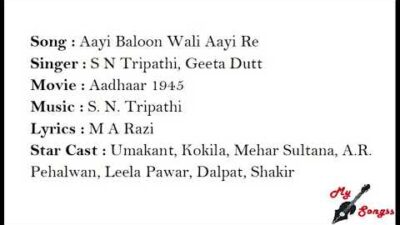
- आई बलूनवाली आई रे Aayi Baloonwali Aayi Re
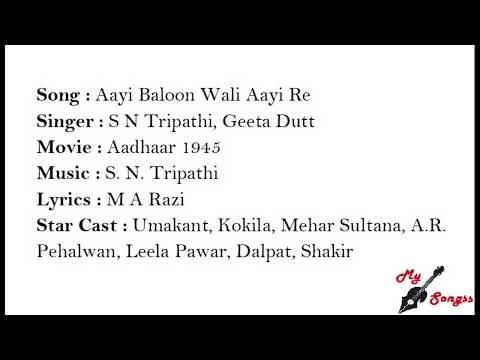
- ओ मेरे मन के मीत आ गाएँ सुहाने गीत O Mere Mann Ke Meet Aa Gaayen Suhane Geet स्वर: Geeta Dutt
- ओ छोड़ के जाने वाले O Chhod Ke Jaane Wale स्वर: उमाकांत देसाई
- भज ले राधेश्याम मनवा Bhaj Le Radheshyam Manwa
- चलो चलें हम टेनिस खेलें Chalo Chalen Hum Tennis Khelen
पट्टिका-लेख
The Monographपर्दे के पीछे Behind the Scenes
निर्देशक रमणलाल लालभाई देसाई का जन्म 6 सितंबर 1915 को अहमदाबाद में हुआ; उनके पिता बॉम्बे, बड़ौदा एंड सेंट्रल इंडिया रेलवे में स्टेशन मास्टर थे। इंटर-आर्ट्स के बाद पढ़ाई छोड़कर उन्होंने पैरामाउंट पिक्चर्स में सहायक कैमरामैन और सहायक निर्देशक के रूप में काम किया, 1935 में कुछ समय के लिए गणेश मूवीटोन गए, और 'बुर्क़ावाली' (1936), 'गुरु घंटाल' (1937) तथा 'मधुर बंसरी' (1939) जैसी फ़िल्मों में सहायता करने के बाद 'डॉटर ऑफ़ द जंगल' (1942) से पूर्ण निर्देशक बने। 'आधार' उनके करियर के मध्य में आती है — 'रंगीला दोस्त' (1944) और 'क़िस्मत का धनी' (1946) के बीच; आगे उन्होंने 'रोशनी' (1949), 'संगीता' (1950) और 'आब-ए-हयात' (1955) निर्देशित कीं। फ़िल्म-इतिहासकारों को उन्हें उनके पिता के नाम से अलग पहचानना पड़ता है, क्योंकि ठीक उसी दौर में रमणलाल भीमभाई देसाई नाम के एक दूसरे हिंदी निर्देशक भी सक्रिय थे — वाडिया मूवीटोन में प्रशिक्षित, 'पौराणिक फ़िल्मों के बादशाह'। फ़िल्म के सहायक कलाकारों में भी यही उलझन है: यहाँ दर्ज 'शहज़ादी' नाम उस दौर की दो अभिनेत्रियों में साझा था, जिनमें बड़ी 'आलम आरा' (1931) की ज़ुबैदा की बहन थीं।
अंग्रेज़ी में पढ़ें · Read in English
The director Ramanlal Lalbhai Desai was born in Ahmedabad on 6 September 1915, the son of a station master on the Bombay, Baroda and Central India Railway. He left his studies after Inter-Arts to work as an assistant cameraman and assistant director at Paramount Pictures, moved briefly to Ganesh Movietone in 1935, and assisted on films including Burqawali (1936), Guru Ghantal (1937) and Madhur Bansari (1939) before graduating to full direction with Daughter of the Jungle (1942). Adhar sits mid-career, between Rangeela Dost (1944) and Kismat Ka Dhani (1946); he went on to direct Roshni (1949), Sangeeta (1950) and Aab-e-Hayaat (1955). Film historians have to disambiguate him by his father's name, because a second Hindi director named Ramanlal Bhimbhai Desai — the Wadia Movietone-trained 'king of mythologicals' — was working in exactly the same period. The film's supporting cast carries a similar hazard: the Shahzadi billed here belongs to a name shared by two actresses of the era, the elder being the sister of Zubeida of Alam Ara (1931).
महत्व Significance
'आधार' का महत्व उसकी अपनी उपलब्धि से कम, और वह जो दर्ज करती है उससे अधिक है। यह 1945 की एस. एन. त्रिपाठी की कम से कम चार फ़िल्मों में से एक है — 'बचपन', 'रामायणी' और 'जी हाँ' के साथ — उस दौर की, जब वाराणसी में जन्मे और लखनऊ के मॉरिस कॉलेज में प्रशिक्षित यह संगीतकार बॉम्बे टॉकीज़ में वायलिन वादक के रूप में शुरुआत करने के बाद अपना स्वतंत्र करियर मज़बूत कर रहे थे। यह 1940 के दशक की उन अपेक्षाकृत दुर्लभ फ़िल्मों में से भी एक है जिनमें नायक ने पर्दे पर अपने गीत स्वयं गाए: उमाकांत देसाई, जो पेशेवर पार्श्वगायक नहीं बल्कि अभिनेता थे, छह में से दो गीतों के दर्ज गायक हैं। और बचे हुए श्रेय युवा गीता रॉय (बाद की गीता दत्त) से जुड़ा एक अनसुलझा प्रश्न भी सुरक्षित रखते हैं, जिनका नाम इस फ़िल्म के दो युगल गीतों पर उस वर्ष से एक साल पहले मिलता है जिसे आमतौर पर उनका पदार्पण-वर्ष माना जाता है।
अंग्रेज़ी में पढ़ें · Read in English
Adhar matters less for what it was than for what it documents. It is one of at least four 1945 scores by S. N. Tripathi — alongside Bachpan, Ramayani and Ji Haan — from the period in which the Varanasi-born, Morris College-trained composer was consolidating an independent career after starting out as a violinist at Bombay Talkies. It is also one of the relatively rare 1940s films in which the leading man sang his own songs on screen: Umakant Desai, a screen actor rather than a professional playback voice, is the documented singer of two of the six numbers. And the surviving credits preserve an unresolved question about the young Geeta Roy, later Geeta Dutt, whose name appears on two of the film's duets a year before the debut she is usually given.
विरासत Legacy
'आधार' ने लगभग कोई निशान नहीं छोड़ा। न कोई प्रिंट प्रचलन में है, न कथा-सारांश बचा है, और इसके छह गीतों में से केवल 'ये चाँद हमें हँस कर कुछ याद दिलाता है' ही आज सुलभ माना जाता है — जिसे मार्च 2026 में अभिलेखीय ब्लॉग 'अतुल्स सॉन्ग अ डे' पर प्रकाशित किया गया, जहाँ लेखक ने इस फ़िल्म को इस बात का उदाहरण बनाया कि हिंदी फ़िल्म गीत कोश क्यों महत्वपूर्ण है — उनके अनुसार उसके बिना ऐसी फ़िल्में इतिहासकारों को उनके अस्तित्व का पता चले बिना ही लुप्त हो जातीं। इससे जुड़े लोग आगे बहुत बड़े काम कर गए: एस. एन. त्रिपाठी 1950-60 के दशक के सबसे उर्वर संगीतकारों में से एक बने, जिन्हें 'रानी रूपमती' और 'संगीत सम्राट तानसेन' (1962) के लिए याद किया जाता है; और उमाकांत देसाई ने 59 हिंदी तथा 15 गुजराती फ़िल्मों में काम किया और 2004 में — अपनी मृत्यु से तीन वर्ष पूर्व — दादासाहेब फाल्के अकादमी पुरस्कार पाया। फ़िल्म स्वयं अब केवल एक संदर्भ-ग्रंथ की पंक्ति और मुट्ठी भर रिकॉर्ड-लेबलों के रूप में जीवित है।
अंग्रेज़ी में पढ़ें · Read in English
Adhar left almost no trace. No print circulates, no synopsis survives, and of its six songs only 'Ye Chand Hamein Hans Kar Kuchh Yaad Dilata Hai' is known to be accessible today, posted in March 2026 on the archival blog Atul's Song A Day, where the writer used the film as an illustration of why the Hindi Film Geet Kosh matters — without it, he argued, films like this would have vanished without historians even knowing they existed. Its personnel went on to much larger things: S. N. Tripathi became one of the most prolific composers of the 1950s and 60s, remembered for Rani Roopmati and Sangeet Samrat Tansen (1962), while Umakant Desai worked in 59 Hindi and 15 Gujarati films and received the Dadasaheb Phalke Academy Award in 2004, three years before his death. The film itself endures only as a line in a reference work and a handful of record labels.
अन्य विवरण
More Details- https://atulsongaday.me/2026/03/28/ye-chaand-hamen-hans-kar-kuchh-yaad-dilaata-hai/
- https://myswar.co/album/aadhaar-1945
- https://www.hindigeetmala.net/movie/aadhaar.htm
- https://en.wikipedia.org/wiki/List_of_Hindi_films_of_1945
- https://indiancine.ma/ECW/info
- https://en.wikipedia.org/wiki/S._N._Tripathi
References
नमूना-पट्टी
The Specimen Table| शीर्षक | आधार · Adhar |
|---|---|
| वर्ष · युग | 1945 — Pre Independence |
| निर्देशक | रमणलाल देसाई · Ramanlal Desai |
| संगीत-निर्देशक | एस. एन. त्रिपाठी · S. N. Tripathi |
| गीतकार | एम. ए. राज़ी · M. A. Razi |
| कलाकार-मंडली | उमाकांत देसाई · Umakant Desai · कोकिला · Kokila · याक़ूब · Yakub · शहज़ादी · Shahzadi · फ़िरोज़ा · Firoza · उषा · Usha · अब्दुल · Abdul · शाकिर · Shakir · दलपतराम · Dalpatram · ए. आर. पहलवान · A. R. Pahelwan |
| निर्माण-गृह | Geeta Pictures, Bombay |
| लेबल | Columbia Records |
| शैली | Social · Drama |
| भाषा | hindi |
| प्रकार | कथा-चित्र (फ़ीचर) |
| गीत | 6 गीत — ऊपर पूरी संगीत-सूची |
जुड़े हुए पन्ने
Connected Plates · The Graph Made Visibleअटलस में कोई पन्ना अकेला नहीं — 'आधार' से उसके गीत, कलाकार, राग और युग, सब जुड़े हैं।
इस फ़िल्म के गीत · Songs of this Film
कलाकार · Cast & Crew
युग · The Era
साझा कीजिए · Share this Plate
यह पन्ना आगे बढ़ाइए
जुड़ी हुई दुनिया
Explore ConnectionsSoundtrack · गीत
ये चाँद हमें हँस कर कुछ याद दिलाता है
Ye Chand Hamein Hans Kar Kuchh Yaad Dilata Hai
उमाकांत देसाई · Adhar