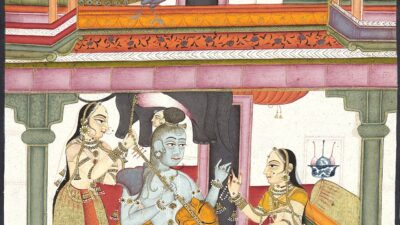
शास्त्र विंग · राग-पट्टिका · Raag Plate
जोगिया
Jogiyā
तपस्वी का राग · The Ascetic's Raag
भावतपस्यापूर्ण · भक्तिपूर्ण · ध्यान · चिंतनशील · आध्यात्मिक
गतिvilambit ऊर्जाधीमी से मध्यम
अन्य नामJog · Yogi Raag · Jogiya Bilaval
स्वर-चित्र · The Swara Panel
आरोह — अवरोह · The Ascent and the Descent
कोमल स्वर — Re, Ni — तीव्रित हरे रंग में।
आरोह · Aroha चढ़ती हुई सीढ़ी
अवरोह · Avaroha उतरती हुई सीढ़ी
कोमल स्वर — नीचे की ओर झुका चिह्न (◌॒)सˊ = तार सप्तक का षड्ज
जोगिया मुख्य रूप से प्राकृतिक (शुद्ध) स्वर का उपयोग करता है जिसमें केवल दो कोमल स्वर होते हैं: रे॒ और नि॒। यह अपने माता-पिता भैरव की तुलना में अधिक खुली, कम विषादपूर्ण गुणवत्ता बनाता है।
अंग्रेज़ी में पढ़ें · Read in English
Jogiya uses predominantly natural (shuddha) swaras with only two komal notes: Re♭ and Ni♭. This creates a more open, less melancholic quality compared to its parent Bhairav. The scale is closer to a major/natural scale system with selective flat notes, giving Jogiya its characteristic uplifting yet ascetic quality.
पकड़ · पहचान वाक्यांश
रे॒ ग म प
Re♭ Ga Ma Pa
जोगिया का विशिष्ट आरोही वाक्यांश, कोमल रे से प्राकृतिक ग के माध्यम से म और प तक चिकनी गति करता है। यह एक उत्थानकारी, ध्यानात्मक गुणवत्ता बनाता है।
अंग्रेज़ी में पढ़ें · Read in English
The characteristic ascending phrase of Jogiya, moving smoothly from flat Re through natural Ga to Ma and Pa. This creates an uplifting, meditative quality.
वादी–संवादी टिप्पणी · Vadi–Samvadi note
Vadi — The most important note — the 'king' of the raag. In Jogiya, Sa becomes the center point for meditation and spiritual seeking, differentiating it from its parent Bhairav.
Samvadi — The second most important note — the 'minister' of the raag. The perfect 5th relationship between Sa and Pa creates spiritual stability.
चलन · स्वर-यात्रा
सा रे॒ ग म प, प म ग रे॒ स, स ध नि॒ स, रे॒ ग म प, ध प म ग रे॒, नि॒ ध प म ग रे॒ स
Sa Re♭ Ga Ma Pa, Pa Ma Ga Re♭ Sa, Sa Dha Ni♭ Sa, Re♭ Ga Ma Pa, Dha Pa Ma Ga Re♭, Ni♭ Dha Pa Ma Ga Re♭ Sa
जोगिया की पूर्ण मधुर प्रगति निचली टेट्राकॉर्ड (सा रे॒ ग म) और ऊपरी आठ के बीच संबंध पर जोर देते हुए चिंतनशील गति दिखाती है।
अंग्रेज़ी में पढ़ें · Read in English
The complete melodic progression of Jogiya showing contemplative movement with emphasis on the relationship between the lower tetrachord (Sa Re♭ Ga Ma) and upper octave. The movement is introspective and meditative.
न्यास स्वर — Sa, Pa अनुवादी — Re♭, Ga, Ma, Dha, Ni♭
विशेष स्वर-वाक्य
Characteristic Phrasesसमय और भाव
Time Theory & Moodसमय-सिद्धांत · Time Theory
प्रातः काल
प्रातःकालीन राग — परंपरागत रूप से सुबह की घंटियों में गाया जाता है। भैरव थाट साझा करने के बावजूद, जोगिया कठोर ब्रह्म प्रहर समय से कम बंधा है।
Early morning raag — traditionally performed in the morning hours. While sharing the Bhairav thaat with Bhairav, Jogiya is less bound to the strict Brahma Prahar timing and can be performed throughout the morning.
No seasonal restriction — Jogiya's ascetic, universal character transcends seasonal limitations
भाव और गति · Mood & Tempo
करुण · Pathos / Compassion / Melancholy
प्राथमिक रस — आध्यात्मिक खोज की कोमल पीड़ा, भक्तिपूर्ण लालसा, और आंतरिक त्याग। भैरव के वीरोचित गुणों के विपरीत, जोगिया नरम, अधिक आत्मनिरीक्षक पहलुओं पर जोर देता…
vilambit
ऊर्जा · Energyधीमी से मध्यम
स्तर · Levelintermediate — जोगिया भैरव या यमन जैसे प्रमुख रागों की तुलना में कम सामान्यतः सिखाया जाता है, जिससे यह मध्यम कठिनाई का बनता ह…
लक्षण गीत · The Mnemonic Verse
लक्षण गीत
जोगिया रे कोमल रे, कोमल नी दहि जान
सा वादी पंचम संवादी, ध्यान धारत गिआन
अंग्रेज़ी में पढ़ें · Read in English
Jogiya Re komal Re, komal Ni dahi jaan
Sa vadi pancham samvadi, dhyan dharat gyan
In Jogiya, Re is komal, Ni is komal. Sa is the vadi, Pancham is the samvadi. Meditate on this knowledge.
पट्टिका-लेख
The Monographपरिचय Introduction
राग जोगिया, जोग या योगी-राग के रूप में भी जाना जाता है, तपस्यापूर्ण का राग है, आध्यात्मिक और ध्यान मनोदशा में डूबा हुआ। नाम 'जोगी' (योगी/तपस्वी) से आता है, और राग आंतरिक साधक को मूर्त रूप देता है जिसने सांसारिक सुखों से सत्य और आत्म-बोध की ओर मुख किया है। जोगिया प्रातःकालीन राग है जो परंपरागत रूप से ध्यान, प्रार्थना और आध्यात्मिक खोज से जुड़ा है। कोमल रे और कोमल नि के साथ, जोगिया अपने माता-पिता भैरव के साथ भैरव थाट साझा करता है, फिर भी मनोदशा और प्रयोग में गहराई से भिन्न है।
अंग्रेज़ी में पढ़ें · Read in English
Raag Jogiya, also known as Jog or the Yogi-raag, is the ascetic's raag, steeped in spiritual and meditative moods. The name comes from 'Jogi' (yogi/ascetic), and the raag embodies the inner seeker who has turned away from worldly pleasures toward truth and self-realization. Jogiya is an early morning raag traditionally associated with meditation, prayer, and spiritual seeking. With Komal Re and Komal Ni, Jogiya has a soft, introspective character that shares the Bhairav thaat with its parent Bhairav, yet differs profoundly in mood and application. Where Bhairav is heroic and majestic, Jogiya is tender and contemplative. The raag represents the voice of renunciation — the yogi turning inward. It appears less frequently in formal concert settings compared to other classical raags, but holds a special and cherished place in devotional bhajan traditions and in the music of ashrams (spiritual retreat centers). Jogiya's power lies not in technical display but in emotional authenticity and spiritual depth.
सांस्कृतिक महत्व Cultural Significance
जोगिया भारतीय भक्तिपूर्ण और योगिक परंपराओं में एक विशेष स्थान रखता है। यह योग, ध्यान और भक्ति (भक्तिपूर्ण) प्रथाओं से गहराई से जुड़ा है। राग औपचारिक संगीत सभाओं में अन्य प्रमुख रागों की तुलना में कम बार किया जाता है, लेकिन आश्रम (मठ) संगीत में प्रमुखता से दिखाई देता है, जहां इसकी ध्यानात्मक गुणवत्ता इसे आध्यात्मिक अभ्यास और प्रार्थना के लिए आदर्श बनाती है।
अंग्रेज़ी में पढ़ें · Read in English
Jogiya holds a special place in Indian devotional and yogic traditions. It is deeply connected to yoga, meditation, and bhakti (devotional) practices. The raag is less frequently performed in formal concerts compared to other major raags, but appears prominently in ashram (monastery) music, where its meditative qualities make it ideal for spiritual practice and prayer. In many spiritual communities and yoga centers, Jogiya is sung or played during morning meditation sessions. The raag represents the philosophical concept of 'yoga' — union with the divine through inner discipline and meditative awareness.
ऐतिहासिक महत्व Historical Significance
जोगिया शास्त्रीय ग्रंथों में भैरव थाट के व्युत्पन्न के रूप में प्रलेखित है, जिसकी अपनी विशिष्ट पहचान शास्त्रीय अवधि के दौरान औपचारिक की गई है। जबकि प्रमुख रागों की तुलना में कम व्यापक रूप से लिखा गया है, जोगिया परंपरागत रूप से आध्यात्मिक और भक्तिपूर्ण संगीत मंडलियों में सिखाया गया है।
अंग्रेज़ी में पढ़ें · Read in English
Jogiya is documented in classical texts as a derivative of the Bhairav thaat, with its own distinct identity formalized during the classical period. While less extensively written about than major raags, Jogiya has been traditionally taught within spiritual and devotional music circles. The raag became particularly associated with saint singers, yogic practitioners, and ashram musicians in North India. Unlike some raags that became popularized through film music, Jogiya has remained primarily within classical, devotional, and spiritual contexts, maintaining its ascetic character and avoiding commercialization.
शिक्षा
Teaching & Learning| बंदिश | ताल · लय | बोल |
|---|---|---|
| Jogiya Khayal Traditional |
Teentaal | |
| Bhakti Bhajan in Jogiya Traditional Devotional |
Dadra |
पकड़ (रे॒ ग म प) से शुरू करें — यह जोगिया का हस्ताक्षर वाक्यांश है। इसे धीरे-धीरे अभ्यास करें, कोमल रे से प्राकृतिक ग तक शांतिपूर्ण आरोहण को महसूस करते हुए।
अंग्रेज़ी में पढ़ें · Read in English
Begin with the pakad (Re♭ Ga Ma Pa) — this is Jogiya's signature phrase. Practice it slowly, feeling the peaceful ascent from flat Re to natural Ga.
ध्यानात्मक गुणवत्ता पर ध्यान दें — जोगिया तकनीकी प्रदर्शन या वीरोचित शक्ति के बारे में नहीं है। इसके बजाय, एक शांत, आत्मनिरीक्षक मनोदशा विकसित करें।
अंग्रेज़ी में पढ़ें · Read in English
Focus on the meditative quality — Jogiya is not about technical display or heroic power (unlike Bhairav). Instead, cultivate a calm, introspective mood. Let each note breathe and settle.
वादी-संवादी संबंध पर जोर दें: सा और प। ये जोगिया में आपके आध्यात्मिक लंगर हैं। जब आप इन स्वरों पर पकड़ते हैं, राग की ध्यानात्मक सार बाहर निकलती है।
अंग्रेज़ी में पढ़ें · Read in English
Emphasize the vadi-samvadi relationship: Sa and Pa. These are your spiritual anchors in Jogiya. When you hold on these notes, the raag's meditative essence emerges.
आश्रम और भक्तिपूर्ण संदर्भों में जोगिया का अध्ययन करें — सुनें कि जोगिया में भजन कैसे गाए जाते हैं।
अंग्रेज़ी में पढ़ें · Read in English
Study Jogiya in ashram and devotional contexts — listen to how bhajans in Jogiya are sung. The emotional expression in these devotional settings reveals the raag's true character more than concert khayal alone.
जोगिया को भैरव के कमजोर संस्करण के रूप में मानना — वे अलग-अलग उद्देश्यों वाले अलग राग हैं
अंग्रेज़ी में पढ़ें · Read in English
Treating Jogiya as a weakened version of Bhairav — they are distinct raags with different purposes
सुधार: Understand that Jogiya has its own identity centered on asceticism and spiritual devotion. Its 'simplicity' (fewer komal notes) is intentional, not a limitation.
जोगिया को एक शक्तिशाली, वीरोचित आवाज़ के साथ गाना — यह इसकी तपस्यापूर्ण प्रकृति के विरुद्ध है
अंग्रेज़ी में पढ़ें · Read in English
Delivering Jogiya with a strong, heroic voice — this contradicts its ascetic character
सुधार: Cultivate a gentler, more introspective vocal delivery. Jogiya rewards subtle expression and emotional depth over volume.
आलाप को जल्दबाज़ी से करना — यह ध्यानात्मक सार को खो देता है
अंग्रेज़ी में पढ़ें · Read in English
Rushing through the alap — this loses the meditative essence
सुधार: Spend generous time on alap, allowing each note to resonate. The extended silence between phrases is as important as the notes themselves.
तुलना
A Specimen Comparisonभैरव थाट साझा करने के बावजूद, भैरव और जोगिया मौलिक रूप से अलग हैं। भैरव वीरोचित और राजकीय है; जोगिया तपस्यापूर्ण और चिंतनशील है।
| तुलनाSpecimen | जोगिया | भैरव |
|---|---|---|
| स्वर-अंतर | Bhairav: Re♯ (sharp), Ga♭ (flat), Dha♯ (sharp) | Jogiya: Re♭ (flat), Ga (natural), Dha (natural). This fundamental difference creates their contrasting aesthetics. | |
| भाव-अंतर | Bhairav = Heroism, Power, Majesty; Jogiya = Asceticism, Renunciation, Spiritual Seeking | |
| समय-अंतर | Bhairav = Very early morning (Brahma Prahar, 4:30-6:30 AM); Jogiya = Flexible morning hours (5:00-8:00+ AM) | |
जोगिया और अहीर भैरव दोनों भैरव के वीरोचित चरित्र को नरम करते हैं, लेकिन वे अलग तरीकों से ऐसा करते हैं।
| तुलनाSpecimen | जोगिया | अहीर भैरव |
|---|---|---|
| स्वर-अंतर | Jogiya: Sa Re♭ Ga Ma Pa Dha Ni♭ Sa' | Ahir Bhairav: Sa Re♯ Ga♭ Ma Pa Dha Ni♭ Sa'. Ahir uses more complex intervals. | |
| भाव-अंतर | Jogiya = Pure Ascetic/Meditative; Ahir Bhairav = Heroic-meets-Emotional/Romantic | |
| समय-अंतर | Jogiya = Morning raag; Ahir Bhairav = Extended morning raag, sometimes evening | |
रोचक तथ्य
Margin Notes'जोगिया' नाम 'जोगी' या 'योगी' से आता है, और राग योगिक अभ्यास और आध्यात्मिक साधुवाद से जुड़ी ध्यानात्मक, त्यागपूर्ण विशेषता को प्रदर्शित करता है।
अंग्रेज़ी में पढ़ें · Read in English
The name 'Jogiya' comes from 'Jogi' or 'Yogi,' and the raag embodies the contemplative, renunciative character associated with yogic practice and spiritual monasticism.
जोगिया औपचारिक संगीत सभाओं में सबसे कम किए जाने वाले रागों में से एक है, लेकिन भक्तिपूर्ण (भजन), आश्रम और योग संदर्भों में गहराई से प्रिय है।
अंग्रेज़ी में पढ़ें · Read in English
Jogiya is one of the least performed raags in formal concert settings but is deeply cherished in devotional (bhajan), ashram, and yoga contexts, making it uniquely important for spiritual practice.
अपने माता-पिता भैरव के विपरीत, जो संगीत सभा के लिए औपचारिक उद्घाटन राग है, जोगिया मुख्य रूप से व्यक्तिगत आध्यात्मिक अभ्यास राग है।
अंग्रेज़ी में पढ़ें · Read in English
Unlike its parent Bhairav, which is the ceremonial opening raag for concerts, Jogiya is primarily a personal spiritual practice raag. It is often sung without accompaniment in meditation contexts.
जोगिया का स्केल भैरव की तुलना में सरल है, केवल दो कोमल स्वर हैं। यह 'सरलता' इरादतन है — यह आध्यात्मिक अभ्यास में 'कम बेहतर है' के तपस्यापूर्ण सिद्धांत को प्रतिबिंबित करता है।
अंग्रेज़ी में पढ़ें · Read in English
Jogiya's scale (Sa Re♭ Ga Ma Pa Dha Ni♭ Sa') is simpler than Bhairav's, with only two komal notes. This 'simplicity' is intentional — it reflects the ascetic principle of 'less is more' in spiritual practice.
प्रस्तुति
Performance- Description
- प्रातःकालीन राग — परंपरागत रूप से सुबह की घंटियों में गाया जाता है। भैरव थाट साझा करने के बावजूद, जोगिया कठोर ब्रह्म प्रहर समय से कम बंधा है। Early morning raag — traditionally performed in the morning hours. While sharing the Bhairav thaat with Bhairav, Jogiya is less bound to the strict Brahma Prahar timing and can be performed throughout the morning.
- Prahar Number
- 1
- Prahar Name
- प्रातः काल Pratah Kaal
- Time Start
- 05:00
- Time End
- 08:00
- Time Flexibility
- flexible
- Time Notes
- Morning raag with flexible timing — can extend into late morning depending on artist and occasion. Suitable for ashram music and devotional contexts throughout the day.
Time
और जानें
More to Know- raag-bhairav — Bhairav — भैरव — Despite sharing the Bhairav thaat, Bhairav and Jogiya are profoundly different. Bhairav is heroic and majestic; Jogiya is ascetic and contemplative. Bhairav opens concerts; Jogiya opens hearts in spiritual practice. — भैरव थाट साझा करने के बावजूद, भैरव और जोगिया मौलिक रूप से अलग हैं। भैरव वीरोचित और राजकीय है; जोगिया तपस्यापूर्ण और चिंतनशील है। — Bhairav: Re♯ (sharp), Ga♭ (flat), Dha♯ (sharp) | Jogiya: Re♭ (flat), Ga (natural), Dha (natural). This fundamental difference creates their contrasting aesthetics. — Bhairav = Heroism, Power, Majesty; Jogiya = Asceticism, Renunciation, Spiritual Seeking — Bhairav = Very early morning (Brahma Prahar, 4:30-6:30 AM); Jogiya = Flexible morning hours (5:00-8:00+ AM)
- raag-ahir-bhairav — Ahir Bhairav — अहीर भैरव — Both Jogiya and Ahir Bhairav soften Bhairav's heroic character, but they do so differently. Jogiya uses simplicity (fewer komal notes); Ahir Bhairav uses emotional colors (mixed prakriti). — जोगिया और अहीर भैरव दोनों भैरव के वीरोचित चरित्र को नरम करते हैं, लेकिन वे अलग तरीकों से ऐसा करते हैं। — Jogiya: Sa Re♭ Ga Ma Pa Dha Ni♭ Sa' | Ahir Bhairav: Sa Re♯ Ga♭ Ma Pa Dha Ni♭ Sa'. Ahir uses more complex intervals. — Jogiya = Pure Ascetic/Meditative; Ahir Bhairav = Heroic-meets-Emotional/Romantic — Jogiya = Morning raag; Ahir Bhairav = Extended morning raag, sometimes evening
Comparisons
सीखने के लिए
For Learners- Difficulty Level
- intermediate
नमूना-पट्टी
The Specimen Table| नाम | जोगिया · Jogiya |
|---|---|
| थाट | भैरव |
| आरोह | सा रे॒ ग म प ध नि॒ सˊ |
| अवरोह | सˊ नि॒ ध प म ग रे॒ स |
| पकड़ | रे॒ ग म प |
| जाति | संपूर्ण-संपूर्ण · Sampurna-Sampurna |
| कोमल स्वर | Re, Ni |
| समय | प्रातः काल |
| ऋतु | No seasonal restriction — Jogiya's ascetic, universal character transcends seasonal limitations |
| गति | vilambit |
| ऊर्जा | धीमी से मध्यम |
| प्रकृति | Shuddha |
| परिवार | भैरव परिवार |
| स्तर | intermediate |
| लोकप्रियता | Known |
| कर्नाटक समतुल्य | Sankarabharanam · Melakarta 29 |
| पाश्चात्य समतुल्य | Ionian / Major with variations |
| अन्य नाम | Jog · Yogi Raag · Jogiya Bilaval |
जुड़े हुए पन्ने
Connected Plates · The Graph Made Visibleअटलस में कोई पन्ना अकेला नहीं — इस राग से गीत, प्रस्तुतियाँ, कलाकार, ताल, घराने और मिलते-जुलते राग, सब यहाँ से खुलते हैं।
इस राग के गीत · Songs in this Raag
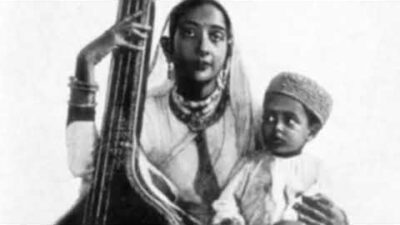
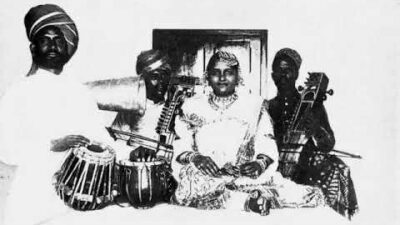

प्रसिद्ध प्रस्तुतियाँ · Legendary Renditions
इस राग के कलाकार · Notable Artists
ताल-साथी · Taal Pairings
मिलते-जुलते राग · Similar Raags
शास्त्र-सूत्र · Shastra Threads
श्रवण-कक्ष · The Listening Room
सुनिए — जोगिया · Hear the Raag
Raga Jogiya | Ravi Shankar
प्रश्नोत्तर
Questions & Answersराग जोगिया का आरोहन-अवरोहन क्या है?
राग जोगिया का आरोहन: सा रे॒ ग म प ध नि॒ सˊ | अवरोहन: सˊ नि॒ ध प म ग रे॒ स
अंग्रेज़ी में पढ़ें · Read in English
What is the arohana and avarohana of Raag Jogiya? — Raag Jogiya arohana: Sa Re♭ Ga Ma Pa Dha Ni♭ Sa' | Avarohana: Sa' Ni♭ Dha Pa Ma Ga Re♭ Sa
जोगिया और भैरव में क्या अंतर है?
भैरव = सुबह का वीरोचित, राजकीय राग, शक्तिशाली वाणी | जोगिया = तपस्यापूर्ण, ध्यानात्मक राग, कोमल भावना। दोनों भैरव थाट से हैं पर अलग-अलग आवेदन हैं।
अंग्रेज़ी में पढ़ें · Read in English
What is the difference between Jogiya and Bhairav? — Bhairav = heroic, majestic morning raag requiring powerful voice | Jogiya = ascetic, meditative raag requiring tender expression. Both are from Bhairav thaat but serve different purposes.
जोगिया कहाँ गाया जाता है?
जोगिया औपचारिक संगीत सभाओं में कम बार किया जाता है। इसे मुख्य रूप से आश्रमों, भजन गायन, और ध्यान संदर्भों में गाया जाता है।
अंग्रेज़ी में पढ़ें · Read in English
Where is Raag Jogiya performed? — Jogiya is less commonly performed in formal concerts but is primarily sung in ashrams, bhajan contexts, and meditation settings.
जोगिया की पकड़ क्या है?
राग जोगिया की पकड़: रे॒ ग म प | यह राग के विशिष्ट, शांतिपूर्ण आरोहण को परिभाषित करता है।
अंग्रेज़ी में पढ़ें · Read in English
What is the pakad of Raag Jogiya? — Raag Jogiya pakad: Re♭ Ga Ma Pa | This defines the raag's characteristic peaceful ascent.
'जोगिया' नाम का क्या अर्थ है?
'जोगिया' 'जोगी' (योगी) से आता है, जिसका अर्थ है तपस्वी या आध्यात्मिक साधक। राग एक योगी की आंतरिक यात्रा को प्रतिबिंबित करता है।
अंग्रेज़ी में पढ़ें · Read in English
What does the name 'Jogiya' mean? — 'Jogiya' comes from 'Jogi' (yogi/ascetic). The raag embodies the inner spiritual journey of a renunciate.
जोगिया की कठिनाई स्तर क्या है?
जोगिया मध्यम कठिनाई है — इसका स्केल भैरव की तुलना में सरल है, लेकिन इसकी तपस्यापूर्ण सौंदर्यबोध और ध्यानात्मक मनोदशा परिपक्व संगीत संवेदनशीलता की मांग करती है।
अंग्रेज़ी में पढ़ें · Read in English
What is the difficulty level of Raag Jogiya? — Jogiya is intermediate difficulty — simpler scale than Bhairav but requires mature musical sensibility and emotional depth for authentic expression.
साझा कीजिए · Share this Plate