कहानियाँ विंग · कहानी · Music Theory
भैरव थाट: भोर का राग — जब शिव जागते हैं
Bhairav Thaat: The Dawn Raga — When Shiva Awakens
दो समतल नोट सबसे विशिष्ट सुबह का तनाव बनाते हैं — चेतना का जागरण।
प्रकाशित31 March 2026 पाठ७ मिनट का पाठ
आमुख
भोर के राग के पदानुक्रम में, भैरव एक पवित्र स्थान रखता है। भैरव का नाम भगवान शिव की भयंकर अभिव्यक्ति के नाम पर रखा गया है—विनाश और परिवर्तन का देवता—यह थाट एक देवता के जागरण, खिंचाव, और ब्रह्मांडीय नृत्य का सामना करने के लिए तैयारी करने का चरित्र रखता है।
जागरण का तनाव: विशिष्ट भैरव ध्वनि
The Tension of Awakening: The Distinctive Bhairav Soundभोर के राग के पदानुक्रम में, भैरव एक पवित्र स्थान रखता है। भैरव का नाम भगवान शिव की भयंकर अभिव्यक्ति के नाम पर रखा गया है—विनाश और परिवर्तन का देवता—यह थाट एक देवता के जागरण, खिंचाव, और ब्रह्मांडीय नृत्य का सामना करने के लिए तैयारी करने का चरित्र रखता है। भैरव थाट बिलावल पैमाने से दो मुख्य परिवर्तनों द्वारा परिभाषित किया जाता है: दूसरा नोट (रे) कोमल (समतल) हो जाता है, और छठा नोट (ध) कोमल (समतल) हो जाता है। यह संयोजन—कोमल रे और कोमल ध—एक 'तनावपूर्ण' या 'तीक्ष्ण' गुण बनाता है जो विरोधाभासी रूप से स्वरों को समतल करके प्राप्त होता है। परिणामी पैमाना स: कोमल रे, ग, म, प, कोमल ध, नी, स है। यह कॉन्फ़िगरेशन थाटों में अद्वितीय है: कोई अन्य पैमाना समतलता को तनाव के साथ इतनी प्रभावी रूप से जोड़ता है, कोमलता को तीव्रता के साथ। जब आप भैरव सुनते हैं, तो आपकी तत्काल प्रतिक्रिया आंत की होती है—यह ऐसा महसूस होता है कि दुनिया थोड़ी झुक रही है, जैसे कुछ महत्वपूर्ण होने वाला है। भैरव का चरित्र विशेष रूप से सुबह का है, परंपरागत रूप से सुबह 4 से 7 बजे के बीच प्रदर्शित किया जाता है। यह हिंदू दर्शन में ब्रह्म मुहूर्त के घंटे हैं—सुबह का शुभ समय जब ब्रह्मांड अभी भी खुद को इकट्ठा कर रहा है, जब चेतना जागरण शुरू कर रही है। भैरव के राग कभी सोए नहीं होते—वे तीक्ष्ण, सतर्क, प्रत्याशित हैं। वे पूर्ण जागरण सेट होने से पहले आधी-चेतना के उस क्षण को पकड़ते हैं। थाट का भैरव से जुड़ाव, शिव का भयंकर रूप, मतलब है कि ये राग अलौकिकता का एक तत्व धारण करते हैं, यहाँ तक कि भय भी। भैरव में कोई मिठास नहीं है जैसे खमाज में है, कोई भव्यता नहीं है जैसे कल्याण में। इसके बजाय, एक नियंत्रित तीव्रता है, एक केंद्रित शक्ति। यह कारण है कि भैरव परंपरागत रूप से ध्यान और आध्यात्मिक अनुशासन के राग के रूप में माना गया है—यह अभ्यासकार्ता को केवल शरीर को नहीं बल्कि मन और आत्मा को जगाने में मदद करता है। कोमल रे और कोमल ध भावनात्मक रूप से मांग कर रहे स्वर बनाते हैं। वे आसानी से हल नहीं करते या पूर्ण की भावना बनाते हैं। इसके बजाय, वे एक निरंतर तनाव बनाते हैं, कुछ अधूरे की भावना, कुछ तलाश कर रहे। यह मनोवैज्ञानिक रूप से मांग कर रहा है—और मनोवैज्ञानिक रूप से परिवर्तनकारी। जब आप नियमित रूप से भैरव सुनते हैं, विशेष रूप से सुबह के शुरुआती घंटों में, आप परंपरा के दावे को समझने लगते हैं कि यह पूरी चेतना को जागृत करता है।
अंग्रेज़ी में पढ़ें · Read in English
In the hierarchy of morning raags, Bhairav occupies a sacred space. Named after Bhairav — a fierce manifestation of Lord Shiva, the god of destruction and transformation — this thaat carries the character of a deity awakening, stretching, preparing to face the cosmic dance. The Bhairav thaat is defined by two key alterations from the Bilawal scale: the second note (Re) becomes komal (flattened), and the sixth note (Dha) becomes komal (flattened). This combination — Komal Re and Komal Dha — creates what musicians describe as a 'tense' or 'sharp' quality, paradoxically achieved through flattening notes. The resulting scale is Sa, Komal Re, Ga, Ma, Pa, Komal Dha, Ni, Sa. This configuration is unique among the thaats: no other scale so effectively combines flatness with tension, softness with intensity. When you hear Bhairav, your immediate reaction is visceral — it feels like the world is tilting slightly, like something momentous is about to happen. The character of Bhairav is distinctly that of early morning, traditionally performed between 4 AM and 7 AM. This is the hour of brahma muhurta in Hindu philosophy — the auspicious early morning time when the universe is still gathering itself, when consciousness is just beginning to stir. The raags of Bhairav are never sleepy or slow — they are sharp, alert, expectant. They capture that moment of half-consciousness just before full awareness sets in. The thaat's association with Bhairav, the fearsome form of Shiva, means that these raags carry an element of awe, even fear. There is no sweetness in Bhairav like there is in Khamaj, no grandeur like in Kalyan. Instead, there is a kind of controlled intensity, a focused power. This is why Bhairav has been traditionally considered a raag of meditation and spiritual discipline — it helps the practitioner wake not just the body, but the mind and spirit. The Komal Re and Komal Dha create intervals that are emotionally demanding. They force the listener (and the performer) to be fully present, fully alert. You cannot hear Bhairav casually — it demands attention, respect, and a willingness to engage with its unique emotional and spiritual territory.
राग भैरव: सर्वोच्च सुबह ध्यान
Raga Bhairav: The Supreme Morning Meditationराग भैरव आदिमूल सुबह के राग के रूप में खड़ा है, सभी अन्य सुबह के राग मापे जाने वाले मानदंड। यह परंपरागत रूप से सुबह 4 से 7 बजे के बीच प्रदर्शित किया जाता है, ब्रह्म मुहूर्त के दौरान—हिंदू दर्शन के अनुसार दिन का सबसे आध्यात्मिक रूप से शुभ समय। राग एक कोमल जागरण आह्वान नहीं है; बल्कि, यह चेतना का ही जागरण है। भैरव की संरचना निचले चतुष्टय (स-कोमल रे-ग-म) पर जोर देती है जिसमें विशिष्ट गतिविधियाँ होती हैं जो अक्सर टॉनिक में लौटती हैं, इससे पहले उच्च रजिस्टरों की खोज करता है। यह एक प्रकार का ध्यान बनाता है जहाँ संगीतकार बार-बार स में लौटता है, जैसे एक आध्यात्मिक अभ्यासकारी अपने अस्तित्व के मूल में लौटता है। भैरव प्रदर्शन अभ्यास अत्यधिक संहिताबद्ध है—कुछ आभूषण परंपरागत हैं, कुछ गतिविधियाँ अपेक्षित हैं। फिर भी इन बाधाओं के भीतर, अनंत अन्वेषण के लिए जगह है। एक महान भैरव प्रदर्शन एक मास्टर द्वारा जैसे पंडित जसराज या उस्ताद अब्दुलकरीम ख़ान द्वारा एक योगी को आध्यात्मिक जागरण के चरणों से गुजरते देख रहा है। राग लगभग संकोच के साथ शुरू होता है, जैसे चेतना जागरण शुरू कर रही है। धीरे-धीरे, यह आत्मविश्वास और तीव्रता में निर्मित होता है। चरम तक, पूर्ण जागरण की भावना होती है, पूर्ण मौजूदगी। भैरव का भावनात्मक चरित्र जटिल है। जबकि कई सुबह के राग उत्सवी या शांतिपूर्ण हैं, भैरव दोनों नहीं है। यह आत्मविश्लेषणात्मक, लगभग प्रश्नवाचक है। अलौकिकता का एक तत्व है, यहाँ तक कि भय भी, आध्यात्मिक आकांक्षा के साथ मिश्रित। कोमल रे—वह निचला दूसरा नोट—इस चरित्र के लिए केंद्रीय है। यह कुछ ऐसा बनाता है जो पूरी तरह से हल नहीं है, पूरी तरह से स्थिर नहीं। यह तलाश का नोट है, कुछ ऐसा खोजने का नोट जो बिल्कुल नहीं रखा जा सकता। भैरव को भक्ति संदर्भों में व्यापक रूप से उपयोग किया गया है, विशेष रूप से शिव को सम्मानित करने वाले भजनों में। राग हिंदुस्तानी राग-आधारित फिल्म संगीत में भी प्रसिद्ध है, हालाँकि अन्य थाटों की तुलना में यह दुर्लभ है। 'भैरव भैरव' विभिन्न भक्ति फिल्मों से और 'तुम इतना जो मुस्कुरा रहे हो' 'अनुराग' (1986) से दिखाता है कि राग कैसे आध्यात्मिक भक्ति और मानव असुरक्षा दोनों को व्यक्त कर सकता है। भैरव की तकनीकी मांग अधिक है—हर नोट को परिशुद्धता के साथ गाया जाना चाहिए, हर संक्रमण स्पष्ट होना चाहिए। कोमल स्वर को सटीकता के साथ गाया जाना चाहिए, अनुमानित नहीं। यह कारण है कि भैरव अक्सर एक गायक की तकनीकी कौशल और आध्यात्मिक परिपक्वता के माप के रूप में माना जाता है।
अंग्रेज़ी में पढ़ें · Read in English
Raga Bhairav stands as the archetypal morning raag, the standard by which all other early-morning raags are measured. It is traditionally performed between 4 AM and 7 AM, during the brahma muhurta — the most spiritually auspicious time of day according to Hindu philosophy. The raag is not a gentle wake-up call; rather, it is an awakening of consciousness itself. The structure of Bhairav emphasizes the lower tetrachord (Sa-Komal Re-Ga-Ma) with characteristic movements that often return to the tonic before exploring higher registers. This creates a kind of meditation where the musician returns again and again to Sa, like a spiritual practitioner returning to the core of their being. The performance practice of Bhairav is highly codified — certain ornaments are traditional, certain movements expected. Yet within these constraints, there is room for infinite exploration. A great Bhairav performance by a master like Pandit Jasraj or Ustad Abdulkarim Khan is like watching a yogi move through the stages of spiritual awakening. The raag begins almost hesitantly, as if consciousness is just stirring. Gradually, it builds in confidence and intensity. By the climax, there is a sense of complete awakening, of full presence. The emotional character of Bhairav is complex. While many morning raags are celebratory or peaceful, Bhairav is neither. It is introspective, almost questioning. There is an element of awe, even dread, mixed with spiritual aspiration. The Komal Re — that lowered second note — is central to this character. It creates a sense of something not quite resolved, not quite stable. It is the note of seeking, of searching for something that cannot quite be named. Bhairav has been extensively used in devotional contexts, especially in hymns honoring Shiva. The raag is also famous for its use in hindustani raga-based film music, though this is rarer than with other thaats. 'Bhairav Bhairav' from various devotional films and 'Tum Itna Jo Muskura Rahe Ho' from 'Anuraag' (1986) show how the raag can express both spiritual devotion and human vulnerability. The technical demand of Bhairav is high — every note must be sung with precision, every transition must be clear. The komal notes must be sung accurately, not approximated. This is why Bhairav is often considered a measure of a vocalist's technical skill and spiritual maturity.
भैरव परिवार: अहीर भैरव, नाट भैरव, और जोगिया
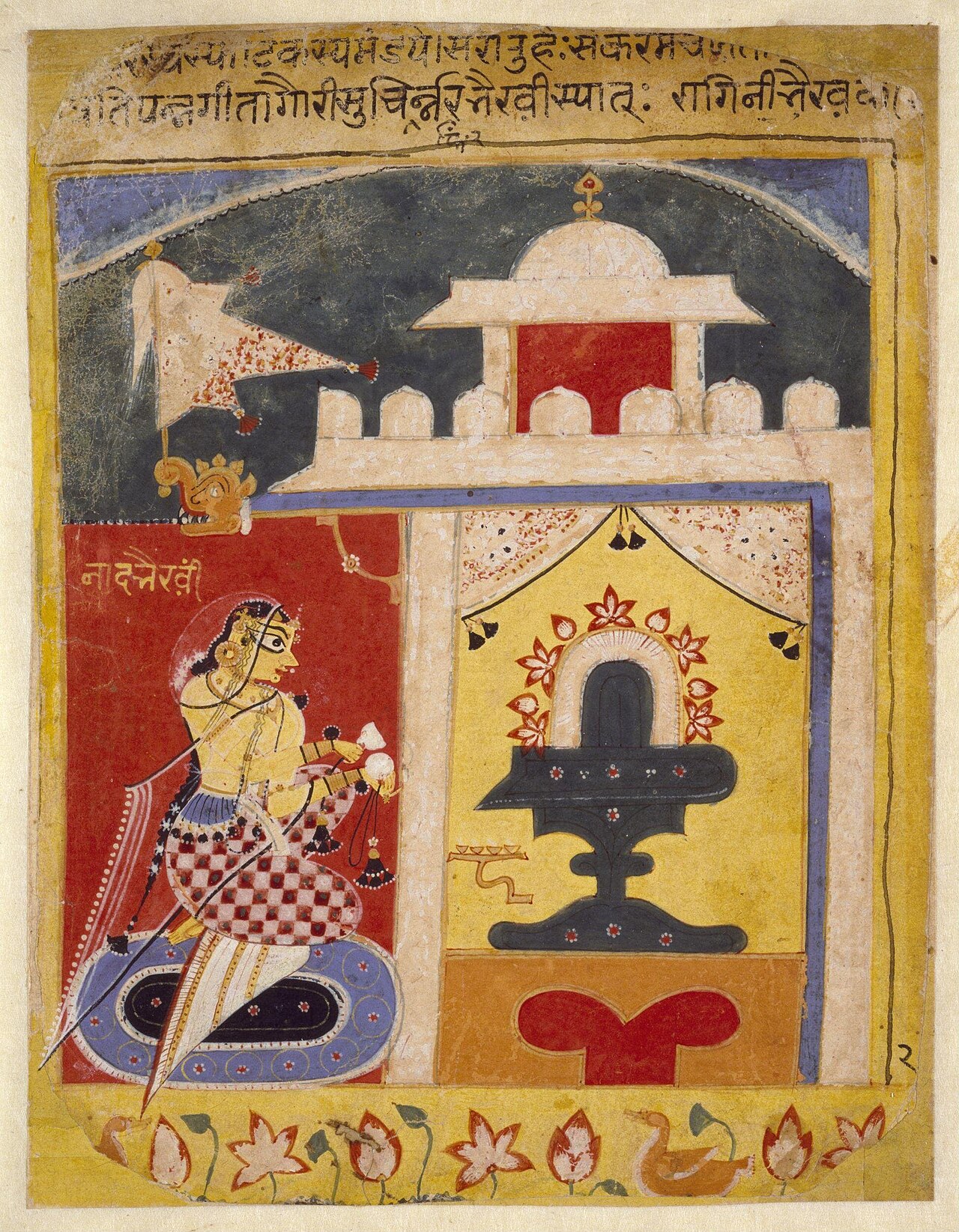
The Bhairav Family: Ahir Bhairav, Nat Bhairav, and Jogiyaभैरव थाट, अपने विशिष्ट कोमल रे और कोमल ध के साथ, राग का एक छोटा लेकिन अत्यधिक महत्वपूर्ण परिवार दे ता है, प्रत्येक अपने स्वयं के सुबह के चरित्र और आध्यात्मिक गहराई के साथ। राग अहीर भैरव शायद भैरव परिवार का सबसे प्रदर्शित सदस्य है। जबकि भैरव स्वयं तीक्ष्ण और तीव्र है, अहीर भैरव अधिक गीतात्मक और अभिव्यक्तिपूर्ण है। नाम 'अहीर' प्राचीन पशुचारी समुदाय से आता है, और वास्तव में, राग इसकी शास्त्रीय परिष्कार के बावजूद एक चरवाहा गुण रखता है। अहीर भैरव अक्सर सुबह में शुद्ध भैरव की तुलना में थोड़ा बाद में (लगभग 6-8 बजे) प्रदर्शित किया जाता है, और अधिक आरामदेह, लगभग भक्तिपूर्ण चरित्र है। राग कोमल रे से ग और म तक की गति पर जोर देता है, एक कोमल आरोही गति बनाता है। कई भक्ति और आध्यात्मिक संरचनाएँ अहीर भैरव में निर्धारित होती हैं, और राग अक्सर ध्यान अभ्यास और योग सत्रों के लिए चुना जाता है। राग नाट भैरव परिवार का एक और सदस्य है, परंपरागत रूप से सुबह के शुरुआती घंटों में प्रदर्शित किया जाता है। 'नाट' संगीत और नृत्य की प्राचीन परंपरा को संदर्भित करता है, और नाट भैरव एक प्रदर्शनकारी गुण रखता है—यह भैरव स्वयं की तुलना में कम ध्यान करने वाला है, अधिक बहिर्मुखी। राग व्यापक आंदोलन पर जोर देता है और विशिष्ट भैरव स्वरात्मक गुणों को बनाए रखते हुए अधिक ऊर्जावान चरित्र रखता है। जोगिया एक और भिन्नता है, परंपरागत रूप से तपस्वियों और भटकने वाले योगियों से जुड़ा हुआ। नाम स्वयं संस्कृत में 'योगी' अर्थ देता है, और राग एक भटकने वाली, तलाश करने वाली गुण रखता है। जोगिया भैरव स्वरों का उपयोग करता है लेकिन एक अलग जोर और सजावट शैली के साथ, एक अलग भावनात्मक परिदृश्य बनाता है। इन राग में से प्रत्येक, भैरव के कोमल रे और कोमल ध नींव साझा करते हुए, अपना स्वयं का विशिष्ट व्यक्तित्व और प्रदर्शन अभ्यास विकसित किया है। जो सभी को एकीकृत करता है वह सुबह का संदर्भ और आध्यात्मिक आयाम है—ये जागरण, तलाश, परिवर्तन के राग हैं। ये मनोरंजन या आकस्मिक सुनने के राग नहीं हैं, बल्कि आध्यात्मिक अभ्यास और गंभीर कलात्मक प्रयास के राग हैं। जिन संगीतकारों ने भैरव परिवार में निपुणता हासिल की है—पंडित जसराज से उस्ताद अली अकबर ख़ान तक—सार्वभौमिक रूप से आध्यात्मिक संगीतकारों के रूप में माना जाता है, केवल तकनीकी कारीगर नहीं। यह भैरव थाट के बारे में कुछ गहन बोलता है: यह न केवल तकनीकी प्रवीणता की मांग करता है, बल्कि कलाकार से आध्यात्मिक ईमानदारी की भी।
अंग्रेज़ी में पढ़ें · Read in English
The Bhairav thaat, with its distinctive Komal Re and Komal Dha, gives birth to a small but highly significant family of raags, each with its own morning character and spiritual depth. Raga Ahir Bhairav is perhaps the most performed member of the Bhairav family. While Bhairav itself is sharp and intense, Ahir Bhairav is more lyrical and expressive. The name 'Ahir' comes from the ancient cowherding community, and indeed, the raag has a pastoral quality despite its classical sophistication. Ahir Bhairav is often performed slightly later in the morning (around 6-8 AM) than pure Bhairav, and has a more relaxed, almost devotional character. The raag emphasizes the movement from Komal Re up to Ga and Ma, creating a gentle ascending motion. Many devotional and spiritual compositions are set in Ahir Bhairav, and the raag is often chosen for meditation practices and yoga sessions. Raga Nat Bhairav is another member of the family, traditionally performed in the early morning hours. 'Nat' refers to the ancient tradition of music and dance, and Nat Bhairav carries a performative quality — it is less meditative than Bhairav itself, more extroverted. The raag emphasizes broader movements and has a more energetic character, though it retains the distinctive Bhairav tonal qualities. Jogiya is another variation, traditionally associated with ascetics and wandering yogis. The name itself means 'yogi' in Sanskrit, and the raag has a wandering, searching quality. Jogiya uses the Bhairav notes but with a different emphasis and ornamentation style, creating a different emotional landscape. Each of these raags, while sharing the Komal Re and Komal Dha foundation of Bhairav, has developed its own distinctive personality and performance practice. What unites them all is the early morning context and the spiritual dimension — these are raags for awakening, for seeking, for transformation. They are not raags of entertainment or casual listening, but raags of spiritual practice and serious artistic pursuit. The musicians who have mastered the Bhairav family — from Pandit Jasraj to Ustad Ali Akbar Khan — are universally regarded as spiritual musicians, not merely technical virtuosos. This speaks to something profound about the Bhairav thaat: it demands not just technical proficiency, but spiritual sincerity from the performer.
भैरव महत्वपूर्ण क्यों है: जागरण और परिवर्तन का राग
Why Bhairav Matters: The Raag of Awakening and Transformationभारतीय शास्त्रीय संगीत के विशाल ब्रह्मांड में, भैरव एकवचन महत्व का स्थान रखता है। यह सबसे अक्सर प्रदर्शित राग नहीं है, न ही सबसे तकनीकी रूप से जटिल। फिर भी यह शायद सबसे आध्यात्मिक रूप से महत्वपूर्ण है। भैरव संगीत संकेतन और तकनीकी विश्लेषण को पार करता है: यह मानव परिवर्तन के लिए एक वाहन है। शुरुआती सुबह के संदर्भ महत्वपूर्ण हैं। हिंदू और योगिक दर्शन में, सूर्योदय से पहले के घंटे सर्वोच्च रूप से शुभ माने जाते हैं। कहा जाता है कि यह तब है जब भौतिक और आध्यात्मिक दुनिया के बीच पर्दा पतला होता है, जब चेतना आसानी से उच्च जागरूकता के स्तर तक पहुँच सकती है। भैरव प्रदर्शन करने के लिए इन घंटों को चुनकर, एक संगीतकार केवल संगीत बजा नहीं रहा है—वे एक आध्यात्मिक अभ्यास में भाग ले रहे हैं जो हजारों वर्षों तक फैला हुआ है। विशिष्ट कोमल रे और कोमल ध एक भावनात्मक परिदृश्य बनाते हैं जो इसकी तीव्रता में अद्वितीय है। ये नोट आरामदेह नहीं हैं। वे आसानी से हल नहीं करते या पूर्ण की भावना बनाते हैं। इसके बजाय, वे एक निरंत तनाव बनाते हैं, कुछ अधूरे की भावना, कुछ तलाश कर रहे। यह मनोवैज्ञानिक रूप से मांग कर रहा है—और मनोवैज्ञानिक रूप से परिवर्तनकारी। जब आप नियमित रूप से भैरव सुनते हैं, विशेष करके शुरुआती सुबह के घंटों में, आप परंपरा के दावे को समझने लगते हैं कि यह केवल कान को नहीं बल्कि पूरी चेतना को जागृत करता है। राग में एक शुद्धिकरण गुण है। कई आध्यात्मिक अभ्यासकार्ता भैरव को अपनी साधना का हिस्सा के रूप में उपयोग करते हैं क्योंकि यह मानसिक अव्यवस्था को स्पष्ट करने के लिए प्रतीत होता है और किसी को अपने आंतरिक परिदृश्य के साथ सीधे सामना करने के लिए लाता है। यह मनोरंजन या पलायन के लिए एक राग नहीं है, बल्कि सत्य-खोज के लिए। इसके अलावा, भैरव यह सिद्धांत प्रदर्शित करता है कि सच्ची शक्ति मिठास या विलासिता में नहीं बल्कि स्पष्टता और सत्यता में निहित है। राग आरामदेह को खारिज करता है और चुनौतीपूर्ण को स्वीकार करता है। इसने इसे सदियों से गंभीर संगीतकारों और आध्यात्मिक साधकों के पसंदीदा के रूप में बनाया है। एक मास्टर भैरव प्रदर्शन सबसे गहन कलात्मक अनुभवों में से एक है जो किसी को प्राप्त हो सकता है, क्योंकि यह तकनीकी महारत को आध्यात्मिक ईमानदारी के साथ इस तरह से जोड़ता है कि कुछ अन्य राग कर सकते हैं। जब पंडित जसराज ने भैरव प्रदर्शित किया, तो वह केवल अपनी गायन प्रवीणता का प्रदर्शन नहीं कर रहे थे—वह अपनी स्वयं के आध्यात्मिक यात्रा, अपनी स्वयं की जागरण और परिवर्तन की समझ का एक झलक दे रहे थे। यह सबसे गहरा उपहार है जो भैरव देता है: यह दिखाता है कि संगीत, अपने सर्वोच्च स्तर पर, मनोरंजन या प्रदर्शन के बारे में नहीं है, बल्कि परिवर्तन और जागरण के बारे में है।
अंग्रेज़ी में पढ़ें · Read in English
In the vast universe of Indian classical music, Bhairav occupies a place of singular importance. It is not the most frequently performed raag, nor the most technically complex. Yet it is perhaps the most spiritually significant. Bhairav represents something that transcends musical notation and technical analysis: it is a vehicle for human transformation. The early morning context is crucial. In Hindu and yogic philosophy, the hours before dawn are considered supremely auspicious. It is said that this is when the veil between the material and spiritual worlds is thinnest, when consciousness can most easily access higher states of awareness. By choosing to perform Bhairav during these hours, a musician is not just playing music — they are participating in a spiritual practice that stretches back thousands of years. The distinctive Komal Re and Komal Dha create an emotional landscape that is unique in its intensity. These notes are not comfortable. They don't resolve easily or create a sense of completion. Instead, they create a perpetual tension, a sense of something unfinished, something seeking. This is psychologically demanding — and psychologically transformative. When you listen to Bhairav regularly, particularly in the early morning hours, you begin to understand the tradition's claim that it awakens not just the ears, but the entire consciousness. The raag has a purifying quality. Many spiritual practitioners use Bhairav as part of their sadhana (spiritual practice) because it seems to clear mental clutter and bring one into direct confrontation with one's inner landscape. It is not a raag for entertainment or escape, but for truth-seeking. Furthermore, Bhairav represents the principle that true strength lies not in sweetness or luxury, but in clarity and truthfulness. The raag rejects the comfortable and embraces the challenging. This has made it a favorite of serious musicians and spiritual seekers for centuries. A master Bhairav performance is among the most profound artistic experiences one can have, because it combines technical mastery with spiritual sincerity in a way that few other raags can achieve. When Pandit Jasraj performed Bhairav, he was not just displaying his vocal prowess — he was offering a glimpse into his own spiritual journey, his own understanding of awakening and transformation. This is the deepest gift that Bhairav offers: it shows us that music, at its highest level, is not about entertainment or display, but about transformation and awakening.
परिचय
IdentityEpithet
दो समतल नोट सबसे विशिष्ट सुबह का तनाव बनाते हैं — चेतना का जागरण।
Two flattened notes create the most distinctive morning tension — the awakening of consciousness itself.
कहानी-नमूना
The Story Specimen| शीर्षक | भैरव थाट: भोर का राग — जब शिव जागते हैं · Bhairav Thaat: The Dawn Raga — When Shiva Awakens |
|---|---|
| श्रेणी | Music Theory |
| प्रकार | विशेष लेख |
| पाठ-समय | ७ मिनट का पाठ |
| प्रकाशित | 31 March 2026 — admin |
| टैग | thaat · bhairav · raga-bhairav · morning_raag · devotional · hindustani_classical · shiva |
इस कहानी में
In This Story · The Cast & Its Platesकहानी में आए नामों के अटलस में अपने पन्ने हैं — यहीं से यात्रा जारी रखिए।
राग-सूत्र · Raags
और कहानियाँ
More Stories from the Atlas

साझा कीजिए · Share this Plate