कहानियाँ विंग · कहानी · Music History · 1937
किसान कन्या
Kisan Kanya
प्रकाशित21 June 2026
आमुख
1931 में 'आलम आरा' से सिनेमा को आवाज़ देने वाले अर्देशिर ईरानी की अगली छलाँग — 'किसान कन्या' (1937), भारत में ही शूट और प्रोसेस हुई पहली रंगीन फ़िल्म, सिनेकलर में बनी और किसान के शोषण की कथा कहती।
अंग्रेज़ी में पढ़ें · Read in English
After giving cinema its voice with Alam Ara in 1931, Ardeshir Irani's next leap — Kisan Kanya (1937), the first Indian colour film both shot and processed at home, made in Cinecolor and telling a story of a farmer's exploitation.
बोली देने वाले की अगली ज़िद
The talkie-maker's next dare1931 में 'आलम आरा' से भारतीय सिनेमा को आवाज़ देने वाले अर्देशिर ईरानी अब रंग के पीछे थे। अपनी बम्बई की इम्पीरियल पिक्चर्स के बैनर तले उन्होंने एक अमेरिकी कंपनी से सिनेकलर प्रक्रिया के अधिकार हासिल किए और 1937 में 'किसान कन्या' बनाई — भारत में ही शूट और प्रोसेस हुई पहली रंगीन फ़िल्म। निर्देशन सौंपा मोती बी. गिडवाणी को।
अंग्रेज़ी में पढ़ें · Read in English
Having given Indian cinema its voice with Alam Ara in 1931, Ardeshir Irani now chased colour. Under his Bombay studio Imperial Pictures, he acquired rights to the American Cinecolor process and in 1937 made Kisan Kanya — the first Indian colour film both shot and processed at home. The direction he handed to Moti B. Gidwani.
एक 'पहली' जो सरहद के भीतर पूरी हुई
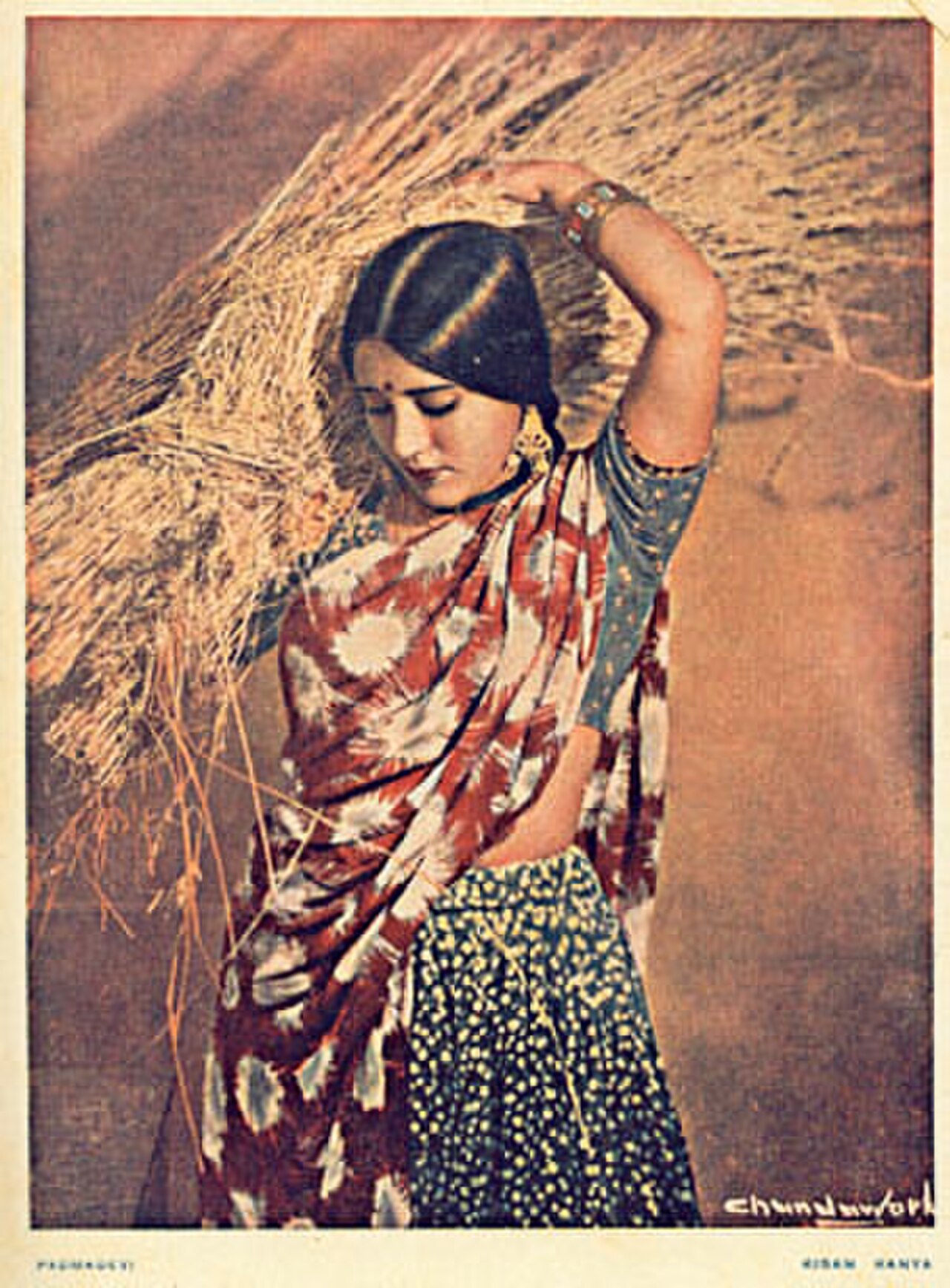
A 'first' completed inside the borderरंग पहले भी परदे पर आ चुका था: वी. शांताराम की 'सैरंध्री' (1933) के कुछ हिस्से रंगीन थे, पर उनकी प्रोसेसिंग और छपाई जर्मनी में हुई थी। यही फ़र्क़ 'किसान कन्या' को विशेष बनाता है — इसका रंग शुरू से अंत तक देश के भीतर ही तैयार हुआ। इसीलिए इसे भारत में स्वदेशी रूप से बनी पहली रंगीन फ़िल्म कहा जाता है, महज़ रंगीन दृश्यों वाली पहली नहीं।
अंग्रेज़ी में पढ़ें · Read in English
Colour had reached the screen before: parts of V. Shantaram's Sairandhri (1933) were in colour, but its processing and printing were done in Germany. That difference is what sets Kisan Kanya apart — its colour was made, start to finish, inside the country. Hence it is called India's first indigenously made colour film, not merely the first with colour scenes.
किसान की पीड़ा परदे पर
The farmer's plight on screen'किसान कन्या' कोई तमाशा नहीं, एक सामाजिक कथा थी — ज़मींदार के हाथों शोषित ग़रीब किसानों की पीड़ा। कथा प्रोफ़ेसर एम. ज़ियाउद्दीन की थी, पटकथा और संवाद लिखे उर्दू के मशहूर अफ़सानानिगार सआदत हसन मंटो ने; संगीत राम गोपाल पाण्डेय का। यानी भारत की पहली स्वदेशी रंगीन फ़िल्म चमक-दमक नहीं, खेत और किसान की सच्चाई लेकर आई।
अंग्रेज़ी में पढ़ें · Read in English
Kisan Kanya was no spectacle but a social drama — the suffering of poor farmers exploited by a landlord. The story was by Professor M. Ziauddin, while the screenplay and dialogue came from the celebrated Urdu writer Saadat Hasan Manto; the music was by Ram Gopal Pandey. India's first home-made colour film thus arrived not with glamour but with the truth of the field and the farmer.
परिचय
Identity- Epithet
- India's first colour film shot and processed at home
अन्य विवरण
More DetailsKey Figures
कहानी-नमूना
The Story Specimen| शीर्षक | किसान कन्या · Kisan Kanya |
|---|---|
| श्रेणी | Music History |
| प्रकार | विशेष लेख |
| प्रकाशित | 21 June 2026 — admin |
| वर्ष | 1937 |
और कहानियाँ
More Stories from the Atlas
साझा कीजिए · Share this Plate
यह पन्ना आगे बढ़ाइए
सवाल-जवाब
Questions & Answersकिसान कन्या को भारत की पहली रंगीन फ़िल्म क्यों कहा जाता है, जबकि 'सैरंध्री' (1933) पहले आई थी? · Why is Kisan Kanya called India's first colour film when Sairandhri (1933) came earlier?
'सैरंध्री' में कुछ रंगीन हिस्से ज़रूर थे, पर उनकी प्रोसेसिंग और छपाई जर्मनी में हुई थी। 'किसान कन्या' (1937) का रंग पूरी तरह भारत में ही तैयार हुआ, इसलिए यह स्वदेशी रूप से बनी पहली रंगीन फ़िल्म कहलाती है।
Sairandhri did have some colour portions, but its processing and printing were done in Germany. Kisan Kanya (1937) had its colour made entirely within India, so it is called the first indigenously made colour film.
किसान कन्या किसने बनाई और किस रंग-प्रक्रिया में? · Who made Kisan Kanya, and in which colour process?
इसका निर्माण अर्देशिर ईरानी की इम्पीरियल पिक्चर्स ने किया और निर्देशन मोती बी. गिडवाणी ने; यह सिनेकलर प्रक्रिया में बनी, जिसके अधिकार ईरानी ने एक अमेरिकी कंपनी से लिए थे।
It was produced by Ardeshir Irani's Imperial Pictures and directed by Moti B. Gidwani; it was made in the Cinecolor process, whose rights Irani had obtained from an American company.