गीत विंग · गीत-पट्टिका · Song Plate
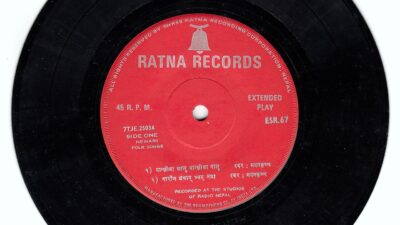
तराना-टप्पा तवे
Tarana and Tappa Sides
रफ़्तार ही तमाशा: ध्वनिक मोम पर आगरा-उस्ताद के तेज़-तर्रार रूप।
भावEnergetic
भाषाbraj
श्रेय
The Creditsसूत्र-वाक्य · The Hook
सूत्र-वाक्य
रफ़्तार ही तमाशा: ध्वनिक मोम पर आगरा-उस्ताद के तेज़-तर्रार रूप।
In EnglishSpeed as spectacle: the Agra master's bravura forms on acoustic wax.
पट्टिका-लेख
The Monographपरिचय Overview
फ़ैयाज़ ख़ाँ के 1920-मध्य के तराना-टप्पा तवे घराने की कसरती धार को रिकॉर्ड पर रखते हैं — बोल-आँधियाँ और टेढ़ी-मेढ़ी तानें, भोंपू की तंग खिड़की में चकाचौंध रचने को गढ़ी हुईं; दरबारी कला का लोकप्रिय चेहरा।
अंग्रेज़ी में पढ़ें · Read in English
Faiyaz Khan's mid-1920s tarana and tappa sides put the gharana's athletic edge on record — syllable-storms and zigzag taans built to dazzle within the horn's narrow window, the popular face of a court art.
संगीत The Music
तराने का बोल-यंत्र और टप्पे की पंजाबी लचक — वह कौशल जो आम ख़रीदार को भी सुनाई दे।
अंग्रेज़ी में पढ़ें · Read in English
Tarana's nonsense-syllable engine and tappa's Punjabi zigzag — virtuosity the lay buyer could hear.
काव्य The Poetry
तराने की बोल-कारीगरी और टप्पे के पंजाबी दोहे — पाठ यहाँ लय का वाद्य है।
अंग्रेज़ी में पढ़ें · Read in English
Tarana's syllable-craft and tappa's Punjabi couplets — text as rhythm's instrument.
कहानी The Story
1924 तक ग्रामोफ़ोन कंपनी के कलकत्ता और बंबई के दफ़्तर वार्षिक रिकॉर्डिंग शिविर चला रहे थे जो उपमहाद्वीप के सर्वश्रेष्ठ दरबारी संगीतकारों को दो-तीन दिनों के सघन सत्रों के लिए बुलाते थे। फ़ैयाज़ ख़ाँ — जिन्हें मैसूर दरबार 'आफ़ताब-ए-मौसीक़ी' का ख़िताब दे चुका था — आगरा घराने का पूरा शस्त्रागार लेकर आते: ख़याल, ध्रुपद-अंग, तराना, टप्पा। ध्वनिक भोंपू निर्दय बंधन लगाता था: गायक को भोंपू के संकरे मुँह के ठीक सामने खड़े होकर आवाज़ का आयाम और दूरी एकसार रखनी होती थी, जबकि तीन-साढ़े तीन मिनट में एक अंतहीन परंपरा को समेटना होता था। तराना और टप्पा भोंपू के लिए आदर्श रूप थे — उनका बोल-घनत्व और लयबद्ध तान-कारी आरंभिक मोम की चपटाने वाली ताक़त में किसी पूर्ण ख़याल के उफान से बेहतर टिक सकती थी। 1924 के तवे चरम ध्वनिक-युग आगरा हैं: इंजीनियर एकल सतत टेक में रिकॉर्ड करते थे, और यदि बीच तान लड़खड़ा जाती या एक बोल धुँधला हो जाता, तो तवा रद्दी हो जाता। इस काल के फ़ैयाज़ ख़ाँ के एचएमवी बहीखाते कई सत्रों की पुष्टि करते हैं, जो बताते हैं कि वे इन बंधनों को गंभीरता से लेते थे।
अंग्रेज़ी में पढ़ें · Read in English
By 1924 the Gramophone Company's Calcutta and Bombay operations were running annual recording camps that summoned the subcontinent's finest court musicians for compressed sessions of perhaps two or three days. Faiyaz Khan — already titled 'Aftab-e-Mausiqui' (Sun of Music) by the Mysore court — arrived with the Agra gharana's entire arsenal: khayal, dhrupad-anga exercises, tarana, tappa. The acoustic horn imposed ruthless constraints: a singer had to project directly into the horn's narrow mouth, keeping volume and distance constant while compressing an improvised tradition into under three and a half minutes. Tarana and tappa were ideal horn forms — their syllable-density and metronomic taan-work could survive the flattening effect of early wax better than the swelling dynamics of a full khayal. The 1924 sides represent peak acoustic-era Agra: the Gramophone Company's engineers recorded in a single continuous take, and if a taan wavered mid-flight or a syllable blurred, the disc was scrapped. Faiyaz Khan's HMV ledgers from this period confirm multiple sessions, suggesting he took these constraints seriously — cutting and re-cutting until the syllable-storm landed clean.
विरासत The Legacy
इन फुर्तीले तवों ने घराना उन घरों तक बेचा, जो कभी दरबार में दाख़िल न होते।
अंग्रेज़ी में पढ़ें · Read in English
These quick sides sold the gharana to households that would never enter a darbar.
वर्गीकरण
ClassificationGenre
अन्य विवरण
More Details- Katz, Mark. Capturing Sound: How Technology Has Changed Music (2004) — acoustic recording constraints
- Sanyal, Ritwik & Widdess, Richard. Dhrupad: Tradition and Performance in Indian Music (2004) — Agra gharana documentation
- Ranade, Ashok. Hindi Film Song: Music Beyond Boundaries (2006)
- Wikipedia: Faiyaz Khan (musician)
- Wikipedia: Tappa (music)
References
रोचक तथ्य
Margin Notesफैयाज़ खान को मैसूर के महाराजा से "आफ़ताब-ए-मौसिक़ी" (संगीत का सूर्य) की उपाधि प्राप्त हुई, जहाँ उन्होंने 1920 के दशक में एच.एम.वी. के लिए रिकॉर्डिंग के साथ-साथ दरबारी संगीतकार के रूप में भी सेवा दी।
अंग्रेज़ी में पढ़ें · Read in English
Faiyaz Khan received the title 'Aftab-e-Mausiqui' (Sun of Music) from the Maharaja of Mysore, where he served as a court musician in the 1920s alongside recordings for HMV.
ध्वनिक रिकॉर्डिंग में गायकों को हॉर्न के मुख से चंद इंच की दूरी पर खड़े होकर एक बिल्कुल स्थिर दूरी बनाए रखनी पड़ती थी — कुछ सेंटीमीटर की भी हलचल मोम मास्टर पर ध्वनि की मात्रा को अस्वीकार्य रूप से बदल सकती थी।
अंग्रेज़ी में पढ़ें · Read in English
Acoustic recording required singers to stand within inches of the horn's mouth and maintain an absolutely fixed distance — movement by even a few centimetres could alter the volume on the wax master unacceptably.
टप्पा की उत्पत्ति पंजाबी लोक परंपरा में नाविकों के गायन से हुई, इससे पहले कि इसे मियाँ शोरी ने परिष्कृत किया और बाद में इसे हिंदुस्तानी शास्त्रीय संगीत में शामिल किया गया; फैयाज़ खान की प्रस्तुतियाँ इस विधा को अखिल भारतीय डिस्क श्रोताओं तक पहुँचाने वाली शुरुआती प्रस्तुतियों में से थीं।
अंग्रेज़ी में पढ़ें · Read in English
Tappa originated in the Punjabi folk tradition of boatmen before being refined by Mian Shori and later adopted into the Hindustani classical canon; Faiyaz Khan's renditions were among the first to bring the form to a pan-Indian disc audience.
आगरा घराने की विशिष्ट पहचान "गमक" — दो स्वरों के बीच तीव्र, हथौड़े जैसी दोलन — ध्वनिक मोम रिकॉर्डिंग में स्वच्छ रूप से पकड़ने के लिए सबसे तकनीकी रूप से चुनौतीपूर्ण अलंकारों में से एक थी, जिससे फैयाज़ खान की इसकी स्पष्ट रिकॉर्डिंग्स तकनीकी के साथ-साथ कलात्मक उपलब्धि भी बन गईं।
अंग्रेज़ी में पढ़ें · Read in English
The Agra gharana's signature 'gamak' — a rapid, hammered oscillation between two notes — was one of the most technically demanding ornaments to capture cleanly on acoustic wax, making Faiyaz Khan's clean recordings of it a technical as well as artistic achievement.
उनकी 78 आरपीएम रिकॉर्डिंग्स 1950 के दशक में भारत में एल.पी. में स्थानांतरित की जाने वाली शुरुआती रिकॉर्डिंग्स में से थीं, जिससे उनकी पहुँच उस नई पीढ़ी के श्रोताओं तक भी हुई जिन्होंने उन्हें कभी प्रत्यक्ष रूप से नहीं सुना था।
अंग्रेज़ी में पढ़ें · Read in English
His 78 rpm recordings were among the first to be transferred to LP in India in the 1950s, extending their reach to a new generation of listeners who had never heard him live.
नमूना-पट्टी
The Specimen Table| शीर्षक | तराना-टप्पा तवे · Tarana and Tappa Sides |
|---|---|
| वर्ष · युग | 1924 |
| गायक | Faiyaz Khan |
| गीतकार | पारंपरिक |
| भाषा | braj |
| भाव | Energetic |
| लोकप्रियता | Popular |
| बोल-स्थिति | सार्वजनिक |
जुड़े हुए पन्ने
Connected Plates · The Graph Made Visibleअटलस में कोई पन्ना अकेला नहीं — इस गीत से जुड़े गीत, कलाकार, फ़िल्म, राग-ताल-विधा, सब यहाँ से खुलते हैं।
मिलते-जुलते गीत · Related Songs
कलाकार · The Artists
साझा कीजिए · Share this Plate