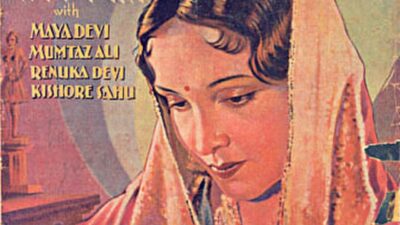
गीत विंग · गीत-पट्टिका · Song Plate
सो जा री मोरे लालना
So Ja Ri More Lalna
1941 की सामाजिक फ़िल्म प्रभात की एक लोरी-युगल — 'सो जा री मोरे लालना' — शांता हुबळीकर और ख़ान मस्ताना की आवाज़ में।
भावपुरानी यादें · शांत
भाषाhindi स्वरूपयुगल
श्रेय
The Creditsसूत्र-वाक्य · The Hook
सूत्र-वाक्य
1941 की सामाजिक फ़िल्म प्रभात की एक लोरी-युगल — 'सो जा री मोरे लालना' — शांता हुबळीकर और ख़ान मस्ताना की आवाज़ में।
In EnglishA lullaby duet ('sleep, my little one') from the 1941 social Prabhat, sung by Shanta Hublikar and Khan Mastana.
पट्टिका-लेख
The Monographपरिचय Overview
'सो जा री मोरे लालना' विष्णु (वी.एम.) व्यास की 1941 की सामाजिक ड्रामा प्रभात की एक लोरी-शैली की युगल रचना है, जो बचे हुए गीत-डेटाबेस में शांता हुबळीकर और ख़ान मस्ताना के पार्श्वगायन के साथ दर्ज है। फ़िल्म का संगीत-निर्देशन श्रेय मानक संदर्भों के बीच विवादित है, इसलिए यहाँ केवल सत्यापित गायक दर्ज किए गए हैं। यह एक मेटाडेटा/खोज प्रविष्टि है — पूर्ण बोल संग्रहीत नहीं किए गए।
अंग्रेज़ी में पढ़ें · Read in English
'So Ja Ri More Lalna' is a lullaby-style duet from Vishnu (V.M.) Vyas's 1941 social drama Prabhat, documented in surviving song databases with playback by Shanta Hublikar and Khan Mastana. The film's music-direction credit is disputed between standard references, so only the verified singers are recorded here. This is a metadata/discovery entry — no full lyrics are stored.
काव्य The Poetry
लोरी उत्तर भारतीय मौखिक परंपरा के सबसे पुराने गीत-रूपों में से एक है, और उसके मुहावरे सदियों में तय हो चुके हैं: 'लालना,' 'लाल,' 'मुन्ना,' 'सोना' जैसे प्यार के नाम; 'सो जा,' 'निंदिया आजा' जैसे सुलाने के आमंत्रण; और माँ की उपस्थिति से बनी वह सुरक्षित दुनिया जहाँ बाहर के खतरे नहीं पहुँचते। एहसान रिज़वी ने 'सो जा री मोरे लालना' में इन परंपराओं का पूरा सम्मान किया। 'लालना' अवधी-ब्रज का वह स्नेह-पद है जो छोटे बच्चे के लिए माँ के होठों पर सहज आता है; 'री' स्त्रीलिंग सम्बोधन-कण है जो गायिका को माँ के रूप में स्थापित करता है। जब ख़ान मस्ताना की आवाज़ इस मूलतः मातृ-एकल रूप में प्रवेश करती है, तो लोरी एक परिवार का गीत बन जाती है—माँ और पिता दोनों मिलकर, बराबर-बराबर, बच्चे को नींद का रास्ता दिखाते हैं।
अंग्रेज़ी में पढ़ें · Read in English
The lullaby (lori) is among the oldest song forms in North Indian oral tradition, and its conventions are precise and time-worn: diminutives of endearment ('lalna,' 'lal,' 'munna,' 'sona'), commands to sleep ('so ja,' 'nindiya aa'), and a protective enclosure of imagery—moonlight, mother's nearness, the outside world held at bay. Ehsan Rizvi's lyric for 'So Ja Ri More Lalna' follows these conventions carefully. 'Lalna' is an Awadhi-Braj endearment meaning little darling or beloved child; 'ri' is the feminine vocative particle in the same dialect tradition, marking the primary singer as a woman (a mother) calling to her infant. The entry of Khan Mastana's male voice in what is structurally a maternal form creates a gentle paradox: the lullaby's convention is opened up, made communal. In Ehsan Rizvi's hands, the lyric's simplicity is a virtue—the lullaby does not need complexity; it needs reassurance, warmth, and repetition, all of which the form provides.
कहानी The Story
प्रभात (1941) एक सामाजिक नाटक था जिसे वी.एम. व्यास ने निर्देशित किया। पंद्रह गीतों का संगीत अन्नासाहेब मैनकर और शांति कुमार ने संयुक्त रूप से रचा और सभी बोल एहसान रिज़वी ने लिखे। फ़िल्म में शांता हुबळीकर थीं—1930–40 के दशक के हिंदी-मराठी सिनेमा की सर्वाधिक सम्मानित गायक-अभिनेत्रियों में से एक, जिन्होंने किराना घराने के संस्थापक उस्ताद अब्दुल करीम ख़ान से हिंदुस्तानी शास्त्रीय संगीत की शिक्षा ली थी। 'सो जा री मोरे लालना' शांता हुबळीकर और ख़ान मस्ताना का लोरी-युगल है—एक असामान्य संयोजन, क्योंकि लोरी पारंपरिक रूप से माँ का एकल गान होती है। इस युगल में दो आवाज़ें मिलकर एक बच्चे को सुलाती हैं, जो माँ और पिता दोनों की समान उपस्थिति का चित्र खींचता है—उस दौर के रिवाज़ से थोड़ा अलग, और उसीलिए थोड़ा विशेष।
अंग्रेज़ी में पढ़ें · Read in English
Prabhat (1941), a social drama directed by V.M. (Vishnu) Vyas, featured a fifteen-song soundtrack jointly composed by Annasaheb Mainkar and Shanti Kumar, with all lyrics written by Ehsan Rizvi. The film starred Shanta Hublikar, one of the most respected actress-singers of 1930s and 1940s Hindi-Marathi cinema, who had trained in Hindustani classical music under the great Abdul Karim Khan, founder of the Kirana gharana. 'So Ja Ri More Lalna'—'Sleep now, my little one'—is a lullaby duet sung by Hublikar and Khan Mastana, an unusual pairing for the normally maternal solo lullaby form. The duet suggests a domestic scene in which both parents share the evening song over a child's cradle—a quietly egalitarian domestic tableau that sits at odds with the period's usual convention of lullabies as exclusively maternal acts. Hublikar's warmth in folk-style and devotional material, and Khan Mastana's baritone, together create a tonal balance that distinguishes this lullaby from the more common single-voice versions.
विरासत The Legacy
शांता हुबळीकर (14 अप्रैल 1914 – 17 जुलाई 1992) प्रारंभिक हिंदी-मराठी सिनेमा की सबसे स्मरणीय हस्तियों में से हैं—विशेष रूप से वी. शांताराम की फ़िल्म आदमी/मानूस (1939) में अपनी भूमिका के लिए, जिसका गीत 'किस लिए कल की बात' छह क्षेत्रीय भाषाओं में रिकॉर्ड हुआ और हिंदी फ़िल्म इतिहास का एक मील का पत्थर बना। किराना घराने के उस्ताद अब्दुल करीम ख़ान की शिष्या होने के कारण उनकी आवाज़ में शास्त्रीय गायन का वह संस्कार था जो उनके दौर के कम ही फ़िल्मी गायकों में मिलता था। ख़ान मस्ताना—जन्म-नाम हाफ़िज़, उपनाम संगीतकार मीर साहब की देन—ने 1940 के दशक में गायन के साथ-साथ संगीत निर्देशन भी किया। लोरी-युगल का यह प्रयोग—जहाँ माँ की अकेली आवाज़ की जगह दो आवाज़ें एक साथ आती हैं—हिंदी फ़िल्म संगीत में एक प्रयोग था जो बाद के दशकों में भी दोहराया गया।
अंग्रेज़ी में पढ़ें · Read in English
Shanta Hublikar (14 April 1914 – 17 July 1992) remains one of the most celebrated personalities of early Hindi-Marathi cinema, particularly remembered for her landmark performance in V. Shantaram's Aadmi/Manoos (1939), where her song 'Kis Liye Kal Ki Baat' was recorded in six regional languages and became a milestone of Hindi film history. Trained under Abdul Karim Khan of the Kirana gharana, she brought a rigour of classical training to popular film song that few contemporaries could match. Khan Mastana, born Hafeez and named by composer Mir Saheb on his first film Bahadur Kisan (1938), combined singing with music direction throughout the 1940s. The lullaby duet form that 'So Ja Ri More Lalna' exemplifies—two voices together rather than the solo maternal convention—became a continuing element in Hindi film music, appearing in variants through subsequent decades.
वर्गीकरण
ClassificationGenre
अन्य विवरण
More Details- https://www.hindigeetmala.net/movie/prabhat_1941.htm
- https://en.wikipedia.org/wiki/Shanta_Hublikar
- https://www.cinemaazi.com/people/khan-mastana-
References
रोचक तथ्य
Margin Notesशांता हुबलीकर ने उस्ताद अब्दुल करीम ख़ान से शास्त्रीय संगीत सीखा, जो किराना घराने के संस्थापक थे — हिंदुस्तानी संगीत की सबसे प्रतिष्ठित गायन वंश-परंपराओं में से एक — जिसने उनके फिल्म कार्य को लोकप्रिय फिल्म गायकों में असामान्य एक औपचारिक शास्त्रीय आधार दिया।
अंग्रेज़ी में पढ़ें · Read in English
Shanta Hublikar studied classical music under Ustad Abdul Karim Khan, the founder of the Kirana gharana—one of Hindustani music's most prestigious vocal lineages—giving her film work a formal classical foundation unusual among popular film singers.
ख़ान मस्ताना का मंच-नाम उन्हें संगीतकार मीर साहब ने दिया था जब उन्होंने बहादुर किसान (1938) से पदार्पण किया; उनका जन्म का नाम हफ़ीज़ था और अपनी पहली फिल्म के समय वे अभी किशोरावस्था में ही थे।
अंग्रेज़ी में पढ़ें · Read in English
Khan Mastana's stage name was given to him by composer Mir Saheb when he debuted with Bahadur Kisan (1938); his birth name was Hafeez and he was still a teenager at his first film.
प्रभात (1941) के पंद्रह-गीतों के साउंडट्रैक की संयुक्त रचना अन्नासाहेब मैनकर और शांति कुमार ने की, जबकि सभी पंद्रह गीत एक ही गीतकार — एहसान रिज़वी — ने लिखे, यह एक असामान्य रूप से एकीकृत रचनात्मक व्यवस्था थी।
अंग्रेज़ी में पढ़ें · Read in English
The fifteen-song Prabhat (1941) soundtrack was jointly composed by Annasaheb Mainkar and Shanti Kumar, with a single lyricist—Ehsan Rizvi—writing all fifteen songs, an unusually unified creative arrangement.
'सो जा री मोरे लालना' में लोरी रूप का पारंपरिक स्त्रीलिंग-संबोधन कण 'री' अवधी-ब्रज बोली परंपरा में प्रमुख गायिका को माँ के रूप में चिह्नित करता है, जिससे युगल गीत में ख़ान मस्ताना का पुरुष-प्रवेश विधा की परिपाटी से एक औपचारिक विचलन बन जाता है।
अंग्रेज़ी में पढ़ें · Read in English
The lullaby form's conventional feminine-vocative particle 'ri' in 'So Ja Ri More Lalna' marks the primary singer as a mother in the Awadhi-Braj dialect tradition, making Khan Mastana's male entry into the duet a formal departure from the genre's convention.
नमूना-पट्टी
The Specimen Table| शीर्षक | सो जा री मोरे लालना · So Ja Ri More Lalna |
|---|---|
| फ़िल्म | प्रभात · 1941 |
| वर्ष · युग | 1941 |
| गायक | Shanta Hublikar, Khan Mastana |
| स्वरूप | युगल |
| भाषा | hindi |
| भाव | पुरानी यादें · शांत |
| लोकप्रियता | Obscure |
| बोल-स्थिति | केवल झलक |
जुड़े हुए पन्ने
Connected Plates · The Graph Made Visibleअटलस में कोई पन्ना अकेला नहीं — इस गीत से जुड़े गीत, कलाकार, फ़िल्म, राग-ताल-विधा, सब यहाँ से खुलते हैं।
मिलते-जुलते गीत · Related Songs
कलाकार · The Artists
फ़िल्म · The Film
साझा कीजिए · Share this Plate