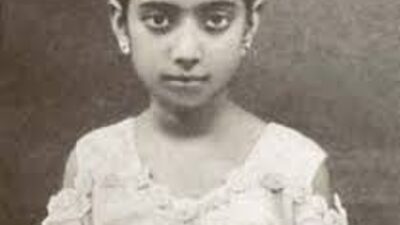
गीत विंग · गीत-पट्टिका · Song Plate
पिया पिया रात के
Piya Piya Raat Ke
फ़िल्म का सबसे ऊँची रेटिंग वाला बचा हुआ शीर्षक — पंद्रह वर्ष की सुरैया रात में अनुपस्थित प्रियतम को पुकारती हुई।
भावपुरानी यादें · रोमांटिक
भाषाhindi गतिधीमी स्वरूपएकल महिला
श्रेय
The Creditsसूत्र-वाक्य · The Hook
सूत्र-वाक्य
फ़िल्म का सबसे ऊँची रेटिंग वाला बचा हुआ शीर्षक — पंद्रह वर्ष की सुरैया रात में अनुपस्थित प्रियतम को पुकारती हुई।
In EnglishThe best-rated surviving title from the film — a fifteen-year-old Suraiya calling into the night for an absent beloved.
पट्टिका-लेख
The Monographपरिचय Overview
'सम्राट चंद्रगुप्त' में सुरैया का प्रमुख एकल और उन सूची-स्थलों पर फ़िल्म के दस शीर्षकों में सर्वोच्च रेटिंग वाला गीत जो आज भी इसे दर्ज करते हैं। शीर्षक 'पिया' संबोधन को दोहराता है और उसे रात में रखता है — विरह-गीत का मानक परिवेश। सुरैया जून 1945 में सोलह वर्ष की हुईं — फ़िल्म उसी वर्ष फ़रवरी में प्रमाणित हुई थी — और उस वर्ष उनकी पाँच फ़िल्में आईं; यह उसी क्रम के बीच का गीत है।
अंग्रेज़ी में पढ़ें · Read in English
Suraiya's principal solo in Samrat Chandragupta and the highest-rated of the film's ten titles on the catalogue sites that still list it. The title repeats the vocative 'piya' — beloved — and places it in the night, the standard setting of the viraha or separation song. Suraiya turned sixteen in June 1945 — the film was certified that February — and appeared in five releases that year; this is from the middle of that run.
संगीत The Music
1945 में सी. रामचंद्र अब भी युद्धकालीन बंबई स्टूडियो के हारमोनियम-तबला व्याकरण में रच रहे थे, न कि उस पीतल-क्लैरिनेट मुहावरे में जिसे वे 'शहनाई' (1947) के बाद गढ़ेंगे। इस दौर में किसी युवा स्त्री-स्वर के लिए धीमा रात-गीत हल्की लयात्मक बुनियाद पर चलता था, जिसमें गायिका को पंक्ति थामने की जगह मिलती थी — और सुरैया के तब भी बन रहे स्वर को यही जगह चाहिए थी; जिन गुणों ने उन्हें दशक की सबसे भरोसेमंद गायिका-अभिनेत्री बनाया — स्पष्टता, संयम, बिना ज़ोर का ऊपरी स्वर — उन्हीं को यह बंदिश पुरस्कृत करती है।
अंग्रेज़ी में पढ़ें · Read in English
C. Ramchandra in 1945 was still writing within the harmonium-and-tabla grammar of the wartime Bombay studio rather than the brass-and-clarinet idiom he would invent after Shehnai (1947). A slow night-song for a young female voice in this period would be carried on a light rhythmic bed with room left for the singer to hold the line, which is exactly the space Suraiya's still-forming voice needed; the qualities that made her the decade's most bankable singer-actress — clarity, restraint, an unforced upper register — are the ones this kind of setting rewards.
काव्य The Poetry
'पिया' ब्रज से आया वह शब्द है जिसे हिंदी फ़िल्मी गीत ने ठुमरी और लोकगीत से विरासत में पाया, और उसे दोहराना — पिया पिया — वर्णन नहीं, पुकार की ध्वनि है। इसे 'रात के' से जोड़ देना गीत को परंपरा के सबसे पुराने कक्ष में रख देता है: अँधेरे के बाद जागती स्त्री और कहीं और मौजूद प्रियतम। मधुर ईसा पूर्व चौथी शताब्दी में स्थित ऐतिहासिक फ़िल्म के लिए लिख रहे थे, पर यहाँ की शब्दावली पूरी तरह जीवित लोक-गीत की है, किसी कालानुरूप नक़ल की नहीं — 1940 के दशक की लगभग हर ऐतिहासिक फ़िल्म ने अपने गीतों के साथ यही किया।
अंग्रेज़ी में पढ़ें · Read in English
'Piya' is the Braj-derived word for the beloved that Hindi film lyric inherited from the thumri and the folk song, and doubling it — piya piya — is the sound of calling rather than describing. Attaching it to 'raat ke', of the night, puts the song in the oldest compartment of the tradition: the woman awake after dark with the beloved elsewhere. Madhur was writing for a historical set in the fourth century BCE, but the vocabulary here is entirely that of the living folk-lyric register, not of period pastiche — which is how almost all 1940s historicals handled their songs.
कहानी The Story
'सम्राट चंद्रगुप्त' (1945) का निर्माण और निर्देशन जयंत देसाई ने अपने बैनर 'जयंत देसाई प्रोडक्शंस' के लिए किया — वह बंबई बैनर जो उन्होंने रणजीत स्टूडियोज़ में चौदह वर्ष बिताने के बाद 1943 में खड़ा किया। यह मौर्य साम्राज्य के संस्थापक चंद्रगुप्त मौर्य पर बनी बड़े पैमाने की ऐतिहासिक फ़िल्म है, जो सिकंदर की मकदूनियाई सेना से उनके विच्छेद और यूनानी सेनापति सेल्यूकस निकेटर की पुत्री से विवाह की किंवदंती के इर्द-गिर्द बुनी गई है। ईश्वरलाल, रेणुका देवी, सुरैया, नयमपल्ली, सुलोचना चटर्जी और मुबारक प्रमुख भूमिकाओं में थे; पटकथा मोहनलाल जी. दवे, शाहिद लतीफ़ और सागर हुसैन की थी और छायांकन द्रोणाचार्य का। सी. रामचंद्र ने — इस दौर में स्वयं को 'चितलकर रामचंद्र' लिखते हुए — बुद्धि चंद्र अग्रवाल 'मधुर' के बोलों पर सभी दस दर्ज गीत रचे, 'शहनाई' (1947) से पूरे दो वर्ष पहले।
अंग्रेज़ी में पढ़ें · Read in English
Samrat Chandragupta (1945) was produced and directed by Jayant Desai for Jayant Desai Productions, the Bombay banner he founded in 1943 after fourteen years at Ranjit Studios. It is a large-scale historical about Chandragupta Maurya, founder of the Mauryan empire, built around the legend of his break with Alexander's Macedonians and his marriage to the daughter of the Greek general Seleucus Nicator. Ishwarlal, Renuka Devi, Suraiya, Nayampalli, Sulochana Chatterjee and Mubarak headed the cast; the screenplay was by Mohanlal G. Dave, Shaheed Latif and Sagar Hussain, and Dronacharya photographed it. C. Ramchandra — signing himself Chitalkar Ramchandra at this stage of his career — composed all ten documented songs to lyrics by Buddhi Chandra Agrawal 'Madhur', two years before Shehnai (1947) made him a household name.
विरासत The Legacy
फ़िल्म के दस शीर्षकों में यही सबसे अधिक दृश्यमान बचा है — जो सूची-स्थल इस संगीत को सहेजते हैं, उन पर श्रोता-रेटिंग में यह सबसे ऊपर है। यह सुरैया के कैरियर के उस दौर का गीत है — 1945, एक ही वर्ष में पाँच फ़िल्में — जब वे बाल-कलाकार नहीं रहीं और एक साथ नायिका तथा बंबई की दो-तीन सर्वाधिक रिकॉर्ड होने वाली स्त्री-आवाज़ों में से एक बन गईं, और यह स्थान लता मंगेशकर के युग तक उनका रहा।
अंग्रेज़ी में पढ़ें · Read in English
Of the film's ten titles this is the one that has retained the most visibility, carrying the highest listener rating on the catalogue sites that preserve the soundtrack. It belongs to the stretch of Suraiya's career — 1945, five films in a single year — in which she stopped being a child performer and became simultaneously a leading lady and one of the two or three most recorded female voices in Bombay, a position she held until the Lata Mangeshkar era.
वर्गीकरण
Classification- Tempo
- Slow
Genre
अन्य विवरण
More Details- https://indiancine.ma/EFY/info
- https://www.hindigeetmala.net/movie/samrat_chandragupta.htm
- https://www.hindilyrics4u.com/movie/samrat_chandragupta.htm
- https://myswar.co/album/samrat-chandragupta-1945
- https://en.wikipedia.org/wiki/List_of_Hindi_films_of_1945
- https://en.wikipedia.org/wiki/Jayant_Desai
- https://en.wikipedia.org/wiki/C._Ramchandra
References
रोचक तथ्य
Margin Notes'सम्राट चंद्रगुप्त' जयंत देसाई के अपने बैनर से 1945 की दो रिलीज़ों में पहली थी: बंबई सेंसर ने इसे 20 फ़रवरी 1945 को प्रमाणित किया, जबकि के. एल. सैगल की संगीत-प्रधान 'तदबीर' 22 अक्तूबर को आई। सी. रामचंद्र, जिन्हें यहाँ 'चितलकर रामचंद्र' श्रेय मिला है, देसाई के ही निर्देशन में बनी 'मनोरमा' (1944) और 'ललकार' (1944) का संगीत पहले ही दे चुके थे।
अंग्रेज़ी में पढ़ें · Read in English
Samrat Chandragupta was the first of Jayant Desai's two 1945 releases from his own banner: the Bombay censor certified it on 20 February 1945, while the K. L. Saigal musical Tadbir followed on 22 October. C. Ramchandra, credited here as 'Chitalkar Ramchandra', had already scored Manorama (1944) and Lalkar (1944), both directed by Desai.
माईस्वर इस संगीत को कोलंबिया रिकॉर्ड्स से जारी बताता है; 'हिंदी फ़िल्म गीत कोश' की प्रविष्टि में इस फ़िल्म के लिए कोई रिकॉर्ड कंपनी दर्ज नहीं है। सूची में दस गीत हैं, और गीत कोश उनमें नौ के लिए गायक का श्रेय देता है — केवल सहगान गीत 'माता की जय हो' बिना नामित स्वरों के रह जाता है।
अंग्रेज़ी में पढ़ें · Read in English
MySwar lists the soundtrack as issued on Columbia Records; the Hindi Film Geet Kosh entry for the film names no record company. Ten songs are catalogued, and the Geet Kosh supplies a singer credit for nine of them, leaving only the chorus number 'Mata Ki Jai Ho' without named voices.
नमूना-पट्टी
The Specimen Table| शीर्षक | पिया पिया रात के · Piya Piya Raat Ke |
|---|---|
| फ़िल्म | सम्राट चंद्रगुप्त · 1945 |
| वर्ष · युग | 1945 |
| गायक | Suraiya |
| गीतकार | Pandit Madhur |
| संगीतकार | C. Ramchandra |
| स्वरूप | एकल महिला |
| गति | धीमी |
| भाषा | hindi |
| भाव | पुरानी यादें · रोमांटिक |
| लोकप्रियता | Known |
| बोल-स्थिति | केवल झलक |
जुड़े हुए पन्ने
Connected Plates · The Graph Made Visibleअटलस में कोई पन्ना अकेला नहीं — इस गीत से जुड़े गीत, कलाकार, फ़िल्म, राग-ताल-विधा, सब यहाँ से खुलते हैं।
मिलते-जुलते गीत · Related Songs
कलाकार · The Artists
फ़िल्म · The Film
साझा कीजिए · Share this Plate