गीत विंग · गीत-पट्टिका · Song Plate
मोरे बालपन के साथी
More Balpan Ke Sathi
सहगल और ख़ुर्शीद स्मृति के पद आपस में बाँटते हैं — दो आवाज़ें उस साझा बचपन की ओर लौटतीं, जिसे दरबार कब का छीन चुका है।
भावमीठा-कड़वा · पुरानी यादें · रोमांटिक
भाषाhindi गतिमध्यम स्वरूपयुगल
श्रेय
The Creditsसूत्र-वाक्य · The Hook
सूत्र-वाक्य
सहगल और ख़ुर्शीद स्मृति के पद आपस में बाँटते हैं — दो आवाज़ें उस साझा बचपन की ओर लौटतीं, जिसे दरबार कब का छीन चुका है।
In EnglishSaigal and Khursheed trade verses of memory, two voices reaching back to a shared childhood that the court has long since taken away.
पट्टिका-लेख
The Monographपरिचय Overview
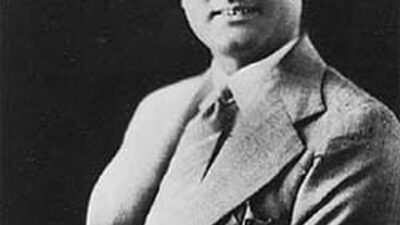
रंजित मूवीटोन की 'तानसेन' (1943) का एक युगल गीत, के.एल. सहगल और ख़ुर्शीद द्वारा गाया गया और खेमचंद प्रकाश के शास्त्रीय-आधारित संगीत में ढला। फ़िल्म 'बचपन के साथी' के इस भाव पर एक से अधिक बार लौटती है, और सहगल-ख़ुर्शीद की जोड़ी — किंवदंती की आवाज़ बनाम प्रतिद्वंद्वी दरबारी गायिका — साउंडट्रैक के भावनात्मक आधारों में से एक है। रचना पूरी फ़िल्म में बहने वाली ध्रुपद-प्रभावित गंभीरता बनाए रखती है, पर कोमल और संवादात्मक रूप में नरम पड़ जाती है।
अंग्रेज़ी में पढ़ें · Read in English
A duet from Ranjit Movietone's Tansen (1943), sung by K.L. Saigal and Khursheed and set to Khemchand Prakash's classically-grounded score. The film returns to this 'companions of childhood' theme more than once, and the Saigal-Khursheed pairing — the legend's voice against the rival court singer's — is one of the soundtrack's emotional anchors. The composition keeps the dhrupad-influenced gravity that runs through the whole film while softening into something tender and conversational.
संगीत The Music
खेमचंद प्रकाश 'तानसेन' स्कोर को परिभाषित करने वाले अर्ध-शास्त्रीय मुहावरे में रचना करते हैं, तबला और सारंगी दोनों आवाज़ों को घेरते हुए। युगल इस तरह बना है कि सहगल की नपी-तुली, ताल-से-पीछे रहती अदायगी और ख़ुर्शीद की उजली गमक अंतरों में एक-दूसरे को उत्तर देती हैं — एक सायास संवाद, न कि स्वर-मिलान। यही संरचनात्मक संयम इस साउंडट्रैक को बाद की राग-फ़िल्म विधा के लिए कसौटी बना देता है।
अंग्रेज़ी में पढ़ें · Read in English
Khemchand Prakash composes in the semi-classical register that defines the Tansen score, with tabla and sarangi framing the two voices. The duet is built so that Saigal's measured, behind-the-beat phrasing and Khursheed's brighter timbre answer each other across the antaras — a deliberate dialogue rather than a unison, the kind of structural restraint that made this soundtrack a touchstone for the later raag-film genre.
काव्य The Poetry
'मोरे बालपन के साथी' में 'बालपन' — बचपन की अपुनर्प्राप्य निर्दोषता — एक रूपक है उन सभी चीज़ों के लिए जो समय और महत्त्वाकांक्षा के साथ छूट जाती हैं। उत्तर भारतीय शास्त्रीय काव्य में, विशेषकर ब्रज परम्परा में जहाँ ठुमरी के अनेक पाठ जड़े हैं, बचपन का अतीत शुद्ध भावना का स्थान है — इससे पहले कि सामाजिक संरचनाएँ अपनी बाधाएँ थोपें। एक 'साथी' — उस युग के संगी — के पास वापस लौटना केवल रोमानी नहीं, एक दार्शनिक कृत्य है: पूर्व-सामाजिक स्व को पुनः प्राप्त करना। पण्डित इन्द्र की भाषा ब्रज-संस्कृत है, 'मोरे' (मेरे का ब्रज-उच्चारण) का प्रयोग इसे शास्त्रीय भंडार में स्थापित करता है। युगल-संरचना — सहगल और ख़ुर्शीद एक-दूसरे को उत्तर देते — गीत के वर्णित पुनर्मिलन को अभिनीत करती है: दो आवाज़ें वर्षों के पार एक-दूसरे को पहचानती हैं, प्रत्येक में वही स्मृति है।
अंग्रेज़ी में पढ़ें · Read in English
The lyric 'More Balpan Ke Sathi' (Companion of my childhood) uses the concept of 'balpan' — the irretrievable innocence of childhood — as a metonymy for everything lost to time and ambition. In North Indian classical poetry, especially in the Braj tradition where much thumri text is anchored, the childhood past is the seat of pure emotion before social structures impose their constraints. The lover's return to a 'sathi' (companion) from that era is not merely romantic — it is a philosophical act of reclaiming the pre-social self. Pandit Indra's diction here is Braj-inflected, using 'more' (mine, Braj vocative) rather than 'mere' — the older poetic register signaling that the song occupies the classical repertoire rather than the contemporary. The duet structure — K.L. Saigal and Khursheed answering each other — enacts the reunion the lyric describes: two voices recognizing each other across the years, each carrying the same memory. Khemchand Prakash's semi-classical setting allows the two voices to maintain their individual character while converging harmonically.
कहानी The Story
'तानसेन' (1943) ने बालपन-मित्रता की भावना को एक से अधिक बार उपयोग किया — तानसेन की जीवनी स्वाभाविक रूप से निर्दोष उद्गम से दरबारी जीवन की महानता और एकाकीपन तक की भावनात्मक यात्रा के लिए अनुकूल थी। के.एल. सहगल और ख़ुर्शीद का यह युगल 'मोरे बालपन के साथी' उस जीवनी-कथा का भावनात्मक आधार है: वह व्यक्ति जो संगीतकार की ख्याति से पहले उसे जानता था। फ़िल्म जयंत देसाई ने रणजीत मूवीटोन के लिए निर्देशित की, और ख़ुर्शीद बानो सहगल के विपरीत मुख्य महिला भूमिका में थीं — यह युगल उनके पर्दे के संबंध का एक प्रमुख दृश्य बन जाता है। खेमचंद प्रकाश ने अर्ध-शास्त्रीय रजिस्टर में रचना की जो 'तानसेन' स्कोर को परिभाषित करती है — तबला और सारंगी आवाज़ों को एक चैम्बर-संगीत की अंतरंगता में बाँधते हैं।
अंग्रेज़ी में पढ़ें · Read in English
Tansen (1943) used the childhood-friendship theme more than once — the biography of Tansen naturally lent itself to the emotional arc from innocent origins to the grandeur and isolation of court life. 'More Balpan Ke Sathi,' sung by K.L. Saigal and Khursheed as a duet, represents the emotional anchor of that biographical narrative: the figure from the past who knew the musician before his fame. The film was directed by Jayant Desai for Ranjit Movietone, and Khursheed Bano appeared opposite Saigal as the film's female lead — making this duet a principal scene of their on-screen relationship. Khemchand Prakash composed in the semi-classical register that defines the Tansen score, the tabla and sarangi framing the voices in a chamber-music intimacy distinct from the grandeur of the dhrupad centrepieces. The duet is included in the song list on Wikipedia's Tansen (film) article, verifying its placement in the film.
विरासत The Legacy
'तानसेन' (1943) के तेरह गीतों में, 'मोरे बालपन के साथी' को संगीत-विद्वानों और पुरानी हिंदी फ़िल्म संगीत के उत्साही लोगों द्वारा फ़िल्म के युगल गीतों में सबसे भावनात्मक रूप से प्रभावशाली के रूप में चुना जाता है — सहगल और ख़ुर्शीद की जोड़ी अपने सबसे अंतरंग स्वर पर पहुँचती है। 'तानसेन' स्कोर समग्र रूप से एक मील का पत्थर माना जाता है, और यह युगल शास्त्रीय राग-प्रदर्शनियों की भव्यता के बीच इसका सबसे उष्म, सबसे मानवीय क्षण है। ख़ुर्शीद बानो, जिन्होंने सहगल के साथ गाया, 1940 के दशक की प्रारम्भिक अभिनेत्री-गायिकाओं में अग्रणी थीं; उनकी यहाँ की स्वर-रसायन इस काल के इतिहासों में दो शास्त्रीय प्रशिक्षित आवाज़ों के एक सुलभ स्तर पर मिलन के उदाहरणात्मक उदाहरण के रूप में उद्धृत है।
अंग्रेज़ी में पढ़ें · Read in English
Among Tansen (1943)'s thirteen songs, 'More Balpan Ke Sathi' is singled out by music scholars and vintage Hindi film enthusiasts as the most emotionally affecting of the film's duets — the Saigal-Khursheed pairing reaching its most intimate register. The Tansen score collectively is considered a landmark, and this duet is its warmest, most humanly scaled moment amid the grandeur of the classical raag showcases. Khursheed Bano, who sang opposite Saigal, was one of the leading actress-singers of the early 1940s; their vocal chemistry here is noted in histories of the period as an exemplary instance of two classical trained voices finding a common, accessible register. The song is preserved on archival platforms as part of the complete Tansen soundtrack, one of the most comprehensively documented commercial scores of the early Hindi film era.
वर्गीकरण
Classification- Tempo
- Medium
Genre
अन्य विवरण
More Details- https://en.wikipedia.org/wiki/Tansen_(film)
- https://www.cinemaazi.com/feature/movie-memories-tansen-1943
- https://mehfilmeinmeri.wordpress.com/2022/08/10/aayega-aanewala-remembering-khemchand-prakash/
- https://www.hindigeetmala.net/movie/tansen.htm
References
रोचक तथ्य
Margin Notesतानसेन (1943) में के.एल. सहगल ने अपनी सबसे प्रशंसित पर्दा भूमिका निभाई थी; इस फ़िल्म का निर्देशन जयंत देसाई ने रणजीत मूवीटोन के लिए किया था और इसे सहगल के जीवनी-आधारित संगीतमय कार्य का शिखर माना जाता है।
अंग्रेज़ी में पढ़ें · Read in English
Tansen (1943) featured K.L. Saigal in his most celebrated screen role; the film was directed by Jayant Desai for Ranjit Movietone and is considered the pinnacle of Saigal's biographical musical work.
इस युगल गीत में सहगल के साथ गाने वालीं खुर्शीद बानो, उस युग की उन गिनी-चुनी अभिनेत्री-गायिकाओं में से एक थीं जिन्हें औपचारिक शास्त्रीय गायन प्रशिक्षण प्राप्त था; राग-आधारित मधुर पंक्ति को बनाए रखने की उनकी क्षमता ने सहगल-खुर्शीद की जोड़ी को विश्वसनीय बनाया।
अंग्रेज़ी में पढ़ें · Read in English
Khursheed Bano, who sings opposite Saigal in this duet, was one of the few actress-singers of the era with formal classical vocal training; her ability to sustain a raag-based melodic line made the Saigal-Khursheed pairing credible.
पंडित इंद्र द्वारा शीर्षक में समकालीन 'मेरे' के बजाय ब्रज-प्रभावित 'मोरे' का प्रयोग यह संकेत देता है कि यह गीत आधुनिक बोलचाल की हिंदी के बजाय शास्त्रीय काव्य परंपरा में स्थित है।
अंग्रेज़ी में पढ़ें · Read in English
Pandit Indra's use of Braj-inflected 'more' (rather than the contemporary 'mere') in the title signals the song's placement within the classical lyric tradition rather than modern conversational Hindi.
तानसेन (1943), 1943 की दूसरी सबसे अधिक कमाई करने वाली भारतीय फ़िल्म थी और हिंदी फ़िल्म संगीत के इतिहास में इसे लगातार व्यावसायिक साउंडट्रैक में शास्त्रीय राग के समावेश के स्वर्ण मानक के रूप में उद्धृत किया जाता है।
अंग्रेज़ी में पढ़ें · Read in English
Tansen (1943) was the second highest-grossing Indian film of 1943 and is consistently cited in Hindi film music histories as the gold standard for classical raag integration in a commercial soundtrack.
नमूना-पट्टी
The Specimen Table| शीर्षक | मोरे बालपन के साथी · More Balpan Ke Sathi |
|---|---|
| फ़िल्म | तानसेन · 1943 |
| वर्ष · युग | 1943 |
| गायक | K.L. Saigal, Khursheed |
| गीतकार | Pandit Indra |
| संगीतकार | Khemchand Prakash |
| स्वरूप | युगल |
| गति | मध्यम |
| भाषा | hindi |
| भाव | मीठा-कड़वा · पुरानी यादें · रोमांटिक |
| लोकप्रियता | Popular |
| बोल-स्थिति | केवल झलक |
जुड़े हुए पन्ने
Connected Plates · The Graph Made Visibleअटलस में कोई पन्ना अकेला नहीं — इस गीत से जुड़े गीत, कलाकार, फ़िल्म, राग-ताल-विधा, सब यहाँ से खुलते हैं।
मिलते-जुलते गीत · Related Songs
कलाकार · The Artists
फ़िल्म · The Film
साझा कीजिए · Share this Plate