गीत विंग · गीत-पट्टिका · Song Plate
मेरी मैया मैं गैया चराऊँ
Meri Maiya Mai Gaiya Charau
बच्चे का गाय-चराने का गीत — और उन दो गीतों में से एक जिन्हें बाल-अभिनेत्री बेबी मुमताज़ ने स्वयं गाया, मधुबाला बनने से दो साल पहले।
भावभक्ति · शांत · चुलबुला
भाषाhindi गतिमध्यम स्वरूपयुगल
श्रेय
The Creditsसूत्र-वाक्य · The Hook
सूत्र-वाक्य
बच्चे का गाय-चराने का गीत — और उन दो गीतों में से एक जिन्हें बाल-अभिनेत्री बेबी मुमताज़ ने स्वयं गाया, मधुबाला बनने से दो साल पहले।
In EnglishA child's cowherding song — and one of the two numbers the child actress Baby Mumtaz sang herself, two years before she became Madhubala.
पट्टिका-लेख
The Monographपरिचय Overview
बेबी मुमताज़ और मास्टर बृजलाल का बाल-युगल गीत, फ़िल्म के बाल-पात्रों पर फ़िल्माया गया। यह उन दो गीतों में से एक है जिन्हें भावी मधुबाला ने 'धन्ना भगत' (1945) के लिए अपनी ही आवाज़ में गाया — उनके किशोरावस्था-पूर्व करियर का दर्ज तथ्य, उन वर्षों का जब वे अब भी अपने जन्म-नाम से परदे पर आती थीं और हिंदी फ़िल्मों में बच्चों को वयस्क पार्श्वगायकों से डब कराने के बजाय आम तौर पर अपनी आवाज़ में गाने दिया जाता था।
अंग्रेज़ी में पढ़ें · Read in English
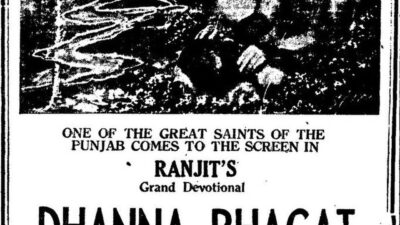
A children's duet between Baby Mumtaz and Master Brijlal, picturised on the film's child characters. It is one of two songs the future Madhubala sang in her own voice for Dhanna Bhagat (1945) — a documented fact of her pre-teen career, from the years when she was still billed under her birth name and children in Hindi films were routinely allowed their own vocals rather than being dubbed by adult playback singers.
संगीत The Music
खेमचंद प्रकाश दो अप्रशिक्षित बाल-स्वरों की सीमा तक ही लिखते हैं और सीमा को ही चरित्र बना देते हैं: छोटी, सीढ़ीनुमा धुन; दोहराया जाने वाला टेक जिसे दोनों गायक आपस में बाँट सकें; और चलती हुई ढोलक की लय जो मवेशियों के साथ चलने का आभास देती है। बच्चों को निपुण दिखाने की कोई कोशिश नहीं है, और संगीत इससे बेहतर ही होता है — बिना माँजे हुए स्वर-रंग का होना ही इस दृश्य का मर्म है।
अंग्रेज़ी में पढ़ें · Read in English
Khemchand Prakash writes to the limits of two untrained child voices and turns the limitation into character: a short scalar tune, a repeated refrain the two singers can trade, a brisk dholak pulse suggesting walking with cattle. There is no attempt to make the children sound accomplished, and the score is better for it — the unpolished timbre is the whole point of the sequence.
काव्य The Poetry
गाय चराना कृष्ण-भक्ति का मानक बाल-परिवेश है, और फ़िल्म के बच्चों को उसी ढाँचे में रखना उन्हें चुपचाप उसमें मिला देता है — गाँव का साधारण काम और ईश्वरीय जीवनी एक ही शब्दावली बरतते हैं। गीत को 'मैया' यानी माँ को संबोधित करना उसे सैद्धांतिक नहीं, घरेलू बनाए रखता है: बच्चा दिन भर के काम का ब्योरा देता है, और भक्ति का अर्थ उसके नीचे बैठा रहता है, कभी कहा नहीं जाता। यही परोक्षता इसे उपदेश के बजाय बाल-गीत के रूप में बरतने लायक बनाती है।
अंग्रेज़ी में पढ़ें · Read in English
Cow-herding is the standard childhood setting of Krishna devotion, and putting the film's children in that frame quietly assimilates them to it — the ordinary village task and the divine biography use the same vocabulary. Addressing the song to maiya, the mother, keeps it domestic rather than doctrinal: what the child reports is a day's work, and the devotional meaning sits underneath it without ever being stated. That indirectness is what makes it usable as a children's number rather than a sermon.
कहानी The Story
मधुबाला का जन्म 1933 में हुआ और 1940 के दशक के मध्य तक वे 'बेबी मुमताज़' नाम से परदे पर आईं; अपना फ़िल्मी नाम उन्होंने 1947 में लिया। 'धन्ना भगत' में वे बाल-मुन्नी की भूमिका में हैं, जबकि वयस्क मुन्नी कमला चटर्जी हैं; इन्हीं निर्देशक केदार शर्मा ने दो साल बाद उन्हें 'नील कमल' (1947) में राज कपूर के सामने लिया — वह फ़िल्म जिसे आम तौर पर उनकी पहली नायिका-भूमिका कहा जाता है।
अंग्रेज़ी में पढ़ें · Read in English
Madhubala was born in 1933 and appeared through the mid-1940s as Baby Mumtaz, taking her screen name only in 1947. In Dhanna Bhagat she plays the child Munni, with Kamla Chatterjee playing the adult Munni; the same director, Kidar Sharma, would cast her two years later in Neel Kamal (1947) opposite Raj Kapoor, the film usually cited as her first leading role.
विरासत The Legacy
'धन्ना भगत' का आज लगभग कुछ भी याद नहीं है, पर इस गीत का ध्यान खींचने का एक टिकाऊ कारण है: यह मधुबाला के गाने की रिकॉर्डिंग है, जो दुर्लभ है। स्टार बनने के बाद उनके गीत लता मंगेशकर, शमशाद बेगम और गीता दत्त ने गाए, और इस फ़िल्म के दो बाल-गीत उन गिनी-चुनी मिसालों में हैं जहाँ किसी फ़िल्म-साउंडट्रैक पर उनकी अपनी आवाज़ है।
अंग्रेज़ी में पढ़ें · Read in English
Almost nothing of Dhanna Bhagat is remembered today, but this song has a durable claim on attention for one reason: it is a recording of Madhubala singing, which is rare. Once she became a star her songs were sung by Lata Mangeshkar, Shamshad Begum and Geeta Dutt, and the two children's numbers from this film are among the very few instances of her own voice on a film soundtrack.
वर्गीकरण
Classification- Tempo
- Medium
Genre
अन्य विवरण
More Details- https://en.wikipedia.org/wiki/Dhanna_Bhagat_(film)
- https://www.hindigeetmala.net/movie/dhanna_bhagat.htm
- https://en.wikipedia.org/wiki/List_of_Hindi_films_of_1945
- https://en.wikipedia.org/wiki/Dhanna
- https://www.cinemaazi.com/feature/bigger-than-sky-ranjit-studio
- https://en.wikipedia.org/wiki/Khemchand_Prakash
References
रोचक तथ्य
Margin Notesबेबी मुमताज़ — भावी मधुबाला, जन्म 1933 — ने 'धन्ना भगत' में दो गीत स्वयं गाए: यह और 'मीठे भोजन'। 'मधुबाला' नाम उन्होंने 1947 में अपनाया।
अंग्रेज़ी में पढ़ें · Read in English
Baby Mumtaz — the future Madhubala, born in 1933 — sang two songs in Dhanna Bhagat herself: this one and 'Meethe Bhojan'. She adopted the screen name Madhubala in 1947.
निर्देशक केदार शर्मा ने अपने बंबई करियर की शुरुआत रणजीत की 'अरमान' (1942) से की थी; 'धन्ना भगत' के दो साल बाद उन्होंने 'नील कमल' (1947) बनाई, जिसने राज कपूर और मधुबाला को उनकी पहली नायक-नायिका भूमिकाएँ दीं।
अंग्रेज़ी में पढ़ें · Read in English
Director Kidar Sharma had begun his Bombay career at Ranjit with Arman (1942); two years after Dhanna Bhagat he made Neel Kamal (1947), which gave Raj Kapoor and Madhubala their first leading roles.
शीर्षक के धन्ना जयपुर के पास चौरू गाँव के पंद्रहवीं सदी के जाट किसान हैं, जिन्हें रामानंद का शिष्य माना जाता है; उनके तीन पद आगे चलकर गुरु ग्रंथ साहिब में सम्मिलित हुए।
अंग्रेज़ी में पढ़ें · Read in English
The Dhanna of the title is a fifteenth-century Jat farmer from Chauru village near Jaipur, counted as a disciple of Ramananda; three of his hymns were later included in the Guru Granth Sahib.
नमूना-पट्टी
The Specimen Table| शीर्षक | मेरी मैया मैं गैया चराऊँ · Meri Maiya Mai Gaiya Charau |
|---|---|
| फ़िल्म | धन्ना भगत · 1945 |
| वर्ष · युग | 1945 — Pre-Independence (1931–1947) |
| गायक | बेबी मुमताज़ (मधुबाला), मास्टर बृजलाल |
| गीतकार | Pandit Indra |
| संगीतकार | Khemchand Prakash |
| स्वरूप | युगल |
| गति | मध्यम |
| भाषा | hindi |
| भाव | भक्ति · शांत · चुलबुला |
| लोकप्रियता | Known |
| बोल-स्थिति | केवल झलक |
जुड़े हुए पन्ने
Connected Plates · The Graph Made Visibleअटलस में कोई पन्ना अकेला नहीं — इस गीत से जुड़े गीत, कलाकार, फ़िल्म, राग-ताल-विधा, सब यहाँ से खुलते हैं।
मिलते-जुलते गीत · Related Songs
कलाकार · The Artists
फ़िल्म · The Film
साझा कीजिए · Share this Plate