गीत विंग · गीत-पट्टिका · Song Plate
मेरी चक्की की सुन के रे घोर
Meri Chakki Ki Sun Ke Re Ghor
एक चक्की-गीत — हाथ की चक्की का गहरा घोर टेक में बदल गया, और रानी के हाथों दासी का काम।
भावउदास · पुरानी यादें · दार्शनिक
भाषाhindi
श्रेय
The Creditsसूत्र-वाक्य · The Hook
सूत्र-वाक्य
एक चक्की-गीत — हाथ की चक्की का गहरा घोर टेक में बदल गया, और रानी के हाथों दासी का काम।
In EnglishA grinding song — the deep rumble of a hand-mill turned into a refrain, and the sound of a queen doing a servant's work.
पट्टिका-लेख
The Monographपरिचय Overview
'मेरी चक्की की सुन के रे घोर' 'तारामती' के नौ दर्ज शीर्षकों में श्रम-गीत है: 'घोर' पत्थर की हाथ-चक्की से उठने वाली वह गहरी, लगातार गूँज है, और पंक्ति किसी को उसे सुनने के लिए बुलाती है। हिंदीगीतमाला और माईस्वर, दोनों शीर्षक को इसी रूप में दर्ज करते हैं। फ़िल्म के लिए दर्ज नौ गीतों पर श्रेय-पंक्ति एक ही है: संगीत रामचंद्र पाल और केशवराव भोले का संयुक्त रूप से, बोल मुखराम शर्मा 'अशांत' के। किसी भी गीत के साथ गायक का नाम नहीं है। न कोई रिकॉर्डिंग मिली, न कोई बोल-पाठ।
अंग्रेज़ी में पढ़ें · Read in English
'Meri Chakki Ki Sun Ke Re Ghor' is the work song among Taramati's nine documented titles: 'ghor' is the low continuous rumble a stone hand-mill makes, and the line invites someone to listen to it. Both HindiGeetMala and MySwar list the title in this form. The credit line is identical on all nine songs documented for the film: music by Ramchandra Pal and Keshavrao Bhole jointly, lyric by Mukhram Sharma 'Ashant'. No singer is named for any of them. No recording has been traced and no lyric text has been found.
संगीत The Music
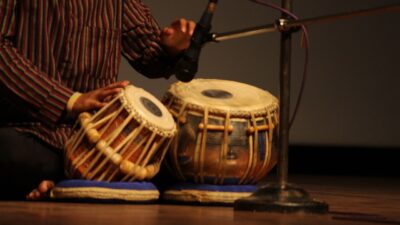
चक्की-गीत फ़िल्मी रूप बनने से पहले एक वास्तविक लोक-रूप है: पत्थर की चक्की एक नियत गति से घूमती है, और गायन उसी गति के चारों ओर व्यवस्थित होता है — यही कारण है कि पिसाई के गीत उत्तर भारतीय ग्रामीण संगीत के सबसे स्थिर छंदों में हैं। इसका फ़िल्मी रूपांतर वही बंधन विरासत में लेता है — लय समान रहनी चाहिए, क्योंकि काम समान रहता है। इस बनावटी बिंदु से आगे इस रिकॉर्डिंग के बारे में कुछ नहीं बताया जा सकता। न कोई गायक दर्ज है, न तवा मिला, न संगीत-संयोजन का विवरण बचा — इसलिए चक्की की लय वास्तव में ताल-वाद्यों ने उठाई थी या नहीं, जैसा ऐसे गीतों में प्रायः होता है, यह अज्ञात है।
अंग्रेज़ी में पढ़ें · Read in English
The chakki song is a real folk form before it is a film form: the stone mill turns at a fixed rate, and the singing organises itself around that rate, which is why grinding songs are among the steadiest metres in North Indian village music. A film setting of one inherits that constraint — the pulse has to stay even, because the work does. Beyond that structural point nothing about this recording can be described. No singer is credited, no disc has been located, and no account of the arrangement survives, so whether the mill's rhythm was actually taken up by the percussion, as such songs often do, is unknown.
काव्य The Poetry
इस शीर्षक में असली काम 'घोर' शब्द कर रहा है। यह पिसाई का नहीं, उसकी ध्वनि का नाम है — भारी, लगातार, कुछ अशुभ-सी गूँज; ऐसा शब्द जो रसोई के औज़ार से कहीं अधिक बार बादल की गरज या घने जंगल से जुड़ता है। इसे हाथ-चक्की पर लगाना एक साधारण घरेलू आवाज़ को कहीं बड़ी और गहरी चीज़ में उठा देता है, और सुनने का निमंत्रण ('सुन के रे') सुनने वाले को तमाशबीन नहीं, साक्षी बना देता है। हरिश्चंद्र-कथा में रानी एक घर में बेच दी जाती है और उससे श्रम कराया जाता है — इसलिए उस स्त्री के मुँह से प्रथम पुरुष में गाया गया चक्की-गीत, जो कुछ ही समय पहले रानी थी, कथा के केंद्रीय उलटाव को एक ही ध्वनि में ढो लेता है। यह पाठ शीर्षक और कथा से निकलता है; फ़िल्म में गीत का वास्तविक स्थान प्रलेखित नहीं है, और इसका कोई छंद नहीं बचा।
अंग्रेज़ी में पढ़ें · Read in English
The word doing the work in this title is 'ghor'. It is not the name of the grinding but of its sound — a heavy, continuous, slightly ominous rumble, a word more often attached to thunder or to a dense forest than to a kitchen implement. Applying it to a hand-mill lifts an ordinary domestic noise into something larger and darker, and the invitation to listen ('sun ke re') turns the listener into a witness rather than a bystander. In the Harishchandra legend the queen is sold into a household and made to labour, so a grinding song sung in the first person by a woman who was lately a queen carries the story's central reversal in a single sound. That reading follows from the title and the legend; the song's actual placement in the film is not documented, and no verse of it has survived.
कहानी The Story
'तारामती' बंबई में रामनिक प्रोडक्शंस ने बनाई और निर्देशन राजा नेने का था, जो प्रभात फ़िल्म कंपनी से निकले थे; संगीत का श्रेय संयुक्त रूप से रामचंद्र पाल और प्रभात के दीर्घकालीन संगीतकार केशवराव भोले को है। फ़िल्म का कोई प्रिंट नहीं बचा और कोई समकालीन समीक्षा नहीं मिली, इसलिए यह दृश्य कैसे रचा गया या किसने प्रस्तुत किया, इस बारे में कुछ नहीं कहा जा सकता। बची हुई गीत-सूची जो दिखाती है, वह कथा की रीढ़ पर टिका संगीत है — प्रार्थना, श्रम, लोरी, विलाप — और यह उसमें श्रम है।
अंग्रेज़ी में पढ़ें · Read in English
Taramati was made in Bombay by Ramnik Productions and directed by Raja Nene, who had come out of the Prabhat Film Company; the score is credited jointly to Ramchandra Pal and Keshavrao Bhole, Prabhat's long-serving composer. No print of the film survives and no contemporary review of it was found, so nothing can be said about how this scene was staged or who performed it. What the surviving song list shows is a soundtrack organised along the spine of the legend — prayer, work, lullaby, lament — of which this is the work.
विरासत The Legacy
चक्की-गीत उत्तर भारत के सबसे टिकाऊ लोक-रूपों में हैं और सबसे कम टिकाऊ फ़िल्मी रिकॉर्डिंगों में: इन्हें शायद ही कभी दोबारा जारी किया गया, और जिस शेलैक पर ये दबाए गए वह अधिकतर बचा नहीं। इस गीत ने केवल अपना शीर्षक छोड़ा है। इसका महत्व संगीत से अधिक साक्ष्य का है — 1945 की एक पौराणिक फ़िल्म की गीत-सूची में श्रम-गीत का होना इसका मज़बूत संकेत है कि फ़िल्म ने रानी की दासता को छोड़कर आगे नहीं बढ़ाया बल्कि उसे रचा, और हरिश्चंद्र-कथा का यही हिस्सा अधिकांश रूपांतर संक्षिप्त कर देते हैं।
अंग्रेज़ी में पढ़ें · Read in English
Grinding songs are among the most durable folk forms in North India and among the least durable film recordings: they were rarely reissued, and the shellac they were pressed on has mostly not survived. This one has left only its title. It matters as evidence rather than as music — a work song in a 1945 mythological's track list is a strong indication that the film staged the queen's servitude rather than skipping past it, which is the part of the Harishchandra story that most versions abbreviate.
वर्गीकरण
ClassificationGenre
अन्य विवरण
More Details- https://www.hindigeetmala.net/song/meri_chakki_ki_sun_ke_re_ghor.htm
- https://www.hindigeetmala.net/movie/taramati.htm
- https://myswar.co/album/taramati-1945
- https://en.wikipedia.org/wiki/List_of_Hindi_films_of_1945
- https://en.wikipedia.org/wiki/List_of_Marathi_films_of_1945
- https://indiancine.ma/EGL/info
References
रोचक तथ्य
Margin Notesफ़िल्म अपना नाम राजा से नहीं, रानी से लेती है: तारामती राजा हरिश्चंद्र की पत्नी हैं, जिन्हें अपने पुत्र के साथ दासी बनकर बिकना पड़ता है, क्योंकि उनके पति वचन तोड़ने के बजाय अपना सब कुछ दे देते हैं। इसी कथा पर दादासाहेब फाल्के की 'राजा हरिश्चंद्र' (1913) बनी थी, जिसे प्रायः भारत की पहली पूर्ण-लंबाई फ़ीचर फ़िल्म माना जाता है — यद्यपि इस स्थान पर बहस रही है और कुछ इतिहासकार दादासाहेब तोरणे की 'श्री पुंडलिक' (1912) को पहले रखते हैं।
अंग्रेज़ी में पढ़ें · Read in English
The film takes its title from the queen rather than the king: Taramati is the wife of Raja Harishchandra, who is sold into servitude along with her son when her husband gives away everything he has rather than break a promise. The same legend was the subject of Dadasaheb Phalke's Raja Harishchandra (1913), generally regarded as the first full-length Indian feature film — though that status has been debated, with some historians putting Dadasaheb Torne's Shree Pundalik (1912) first.
'तारामती' के नौ में से किसी भी गीत के साथ गायक का श्रेय दर्ज नहीं है। हिंदीगीतमाला हर शीर्षक को उसका अपना पृष्ठ देती है और गीतकार तथा दोनों संगीतकारों के नाम भरती है, पर गायक का ख़ाना हर बार ख़ाली छोड़ देती है; माईस्वर की सूची भी यही करती है। इसीलिए इस फ़िल्म की हर गीत-फ़ाइल में गायकों की सूची अनुमान के बजाय ख़ाली रखी गई है।
अंग्रेज़ी में पढ़ें · Read in English
Not one of Taramati's nine songs carries a singer credit. HindiGeetMala gives each title its own page and fills in the lyricist and both music directors, but leaves the singer column empty on every one; MySwar's track listing does the same. Every song file for this film therefore has an empty singers array rather than a guess.
1945 की मराठी फ़िल्मों की विकिपीडिया सूची 'तारामती' को मराठी और हिंदी में साथ-साथ बनी फ़िल्म के रूप में दर्ज करती है — वही द्विभाषी तरीक़ा जो निर्देशक राजा नेने 'दस बजे / दहा वाजता' (1942) में अपना चुके थे, वह फ़िल्म जिस पर वे, संगीतकार केशवराव भोले और गीतकार मुखराम शर्मा तीनों प्रभात में साथ काम कर चुके थे।
अंग्रेज़ी में पढ़ें · Read in English
Wikipedia's register of Marathi films of 1945 lists Taramati as having been made simultaneously in Marathi and Hindi — the same bilingual method its director Raja Nene had used on Das Baje / Daha Wajta (1942), the film on which he, composer Keshavrao Bhole and lyricist Mukhram Sharma had all worked together at Prabhat.
नमूना-पट्टी
The Specimen Table| शीर्षक | मेरी चक्की की सुन के रे घोर · Meri Chakki Ki Sun Ke Re Ghor |
|---|---|
| फ़िल्म | तारामती · 1945 |
| वर्ष · युग | 1945 — pre independence |
| गीतकार | Mukhram Sharma |
| संगीतकार | Ramchandra Pal, Keshavrao Bhole |
| भाषा | hindi |
| भाव | उदास · पुरानी यादें · दार्शनिक |
| लोकप्रियता | Obscure |
| बोल-स्थिति | केवल झलक |
जुड़े हुए पन्ने
Connected Plates · The Graph Made Visibleअटलस में कोई पन्ना अकेला नहीं — इस गीत से जुड़े गीत, कलाकार, फ़िल्म, राग-ताल-विधा, सब यहाँ से खुलते हैं।
कलाकार · The Artists
फ़िल्म · The Film
साझा कीजिए · Share this Plate