गीत विंग · गीत-पट्टिका · Song Plate
माना कि तुम हसीन हो
Mana Ki Tum Haseen Ho
फ़िल्मी ग़ज़ल का पुनर्निर्माण होते हुए — 'मूर्ती' के उन दो रिकॉर्डों में एक जिन्हें इतिहासकार इस बात का सबसे स्पष्ट प्रमाण बताते हैं कि बुलो सी. रानी क्या करना चाह रहे थे, और गाने वाले वह मुकेश जिन्हें तब कोई नहीं जानता था।
भावमीठा-कड़वा · उदास · चुलबुला · रोमांटिक
भाषाUrdu · Hindi गतिधीमी स्वरूपएकल पुरुष
श्रेय
The Creditsशब्दकोश
Word Meaningsसूत्र-वाक्य · The Hook
सूत्र-वाक्य
फ़िल्मी ग़ज़ल का पुनर्निर्माण होते हुए — 'मूर्ती' के उन दो रिकॉर्डों में एक जिन्हें इतिहासकार इस बात का सबसे स्पष्ट प्रमाण बताते हैं कि बुलो सी. रानी क्या करना चाह रहे थे, और गाने वाले वह मुकेश जिन्हें तब कोई नहीं जानता था।
In EnglishThe film ghazal being rebuilt in real time — one of the two Moorti sides that historians cite as the clearest evidence of what Bulo C. Rani was trying to do, sung by a Mukesh nobody had heard of yet.
पट्टिका-लेख
The Monographपरिचय Overview
'माना कि तुम हसीन हो' 'मूर्ती' (1945) में मुकेश के दो एकलों में अधिक जाना-पहचाना है, और फ़िल्म का ज़िक्र आने पर सबसे पहले यही नाम लिया जाता है। बुलो सी. रानी पर लिखते हुए फ़िल्म-संगीत इतिहासकार शरद दत्त उन्हें ग़ज़ल गायकी की मूल शैली लौटाने का श्रेय देते हैं और इसी गीत तथा 'हसीनों से हसीनों को मोहब्बत हो ही जाती है' को सर्वोत्तम उदाहरण बताते हैं, यह जोड़ते हुए कि बुलो सी. रानी ने 1945 में भी प्रचलित पारसी-रंगमंच वाली अदायगी से जान-बूझकर दूरी रखी। मुकेश को तब फ़िल्मों में दो-तीन बरस हुए थे और वह हिट अभी नहीं आई थी जो उनका नाम बनाती — 'पहली नज़र' का 'दिल जलता है तो जलने दे' उसी वर्ष आया — इसलिए यह रिकॉर्ड एक ऐसी आवाज़ को पकड़ता है जो अभी बन ही रही है, और जिसकी अदायगी में के.एल. सहगल का असर साफ़ सुनाई देता है।
अंग्रेज़ी में पढ़ें · Read in English
'Mana Ki Tum Haseen Ho' is the better known of Mukesh's two solos in Moorti (1945), and the one most often named when the film comes up at all. Writing on Bulo C. Rani, the film-music historian Sharad Dutt credits the composer with bringing back the original style of ghazal singing and points to this song and 'Hasino Se Hasino Ko Mohabbat Ho Hi Jati Hai' as the best examples, adding that Bulo C. Rani deliberately kept away from the Parsi-theatre manner of delivery still common in 1945. Mukesh was four years into films at the time — he had debuted as an actor-singer in Nirdosh (1941) — and had not yet had the hit that would make his name — 'Dil Jalta Hai To Jalne De' from Pehli Nazar came out in the same year — so the record catches a voice that is still being assembled, with K.L. Saigal's influence audible in the phrasing.
संगीत The Music
संगत जान-बूझकर सादी है: धीमी लय, हारमोनियम और हल्की ताल, ऐसी धुन जो उर्दू पंक्ति के स्वाभाविक बलाघात को दबाने के बजाय उसका अनुसरण करती है, और पंक्तियों के बीच लगभग कोई वाद्य-टिप्पणी नहीं। यही सादगी इसका मर्म है। जिस पारसी-रंगमंच शैली से बुलो सी. रानी मुँह मोड़ रहे थे, वह हर अक्षर सभागार के आख़िरी छोर तक फेंकती थी; यहाँ गायक माइक्रोफ़ोन से बातचीत की दूरी पर है, और इसी से शब्द बोली की तरह सुनाई देते हैं। यह उस वाद्य के भी अनुकूल था जो उनके पास था: 1945 में मुकेश की आवाज़ संकरी और कुछ नासिक्य थी, भारी वाद्य-संगत को ढोने की शक्ति के बिना — और जिन संगीतकार को शरद दत्त के अनुसार भारी आवाज़ें प्रिय थीं, वे यह समझते जान पड़ते हैं कि हल्की आवाज़ को बदले में बिना भीड़ वाली जगह चाहिए।
अंग्रेज़ी में पढ़ें · Read in English
The setting is deliberately plain: a slow tempo, harmonium and light percussion, a melody that follows the natural stress of the Urdu line rather than overriding it, and almost no orchestral commentary between phrases. That plainness is the point. The Parsi-theatre style Bulo C. Rani was turning away from projected every syllable to the back of a hall; this is a singer at conversational distance from the microphone, which is what allows the words to be heard as speech. It also suited the instrument he had: Mukesh's voice in 1945 was narrow and slightly nasal, without the power to carry a heavily orchestrated line, and a composer who Sharad Dutt says preferred weighty voices seems to have understood that a light one needed uncluttered space instead.
काव्य The Poetry
यह गीत 'माना कि' की स्वीकृति-संरचना पर बना है — मान लिया कि, चाहे जो हो — जो उर्दू शायरी के सबसे टिकाऊ आरंभों में है, क्योंकि यह बहस पहले सामने वाले को सौंप देती है और फिर चुपचाप वापस ले लेती है। वक्ता दरबारी शब्दावली में प्रिय के सौंदर्य और अपने ऊपर उसके आधिपत्य को स्वीकार करता है ('अहल-ए-शबाब', यौवन के उफान पर; 'नवाब', शासक) और तभी, यह स्थापित कर लेने के बाद कि वह कुछ विवादित नहीं कर रहा, आत्मीय संबोधन 'जाने-जाँ' पर आकर अपनी छोटी-सी माँग रखता है। एक ही शेर के भीतर औपचारिक से आत्मीय स्तर की ओर यह गति ग़ज़ल की मानक तकनीक है, और पंडित इंद्र — जिन्होंने उसी फ़िल्म में स्त्री-गीतों के लिए सहज ब्रज-रंगी हिंदी लिखी — यहाँ उसे उसी फ़ारसी-रंगी भाषा में निभाते हैं जिसकी यह विधा अपेक्षा करती है।
अंग्रेज़ी में पढ़ें · Read in English
The song is built on the concessive 'mana ki' — granted that, even if — which is one of the most durable openings in Urdu verse because it hands the argument to the other side before quietly taking it back. The speaker concedes the beloved's beauty and her sovereignty over him in courtly vocabulary (ahl-e-shabaab, one in the bloom of youth; nawaab, sovereign) and only then, having established that he is not disputing anything, slips into the intimate address jaane-jaan to make his small request. The movement from formal to intimate register inside a single verse is a standard ghazal technique, and Pandit Indra — who in the same film wrote in plain Braj-inflected Hindi for the women's songs — executes it here in the Persianised register the form expects.
कहानी The Story
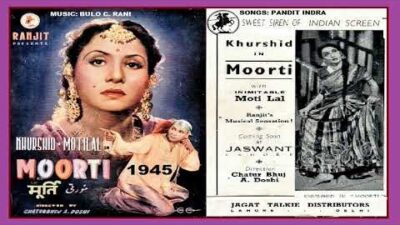
'मूर्ती' रणजीत मूवीटोन की सोशल फ़िल्म थी, निर्देशक स्टूडियो के अनुभवी लेखक-निर्देशक चतुर्भुज दोशी, और मुख्य भूमिकाओं में मोतीलाल तथा गायिका-सितारा ख़ुर्शीद। बुलो सी. रानी रणजीत में खेमचंद प्रकाश और ज्ञान दत्त के सहायक रहने के बाद पिछले ही वर्ष 'पागल दुनिया' (1944) से स्वतंत्र संगीतकार बने थे; पंडित इंद्र स्टूडियो के नियमित गीतकार थे। मुकेश के लिए किसी स्थापित गायिका-सितारा के नाम पर बनी फ़िल्म में दो एकल और त्रिक-गीत में एक हिस्सा स्टूडियो की सीढ़ी पर सचमुच एक क़दम ऊपर था। फ़िल्म का कोई प्रिंट नहीं बचा, और संदर्भ-ग्रंथ श्रेय तो रखते हैं कथा नहीं, इसलिए यह नहीं कहा जा सकता कि यह गीत कैसे और किस पर फ़िल्माया गया।
अंग्रेज़ी में पढ़ें · Read in English
Moorti was a Ranjit Movietone social directed by Chaturbhuj Doshi, the studio's veteran writer-director, with Motilal and the singing star Khursheed in the leads. Bulo C. Rani had become an independent composer only the previous year, with Pagli Duniya (1944), after an apprenticeship assisting Khemchand Prakash and Gyan Dutt at Ranjit; Pandit Indra was the studio's regular lyricist. For Mukesh, two solos and a share of the trio in a picture headlined by an established singing star was a real step up in the studio hierarchy. No print of the film survives, and the reference works preserve its credits without its story, so nothing can be said about how or on whom this song was staged.
विरासत The Legacy
फ़िल्म भुला दी गई, गीत पूरी तरह नहीं। यह संग्राहकों की कई प्रतिलिपियों में बचा है और उस दौर के लिखित इतिहास में इसकी छोटी पर वास्तविक जगह है — बुलो सी. रानी के फ़िल्मी-ग़ज़ल संबंधी काम की चर्चा में उद्धृत दो उदाहरणों में एक के रूप में। इसका दूसरा मूल्य जीवनी-परक है: यह मुकेश की सबसे आरंभिक बची हुई रिकॉर्डिंगों में से एक है, 'अनोखा प्यार' (1948) और राज कपूर के साथ लंबे साथ से पहले की — जिसने आगे चलकर उस आवाज़ को भारतीय लोकप्रिय संगीत की सबसे पहचानी ध्वनियों में बदल दिया — और श्रोता इसे यह सुनने लौटते हैं कि उसमें तब कितना सहगल बाक़ी था।
अंग्रेज़ी में पढ़ें · Read in English
The film is forgotten and the song is not quite. It survives in several collectors' transfers and it has a small but genuine place in the written history of the period, as one of the two examples cited when Bulo C. Rani's work on the film ghazal is discussed. Its other value is biographical: it is one of the earliest surviving Mukesh recordings, made before Anokha Pyar (1948) and the long association with Raj Kapoor turned that voice into one of the most recognisable sounds in Indian popular music, and listeners return to it to hear how much Saigal was still in it.
वर्गीकरण
Classification- Tempo
- Slow
Genre
अन्य विवरण
More Details- https://www.hindigeetmala.net/movie/moorti.htm
- https://en.wikipedia.org/wiki/List_of_Hindi_films_of_1945
- https://indiancine.ma/EFB/info
- https://www.millenniumpost.in/sundaypost/beacon/in-the-shadow-of-giants-bulo-c-rani-375482
- https://atulsongaday.me/2011/10/08/haseenon-se-haseenon-ko-muhabbat-ho-hi-jaati-hai/
- https://en.wikipedia.org/wiki/Ranjit_Studios
- https://www.youtube.com/watch?v=7S1xKEKPwHU
References
रोचक तथ्य
Margin Notesविंटेज-संगीत इतिहासकार नलिन शाह से जुटाई सामग्री पर आधारित मिलेनियम पोस्ट के अपने लेख में शरद दत्त इस गीत और 'हसीनों से हसीनों को मोहब्बत हो ही जाती है' को संगीतकार द्वारा ग़ज़ल गायकी की मूल शैली लौटाने के सर्वोत्तम उदाहरण बताते हैं।
अंग्रेज़ी में पढ़ें · Read in English
Sharad Dutt, in his Millennium Post account of Bulo C. Rani built on material from the vintage-music historian Nalin Shah, names this song and 'Hasino Se Hasino Ko Mohabbat Ho Hi Jati Hai' as the best examples of the composer bringing back the original style of ghazal singing.
मुकेश का निर्णायक गीत, 'पहली नज़र' का 'दिल जलता है तो जलने दे', उसी वर्ष 1945 में आया; 'मूर्ती' के एकल उनके नाम बनने से ठीक पहले के महीनों के हैं।
अंग्रेज़ी में पढ़ें · Read in English
Mukesh's breakthrough, 'Dil Jalta Hai To Jalne De' from Pehli Nazar, was released in the same year, 1945; the Moorti solos come from the months just before his name was made.
बुलो सी. रानी ने 22 वर्षों में 66 फ़िल्मों के लिए संगीत रचा। उनका जन्म 6 मई 1921 को सिंध में बुलो चंदीराम रामचंदानी के रूप में हुआ और 24 मई 1993 को उनका निधन हुआ।
अंग्रेज़ी में पढ़ें · Read in English
Bulo C. Rani composed for 66 films over 22 years. He was born Bulo Chandiram Ramchandani in Sindh on 6 May 1921 and died on 24 May 1993.
1929 में चंदूलाल शाह और गौहर द्वारा स्थापित रणजीत मूवीटोन अपने समय के सबसे बड़े बंबई स्टूडियो में था; 1932 तक इसने 39 फ़िल्में बनाईं और 1930 के दशक भर लगभग 300 कलाकारों-तकनीशियनों को वेतन पर रखा।
अंग्रेज़ी में पढ़ें · Read in English
Ranjit Movietone, founded by Chandulal Shah and Gohar in 1929, was among the largest Bombay studios of its time; it produced 39 pictures by 1932 and kept a payroll of roughly 300 actors and technicians through the 1930s.
फ़िल्म के गीतकार पंडित इंद्र को 132 फ़िल्मों के 913 गीतों का श्रेय दिया जाता है; बाद में उन्होंने जेमिनी स्टूडियोज़ की 'चंद्रलेखा' (1948) के हिंदी संवाद लिखे और भरत व्यास के साथ उसके हिंदी गीत भी।
अंग्रेज़ी में पढ़ें · Read in English
Pandit Indra, the film's lyricist, is credited with 913 songs in 132 films; he later wrote the Hindi dialogue for Gemini Studios' Chandralekha (1948) and, with Bharat Vyas, its Hindi lyrics.
नमूना-पट्टी
The Specimen Table| शीर्षक | माना कि तुम हसीन हो · Mana Ki Tum Haseen Ho |
|---|---|
| फ़िल्म | मूर्ती · 1945 |
| वर्ष · युग | 1945 — Pre-Independence (1931-1947) |
| गायक | Mukesh |
| गीतकार | Pandit Indra |
| संगीतकार | Bulo C. Rani |
| स्वरूप | एकल पुरुष |
| गति | धीमी |
| भाषा | Urdu · Hindi |
| भाव | मीठा-कड़वा · उदास · चुलबुला · रोमांटिक |
| लोकप्रियता | Known |
| बोल-स्थिति | केवल झलक |
जुड़े हुए पन्ने
Connected Plates · The Graph Made Visibleअटलस में कोई पन्ना अकेला नहीं — इस गीत से जुड़े गीत, कलाकार, फ़िल्म, राग-ताल-विधा, सब यहाँ से खुलते हैं।
मिलते-जुलते गीत · Related Songs
कलाकार · The Artists
फ़िल्म · The Film
साझा कीजिए · Share this Plate
यह पन्ना आगे बढ़ाइए
सवाल-जवाब
Questions & Answersक्या यह मुकेश के सबसे शुरुआती फ़िल्मी गीतों में से है? · Is this one of Mukesh's earliest film songs?
हाँ। मुकेश ने 1941 की 'निर्दोष' से अभिनेता-गायक के रूप में फ़िल्मों में पदार्पण किया, और 1945 में रिकॉर्ड हुए 'मूर्ती' के दोनों एकल उनकी सबसे आरंभिक बची हुई फ़िल्मी रिकॉर्डिंगों में हैं — उसी वर्ष के, जिस वर्ष 'पहली नज़र' का 'दिल जलता है तो जलने दे' आया, वह गीत जिसने वास्तव में उनका नाम बनाया।
Yes. Mukesh made his film debut as an actor-singer in Nirdosh (1941), and the two Moorti solos recorded in 1945 are among his earliest surviving film recordings — made in the same year as 'Dil Jalta Hai To Jalne De' from Pehli Nazar, the song that actually made his name.
बुलो सी. रानी कौन थे? · Who was Bulo C. Rani?
बुलो सी. रानी (1921-1993), जिनका जन्म सिंध में बुलो चंदीराम रामचंदानी के रूप में हुआ, को गीतकार डी.एन. माधोक बंबई लाए और रणजीत मूवीटोन के चंदूलाल शाह से मिलवाया। खेमचंद प्रकाश और ज्ञान दत्त के सहायक रहने के बाद वे 'पागल दुनिया' (1944) से स्वतंत्र संगीतकार बने और आगे चलकर 'जोगन' (1950) समेत 66 फ़िल्मों में संगीत दिया।
Bulo C. Rani (1921-1993), born Bulo Chandiram Ramchandani in Sindh, was brought to Bombay by the lyricist D.N. Madhok and introduced to Chandulal Shah of Ranjit Movietone. After assisting Khemchand Prakash and Gyan Dutt he became an independent composer with Pagli Duniya (1944) and went on to score 66 films, including Jogan (1950).