गीत विंग · गीत-पट्टिका · Song Plate
मैं जनम जनम दुखियारी
Mai Janam Janam Dukhiyari
दुःख की गिनती वर्षों में नहीं, जन्मों में — फ़िल्म का सबसे अँधेरा गीत, और मोहनतारा तलपड़े का सबसे भारी।
भावभक्ति · उदास · Yearning
भाषाhindi गतिधीमी स्वरूपएकल महिला
श्रेय
The Creditsसूत्र-वाक्य · The Hook
सूत्र-वाक्य
दुःख की गिनती वर्षों में नहीं, जन्मों में — फ़िल्म का सबसे अँधेरा गीत, और मोहनतारा तलपड़े का सबसे भारी।
In EnglishSorrow measured not in years but in lifetimes — the film's darkest song, and Mohantara Talpade's heaviest.
पट्टिका-लेख
The Monographपरिचय Overview
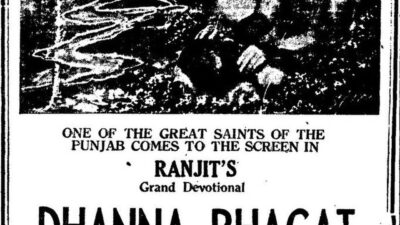
'धन्ना भगत' (1945) में मोहनतारा तलपड़े के चार गीतों में अंतिम, और वही जो विलाप में सबसे दूर तक जाता है। शीर्षक जन्मों से ढोए गए दुःख का दावा करता है, जो भक्ति के ढाँचे में आत्म-दया नहीं, बल्कि उस संचित भार का कथन है जो आत्मा इस जीवन में साथ लाती है — और इसलिए उस मुक्ति के आकार का भी, जिसकी माँग की जा रही है।
अंग्रेज़ी में पढ़ें · Read in English
The last of Mohantara Talpade's four songs in Dhanna Bhagat (1945) and the one that pushes furthest into lament. Its title claims a sorrow carried across births, which in the devotional frame is not self-pity but a statement about the accumulated weight a soul brings to this life — and therefore about the size of the release being asked for.
संगीत The Music
खेमचंद प्रकाश धुन को सीमित स्वर-परास में, लंबे और बिना जल्दी के पदों के साथ लिखते हैं — गायिका के लिए न छिपने की जगह, न टेक लेने को अलंकार। असर गीत से अधिक पाठ जैसा है, और 1940 के दशक की संत-फ़िल्म में विलाप-गीत का यही मानक स्वर है — वह क्षण जब संगीत कथा को आगे बढ़ाना छोड़कर बस ठहर जाता है।
अंग्रेज़ी में पढ़ें · Read in English
Khemchand Prakash writes the melody in a narrow range with long, unhurried phrases, giving the singer nowhere to hide and no ornament to lean on. The effect is closer to a recitation than a song, which is the standard register for the lament number in a 1940s saint-film — the moment the score stops moving the plot and simply holds still.
काव्य The Poetry
'जनम जनम' हिंदी भक्ति-काव्य के भार उठाने वाले पदबंधों में है, और वह एक साथ दो काम करता है। यह वक्ता के शोक को सार्वभौमिक बना देता है — परिस्थितिजन्य नहीं, संरचनागत — और ईश्वर से किए गए संबोधन को याचना के बजाय माँग बना देता है, क्योंकि चक्र की शिकायत का उत्तर केवल चक्र के बाहर की कोई सत्ता ही दे सकती है। पंडित इंद्र की भाषा सादी और अ-साहित्यिक रहती है; पंक्ति का भार अलंकार से नहीं, उसके पीछे खड़े सिद्धांत से आता है।
अंग्रेज़ी में पढ़ें · Read in English
Janam janam — birth after birth — is one of the load-bearing phrases of Hindi devotional verse, and it does two things at once. It universalises the speaker's grief, making it structural rather than circumstantial, and it makes the address to God a demand rather than a request, since only something outside the cycle can answer a complaint about the cycle. Pandit Indra's diction stays plain and unliterary; the line's weight comes from the doctrine behind it, not from ornament.
कहानी The Story
'धन्ना भगत' उसी भक्ति-शृंखला का हिस्सा है जिसने युद्ध के वर्षों में रणजीत मूवीटोन को टिकाए रखा, और इसकी भावनात्मक संरचना परंपरागत है: विलाप देर से रखा गया, और समाधान कथानक से नहीं, चमत्कार से आया। बाबूराव पटेल ने फ़रवरी 1946 की 'फ़िल्मइंडिया' समीक्षा में इसी पूर्वानुमेयता को असह्य पाया और फ़िल्म को सिरे से ख़ारिज कर दिया, जबकि 'द टाइम्स ऑफ़ इंडिया' ने दिसंबर 1945 में दर्शकों की गर्मजोशी भरी प्रतिक्रिया दर्ज की थी।
अंग्रेज़ी में पढ़ें · Read in English
Dhanna Bhagat belongs to the devotional cycle that kept Ranjit Movietone solvent through the war years, and its emotional architecture is conventional: a lament placed late, a resolution supplied by miracle rather than by plot. Baburao Patel, reviewing in Filmindia in February 1946, found exactly this predictability intolerable and dismissed the film outright, while The Times of India had reported audiences responding warmly to it in December 1945.
विरासत The Legacy
किसी पुनःप्रकाशन का प्रमाण नहीं है। यह गीत फ़िल्म की सूची-प्रविष्टि की एक पंक्ति के रूप में बचा है — 1945 की अधिकांश भक्ति-रिकॉर्डिंगों की यही स्थिति है, उन गिनी-चुनी रचनाओं को छोड़कर जिन्हें ग्रामोफ़ोन कंपनियों ने बाद में दोबारा छापना चुना।
अंग्रेज़ी में पढ़ें · Read in English
No reissue is documented. The song survives as a line in the film's catalogue entry, which is the condition of most 1945 devotional recordings outside the handful of titles that the gramophone companies later chose to reprint.
वर्गीकरण
Classification- Tempo
- Slow
Genre
अन्य विवरण
More Details- https://en.wikipedia.org/wiki/Dhanna_Bhagat_(film)
- https://www.hindigeetmala.net/movie/dhanna_bhagat.htm
- https://en.wikipedia.org/wiki/List_of_Hindi_films_of_1945
- https://en.wikipedia.org/wiki/Dhanna
- https://www.cinemaazi.com/feature/bigger-than-sky-ranjit-studio
- https://en.wikipedia.org/wiki/Khemchand_Prakash
References
रोचक तथ्य
Margin Notesफ़िल्म ने अपने पहले दर्शकों को बाँट दिया: बाबूराव पटेल की 'फ़िल्मइंडिया' ने फ़रवरी 1946 में इसे "भक्ति-विषय के बावजूद टालने लायक फ़िल्म" कहा, जबकि 'द टाइम्स ऑफ़ इंडिया' ने 8 दिसंबर 1945 को बताया था कि दर्शक इससे मुग्ध हैं।
अंग्रेज़ी में पढ़ें · Read in English
The film divided its first audience: Baburao Patel's Filmindia called it "a picture which deserves to be avoided inspite of its devotional theme" in February 1946, while The Times of India had reported on 8 December 1945 that filmgoers were charmed by it.
नमूना-पट्टी
The Specimen Table| शीर्षक | मैं जनम जनम दुखियारी · Mai Janam Janam Dukhiyari |
|---|---|
| फ़िल्म | धन्ना भगत · 1945 |
| वर्ष · युग | 1945 — Pre-Independence (1931–1947) |
| गायक | मोहनतारा तलपड़े |
| गीतकार | Pandit Indra |
| संगीतकार | Khemchand Prakash |
| स्वरूप | एकल महिला |
| गति | धीमी |
| भाषा | hindi |
| भाव | भक्ति · उदास · Yearning |
| लोकप्रियता | Obscure |
| बोल-स्थिति | केवल झलक |
जुड़े हुए पन्ने
Connected Plates · The Graph Made Visibleअटलस में कोई पन्ना अकेला नहीं — इस गीत से जुड़े गीत, कलाकार, फ़िल्म, राग-ताल-विधा, सब यहाँ से खुलते हैं।
मिलते-जुलते गीत · Related Songs
कलाकार · The Artists
फ़िल्म · The Film
साझा कीजिए · Share this Plate