गीत विंग · गीत-पट्टिका · Song Plate
भूल न जाना हे गिरधारी
Bhool Na Jana Hey Girdhari
मोहनतारा तलपड़े गिरधारी से कहती हैं कि वे उन्हें भूल न जाएँ — वह उलाहना जिसकी छूट सिर्फ़ भक्त को है।
भावभक्ति · उदास · Yearning
भाषाhindi गतिधीमी स्वरूपएकल महिला
श्रेय
The Creditsसूत्र-वाक्य · The Hook
सूत्र-वाक्य
मोहनतारा तलपड़े गिरधारी से कहती हैं कि वे उन्हें भूल न जाएँ — वह उलाहना जिसकी छूट सिर्फ़ भक्त को है।
In EnglishMohantara Talpade asks Krishna the mountain-lifter not to forget her — the reproach a devotee is allowed to make, and no one else.
पट्टिका-लेख
The Monographपरिचय Overview
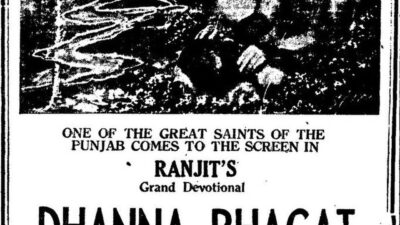
'धन्ना भगत' (1945) में मोहनतारा तलपड़े के चार गीतों में पहला, और वही जो फ़िल्म के लिए उनका स्वर तय करता है: उल्लास नहीं, उलाहना। कृष्ण को यहाँ 'गिरधारी' कहकर पुकारा गया है — गोवर्धन उठाने वाला — और याद दिलाया गया है कि जिसने कभी पूरे गाँव को शरण दी थी, वह अब एक भक्त को अनदेखा न करे।
अंग्रेज़ी में पढ़ें · Read in English
The first of Mohantara Talpade's four songs in Dhanna Bhagat (1945) and the one that sets her register for the film: not ecstatic but aggrieved, addressing Krishna by the epithet Girdhari — he who lifted the Govardhan hill — and reminding him that someone who once sheltered a whole village should not now overlook a single devotee.
संगीत The Music
खेमचंद प्रकाश एक धीमी, उतरती हुई स्वर-पंक्ति लिखते हैं जो हर पद के अंत में गायिका को लंबे ठहरे स्वर सौंप देती है — यह वक्तव्य नहीं, विनती का आकार है। मोहनतारा तलपड़े, मराठी प्रशिक्षण वाली वह आवाज़ जो 1940 के दशक के मध्य में हिंदी फ़िल्मों में लगातार सुनाई दी, इसे उस दौर के फ़ैशनेबल भारी कंपन के बिना गाती हैं — और यह संयम ऐसी पंक्ति के अनुकूल है जिसकी पूरी ताक़त उसके धीमेपन में है।
अंग्रेज़ी में पढ़ें · Read in English
Khemchand Prakash writes a slow, descending melodic line that hands the singer long held notes at the end of each phrase — the shape of a plea rather than a statement. Mohantara Talpade, a Marathi-trained voice who worked steadily in Hindi films of the mid-1940s, sings it without the heavy vibrato fashionable at the time, and the restraint suits a lyric whose whole force is that it is quiet.
काव्य The Poetry
'मुझे भूल न जाना' सर्वज्ञ ईश्वर से कहना अजीब बात है — और यही अजीबपन इसका मर्म है। भक्ति-काव्य, विशेषकर उस मीरा-परंपरा में जिसकी भाषा यह गीत दोहराता है, भक्त को शिकायत का अधिकार देता है — ईश्वर को उलाहने से परे अमूर्त सत्ता नहीं, बल्कि दायित्व वाला व्यक्ति मानने का। 'गिरधारी' संबोधन ही तर्क सँभाल लेता है: यहाँ नामित देवता ठीक वही है जिसने कभी साधारण ग्रामवासियों की रक्षा के लिए सचमुच हस्तक्षेप किया था — इसलिए यह माँग कृपा की नहीं, निरंतरता की है। पंडित इंद्र संबोधन को घरेलू और आत्मीय रखते हैं, और परंपरा ने ईश्वर से यह घनिष्ठता परदे पर सदा इसी तरह पढ़ने योग्य बनाई है।
अंग्रेज़ी में पढ़ें · Read in English
'Do not forget me' is a strange thing to say to an omniscient god, and the strangeness is the point. Bhakti poetry, particularly in the Mira lineage that this song's diction echoes, grants the devotee the right to complain — to treat the divine as a person with obligations rather than an abstraction beyond reproach. The epithet Girdhari carries the argument: the god named here is specifically the one who once physically intervened to protect ordinary villagers, so the request is not for a favour but for consistency. Pandit Indra keeps the address familiar and domestic, which is how the tradition has always made intimacy with the divine legible on screen.
कहानी The Story
केदार शर्मा की फ़िल्म अपनी नायिका मुन्नी को — कमला चटर्जी के अभिनय में, और बाल-रूप में बेबी मुमताज़ — संत के समानांतर एक अपनी भक्ति-यात्रा देती है, और मोहनतारा तलपड़े के चार गीत उसी को ढोते हैं। 1945 की संत-फ़िल्म में नायिका की आस्था परंपरागत रूप से अधिक भावुक होती है और नायक की अधिक तर्कशील; मोहनतारा के करुण गीतों और ख़ान मस्ताना के वैरागी गीतों के बीच संगीत का यह बँटवारा उसी परिपाटी का पालन करता है।
अंग्रेज़ी में पढ़ें · Read in English
Kidar Sharma's film gives its female lead Munni — played by Kamla Chatterjee, with Baby Mumtaz as her child self — a devotional arc parallel to the saint's own, and Mohantara Talpade's four songs carry it. In a 1945 saint-film the heroine's faith is conventionally the more emotional and the hero's the more argumentative; the division of the score between Mohantara's plaintive numbers and Khan Mastana's renunciate ones follows that convention closely.
विरासत The Legacy
इस गीत का फ़िल्म की सूची-प्रविष्टि से आगे कोई दर्ज जीवन नहीं है। मोहनतारा तलपड़े का अपना करियर भी दशक के अंत तक पतला पड़ गया, जब लता मंगेशकर की पीढ़ी ने स्त्री-पार्श्वगायन सँभाल लिया; और इस तरह के गीत — कुशल, पर असाधारण नहीं, ऐसी शैली में गाए गए जो पाँच साल में पुरानी लगने लगी — यही कारण हैं कि उनका नाम मुख्यतः डिस्कोग्राफ़ियों में ही बचा है।
अंग्रेज़ी में पढ़ें · Read in English
The song has no recorded afterlife beyond the film's own catalogue entry. Mohantara Talpade's career itself thinned by the end of the decade as the Lata Mangeshkar generation took over the female playback field, and songs like this one — competent, unspectacular, sung in a manner that would sound old-fashioned within five years — are the reason her name survives mainly in discographies.
वर्गीकरण
Classification- Tempo
- Slow
Genre
अन्य विवरण
More Details- https://en.wikipedia.org/wiki/Dhanna_Bhagat_(film)
- https://www.hindigeetmala.net/movie/dhanna_bhagat.htm
- https://en.wikipedia.org/wiki/List_of_Hindi_films_of_1945
- https://en.wikipedia.org/wiki/Dhanna
- https://www.cinemaazi.com/feature/bigger-than-sky-ranjit-studio
- https://en.wikipedia.org/wiki/Khemchand_Prakash
References
रोचक तथ्य
Margin Notesनिर्देशक केदार शर्मा ने अपने बंबई करियर की शुरुआत रणजीत की 'अरमान' (1942) से की थी; 'धन्ना भगत' के दो साल बाद उन्होंने 'नील कमल' (1947) बनाई, जिसने राज कपूर और मधुबाला को उनकी पहली नायक-नायिका भूमिकाएँ दीं।
अंग्रेज़ी में पढ़ें · Read in English
Director Kidar Sharma had begun his Bombay career at Ranjit with Arman (1942); two years after Dhanna Bhagat he made Neel Kamal (1947), which gave Raj Kapoor and Madhubala their first leading roles.
नमूना-पट्टी
The Specimen Table| शीर्षक | भूल न जाना हे गिरधारी · Bhool Na Jana Hey Girdhari |
|---|---|
| फ़िल्म | धन्ना भगत · 1945 |
| वर्ष · युग | 1945 — Pre-Independence (1931–1947) |
| गायक | मोहनतारा तलपड़े |
| गीतकार | Pandit Indra |
| संगीतकार | Khemchand Prakash |
| स्वरूप | एकल महिला |
| गति | धीमी |
| भाषा | hindi |
| भाव | भक्ति · उदास · Yearning |
| लोकप्रियता | Obscure |
| बोल-स्थिति | केवल झलक |
जुड़े हुए पन्ने
Connected Plates · The Graph Made Visibleअटलस में कोई पन्ना अकेला नहीं — इस गीत से जुड़े गीत, कलाकार, फ़िल्म, राग-ताल-विधा, सब यहाँ से खुलते हैं।
मिलते-जुलते गीत · Related Songs
कलाकार · The Artists
फ़िल्म · The Film
साझा कीजिए · Share this Plate