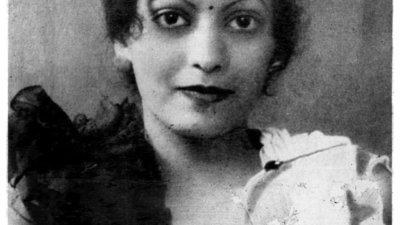
गीत विंग · गीत-पट्टिका · Song Plate
भुलाने वाले हमें भी
Bhulane Wale Hamein Bhi
फ़िल्म का इकलौता गीत जिसे उसके अपने निर्माता-निर्देशक ने गाया — ज़हूर राजा और नसीम अख़्तर, ग़ज़ल के सबसे दुधारी संबोधन पर आमने-सामने: ऐ भुलाने वाले।
भावमीठा-कड़वा · उदास · पुरानी यादें
भाषाhindi गतिधीमी स्वरूपयुगल
श्रेय
The Creditsसूत्र-वाक्य · The Hook
सूत्र-वाक्य
फ़िल्म का इकलौता गीत जिसे उसके अपने निर्माता-निर्देशक ने गाया — ज़हूर राजा और नसीम अख़्तर, ग़ज़ल के सबसे दुधारी संबोधन पर आमने-सामने: ऐ भुलाने वाले।
In EnglishThe one song in the film sung by its own producer-director — Zahoor Raja and Naseem Akhtar trading the ghazal's most double-edged address: you who forget.
पट्टिका-लेख
The Monographपरिचय Overview
पूरे रूप में 'भुलाने वाले हमें भी न याद आया करो' के रूप में दर्ज, यह 'ग़ज़ल' (1945) का इकलौता गीत है जिसे ज़हूर राजा ने — फ़िल्म के निर्माता, निर्देशक और नायक ने — स्वयं गाया, नसीम अख़्तर के साथ युगल में। संबोधन 'भुलाने वाले' उसी पर लक्षित है जो भुला चुका है, और उसके बाद जो निवेदन आता है वह याद किए जाने का नहीं, बल्कि एक ख़ास तरह की याद से बचा लिए जाने का है।
अंग्रेज़ी में पढ़ें · Read in English
Documented in fuller form as 'Bhulaane Waale Hamen Bhi Na Yaad Aaya Karo', this is the only number in Ghazal (1945) known to have been sung by Zahoor Raja himself — the film's producer, director and male lead — in duet with Naseem Akhtar. The address 'bhulane wale', one who forgets, is aimed at someone who has already done the forgetting, and the request that follows is not to be remembered but to be spared a particular kind of remembering.
संगीत The Music
यह युगल ग़ज़ल के बारी-बारी वाले तर्क पर बना है, न कि उस गुँथी हुई स्वर-संगति पर जो कोई बाद का संगीतकार लिखता: दो आवाज़ें क्रम से, हर एक एक शेर पूरा करती हुई — यही वह ढंग है जिससे यह विधा ख़ुद से बहस करती है। ज़हूर राजा गाने वाले अभिनेता थे, प्रशिक्षित गायक नहीं — उन्होंने गायन की शुरुआत 'पूजा' (1940) से की थी — इसलिए ज्ञान दत्त धुन की माँग संयत रखते हैं और अलंकरण का भार नसीम अख़्तर की तालीमशुदा आवाज़ पर छोड़ देते हैं। ज्ञान दत्त रणजीत मूवीटोन के स्टाफ़-संगीतकार रह चुके थे — 'संत तुलसीदास' (1939) और के. एल. सैगल वाली पंद्रह-गीतों की 'भक्त सूरदास' (1942) के रचयिता — और 1937 से 1965 के बीच उन्होंने लगभग 58 फ़िल्मों के लिए क़रीब 600 गीत लिखे। 1945 तक वे राजा मूवीटोन जैसे छोटे स्वतंत्र निर्माताओं के लिए स्वतंत्र रूप से काम कर रहे थे, और कुछ ही वर्षों में नौशाद, सी. रामचंद्र और एस. डी. बर्मन के आगमन ने उन्हें उसी उद्योग के हाशिये पर धकेल दिया जिसे बनाने में उनका हाथ था।
अंग्रेज़ी में पढ़ें · Read in English
A duet built on the ghazal's turn-taking logic rather than on the interlocking harmony a later composer would have written: two voices in sequence, each completing a couplet, which is how the form argues with itself. Zahoor Raja was an actor who sang rather than a trained singer — he had made his singing debut in Pooja (1940) — so Gyan Dutt keeps the melodic demands modest and lets Naseem Akhtar's schooled voice carry the ornament. Gyan Dutt had been Ranjit Movietone's house composer, the man behind Sant Tulsidas (1939) and the fifteen-song Bhakt Surdas (1942) with K. L. Saigal, and across 1937-1965 he wrote some 600 songs for around 58 films. By 1945 he was working freelance for small independents like Raja Movietone, and within a few years the arrival of Naushad, C. Ramchandra and S. D. Burman had pushed him to the margins of an industry he had helped build.
काव्य The Poetry
यहाँ की उर्दू पहली नज़र से कहीं ज़्यादा तीखा काम कर रही है। किसी को 'भुलाने वाले' कहना पहले से ही नाम की शक्ल में लगाया गया इल्ज़ाम है: प्रिय की पहचान ही भूल जाने की क्रिया से की जा रही है, मानो वह उसका पेशा हो। फिर पूरी पंक्ति उससे याद न आने की गुज़ारिश करती है — 'यूँ न याद आया करो' — और यह पूरी परंपरा को उलट देती है। ग़ज़ल की मानक शिकायत यह होती है कि प्रिय भूल गया; यह गीत शिकायत करता है कि प्रिय बार-बार याद में इस तरह उभरता है कि घाव फिर खुल जाता है। कहने वाला किसी व्यक्ति से नहीं, एक साये से अकेला छोड़ दिए जाने की माँग कर रहा है — और यह कहीं अधिक आधुनिक तथा कहीं अधिक असहज माँग है।
अंग्रेज़ी में पढ़ें · Read in English
The Urdu here is doing something sharper than it first appears. To call someone 'bhulane wale' is already an accusation dressed as a name: the beloved is identified by the act of forgetting, as though it were their profession. The fuller line then asks them not to remember — 'yoon na yaad aaya karo', do not come to mind like this — which inverts the entire convention. The standard ghazal complaint is that the beloved has forgotten; this one complains that the beloved keeps surfacing in memory in a way that reopens the wound. The speaker is asking to be left alone by a ghost, not by a person, and that is a far more modern and far more uncomfortable request.
कहानी The Story
'ग़ज़ल' का निर्माण और निर्देशन ज़हूर राजा ने अपनी ही राजा मूवीटोन के लिए किया — वह बंबई का बैनर जो उन्होंने 1943 में, ईस्टर्न पिक्चर्स में संपादक और सहायक के रूप में हुनर सीखने के बाद, खड़ा किया था। समकालीन विवरण इस फ़िल्म को हल्के हास्य-पुट वाली मुस्लिम सामाजिक फ़िल्म बताते हैं: 1945 के सबसे लोकप्रिय हास्य-अभिनेता नूर मोहम्मद चार्ली लीला चिटणीस के सामने नायक थे, जबकि राजा स्वयं राधारानी के साथ जोड़ी में थे। आठों गीत ज्ञान दत्त ने रचे, और चारों गीतकारों को सामूहिक श्रेय मिला है — किसी सूचीपत्र में गीतों का उनके बीच विभाजन दर्ज नहीं है। यह कि राजा ने ठीक यही गीत ख़ुद गाया, फ़िल्म के बारे में बरामद हो सकने वाला सबसे दिलचस्प निर्माण-तथ्य है। पाकिस्तानी फ़िल्म-पत्रकारिता के अनुसार वे उद्योग के आख़िरी सचमुच बहुमुखी लोगों में थे — बारी-बारी से अभिनेता, निर्माता, निर्देशक, संपादक, लेखक, गायक, गीतकार और संगीतकार — और 'ग़ज़ल' में वे इनमें से चार भूमिकाएँ एक साथ निभा रहे थे। वे रावलपिंडी के गवर्नमेंट गॉर्डन कॉलेज से ए. आर. कारदार के नाम एक चिट्ठी के बल पर बंबई आए, 'मिर्ज़ा साहिबाँ' (1939) से पहचान बनाई और सबसे बड़ी सफलता सोहराब मोदी की 'सिकंदर' (1941) से पाई।
अंग्रेज़ी में पढ़ें · Read in English
Ghazal was produced and directed by Zahoor Raja for Raja Movietone, the Bombay banner he founded in 1943 after learning the craft as an editor and assistant at Eastern Pictures. Contemporary accounts describe the picture as a Muslim social with a light comedy touch: Noor Mohammad Charlie — the reigning screen comedian of 1945 — played hero opposite Leela Chitnis, while Raja himself was paired with Radharani. Gyan Dutt composed all eight songs, and the four lyricists are credited collectively, with no catalogue splitting the titles between them. That Raja sang this particular number himself is the most interesting production fact recoverable about the film. He was, by the account of the Pakistani film press, one of the last genuinely multi-skilled men in the industry — actor, producer, director, editor, writer, singer, lyricist and composer by turns — and on Ghazal he was exercising four of those functions at once. He had come to Bombay from Government Gordon College in Rawalpindi on the strength of a letter to A. R. Kardar, broken through in Mirza Sahiban (1939) and had his largest success in Sohrab Modi's Sikandar (1941).
विरासत The Legacy
यह गीत अपनी ही फ़िल्म में गायक के रूप में ज़हूर राजा का इकलौता बचा हुआ श्रव्य निशान है, इसलिए यह संगीतिक प्रसिद्धि से अधिक अभिलेखीय महत्व रखता है: राजा को, जब भी याद किया जाता है, 'सिकंदर' के सहायक कलाकार और लाहौर चले जाने वाले आदमी के रूप में याद किया जाता है। मुस्लिम फ़िल्मकारों के लिए माहौल बिगड़ने पर उन्होंने 1950 के आसपास बंबई छोड़ा, वहाँ 'जिहाद' बनाई, फिर कारोबार में चले गए, 'ग़ाज़ी बिन अब्बास' और 'गुलफ़रोश' (दोनों 1961) तथा 'बाग़ी सरदार' (1966) के साथ लौटे, और फिर इंग्लैंड जाकर सिनेमा से पूरी तरह अलग हो गए। अगस्त 1993 में लाहौर में उनका निधन हुआ। जिस संग्राहक ने यह गीत प्रकाशित किया, उन्होंने लिखा कि वे गायकों की पहचान के बारे में निश्चित नहीं हैं और पाठकों से पुष्टि माँगी — इसलिए यह श्रेय भी सशर्त ही है।
अंग्रेज़ी में पढ़ें · Read in English
The song is the only surviving audible trace of Zahoor Raja as a singer in his own production, and it therefore carries more documentary weight than musical fame: Raja is remembered, when he is remembered at all, as Sikandar's supporting player and as the man who went to Lahore. He left Bombay around 1950 as the climate for Muslim film-makers deteriorated, made Jihad there, withdrew into business, returned with Ghazi Bin Abbas and Gulfarosh (both 1961) and Baghi Sardar (1966), then moved to England and left films altogether. He died in Lahore in August 1993. The collector who posted this song noted he could not be certain of the singer identifications and asked readers to confirm them, so even this attribution is offered provisionally.
वर्गीकरण
Classification- Tempo
- Slow
Genre
अन्य विवरण
More Details- https://www.hindigeetmala.net/movie/ghazal_1945.htm
- https://www.hindilyrics4u.com/movie/ghazal_1945.htm
- https://en.wikipedia.org/wiki/List_of_Hindi_films_of_1945
- https://en.wikipedia.org/wiki/Zahur_Raja
- https://en.wikipedia.org/wiki/Gyan_Dutt
- https://hamraaz.org/cineplot/zahoor-raja/index.html
- https://atulsongaday.me/2016/04/08/bhulaane-waale-hamen-yoon-na-yaad-aaya-karo/
- https://www.cinemaazi.com/people/naseem-akhtar
References
रोचक तथ्य
Margin Notesज़हूर राजा ने 'ग़ज़ल' का निर्माण किया, निर्देशन किया, इसमें अभिनय किया और गाया भी — एक ही फ़िल्म में चार हुनर; पाकिस्तानी फ़िल्म-पत्रकारिता ने बाद में उन्हें उपमहाद्वीप के सिनेमा के आख़िरी सचमुच बहुमुखी कलाकारों में गिना।
अंग्रेज़ी में पढ़ें · Read in English
Zahoor Raja produced, directed, starred in and sang in Ghazal, exercising four crafts on a single picture; the Pakistani film press later described him as one of the last genuinely multi-skilled artistes of the subcontinent's cinema.
राजा का गायन-कैरियर पाँच साल पहले 'पूजा' (1940) से शुरू हुआ था; 'ग़ज़ल' उस दुर्लभ स्थिति का उदाहरण है जहाँ एक गायक-अभिनेता ने वह फ़िल्म ख़ुद बनाकर अपना अवसर ख़ुद रचा जिसमें उसने गाया।
अंग्रेज़ी में पढ़ें · Read in English
Raja's singing career began five years earlier with Pooja (1940); Ghazal is a rare instance of an actor-singer composing his own opportunity by producing the film he sang in.
नसीम अख़्तर राजा की पिछली फ़िल्म 'भाई' (1944) में गा चुकी थीं, इसलिए यह युगल एक पहले से बनी हुई जोड़ी का पुनर्मिलन था।
अंग्रेज़ी में पढ़ें · Read in English
Naseem Akhtar had already sung for Raja's earlier production Bhai (1944), so this duet reunited an established working pair.
नमूना-पट्टी
The Specimen Table| शीर्षक | भुलाने वाले हमें भी · Bhulane Wale Hamein Bhi |
|---|---|
| फ़िल्म | ग़ज़ल · 1945 |
| वर्ष · युग | 1945 |
| गायक | Zahur Raja, Naseem Akhtar |
| गीतकार | D. N. Madhok, Abid Gulrez, शांत अरोड़ा, ख़ावर ज़मान |
| संगीतकार | Gyan Dutt |
| स्वरूप | युगल |
| गति | धीमी |
| भाषा | hindi |
| भाव | मीठा-कड़वा · उदास · पुरानी यादें |
| लोकप्रियता | Obscure |
| बोल-स्थिति | केवल झलक |
जुड़े हुए पन्ने
Connected Plates · The Graph Made Visibleअटलस में कोई पन्ना अकेला नहीं — इस गीत से जुड़े गीत, कलाकार, फ़िल्म, राग-ताल-विधा, सब यहाँ से खुलते हैं।
मिलते-जुलते गीत · Related Songs
कलाकार · The Artists
फ़िल्म · The Film
साझा कीजिए · Share this Plate