गीत विंग · गीत-पट्टिका · Song Plate
लाई ख़ुशी की दुनिया हँसती हुई जवानी
Laai Khushi Ki Duniya Hansati Hui Jawani
परदे पर देव आनंद और सुरैया का प्यार था — लेकिन जो आवाज़ें सुनाई दीं वे मुकेश और सुरैया की थीं।
भावउत्सव · आनंदित · रोमांटिक
भाषाHindi · Urdu गतिMedium-Fast स्वरूपयुगल
श्रेय
The Creditsबोल · The Lyrics
बोल — झलक · Lyrics Preview
दिल ने गाई ख़ुशी की यह कहानी
साथ तेरे हो जाऊँ मैं
ज़िंदगी यह सजाऊँ मैं
Dil ne gaai khushi ki yeh kahani
Saath tere ho jaoon main
Zindagi yeh sajaoon main
कॉपीराइट के कारण केवल झलक — पूरे बोल आधिकारिक मंचों पर।
शब्दकोश
Word Meaningsसूत्र-वाक्य · The Hook
सूत्र-वाक्य
परदे पर देव आनंद और सुरैया का प्यार था — लेकिन जो आवाज़ें सुनाई दीं वे मुकेश और सुरैया की थीं।
In EnglishDev Anand and Suraiya were in love in real life — but the voices you hear belong to Mukesh and Suraiya.
पट्टिका-लेख
The Monographपरिचय Overview
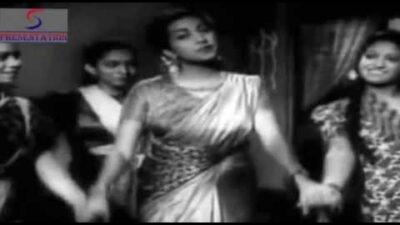
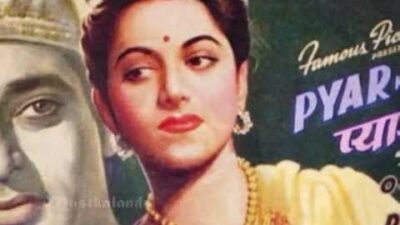
'विद्या' (१९४८) — एस.डी. बर्मन की प्रारंभिक हिंदी फ़िल्म, देव आनंद (जिनके लिए मुकेश की आवाज़) और सुरैया (जो ख़ुद के लिए गाती थीं) — का यह उल्लासपूर्ण युगल गीत यौवन और प्रेम के साथ आने का जश्न मनाता है। एस.डी. बर्मन का संगीत और यशोदानंदन जोशी के बोल। यह मुकेश का सुरैया के साथ गाने के शुरुआती प्रमाणित उदाहरणों में से एक है। परदे पर देव आनंद-सुरैया की जोड़ी (जो असल ज़िंदगी में प्रेमी थे) मुकेश और सुरैया की आवाज़ों के ज़रिए जीती है — एक दिलचस्प लेकिन मार्मिक परत।
अंग्रेज़ी में पढ़ें · Read in English
From Vidya (1948) — S.D. Burman's early Hindi film, starring Dev Anand (with Mukesh providing his voice) and Suraiya (singing her own songs) — 'Laai Khushi Ki Duniya Hansati Hui Jawani' is a jubilant duet that captures the promise of youth and love arriving simultaneously. Composed by S.D. Burman with lyrics by Yashodanandan Joshi, the song is one of the earliest known recordings of Mukesh singing against Suraiya. The context — Dev Anand being voiced by Mukesh, while Suraiya sings for herself — creates a fascinating palimpsest where the screen pairing of two real-life lovers (Dev Anand and Suraiya were romantically involved) is mediated through two very different voices.
संगीत The Music
एस.डी. बर्मन की इस युगल के लिए रचना विशेषरूप से हल्की और मधुर है — उछाल धुन और लय दोनों से आती है। बर्मन के पास ऐसी धुनें लिखने का स्वाभाविक गुण था जो सहज लगती थीं। इस उत्सव-भरे अंदाज़ में उन्होंने एक उछलती-कूदती, यादगार धुन लिखी जो मुकेश के संवाद-जैसे गायन और सुरैया की स्वाभाविक गर्म आवाज़ के लिए उपयुक्त थी।
अंग्रेज़ी में पढ़ें · Read in English
S.D. Burman's composition for this duet is characteristically light and melodic — the buoyancy comes from both the melody and the rhythm. Burman had a gift for writing songs that felt effortless; his Bengali musical background gave him a different kind of lyricism from his North Indian contemporaries. In this celebratory mode he writes a bouncy, memorable tune that was perfectly suited to Mukesh's more conversational approach to melody and Suraiya's naturally warm voice.
काव्य The Poetry
यशोदानंदन जोशी के बोल सीधे उत्सव के हैं — 'लाई ख़ुशी की दुनिया हँसती हुई जवानी'। सरलता जानबूझकर है: यह गीत सोचने के लिए नहीं, नाचने के लिए है, बाँटने के लिए है, उस क्षण के लिए जब यौवन और प्यार एक साथ आएँ।
अंग्रेज़ी में पढ़ें · Read in English
Yashodanandan Joshi's lyric is celebratory in the most direct sense — 'laai khushi ki duniya' (youth has brought a world of happiness). The simplicity is intentional: the song is not for reflection but for dancing, for sharing, for the moment when youth and love arrive together and there is nothing to do but celebrate.
कहानी The Story
इस युगल के पीछे एक मार्मिक कहानी है जिसे ख़ुशमिज़ाज गीत ख़ुद व्यक्त नहीं कर सकता। 'विद्या' (१९४८) बनाते समय देव आनंद और सुरैया वास्तव में प्यार में थे। उन्होंने शादी की उम्मीद रखी थी। लेकिन देव आनंद के परिवार ने धार्मिक आधार पर (सुरैया मुसलमान थीं) आपत्ति जताई। रिश्ता टूट गया — और दोनों ने कई वर्षों तक किसी से शादी नहीं की। परदे पर देव आनंद-सुरैया की जोड़ी, मुकेश-सुरैया की आवाज़ों में — यह उस 'जो हो सकता था' की एक मार्मिक याद है।
अंग्रेज़ी में पढ़ें · Read in English
The story behind this duet carries a bittersweet quality that the cheerful song itself cannot express. Dev Anand and Suraiya were genuinely in love while making Vidya (1948) — their romance had begun and they hoped to marry. But Dev Anand's family objected on religious grounds (Suraiya was Muslim). The romance ended, and neither married anyone else for many years. The image of Dev Anand and Suraiya on screen, with Mukesh and Suraiya's voices, is a haunting reminder of what might have been.
विरासत The Legacy
'विद्या' (१९४८) देव आनंद-सुरैया की दंतकथा का हिस्सा है — एक याद दिलाने वाली कि हिंदी सिनेमा की सबसे बड़ी प्रेम-कहानियाँ हमेशा काल्पनिक नहीं होतीं। एस.डी. बर्मन का इस फ़िल्म में काम उनके शुरुआती हिंदी सिनेमा आउटपुट में से है; देव आनंद के साथ उनकी बाद की जुगलबंदी एक पूरे युग को परिभाषित करेगी।
अंग्रेज़ी में पढ़ें · Read in English
Vidya (1948) is remembered as part of the Dev Anand-Suraiya legend, a reminder that Hindi cinema's greatest love stories were not always fictional. S.D. Burman's work in this film is among his earliest Hindi cinema output; his subsequent collaborations with Dev Anand (Nau Do Gyarah, Guide, Jewel Thief) would define an entire era of Hindi film music.
वर्गीकरण
Classification- Tempo
- Medium-Fast
Genre
अन्य विवरण
More Details- Wikipedia — Vidya (film)
- Songs of Yore — 'Suraiya's songs by SD Burman'
- MySwar — Vidya (1948)
- Wikipedia — Dev Anand
- Wikipedia — Suraiya
References
रोचक तथ्य
Margin Notesदेव आनंद और सुरैया विद्या (1948) बनाते समय वास्तविक जीवन में प्रेम-प्रसंग में थे; यह रिश्ता तब समाप्त हुआ जब उनके परिवार ने धार्मिक आधार पर आपत्ति जताई।
अंग्रेज़ी में पढ़ें · Read in English
Dev Anand and Suraiya were in a real-life romance while making Vidya (1948); the relationship ended when his family objected on religious grounds.
विद्या (1948) की आईएमडीबी रेटिंग 8.1 है — 1948 की फिल्म के लिए असामान्य रूप से उच्च, जो वास्तविक उदासीन स्नेह का संकेत देती है।
अंग्रेज़ी में पढ़ें · Read in English
Vidya (1948) has an IMDB rating of 8.1 — unusually high for a 1948 film, suggesting genuine nostalgic affection.
1948 में एस.डी. बर्मन का हिंदी फिल्म करियर अभी शुरू ही हुआ था; वे आगे चलकर देव आनंद के लिए नौ दो ग्यारह (1957), गाइड (1965), और ज्वेल थीफ़ (1967) जैसी ऐतिहासिक फिल्मों के लिए संगीत रचने वाले थे।
अंग्रेज़ी में पढ़ें · Read in English
S.D. Burman's Hindi film career was just beginning in 1948; he would go on to compose for Dev Anand in landmark films like Nau Do Gyarah (1957), Guide (1965), and Jewel Thief (1967).
एक अभिनेता को दूसरे गायक द्वारा आवाज़ दिए जाने (पार्श्वगायन) की परंपरा 1948 तक दृढ़ता से स्थापित हो चुकी थी; मुकेश आगे चलकर विशेष रूप से देव आनंद, राज कपूर, दिलीप कुमार और मनोज कुमार से जुड़ गए।
अंग्रेज़ी में पढ़ें · Read in English
The convention of one actor being voiced by another singer (playback) was firmly established by 1948; Mukesh would become particularly associated with Dev Anand, Raj Kapoor, Dilip Kumar, and Manoj Kumar.
यशोदानंदन जोशी ने अन्य गीतकारों के साथ मिलकर विद्या (1948) के कई गीतों के बोल लिखे, जिससे यह एक सहयोगी बहु-गीतकार फिल्म बन गई — जो 1940 के दशक में आम बात थी।
अंग्रेज़ी में पढ़ें · Read in English
Yashodanandan Joshi wrote lyrics for multiple songs in Vidya (1948) alongside other lyricists, making it a collaborative multi-lyricist film — common in the 1940s.
नमूना-पट्टी
The Specimen Table| शीर्षक | लाई ख़ुशी की दुनिया हँसती हुई जवानी · Laai Khushi Ki Duniya Hansati Hui Jawani |
|---|---|
| वर्ष · युग | 1948 — Golden Era |
| गायक | Mukesh, Suraiya |
| गीतकार | यशोदानंदन जोशी |
| संगीतकार | S.D. Burman |
| स्वरूप | युगल |
| गति | Medium-Fast |
| अवधि | circa 3:10 |
| भाषा | Hindi · Urdu |
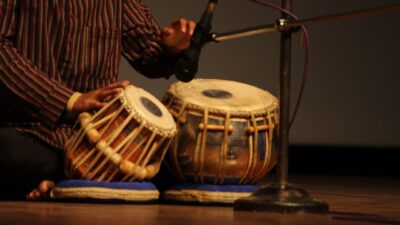
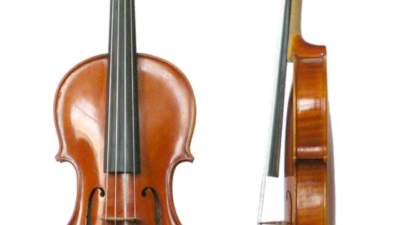
| वाद्य | harmonium · tabla · violin · instrument-flute |
| भाव | उत्सव · आनंदित · रोमांटिक |
| लोकप्रियता | Obscure |
| बोल-स्थिति | केवल झलक |
जुड़े हुए पन्ने
Connected Plates · The Graph Made Visibleअटलस में कोई पन्ना अकेला नहीं — इस गीत से जुड़े गीत, कलाकार, फ़िल्म, राग-ताल-विधा, सब यहाँ से खुलते हैं।
मिलते-जुलते गीत · Related Songs
कलाकार · The Artists
युग · The Era
साझा कीजिए · Share this Plate
यह पन्ना आगे बढ़ाइए
उनकी आवाज़ें ख़ुशी गा रही थीं; दिल पहले से ही टूट रहे थे।
Their voices sang of joy; their hearts were already breaking.
— editorial reflection on the Dev Anand-Suraiya story behind Vidya (1948)
सवाल-जवाब
Questions & Answersदेव आनंद और सुरैया की प्रेम-कहानी क्या थी? · What is the story of Dev Anand and Suraiya's romance?
१९४० के दशक के अंत में साथ फ़िल्में बनाते हुए देव आनंद और सुरैया प्यार में पड़ गए और शादी की आशा रखी। रिश्ता तब टूटा जब देव आनंद के परिवार ने धार्मिक कारणों से आपत्ति जताई — वे मुसलमान, वे हिंदू। दोनों ने कई साल शादी नहीं की। उनकी अधूरी प्रेम-कहानी हिंदी सिनेमा की सबसे मार्मिक वास्तविक प्रणय-गाथाओं में से एक है।
While making films together in the late 1940s, Dev Anand and Suraiya fell in love and hoped to marry. The romance ended when his family objected on religious grounds — she was Muslim, he was Hindu. Neither married for many years afterwards. Their unfulfilled love story became one of Hindi cinema's most poignant real-life romances.