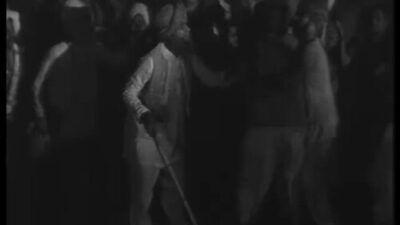
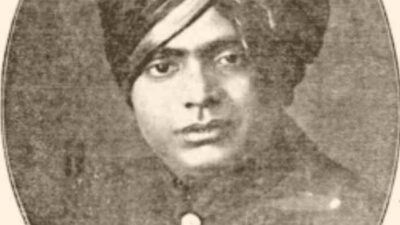
गीत विंग · गीत-पट्टिका · Song Plate
भरत अवध में शोक मनाए
Bharat Avadh Me Shok Manaye
भरत और अवध शोक में — रामायण की ओर इशारा करता एक गीत जो फ़िल्म के शोक को प्रतिबिंबित करता है।
भावउदास · दार्शनिक
भाषाhindi गतिधीमी स्वरूपसमूह गान
श्रेय
The Creditsसूत्र-वाक्य · The Hook
सूत्र-वाक्य
भरत और अवध शोक में — रामायण की ओर इशारा करता एक गीत जो फ़िल्म के शोक को प्रतिबिंबित करता है।
In EnglishBharat and Avadh in mourning — a song reaching for the Ramayana to mirror the film's grief.
पट्टिका-लेख
The Monographपरिचय Overview
'भरत अवध में शोक मनाए' वी. शांताराम की 'पड़ोसी' (1941) का एक गीत है, संगीत मास्टर कृष्णाराव का और बोल पंडित सुदर्शन के। इसकी कल्पना रामायण से ली गई है — शोक में डूबा अवध राज्य — एक ऐसा स्वर जिसे सुदर्शन अक्सर अपने बोलों को पौराणिक भार देने के लिए प्रयोग करते थे। यह गीत फ़िल्म की शोकपूर्ण अंतर्धारा को गहरा करता है; देखे गए स्रोतों में इसका गायक श्रेय दर्ज नहीं है।
अंग्रेज़ी में पढ़ें · Read in English
'Bharat Avadh Me Shok Manaye' is a song from V. Shantaram's Padosi (1941), with music by Master Krishnarao and lyrics by Pandit Sudarshan. Its imagery draws on the Ramayana — the kingdom of Avadh in mourning — a register Sudarshan often used to lend mythic weight to his lyrics. The number deepens the film's elegiac undertow, its singer credit not documented in the sources consulted.
काव्य The Poetry
पंडित सुदर्शन—असली नाम बद्रीनाथ शर्मा, सियालकोट, 1896—एक ऐसे साहित्यकार थे जिनकी कहानियाँ पाठ्यपुस्तकों में पढ़ाई जाती थीं और जिन्हें महात्मा गांधी ने बच्चों के लिए हिंदी पाठ्यपुस्तकें लिखने का काम सौंपा था। पड़ोसी (1941) में उनका काव्य-चयन राजनीतिक रूप से गहन था। 'भरत अवध में शोक मनाए' में उन्होंने राम को नहीं, भरत को चुना—वह भरत जिसने सत्ता लेने से इनकार किया, जिसने राम की खड़ाऊँ को राज-सिंहासन पर रखकर विरह में वर्षों गुज़ारे। यह एक ऐसे शोक का चित्रण है जो त्याग और वफ़ादारी से उपजता है। फ़िल्म के भीतर यह रूपक बेहद सटीक बैठता है—दो दोस्त जो भाइयों की तरह जीते थे, बाहरी षड्यंत्र से बिछड़ गए। और सुदर्शन की कविताई की शक्ति यह थी कि वे हिंदू धर्म के प्रतीकों को इस तरह प्रस्तुत कर सकते थे कि वे सर्वधर्म के श्रोताओं के लिए सार्वभौमिक शोक की भाषा बन जाएँ—जो पड़ोसी की पूरी परियोजना थी।
अंग्रेज़ी में पढ़ें · Read in English
Pandit Sudarshan—born Badrinath Sharma in Sialkot in 1896—brought a literary authority to the Padosi (1941) soundtrack that went beyond film convention. Commissioned by Mahatma Gandhi to write Hindi textbooks for children, and celebrated for prose fiction taught in schools, Sudarshan wrote songs that could bear the weight of political meaning. In 'Bharat Avadh Me Shok Manaye,' the choice to invoke Bharat rather than Ram is itself significant: Bharat is the loyal brother who mourned, who refused the throne, who kept Rama's sandals on the seat of power as a sign of regency. His grief is not a grief of loss but of principled refusal—he would not rule in the name of the friend he could not be near. In Padosi's context, this becomes the grief of communal separation: two men who loved as brothers, now sundered. The Ramayana reference does not make the song sectarian—Sudarshan's art was to make Hindu imagery speak to universal grief across the audience's religious divide.
कहानी The Story
वी. शांताराम की पड़ोसी (1941)—मराठी में शेजारी के नाम से एक साथ प्रदर्शित—पूना की प्रभात फ़िल्म कंपनी के लिए उनका आख़िरी निर्देशन था, इसके बाद उन्होंने राजकमल कलामंदिर की स्थापना की। फ़िल्म एक ऐसे गाँव की कहानी थी जहाँ एक हिंदू और एक मुसलमान परिवार सदियों से पड़ोस में रहते आए थे—और एक बाहरी उद्योगपति उनके बीच फूट डाल देता है। शांताराम का रचनात्मक साहस देखिए: मुसलमान अभिनेता माज़हर ख़ान ने हिंदू पात्र निभाया और हिंदू अभिनेता गजानन जागीरदार ने मुसलमान—यह एक सार्वजनिक कलात्मक वक्तव्य था। 'भरत अवध में शोक मनाए' रामायण की उस परिचित गाथा को काम में लाता है जिसमें राम के वनवास के बाद भरत और सारी अयोध्या शोक में डूब जाती है—और यह शोक फ़िल्म के भीतर उस टूटे हुए पड़ोस का दर्पण बन जाता है जहाँ दोस्ती को बाहरी षड्यंत्र ने छिन्न-भिन्न कर दिया। मास्टर कृष्णाराव के संगीत ने इस गीत को फ़िल्म की भावनात्मक रीढ़ से जोड़ा, और सहायक संगीत-निर्देशक के रूप में युवा वसंत देसाई ने अपनी पहचान बनानी शुरू की।
अंग्रेज़ी में पढ़ें · Read in English
V. Shantaram's Padosi (1941)—released simultaneously in Marathi as Shejari—was the final film he directed for Prabhat Film Company of Poona before founding his own studio, Rajkamal Kalamandir. Set in a village where a Hindu patriach and a Muslim patriarch have lived as neighbours and friends for decades, the film charts their tragic estrangement when an industrialist arrives to divide the community. Shantaram's deliberate casting reversal—Muslim actor Mazhar Khan playing the Hindu character, and Hindu actor Gajanan Jagirdar the Muslim—was a public artistic statement on interchangeable humanity at a moment of severe communal tension. 'Bharat Avadh Me Shok Manaye' uses the Ramayana's most famous scene of grief—Bharat's desolation after Rama's exile to the forest, and the mourning of Ayodhya—as a mirror for the film's own anguish: a close relationship sundered by manipulation from outside, a community that has lost its centre. Master Krishnarao's music for this song served the film's emotional architecture, and Vasant Desai, who would become a legendary composer in his own right, served as assistant music director.
विरासत The Legacy
पड़ोसी (1941) को वी. शांताराम की तीन महान सामाजिक फ़िल्मों में गिना जाता है—दुनिया न माने (1937) और आदमी (1939) के साथ। प्रभात फ़िल्म कंपनी के लिए यह एक ऐसी फ़िल्म थी जो आलोचकीय और व्यावसायिक दोनों स्तरों पर सफल रही। हिंदू-मुस्लिम एकता का इसका संदेश और अभिनेताओं की रचनात्मक अदला-बदली—जहाँ मुसलमान अभिनेता हिंदू चरित्र निभाए और हिंदू अभिनेता मुसलमान—ने इसे भारतीय सिनेमा के सामाजिक इतिहास में एक संदर्भ-बिंदु बना दिया। IMDb पर इसकी रेटिंग 8.1 है। सहायक संगीत-निर्देशक के रूप में इस फ़िल्म से जुड़े वसंत देसाई आगे चलकर 1950–60 के दशक के सबसे प्रतिष्ठित संगीतकारों में गिने गए। हिंदी और मराठी में एक साथ प्रदर्शन ने फ़िल्म को शहरी हिंदी दर्शकों से परे महाराष्ट्र के गाँवों तक पहुँचाया।
अंग्रेज़ी में पढ़ें · Read in English
Padosi (1941) is counted among V. Shantaram's three landmark social films at Prabhat, alongside Duniya Na Mane (1937) and Aadmi (1939), and is documented as both a critical success and a significant commercial achievement for the studio. Its theme of Hindu-Muslim friendship and its artistic audacity—demonstrated most visibly in the casting reversal—gave the film a long afterlife in writing about Indian cinema's social function. The film holds an 8.1 rating on IMDb based on surviving audience assessment. Vasant Desai, who served as assistant music director on this film under Master Krishnarao, later became one of the most celebrated composers of the 1950s and 1960s. The film's bilingual release in Hindi and Marathi extended its reach beyond urban Hindi-speaking audiences and gave it an additional historical record in Marathi cinema.
वर्गीकरण
Classification- Tempo
- Slow
Genre
अन्य विवरण
More Details- https://en.wikipedia.org/wiki/Padosi
- https://www.hindigeetmala.net/movie/padosi.htm
- https://bombaymann2.blogspot.com/2020/05/film-padosi1941.html
- https://www.cinestaan.com/articles/2015/dec/16/312
References
रोचक तथ्य
Margin Notes'पड़ोसी' (1941) वी. शांताराम द्वारा प्रभात फिल्म कंपनी के लिए निर्देशित अंतिम फिल्म थी, इसके बाद उन्होंने अपनी स्वयं की निर्माण संस्था राजकमल कलामंदिर की स्थापना की, जो आगे चलकर स्वतंत्रता-पश्चात भारत के सबसे महत्वपूर्ण स्टूडियो में से एक बनी।
अंग्रेज़ी में पढ़ें · Read in English
Padosi (1941) was the final film V. Shantaram directed for Prabhat Film Company before founding his own production house, Rajkamal Kalamandir, which became one of post-independence India's most significant studios.
शांताराम ने मुस्लिम अभिनेता मज़हर खान को हिंदू कुलमुखिया की भूमिका में और हिंदू अभिनेता गजानन जागीरदार को मुस्लिम पात्र की भूमिका में लिया — यह एक जानबूझकर किया गया उलटफेर था, जो दोनों समुदायों की साझा मानवता को रेखांकित करने का एक कथन था।
अंग्रेज़ी में पढ़ें · Read in English
Shantaram cast Muslim actor Mazhar Khan as the Hindu patriarch and Hindu actor Gajanan Jagirdar as the Muslim—a deliberate reversal intended as a statement on the interchangeable humanity of the two communities.
इस फिल्म में मास्टर कृष्णराव के सहायक संगीत निर्देशक रहे वसंत देसाई ने आगे चलकर 'दो आँखें बारह हाथ' (1957) और 'गाइड' (1965) जैसी ऐतिहासिक फिल्मों का संगीत रचा।
अंग्रेज़ी में पढ़ें · Read in English
Vasant Desai, who served as assistant music director to Master Krishnarao on this film, later composed the music for landmark films including Do Aankhen Barah Haath (1957) and Guide (1965).
फिल्म के गीतकार पंडित सुदर्शन को महात्मा गांधी ने बच्चों के लिए हिंदी पाठ्यपुस्तकें लिखने का दायित्व सौंपा था, जो यह दर्शाता है कि एक साहित्यकार के रूप में उनका काम सिनेमा से कहीं आगे तक फैला था।
अंग्रेज़ी में पढ़ें · Read in English
Pandit Sudarshan, the film's lyricist, had been commissioned by Mahatma Gandhi to write Hindi textbooks for children, reflecting his status as a literary figure whose work extended well beyond cinema.
यह फिल्म हिंदी और मराठी (शीर्षक 'शेजारी') दोनों भाषाओं में एक साथ प्रदर्शित हुई थी — यह प्रभात की मानक द्विभाषी प्रथा थी, जो उसकी फिल्मों को दोनों भाषा-बाज़ारों में वितरण दिलाती थी।
अंग्रेज़ी में पढ़ें · Read in English
The film was released simultaneously in Hindi and Marathi (as Shejari), Prabhat's standard bilingual practice that gave its films distribution across both language markets.
नमूना-पट्टी
The Specimen Table| शीर्षक | भरत अवध में शोक मनाए · Bharat Avadh Me Shok Manaye |
|---|---|
| फ़िल्म | पड़ोसी · 1941 |
| वर्ष · युग | 1941 |
| गीतकार | Pandit Sudarshan |
| संगीतकार | Master Krishnarao |
| स्वरूप | समूह गान |
| गति | धीमी |
| भाषा | hindi |
| भाव | उदास · दार्शनिक |
| लोकप्रियता | Obscure |
| बोल-स्थिति | केवल झलक |
जुड़े हुए पन्ने
Connected Plates · The Graph Made Visibleअटलस में कोई पन्ना अकेला नहीं — इस गीत से जुड़े गीत, कलाकार, फ़िल्म, राग-ताल-विधा, सब यहाँ से खुलते हैं।
कलाकार · The Artists
फ़िल्म · The Film
साझा कीजिए · Share this Plate