गीत विंग · गीत-पट्टिका · Song Plate
अपने हुए पराये
Apne Huye Paraye
'पन्ना दाई' के संगीत का विलाप-गीत — अपने जो पराये हो गए, मीनाक्षी शिरोडकर की आवाज़ में।
भावमीठा-कड़वा · उदास · दार्शनिक
भाषाhindi गतिधीमी स्वरूपएकल महिला
श्रेय
The Creditsसूत्र-वाक्य · The Hook
सूत्र-वाक्य
'पन्ना दाई' के संगीत का विलाप-गीत — अपने जो पराये हो गए, मीनाक्षी शिरोडकर की आवाज़ में।
In EnglishThe lament of Pannadai's score — one's own turned into strangers, sung by Meenakshi Shirodkar.
पट्टिका-लेख
The Monographपरिचय Overview
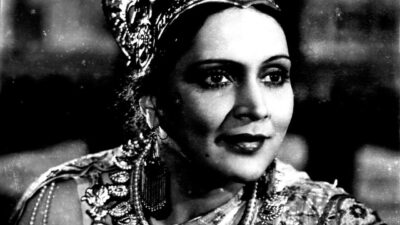
'पन्ना दाई' में मीनाक्षी शिरोडकर के तीन एकलों में तीसरा और सबसे गहरा। इसका शीर्षक फ़िल्म की राजनीतिक स्थिति को ठीक-ठीक नाम देता है: एक ऐसा दरबार जहाँ अपने ही अपनों पर पलट गए हैं, जहाँ सिंहासन के लिए स्वजन हत्या कर रहा है, और जहाँ वह घर उस बालक के लिए सुरक्षित नहीं रहा जिसकी रक्षा उसे करनी थी। हिंदीगीतमाला और सारेगामा में दर्ज श्रेय के अतिरिक्त इस गीत पर कोई टिप्पणी नहीं मिलती, और कथा में इसका ठीक स्थान दर्ज नहीं है।
अंग्रेज़ी में पढ़ें · Read in English
The third and darkest of Meenakshi Shirodkar's solos in Pannadai. Its title names the film's political situation exactly: a court in which kin have turned on kin, an uncle-figure killing to take a throne, a household no longer safe for the child it is meant to protect. Beyond the credits held by hindigeetmala and Saregama, the song has attracted no commentary, and its exact place in the narrative is not recorded.
संगीत The Music
1940 के दशक के मध्य का एक धीमा फ़िल्मी विलाप, जो प्रशिक्षित शास्त्रीय आवाज़ के बजाय अभिनेत्री-गायिका के लिए लिखा गया: स्वर-पंक्तियाँ एक सँकरे, बोलचाल के निकट दायरे में रखी गई हैं ताकि भाव गायन-प्रदर्शन में नहीं, शब्दों में बैठे। ज्ञान दत्त ने प्रसंग-आधारित शोक-गीतों के लिए यह संयत बनावट बार-बार बरती, और अपना विस्तृत लेखन अपनी सूची की उपशास्त्रीय गायिकाओं के लिए बचाकर रखा।
अंग्रेज़ी में पढ़ें · Read in English
A slow film lament of the mid-1940s, written for an actress-singer rather than a trained classical voice: melodic phrases kept within a narrow, speech-adjacent range so the emotion sits in the words rather than in vocal display. Gyan Dutt used this restrained construction repeatedly for situational grief songs, reserving his more elaborate writing for the semi-classical singers on his roster.
काव्य The Poetry
'अपने हुए पराये' कोई गढ़ी हुई उक्ति नहीं, रोज़मर्रा की हिंदी का वह मुहावरा है जो उस क्षण को नाम देता है जब अपने अपनों जैसा व्यवहार करना छोड़ देते हैं। लोकोक्ति पर फ़िल्मी गीत खड़ा करना डी.एन. माधोक की सामान्य पद्धति थी; गीतकार के रूप में उनकी सबसे बड़ी शक्ति यही थी कि वे जनसाधारण तक उसी भाषा से पहुँचते थे जो पहले से उसकी अपनी थी। यह पंक्ति अपना पूरा तर्क तीन शब्दों में उठा लेती है — इसीलिए शीर्षक बनने के लिए उसे किसी विस्तार की ज़रूरत नहीं पड़ी।
अंग्रेज़ी में पढ़ें · Read in English
'Apne huye paraye' is a phrase, not an invention — the everyday Hindi formulation for the moment when family stops behaving as family. Building a film song on a proverb was standard practice for D.N. Madhok, whose great strength as a lyricist was reaching a mass audience through language it already owned. The line carries its whole argument in three words, which is why it needed no elaboration to work as a title.
कहानी The Story
'पन्ना दाई' (1945) का निर्माण कमलाबाई मंगलोरेकर ने प्रदीप पिक्चर्स, बंबई के लिए किया और निर्देशन राम दरयानी ने; शीर्षक भूमिका में दुर्गा खोटे थीं तथा चंद्रमोहन, मीनाक्षी शिरोडकर, मास्टर विट्ठल, मुबारक, एम. इस्माइल, गोप और नानासाहेब फाटक सहयोगी भूमिकाओं में। फ़िल्म सोलहवीं सदी के मेवाड़ के उस प्रसंग को कहती है जिसमें बालक उत्तराधिकारी उदय सिंह द्वितीय की धाय पन्ना दाई ने अपने ही पुत्र चंदन को राजकुमार की शय्या पर लिटा दिया ताकि हड़पने वाला बनवीर उसी को मार डाले, और फिर उत्तराधिकारी को कुम्भलगढ़ तक सुरक्षित पहुँचाया। ज्ञान दत्त ने इसके लिए दस गीत रचे, जिनके बोल डी.एन. माधोक और दीवान शरर के बीच बँटे थे।
अंग्रेज़ी में पढ़ें · Read in English
Pannadai (1945) was produced by Kamalabai Mangalorekar for Pradeep Pictures, Bombay, and directed by Ram Daryani, with Durga Khote in the title role and Chandra Mohan, Meenakshi Shirodkar, Master Vithal, Mubarak, M. Ismail, Gope and Nana Saheb Phatak in support. The film retells the sixteenth-century Mewar episode in which Panna Dhai, nursemaid to the child heir Udai Singh II, put her own son Chandan in the prince's bed so the usurper Banbir would kill him instead, then carried the heir to safety at Kumbhalgarh. Gyan Dutt wrote ten songs for it, with lyrics split between D.N. Madhok and Dewan Sharar.
विरासत The Legacy
यह रिकॉर्ड फ़िल्म की सारेगामा सूची में बचा है, पर न आम प्रचलन में आया न इस पर कोई पुनरावलोकन लिखा गया। यह 1945 के फ़िल्म-गीत उत्पादन के बड़े हिस्से का प्रतिनिधि है — पेशेवर ढंग से बना, किसी विशिष्ट नाटकीय प्रसंग से बँधा, और अपने भाग्य के लिए फ़िल्म के भाग्य पर निर्भर।
अंग्रेज़ी में पढ़ें · Read in English
The record survives in the Saregama catalogue for the film but has not entered general circulation or attracted retrospective writing. It is representative of the bulk of 1945's film-song output — professionally made, tied to a specific dramatic situation, and dependent on the film's fortunes for its own.
वर्गीकरण
Classification- Tempo
- Slow
Genre
अन्य विवरण
More Details- https://www.hindigeetmala.net/movie/panna_dai.htm
- https://en.wikipedia.org/wiki/List_of_Hindi_films_of_1945
- https://atulsongaday.me/tag/panna-dai/
- https://www.saregama.com/album/panna-dai_120043
References
नमूना-पट्टी
The Specimen Table| शीर्षक | अपने हुए पराये · Apne Huye Paraye |
|---|---|
| फ़िल्म | पन्ना दाई · 1945 |
| वर्ष · युग | 1945 |
| गायक | Meenakshi Shirodkar |
| गीतकार | D. N. Madhok |
| संगीतकार | Gyan Dutt |
| स्वरूप | एकल महिला |
| गति | धीमी |
| भाषा | hindi |
| भाव | मीठा-कड़वा · उदास · दार्शनिक |
| लोकप्रियता | Obscure |
| बोल-स्थिति | केवल झलक |
जुड़े हुए पन्ने
Connected Plates · The Graph Made Visibleअटलस में कोई पन्ना अकेला नहीं — इस गीत से जुड़े गीत, कलाकार, फ़िल्म, राग-ताल-विधा, सब यहाँ से खुलते हैं।
मिलते-जुलते गीत · Related Songs
कलाकार · The Artists
फ़िल्म · The Film
साझा कीजिए · Share this Plate