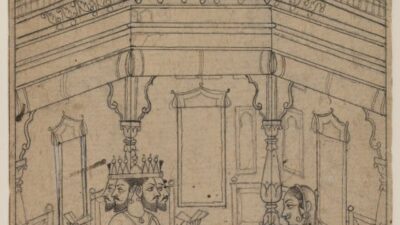
शास्त्र विंग · राग-पट्टिका · Raag Plate
सहन
Sahana
एक शांत Carnatic राग · A Peace Carnatic Raag
भावशांतिपूर्ण · ध्यानपूर्ण · प्रशांत · शांत
ऊर्जाधीमी
स्वर-चित्र · The Swara Panel
आरोह — अवरोह · The Ascent and the Descent
आरोह · Aroha
स ऋ गा म प म ध नी स
S R₂ G₃ M₁ P M₁ D₂ N₂ Ṡ
अवरोह · Avaroha
स नी ध प म गा ऋ स
Ṡ N₂ D₂ P M₁ G₃ R₂ S
वादी–संवादी टिप्पणी · Vadi–Samvadi note
Vadi — In the Carnatic tradition, Raag Sahana emphasizes Pancham (Pa) as a key resting note.
Samvadi — Sa (Shadj) serves as the complementary note.
समय और भाव
Time Theory & Moodसमय-सिद्धांत · Time Theory
संध्या काल
परंपरागत रूप से संध्या काल (4:00 PM - 7:00 PM) में गाया जाता है।
Traditionally performed during evening/twilight hours (4:00 PM - 7:00 PM), when day transitions to night.
भाव और गति · Mood & Tempo
शांत · Peace/Tranquility
आंतरिक शांति, सुकून और आध्यात्मिक वैराग्य का रस। शांति, ध्यान और अध्यात्म को जगाता है।
ऊर्जा · Energyधीमी
स्तर · Levelintermediate — राग Sahana के लिए कर्नाटक संगीत सिद्धांत की मजबूत नींव आवश्यक है।
पट्टिका-लेख
The Monographपरिचय Introduction
राग Sahana कर्नाटक शास्त्रीय संगीत परंपरा का एक राग है। इसका प्रमुख रस शांत (Peace/Tranquility) है। यह परंपरागत रूप से संध्या काल (4:00 PM - 7:00 PM) में गाया जाता है। गाया जाता है।
अंग्रेज़ी में पढ़ें · Read in English
Raag Sahana is a complete scale with all 7 notes in both ascent and descent raga in the Carnatic classical music tradition.. With its Sampurna-Sampurna jati structure, this raag creates a distinctive tonal landscape. The predominant rasa is Peace/Tranquility (शांत), making it suitable for compositions that evoke peaceful, meditative emotions. It is traditionally performed during evening hours, and its melodic contour offers rich possibilities for alapana, kalpanaswaram, and creative improvisation.
सांस्कृतिक महत्व Cultural Significance
भारतीय शास्त्रीय संगीत की समृद्ध परंपरा के अंग के रूप में, राग Sahana Carnatic परंपरा को परिभाषित करने वाले स्वर संरचना और भावनात्मक अभिव्यक्ति के बीच गहरे संबंध का प्रतिनिधित्व करता है।
अंग्रेज़ी में पढ़ें · Read in English
As part of the rich tapestry of Indian classical music, Raag Sahana represents the deep connection between melodic structure and emotional expression that defines the Carnatic tradition.
ऐतिहासिक महत्व Historical Significance
राग सहना कर्नाटक संगीत का एक राग है जो आरोहण में वक्र (टेढ़े) वाक्य के लिए जाना जाता है, विशेष रूप से पंचम तक पहुंचने के बाद मध्यम को लौटना। "सहना" नाम धैर्य और सहनशीलता का सुझाव देता है, जो इसके चिंतनशील स्वभाव को दर्शाता है। यह राग चक्रवाकम मेलकर्ता परिवार से संबंधित है और भक्ति और रोमांटिक भावनाओं दोनों को व्यक्त करने की क्षमता के लिए मूल्यवान है।
अंग्रेज़ी में पढ़ें · Read in English
Raag Sahana is a Carnatic raga known for its vakra (zigzag) phrasing, particularly the return to Madhyama in the arohana after reaching Pancham. The name "Sahana" suggests patience and tolerance, reflecting its contemplative nature. This raga belongs to the Chakravakam melakarta family and is prized for its capacity to express both devotional and romantic sentiments. Sahana is equally popular in both vocal and instrumental traditions and has inspired many classical compositions in the Carnatic canon.
शिक्षा
Teaching & LearningBegin with slow aalapana to internalize the raag's swaroopa (melodic form)
Practice the arohana and avarohana patterns with a tanpura drone
Listen to recordings by master performers to understand the raag's gamakas (ornamentations)
Work on kalpanaswaram (improvisation) within the raag's framework
Using incorrect gamakas that belong to a different raag
Not maintaining proper swar sthana (note placement)
Rushing through phrases without allowing the raag bhava to develop
तुलना
A Specimen Comparisonचक्रवाकम् (16वाँ मेलकर्ता, जनक) में आरोह-अवरोह सीधा है, जबकि सहना की पहचान उसके आरोह में वक्र (टेढ़ा) वाक्य से है — पंचम तक चढ़ने के बाद वाक्य मध्यम पर लौटता है और फिर ऊपर बढ़ता है (स रे ग म प म ध नि स)। यह 'प से म की वापसी' सहना की संगीत-पहचान है जो उसे जनक से अलग करती है और एक विशिष्ट विरही-भाव देती है।
| तुलनाSpecimen | सहन | चक्रवाकम् |
|---|---|---|
| भाव-अंतर | Sahana: wistful longing created by the vakra return to Ma; Chakravakam: straightforward, without the characteristic return. | |
| तुलनाSpecimen | सहन | केदारम् |
|---|
देवगंधारी पंचम स्वर वाला (ऋ और नि रहित) राग है जो सरल और मधुर है; सहना के सातों स्वर उसे अधिक नाटकीय विस्तार देते हैं।
| तुलनाSpecimen | सहन | देवगंधारी |
|---|---|---|
| स्वर-अंतर | Devagandhari: pentatonic (omits Ri and Ni); Sahana: seven-note (sampurna). | |
सहना की तुलना कभी-कभी हिंदुस्तानी पूरिया धनाश्री के भक्तिमय-करुण भाव से भी की जाती है, किन्तु दोनों के स्वर-समूह और सैद्धांतिक आधार सर्वथा भिन्न हैं।
| तुलनाSpecimen | सहन | पूरिया धनाश्री |
|---|---|---|
| स्वर-अंतर | Sahana: shuddha Ma (Chakravakam family); Pooriya Dhanashree: tivra Ma. | |
| भाव-अंतर | Both share a bittersweet devotional quality despite entirely different theoretical frameworks. | |
प्रस्तुति
Performance- Description
- परंपरागत रूप से संध्या काल (4:00 PM - 7:00 PM) में गाया जाता है। Traditionally performed during evening/twilight hours (4:00 PM - 7:00 PM), when day transitions to night.
- Prahar Number
- 5
- Prahar Name
- संध्या काल Sandhya Kaal
- Time Start
- 16:00
- Time End
- 19:00
- Time Flexibility
- flexible
Time
और जानें
More to Know- raag-chakravakam — Chakravakam — चक्रवाकम् — Chakravakam is Sahana's parent melakarta (16th melakarta) with a straight, uninterrupted ascent and descent, whereas Sahana's defining feature is a vakra (zigzag) movement in the arohana — after ascending to Pancham, the phrase characteristically returns to Madhyam before continuing upward (S R G M P M D N S). This return to Ma after Pa is the musical fingerprint that sets Sahana apart and gives it a distinctive quality of wistful longing. Without that vakra, the phrase sounds merely like Chakravakam. — चक्रवाकम् (16वाँ मेलकर्ता, जनक) में आरोह-अवरोह सीधा है, जबकि सहना की पहचान उसके आरोह में वक्र (टेढ़ा) वाक्य से है — पंचम तक चढ़ने के बाद वाक्य मध्यम पर लौटता है और फिर ऊपर बढ़ता है (स रे ग म प म ध नि स)। यह 'प से म की वापसी' सहना की संगीत-पहचान है जो उसे जनक से अलग करती है और एक विशिष्ट विरही-भाव देती है। — Sahana: wistful longing created by the vakra return to Ma; Chakravakam: straightforward, without the characteristic return.
- raag-kedaram — Kedaram — केदारम् — Kedaram also has contemplative qualities and a morning-to-evening association, but differs from Sahana in its specific note emphasis and characteristic phrases.
- raag-devagandhari — Devagandhari — देवगंधारी — Devagandhari is a pentatonic janya of the Harikambhoji family that omits Ri and Ni, giving it a simpler, sweeter quality. Sahana's seven-note completeness allows greater dramatic range compared to Devagandhari's reduced note palette. — देवगंधारी पंचम स्वर वाला (ऋ और नि रहित) राग है जो सरल और मधुर है; सहना के सातों स्वर उसे अधिक नाटकीय विस्तार देते हैं। — Devagandhari: pentatonic (omits Ri and Ni); Sahana: seven-note (sampurna).
- raag-pooriya-dhanashree — Pooriya Dhanashree — पूरिया धनाश्री — Sahana is sometimes compared to Hindustani Pooriya Dhanashree for its bittersweet devotional quality, though the two belong to entirely different theoretical frameworks — Sahana is within the Chakravakam family with shuddha Ma, while Pooriya Dhanashree uses tivra Ma. — सहना की तुलना कभी-कभी हिंदुस्तानी पूरिया धनाश्री के भक्तिमय-करुण भाव से भी की जाती है, किन्तु दोनों के स्वर-समूह और सैद्धांतिक आधार सर्वथा भिन्न हैं। — Sahana: shuddha Ma (Chakravakam family); Pooriya Dhanashree: tivra Ma. — Both share a bittersweet devotional quality despite entirely different theoretical frameworks.
In Film Music
Sahana is one of the most beloved ragas in South Indian film music — Tamil and Telugu cinema has used it extensively, from classical film compositions to devotional sequences — but in Hindi film music it has not entered as a named or clearly attributable raga. The raga belongs to the Carnatic tradition as a janya (derivative) of Chakravakam (16th melakarta), and its characteristic vakra phrasing and devotional warmth have charmed composers in the Carnatic film world. Composers in Tamil cinema such as M. S. Viswanathan and later A. R. Rahman are often credited with drawing on Sahana's melodic language in songs marked by quiet longing and spiritual tenderness. In Hindustani-influenced Hindi film music, no specific songs have been reliably attributed to Sahana by name. Its closest approximations in Hindi cinema would appear through ragas like Bhimpalasi or Bageshri which share Sahana's contemplative mood but follow a different note structure. Sahana's full depth is best appreciated in Carnatic concert recordings — particularly in the extended alapana format where its vakra turns reveal themselves gradually.
Comparisons
सीखने के लिए
For Learners- Difficulty Level
- intermediate
अन्य विवरण
More Details- Indian_Music_Raga_Encyclopedia_v2.xlsx
- Chakravakam melakarta (#16) and janya raag theory in Carnatic music
- M. S. Viswanathan Tamil film compositions in Sahana
- Vakra sanchara in Carnatic janya raag theory
References
नमूना-पट्टी
The Specimen Table| नाम | सहन · Sahana |
|---|---|
| आरोह | स ऋ गा म प म ध नी स |
| अवरोह | स नी ध प म गा ऋ स |
| जाति | संपूर्ण-संपूर्ण · Sampurna-Sampurna |
| समय | संध्या काल |
| ऊर्जा | धीमी |
| परिवार | Sahana |
| स्तर | intermediate |
| लोकप्रियता | Very popular |
जुड़े हुए पन्ने
Connected Plates · The Graph Made Visibleअटलस में कोई पन्ना अकेला नहीं — इस राग से गीत, प्रस्तुतियाँ, कलाकार, ताल, घराने और मिलते-जुलते राग, सब यहाँ से खुलते हैं।
इस राग के कलाकार · Notable Artists
ताल-साथी · Taal Pairings
श्रवण-कक्ष · The Listening Room
सुनिए — सहन · Hear the Raag
Raag Sahana — Classical Performance
प्रश्नोत्तर
Questions & Answersराग Sahana किस संगीत पद्धति का राग है?
राग Sahana कर्नाटक (दक्षिण भारतीय) शास्त्रीय संगीत पद्धति का राग है।
अंग्रेज़ी में पढ़ें · Read in English
Which music system does Raga Sahana belong to? — Raga Sahana belongs to the Carnatic (South Indian) classical music system.
साझा कीजिए · Share this Plate