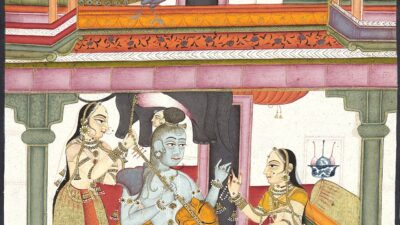
शास्त्र विंग · राग-पट्टिका · Raag Plate
कीरवनि
Keeravani
एक करुण Carnatic राग · A Compassion Carnatic Raag
भावउदास · चिंतनशील · भावपूर्ण · विचारशील
ऊर्जाधीमी
स्वर-चित्र · The Swara Panel
आरोह — अवरोह · The Ascent and the Descent
आरोह · Aroha चढ़ती हुई सीढ़ी
अवरोह · Avaroha उतरती हुई सीढ़ी
सˊ = तार सप्तक का षड्ज
वादी–संवादी टिप्पणी · Vadi–Samvadi note
Vadi — In the Carnatic tradition, Raag Keeravani emphasizes Pancham (Pa) as a key resting note.
Samvadi — Sa (Shadj) serves as the complementary note.
समय और भाव
Time Theory & Moodसमय-सिद्धांत · Time Theory
संध्या काल
परंपरागत रूप से संध्या काल (4:00 PM - 7:00 PM) में गाया जाता है।
Traditionally performed during evening/twilight hours (4:00 PM - 7:00 PM), when day transitions to night.
भाव और गति · Mood & Tempo
करुण · Compassion/Pathos
करुणा, दुख और गहरी भावना का रस। सहानुभूति, उदासी और चिंतनशील ध्यान जगाता है।
ऊर्जा · Energyधीमी
स्तर · Leveladvanced — राग Keeravani के लिए कर्नाटक संगीत सिद्धांत की मजबूत नींव आवश्यक है।
पट्टिका-लेख
The Monographपरिचय Introduction
राग Keeravani कर्नाटक शास्त्रीय संगीत परंपरा का एक राग है। इसका प्रमुख रस करुण (Compassion/Pathos) है। यह परंपरागत रूप से संध्या काल (4:00 PM - 7:00 PM) में गाया जाता है। गाया जाता है।
अंग्रेज़ी में पढ़ें · Read in English
Raag Keeravani is a complete scale with all 7 notes in both ascent and descent raga in the Carnatic classical music tradition. It is derived from the Keeravani melakarta (#21). With its Sampurna-Sampurna jati structure, this raag creates a distinctive tonal landscape. The predominant rasa is Compassion/Pathos (करुण), making it suitable for compositions that evoke melancholic, contemplative emotions. It is traditionally performed during evening hours, and its melodic contour offers rich possibilities for alapana, kalpanaswaram, and creative improvisation.
सांस्कृतिक महत्व Cultural Significance
भारतीय शास्त्रीय संगीत की समृद्ध परंपरा के अंग के रूप में, राग Keeravani Carnatic परंपरा को परिभाषित करने वाले स्वर संरचना और भावनात्मक अभिव्यक्ति के बीच गहरे संबंध का प्रतिनिधित्व करता है।
अंग्रेज़ी में पढ़ें · Read in English
As part of the rich tapestry of Indian classical music, Raag Keeravani represents the deep connection between melodic structure and emotional expression that defines the Carnatic tradition.
शिक्षा
Teaching & LearningBegin with slow aalapana to internalize the raag's swaroopa (melodic form)
Practice the arohana and avarohana patterns with a tanpura drone
Listen to recordings by master performers to understand the raag's gamakas (ornamentations)
Work on kalpanaswaram (improvisation) within the raag's framework
Using incorrect gamakas that belong to a different raag
Not maintaining proper swar sthana (note placement)
Rushing through phrases without allowing the raag bhava to develop
तुलना
A Specimen Comparisonखरहरप्रिय (#22) — इसका तत्काल पड़ोसी — में शुद्ध धैवत और कोमल निषाद है, जबकि कीरवनि में कोमल धैवत और शुद्ध निषाद है। ध और नि के इस एकल अदल-बदल का श्रव्य प्रभाव गहरा है: कीरवनि का कोमल ध + शुद्ध नि एक विशेष तनाव-और-मुक्ति की अनुभूति देता है जो करुण रस को पुष्ट करता है, जबकि खरहरप्रिय का शुद्ध ध + कोमल नि एक अधिक विस्तृत, दोपहरी स्वभाव रखता है।
| तुलनाSpecimen | कीरवनि | खरहरप्रिय |
|---|---|---|
| स्वर-अंतर | Kharaharapriya: shuddha Dha, komal Ni; Keeravani: komal Dha, shuddha Ni | |
| भाव-अंतर | Kharaharapriya: expansive afternoon Shringara; Keeravani: evening Karuna | |
| समय-अंतर | Kharaharapriya is an afternoon raag; Keeravani is an evening raag | |
नटभैरवी (#20), एक कदम नीचे, कीरवनि के समान रे और कोमल ग रखता है, किंतु दोनों ध और नि कोमल लेता है — जिससे वह अधिक गहरे शोक का भाव रखता है और हिंदुस्तानी आसावरी का कर्नाटक समकक्ष बनता है।
| तुलनाSpecimen | कीरवनि | नटभैरवी |
|---|---|---|
| स्वर-अंतर | Natabhairavi: komal Dha and komal Ni; Keeravani: komal Dha and shuddha Ni | |
| भाव-अंतर | Natabhairavi is significantly more sombre; Keeravani has karuna quality | |
प्रस्तुति
Performance- Description
- परंपरागत रूप से संध्या काल (4:00 PM - 7:00 PM) में गाया जाता है। Traditionally performed during evening/twilight hours (4:00 PM - 7:00 PM), when day transitions to night.
- Prahar Number
- 5
- Prahar Name
- संध्या काल Sandhya Kaal
- Time Start
- 16:00
- Time End
- 19:00
- Time Flexibility
- flexible
Time
और जानें
More to Know- raag-kharaharapriya — Kharaharapriya — खरहरप्रिय — Kharaharapriya (#22) — its immediate neighbor — has shuddha Dha and komal Ni, while Keeravani has komal Dha and shuddha Ni. This single swap of character between Dha and Ni is aurally significant: Keeravani's komal Dha with shuddha Ni produces a particular tension-and-release quality that gives it the karuna rasa, while Kharaharapriya's shuddha Dha with komal Ni has a more expansive, madhyahna (afternoon) character. — खरहरप्रिय (#22) — इसका तत्काल पड़ोसी — में शुद्ध धैवत और कोमल निषाद है, जबकि कीरवनि में कोमल धैवत और शुद्ध निषाद है। ध और नि के इस एकल अदल-बदल का श्रव्य प्रभाव गहरा है: कीरवनि का कोमल ध + शुद्ध नि एक विशेष तनाव-और-मुक्ति की अनुभूति देता है जो करुण रस को पुष्ट करता है, जबकि खरहरप्रिय का शुद्ध ध + कोमल नि एक अधिक विस्तृत, दोपहरी स्वभाव रखता है। — Kharaharapriya: shuddha Dha, komal Ni; Keeravani: komal Dha, shuddha Ni — Kharaharapriya: expansive afternoon Shringara; Keeravani: evening Karuna — Kharaharapriya is an afternoon raag; Keeravani is an evening raag
- raag-natabhairavi — Natabhairavi — नटभैरवी — Natabhairavi (#20), one step below, shares Keeravani's Re and Ga♭ but takes both Dha and Ni as komal — making it significantly more sombre, the closest Carnatic counterpart to Hindustani Asavari. — नटभैरवी (#20), एक कदम नीचे, कीरवनि के समान रे और कोमल ग रखता है, किंतु दोनों ध और नि कोमल लेता है — जिससे वह अधिक गहरे शोक का भाव रखता है और हिंदुस्तानी आसावरी का कर्नाटक समकक्ष बनता है। — Natabhairavi: komal Dha and komal Ni; Keeravani: komal Dha and shuddha Ni — Natabhairavi is significantly more sombre; Keeravani has karuna quality
In Film Music
The Carnatic melakarta Keeravani (#21) does not appear by name in Hindi film compositions, but its Hindustani counterpart Kirwani — widely acknowledged to have been borrowed directly from Carnatic Keeravani — is an active part of the Hindi film music lexicon. Kirwani shares Keeravani's svar structure (Sa Re komal-Ga shuddha-Ma Pa komal-Dha shuddha-Ni) and is classified as a night raag with Karuna and Shringara rasas — evoking longing, separation, and bittersweet romance. Major Hindi film composers including R.D. Burman, Shankar-Jaikishan, and Laxmikant-Pyarelal used Kirwani for some of their most emotionally resonant compositions. One of the most cited film songs in this raag is 'Aanewala Pal Janewala Hai' from Golmaal (1979), composed by R.D. Burman and sung by Kishore Kumar to Gulzar's poetry — a meditation on the transience of time whose Kirwani melody makes the philosophical longing deeply palpable. In the South Indian film tradition, Keeravani itself appears in Tamil and Telugu film compositions, particularly through composers like Ilayaraja who drew extensively from the Carnatic concert repertoire.
Comparisons
सीखने के लिए
For Learners- Difficulty Level
- advanced
अन्य विवरण
More Details- Indian_Music_Raga_Encyclopedia_v2.xlsx
- https://chandrakantha.com/music-and-dance/film-and-pop/film-songs-rags/film-songs-rag-kirwani/ — Film Songs in Rag Kirwani
- https://drvidyahattangadi.com/do-you-know-about-raag-kirwani/ — Raag Kirwani overview
- https://wholisticwellnessspace.wordpress.com/2026/03/01/raag-kirvani-kirwani/ — Raag Kirwani detail
References
नमूना-पट्टी
The Specimen Table| नाम | कीरवनि · Keeravani |
|---|---|
| आरोह | Sa Re Ga♭ Ma Pa Dha♭ Ni Sa' Sa' |
| अवरोह | Sa' Sa' Ni Dha♭ Pa Ma Ga♭ Re Sa |
| जाति | संपूर्ण-संपूर्ण · Sampurna-Sampurna |
| समय | संध्या काल |
| ऊर्जा | धीमी |
| परिवार | Keeravani |
| स्तर | advanced |
| लोकप्रियता | Obscure |
| कर्नाटक समतुल्य | Keeravani · Melakarta 21 |
जुड़े हुए पन्ने
Connected Plates · The Graph Made Visibleअटलस में कोई पन्ना अकेला नहीं — इस राग से गीत, प्रस्तुतियाँ, कलाकार, ताल, घराने और मिलते-जुलते राग, सब यहाँ से खुलते हैं।
फ़िल्मी गीत इस राग में · Famous Film Songs
ताल-साथी · Taal Pairings
श्रवण-कक्ष · The Listening Room
सुनिए — कीरवनि · Hear the Raag
Raag Keeravani — Classical Performance
प्रश्नोत्तर
Questions & Answersराग Keeravani किस संगीत पद्धति का राग है?
राग Keeravani कर्नाटक (दक्षिण भारतीय) शास्त्रीय संगीत पद्धति का राग है।
अंग्रेज़ी में पढ़ें · Read in English
Which music system does Raga Keeravani belong to? — Raga Keeravani belongs to the Carnatic (South Indian) classical music system.
साझा कीजिए · Share this Plate