शास्त्र विंग · वाद्य-पट्टिका · Instrument Plate
काहोन
Cajon
अन्य नामकाहोन · काजोन · बॉक्स ड्रम (Box Drum) · Cajón (also: Cajón peruano, Cajón flamenco)
परिचय
Overviewकाहोन देखने में महज़ लकड़ी का एक बक्सा है, पर उसमें पूरी ड्रम-किट की जान बसती है। वादक उसी बक्से पर बैठकर, आगे के पतले फलक (तपा) को हाथों से थपकता है — केंद्र से गहरी बास और किनारे से स्नेयर जैसी खनक। पेरू के दासों की गुमनाम खोज, पाको दे लूसिया के हाथों फ़्लमेंको में इसका प्रवेश, और भारत के अनप्लग्ड-युग में इसकी लोकप्रियता — यह छोटा-सा बक्सा एक बड़ी यात्रा की कहानी है।
अंग्रेज़ी में पढ़ें · Read in English
The cajon looks like a mere box of wood, yet the soul of a full drum kit lives inside it. The player sits on that very box and strikes the thin front plate (the tapa) with the hands — a deep bass from the centre and a snare-like crack from the edge. The anonymous invention of Peru's enslaved people, its entry into flamenco through Paco de Lucía, and its popularity in India's unplugged era — this small box carries the story of a large journey.
वर्गीकरण
ClassificationNatya Shastra Category
घन (Ghana - solid/idiophone)
नाट्यशास्त्र की चार वाद्य-श्रेणियों में काहोन 'घन' वर्ग में आता है — अर्थात ठोस पदार्थ का बना वह वाद्य जिसमें कोई खिंची हुई खाल (झिल्ली) नहीं होती और जिसकी अपनी लकड़ी की देह को थपकाने से ही ध्वनि उत्पन्न होती है। भूमिका की दृष्टि से यह 'अवनद्ध' (ताल वाद्य/ढोल परिवार) का काम करता है, किंतु बनावट में यह घटम या मंजीरा की तरह घन-वाद्य है।
Within the four instrument-families of the Natya Shastra, the cajon belongs to the 'Ghana' (solid / idiophone) class — a solid-bodied instrument with no stretched membrane, whose sound comes from striking its own wooden body. Functionally it does the job of an 'Avanaddha' (drum/rhythm) instrument, but in construction it is an idiophone like the ghatam or manjira. In Hornbostel-Sachs it is classed as a struck percussion vessel (111.24).
Western Category
Box drum (hand percussion / struck idiophone)
Western Family
Unpitched hand-percussion; the Latin-American percussion family (cousin to congas, bongos, and the Cuban cajón)
Sub Classification
बनावट
PhysicalDescription Hindi
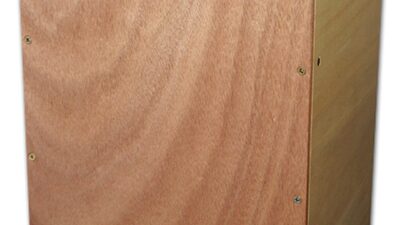
काहोन एक छह-फलकीय लकड़ी का बक्सा है जिस पर वादक स्वयं बैठकर, आगे के पतले फलक (तपा) को हाथों से थपककर बजाता है। ऊपरी किनारे को थपकाने से तीव्र 'स्नेयर' जैसी खनक और बीच में थपकाने से गहरी 'बास' ध्वनि निकलती है। इसकी सादगी, आत्म-निहित बनावट और पोर्टेबिलिटी ने इसे अनप्लग्ड/एकॉस्टिक युग का प्रिय ताल-वाद्य बना दिया।
Description English
The cajon is a six-sided wooden box on which the player sits astride, striking the thin front panel (the tapa) with the hands. Striking the top edge yields a sharp snare-like crack, while striking the centre yields a deep bass tone. Its simplicity, self-contained build and portability made it the beloved rhythm instrument of the unplugged / acoustic era.
Body
Rectangular six-sided box (roughly cube-and-a-half in height)
आयताकार छह-फलकीय बक्सा (घनाभ आकार)
Birch or other plywood body with a thin hardwood-veneer front playing panel (tapa)
बर्च या अन्य प्लाईवुड की देह, आगे पतले हार्डवुड-विनियर का वादन-फलक (तपा)
45-50
The hollow box itself is the resonating chamber; a circular sound hole is cut into the rear panel to project the bass
Strings
The modern flamenco cajón has internal snare wires or guitar strings pressed against the inside of the tapa; they are not melodic strings but rattling snares that add a buzz to the high slap tone
The Peruvian (traditional) cajón has no strings at all; only the modern flamenco cajón adds snares. There are no sympathetic resonating strings.
The cajon is an unpitched rhythm instrument and has no drone strings
Bow
हाथ (कोई गज नहीं)
Hands (no bow)
Played with bare hands; sometimes brushes, mallets or a bass-pedal beater are used
0
Struck directly with fingers and palms — the bow entry is not applicable to this percussion instrument
Tuning Pegs
स्नेयर समायोजन पेंच
Snare-adjustment screws
Modern cajóns have screws or a lever that press or slacken the internal snare against the tapa to control the amount of buzz; there are no pitch-tuning pegs
Bridge
तपा (वादन-फलक)
Tapa (front playing plate)
The thin, slightly loose front panel is the heart of the instrument — its flex against the box edges and snares determines tone, slap and bass response
Thin hardwood veneer or thin plywood, screwed only at the top corners so the striking area can vibrate freely
Frets
काहोन में फ्रेट या सुर-विभाजन नहीं होते — यह एक अस्वरित ताल वाद्य है। पिच नहीं, बल्कि बजाने की जगह (केंद्र बनाम किनारा) और हाथ की तकनीक ध्वनि तय करती है।
The cajon has no frets or pitch divisions — it is an unpitched percussion instrument. Not pitch, but the striking location (centre vs. edge) and hand technique determine the sound.
ध्वनि-चरित्र
SoundTonal Character Hindi
काहोन की आवाज़ में दो साफ़ रंग हैं — केंद्र की गहरी, गोल 'बास' थाप जो बास-ड्रम की जगह लेती है, और ऊपरी किनारे की तीखी, स्नेयर जैसी 'खनक'। यही दो-रंगी सादगी इसे एक अकेले वादक के हाथों में पूरी ड्रम-किट का एहसास देने वाला वाद्य बना देती है।
Tonal Character English
The cajon's voice has two clear colours — a deep, round bass thump at the centre that stands in for a bass drum, and a sharp, snare-like crack at the top edge. This two-colour simplicity lets a single seated player evoke an entire drum kit.
Timbre
Warm, woody, dry; bass tone at centre and bright buzzing snare-crack at the upper corners
Range
Unpitched — effectively two-to-three timbral zones (bass, mid, high slap) rather than a melodic range
Dynamic Range
Wide for a hand drum — from a soft brushed pulse to a loud, cutting slap; naturally suited to unamplified acoustic settings
Techniques
सुनने का मार्गदर्शन
The Listening Guideकाहोन का रस लेना हो तो किसी अनप्लग्ड बॉलीवुड कवर से शुरू कीजिए जहाँ सिर्फ़ गिटार और काहोन हों। गौर कीजिए कि केंद्र की गहरी 'बास' थाप और किनारे की तीखी 'खनक' मिलकर कैसे पूरी ड्रम-किट का भ्रम रचती हैं। फिर एक फ़्लमेंको काहोन-एकल सुनिए, जहाँ स्नेयर की झनझनाहट और लय की रफ़्तार इसकी तकनीकी गहराई खोलती है। अंत में एक अफ़्रो-पेरूवियन फ़ेस्तेजो सुनिए — यहाँ बिना स्नेयर वाले मूल काहोन की जड़ें मिलती हैं।
अंग्रेज़ी में पढ़ें · Read in English
To understand the cajon, start with an acoustic/unplugged Bollywood cover where there is just a guitar and a cajon. Notice how the deep bass thump (centre of the box) and the sharp crack (top edge) together create the illusion of a full drum kit. Then listen to a flamenco cajon solo to catch the snare buzz and rhythmic speed.
परिचय
Identity- Year Of Origin
- 1800
अन्य विवरण
More DetailsTimbre
Warm, woody, dry; bass tone at centre and bright buzzing snare-crack at the upper corners
रोचक तथ्य
Margin Notesप्रतिबंध से जन्मा वाद्य — औपनिवेशिक पेरू में जब अफ़्रीकी दासों के पारंपरिक ढोल प्रतिबंधित कर दिए गए, तो उन्होंने आसपास पड़े लकड़ी के मालवाहक बक्सों को ही ताल-वाद्य बना लिया। इस तरह प्रतिबंध और अभाव में से एक ऐसा वाद्य जन्मा जो आज पूरी दुनिया में बजता है।
In colonial Peru, when the traditional drums of enslaved Africans were banned, they turned the wooden shipping crates lying around them into rhythm instruments. Thus, out of prohibition and scarcity, was born an instrument now played across the whole world.
पाको दे लूसिया की भेंट — 1977 में पेरू दौरे पर गायक-वादक काइत्रो सोतो ने फ़्लमेंको गिटार के महान उस्ताद पाको दे लूसिया को एक काहोन भेंट किया। पाको इसे स्पेन ले गए और उनके पर्कशनिस्ट रूबेम दांतास ने भीतर स्नेयर जोड़कर इसे फ़्लमेंको का स्थायी अंग बना दिया।
On a 1977 tour of Peru, the singer-percussionist Caitro Soto gifted a cajón to Paco de Lucía, the great master of flamenco guitar. Paco took it back to Spain, and his percussionist Rubem Dantas added internal snares, making it a permanent part of flamenco.
अनप्लग्ड युग की धड़कन — इक्कीसवीं सदी में जब भारत और दुनिया भर में 'अनप्लग्ड' और एकॉस्टिक-कवर संस्कृति उभरी, काहोन उसका प्रतीक बन गया। एक गिटार और एक काहोन — बस इतने में पूरे बैंड की व्यवस्था हो जाती है, इसीलिए यह कैफ़े-गिग्स और यूट्यूब कवर का पसंदीदा वाद्य है।
In the 21st century, as the 'unplugged' and acoustic-cover culture rose across India and the world, the cajon became its emblem. A guitar and a cajon — that alone amounts to a full band arrangement, which is why it is the favourite instrument of café gigs and YouTube covers.
बजाने की सीट भी, साज़ भी — काहोन दुनिया के उन गिने-चुने वाद्यों में है जिन पर वादक बैठकर ही बजाता है। यह अपने आप में ड्रमर की कुर्सी और ड्रम-किट, दोनों है — यही इसकी अद्भुत पोर्टेबिलिटी का राज़ है।
The cajon is among the very few instruments in the world that the player sits on to play. It is at once the drummer's chair and the drum kit — the secret of its remarkable portability.
सवाल-जवाब
Questions & Answersकाहोन क्या है?
काहोन एक छह-फलकीय लकड़ी का बॉक्स ड्रम है, जिस पर वादक बैठकर आगे के पतले फलक (तपा) को हाथों से थपककर बजाता है। इसकी उत्पत्ति पेरू में हुई और आज यह फ़्लमेंको तथा अनप्लग्ड/एकॉस्टिक संगीत का प्रमुख ताल-वाद्य है।
काहोन में कितने तार होते हैं?
पारंपरिक पेरूवियन काहोन में कोई तार नहीं होता। आधुनिक फ़्लमेंको काहोन के भीतर गिटार के तार या स्नेयर-वायर लगे होते हैं, जो तपा से सटकर स्नेयर-ड्रम जैसी खनक पैदा करते हैं — ये सुर के तार नहीं हैं।
काहोन भारतीय संगीत में कब आया?
काहोन भारतीय ग्रामोफोन युग का हिस्सा नहीं था। यह इक्कीसवीं सदी के अनप्लग्ड/एकॉस्टिक दौर में — MTV Unplugged (2011 से), कोक स्टूडियो और यूट्यूब एकॉस्टिक-कवर संस्कृति के साथ — हिंदी फ़िल्म और पॉप संगीत में लोकप्रिय हुआ।
काहोन को फ़्लमेंको में कौन लाया?
1977 में महान फ़्लमेंको गिटारवादक पाको दे लूसिया को पेरू में काइत्रो सोतो ने काहोन भेंट किया। पाको इसे स्पेन ले आए और उनके पर्कशनिस्ट रूबेम दांतास ने भीतर स्नेयर जोड़कर इसे फ़्लमेंको का मानक वाद्य बना दिया।
काहोन इतना लोकप्रिय क्यों है?
काहोन सस्ता, पोर्टेबल और आत्म-निहित है — एक अकेला वादक इस पर बैठकर पूरी ड्रम-किट (बास + स्नेयर) का एहसास दे सकता है। यही सादगी और पोर्टेबिलिटी इसे अनप्लग्ड सत्रों, कैफ़े-गिग्स और सड़क-प्रदर्शनों का आदर्श वाद्य बनाती है।
नमूना-पट्टी
The Specimen Table| नाम | काहोन · Cajon |
|---|---|
| अन्य नाम | काहोन · काजोन · बॉक्स ड्रम (Box Drum) · Cajón (also: Cajón peruano, Cajón flamenco) |
| उद्गम | 1800 |
| प्रकार | वाद्य · Instruments |
इस वाद्य के गीत
Songs of this Instruments



साझा कीजिए · Share this Plate