शास्त्र विंग · वाद्य-पट्टिका · Instrument Plate
कबासा
Cabasa
अन्य नामअफुशे-कबासा · अफुशे (Afuche) · कबासा / कबाका (Portuguese: cabaça) · Cabasa (also: Afuche-Cabasa)
परिचय
Overviewकबासा एक नन्हा घन-वाद्य है जिसकी आत्मा उसकी बनावट में बसती है — इस्पात के मणकों की लड़ियाँ खुरदरे धातु-बेलन पर रगड़कर एक सूखी, चमकीली 'शह-शह' खनक रचती हैं। यह न राग गाता है, न स्वर; यह लय के ऊपर एक अटूट झिलमिलाती परत बिछा देता है। अफ़्रीकी शेकेरे और ब्राज़ीली अफ़ोशे का आधुनिक इस्पात-वंशज, जिसे मार्टिन कोहेन ने स्टूडियो के लिए गढ़ा — और जो कभी-कभी बॉलीवुड की डिस्को-लय में भी झलक उठता है।
अंग्रेज़ी में पढ़ें · Read in English
The cabasa is a tiny idiophone whose soul lives in its build — loops of steel beads scraping across a dimpled metal cylinder to weave a dry, bright 'shh-shh' rattle. It sings neither raga nor note; it lays an unbroken shimmer across the rhythm. A modern steel descendant of the African shekere and Brazilian afoxé, shaped for the studio by Martin Cohen — and glimpsed, now and then, in a Bollywood disco groove.
वर्गीकरण
ClassificationNatya Shastra Category
घन (Ghana - solid/struck idiophones)
कबासा घन वर्ग का वाद्य है — इसमें न तार होते हैं, न झिल्ली; ध्वनि ठोस धातु पर मणकों के घर्षण से बनती है। नाट्यशास्त्र की चार वर्ग व्यवस्था (तत, सुषिर, अवनद्ध, घन) में यह मंजीरा, घुंघरू और खड़ताल जैसे झुनझुना/टकराव वाद्यों के परिवार में आता है।
The cabasa belongs to the Ghana (solid idiophone) category — it has neither strings nor membrane; its sound arises from beads rubbing against solid metal. Within the four-fold Natya Shastra scheme (Tata, Sushira, Avanaddha, Ghana) it sits with rattle/struck idiophones such as manjira, ghungroo and khartal.
Western Category
Percussion idiophone (shaken / rotated rattle)
Western Family
Rattle & shaker family — a modern relative of the West African shekere, the Brazilian afoxé, and the maraca
Sub Classification
बनावट
PhysicalDescription Hindi
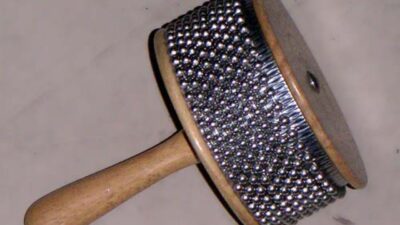
कबासा एक छोटा, हाथ में पकड़ा जाने वाला ताल-वाद्य है। इसमें एक लकड़ी या प्लास्टिक का हत्था होता है जिसके ऊपर एक चौड़ा, उभरी-दानेदार सतह वाला धातु का बेलन (सिलिंडर) लगा रहता है, और उस बेलन के चारों ओर इस्पात के छोटे-छोटे गोल मणकों की कई लड़ियाँ (बॉल-चेन) लिपटी रहती हैं। हथेली को इन मणकों पर टिकाकर बेलन को आगे-पीछे मरोड़ने से मणके धातु की खुरदरी सतह पर रगड़ खाते हैं और एक सूखी, चमकीली 'शह-शह' खनक पैदा होती है।
Description English
The cabasa is a small, hand-held percussion instrument. It has a wooden or plastic handle topped by a wide metal cylinder with a bumpy, dimpled surface, around which several loops of small steel ball-chain are wrapped. Resting the palm against the beads and twisting the cylinder back and forth makes the beads scrape across the textured metal, producing a dry, bright 'shh-shh' rattle.
Handle
हत्था / डंडी
Handle
Straight grip attached to the cylinder head
बेलन से जुड़ी सीधी पकड़
Wood (traditional) or moulded plastic (modern)
लकड़ी (पारंपरिक) या ढला हुआ प्लास्टिक (आधुनिक)
Cylinder
धातु बेलन
Metal cylinder (head)
क्रोम-मढ़ा इस्पात का चौड़ा बेलन जिसकी सतह पर छोटे-छोटे उभार/गड्ढे होते हैं ताकि मणके रगड़कर तीखी खनक दें।
A wide chrome-plated steel cylinder with a raised, dimpled surface so that the beads catch and scrape to give a crisp rattle.
Chrome-plated / stainless steel
Bead Chains
मणका लड़ियाँ (बॉल-चेन)
Steel bead chains
Multiple loops (typically several strands wrapped around the cylinder)
इस्पात के अनेक छोटे गोल मणकों की लड़ियाँ बेलन के गिर्द लिपटी रहती हैं। हथेली इन्हीं पर टिकती है; मरोड़ने पर ये धातु पर रगड़कर ध्वनि उत्पन्न करती हैं।
Loops of many small steel balls wrap around the cylinder. The palm rests on these; when twisted, they scrape against the metal to generate the sound.
Steel ball-chain
Traditional Version
पारंपरिक लौकी-रूप (अफ़ोशे / शेकेरे)
Traditional gourd form (afoxé / shekere)
मूल वाद्य एक सूखी लौकी (कबाका) थी जिसके चारों ओर मणकों या कौड़ियों का जाल बुना जाता था। आधुनिक धातु कबासा इसी का टिकाऊ, स्टूडियो-अनुकूल संस्करण है।
The original instrument was a dried gourd (cabaça) wrapped in a net of beads or cowries. The modern metal cabasa is its durable, studio-friendly successor.
Dried gourd + bead/cowrie net
Playing Grip
पकड़ व वादन-मुद्रा
Grip and playing posture
एक हाथ से हत्था पकड़ते हैं और दूसरे हाथ की हथेली मणकों पर रखते हैं; फिर बेलन को बाएँ-दाएँ मरोड़कर या हल्का झटककर लय बुनी जाती है। हथेली के दबाव से आवाज़ की तीव्रता बदलती है।
One hand holds the handle while the other palm presses on the beads; the cylinder is then twisted left-and-right (or lightly shaken) to weave the rhythm. Palm pressure controls loudness and sustain.
Frets
कबासा अस्वरित (नॉन-पिच) वाद्य है — इसमें फ्रेट या स्वर-निर्धारण नहीं होता; यह केवल लय और ध्वनि-बनावट देता है।
The cabasa is an unpitched instrument — it has no frets or defined notes; it provides rhythm and texture only.
ध्वनि-चरित्र
SoundTonal Character Hindi
कबासा की ध्वनि सूखी, चमकीली और धातु जैसी होती है — एक तीखी 'शह-शह/छक-छक' खनक जो जल्दी थम जाती है। यह कोई स्वर नहीं देता, बल्कि लय के ऊपर एक सतत, झिलमिलाती बनावट (texture) बिछा देता है।
Tonal Character English
The cabasa's sound is dry, bright and metallic — a crisp 'shh-shh / chick-chick' rattle with a short decay. It carries no pitch; instead it lays a continuous, shimmering texture over a groove.
Timbre
Dry, high-frequency, metallic swish; short sustain
Range
Non-pitched (unpitched percussion) — broadband high-frequency noise rather than a defined pitch
Dynamic Range
Soft brushed whisper to a sharp, cutting rasp, controlled by palm pressure
Techniques
सुनने का मार्गदर्शन
The Listening Guideकबासा को पहचानना हो तो किसी बोसा नोवा, फ़ंक या डिस्को ट्रैक में ताल के ठीक ऊपर बहती उस निरंतर, चमकीली 'शह-शह' परत पर कान टिकाइए — हाई-हैट से अलग, गोल और रगड़दार, धातु-सी सूखी। फिर प्रदर्शन-वीडियो देखिए जहाँ हथेली की मरोड़ और मणकों की लड़ियाँ साफ़ दिखती हैं।
अंग्रेज़ी में पढ़ें · Read in English
To spot the cabasa, listen in any bossa nova, funk or disco track for that continuous, bright 'shh-shh' layer floating just above the beat — never loud, never sharp, just constantly shimmering. Distinguish it from the hi-hat: the cabasa's rattle is rounder and grainier, dry and metallic. Then watch the demonstration videos below, where the palm twist and the loops of beads are clearly visible.
परिचय
Identity- Year Of Origin
- 1967
अन्य विवरण
More Details- Timbre
- Dry, high-frequency, metallic swish; short sustain
रोचक तथ्य
Margin Notesकबासा, अफुशे और शेकेरे — नामों की उलझन — 'शेकेरे' पश्चिम अफ़्रीका का लौकी-मणका झुनझुना है; 'अफ़ोशे' उसका ब्राज़ीली रूप; और 'अफुशे-कबासा' उसी परिवार का आधुनिक इस्पात-संस्करण। इसीलिए Latin Percussion अपने वाद्य को 'Afuche/Cabasa' कहती है — एक ही परंपरा के तीन नाम।
The 'shekere' is the West African gourd-and-bead rattle; the 'afoxé' is its Brazilian form; and the 'afuche-cabasa' is the modern steel version of the same family. That is why Latin Percussion calls its instrument 'Afuche/Cabasa' — three names for one tradition.
एक इंजीनियर की देन — मार्टिन कोहेन कोई पेशेवर संगीतकार नहीं, एक इंजीनियर थे जिन्हें लातिन संगीत से प्रेम था। न्यूयॉर्क में टिकाऊ, भरोसेमंद वाद्यों की खोज में उन्होंने Latin Percussion (LP) की नींव रखी और लौकी की जगह धातु लाकर कबासा को स्टूडियो-मानक बना दिया।
Martin Cohen was not a professional musician but an engineer who loved Latin music. Searching in New York for durable, reliable instruments, he founded Latin Percussion (LP) and, by swapping gourd for metal, turned the cabasa into a studio standard.
संगीत-चिकित्सा का प्रिय वाद्य — पकड़ने में आसान और स्पर्श-अनुकूल संतोषजनक ध्वनि के कारण कबासा संगीत-चिकित्सा और आरंभिक संगीत-शिक्षा में बहुत लोकप्रिय है — छोटे बच्चे और विशेष-आवश्यकता वाले शिक्षार्थी भी इसे सहज बजा लेते हैं।
Easy to hold and giving a tactile, satisfying sound, the cabasa is very popular in music therapy and early music education — young children and special-needs learners can play it with ease.
फ़िल्म-लय में झलक — भारतीय फ़िल्म-संगीत में कबासा मुख्य ताल कभी नहीं रहा, पर 1970 के दशक से व्यवस्थाकारों ने कोंगा-बोंगो के साथ शेकर-बनावट को डिस्को व आधुनिक व्यवस्थाओं में जोड़ा — जहाँ यह ऊपर एक चमकीली, चलती-फिरती लय-परत भर देता है।
The cabasa has never been the main rhythm in Indian film music, but from the 1970s arrangers added shaker texture alongside congas and bongos in disco and modern arrangements — where it fills in a bright, moving rhythmic layer on top.
सवाल-जवाब
Questions & Answersकबासा क्या है?
कबासा एक छोटा हाथ-वाद्य (घन/इडियोफोन) है जिसमें एक धातु-बेलन के चारों ओर इस्पात के मणकों की लड़ियाँ लिपटी रहती हैं। हथेली से मणकों को दबाकर बेलन मरोड़ने पर एक सूखी 'शह-शह' खनक बनती है। यह अस्वरित है और मुख्यतः लय-बनावट देता है।
कबासा किसने बनाया?
आधुनिक धातु 'अफुशे-कबासा' को Latin Percussion (LP) के संस्थापक मार्टिन कोहेन ने 1960 के दशक के उत्तरार्ध में डिज़ाइन किया। इसका मूल रूप पश्चिम अफ़्रीका का शेकेरे और ब्राज़ील का अफ़ोशे — लौकी-मणका झुनझुना — है।
कबासा कैसे बजाया जाता है?
एक हाथ से हत्था पकड़कर दूसरे हाथ की हथेली मणकों पर रखी जाती है, फिर बेलन को आगे-पीछे मरोड़ा जाता है जिससे मणके खुरदरी धातु पर रगड़कर खनकते हैं। हथेली का दबाव और मरोड़ की गति लय व तीव्रता तय करती है।
क्या कबासा भारतीय शास्त्रीय संगीत का वाद्य है?
नहीं। कबासा एक आधुनिक लातिन/स्टूडियो पर्कशन है, भारतीय शास्त्रीय या लोक परंपरा का अंग नहीं। भारतीय फ़िल्म-संगीत में यह 1970 के दशक से कभी-कभी सजावटी शेकर-परत के रूप में सुनाई देता है, मुख्य ताल के रूप में नहीं।
कबासा और शेकेरे में क्या अंतर है?
शेकेरे लौकी से बना पारंपरिक अफ़्रीकी वाद्य है जिसे हिलाकर व थपककर बजाया जाता है; कबासा उसी परिवार का आधुनिक इस्पात-संस्करण है जिसे मुख्यतः मरोड़कर बजाते हैं और जो अधिक तीखी, धातु-रगड़दार ध्वनि देता है।
नमूना-पट्टी
The Specimen Table| नाम | कबासा · Cabasa |
|---|---|
| अन्य नाम | अफुशे-कबासा · अफुशे (Afuche) · कबासा / कबाका (Portuguese: cabaça) · Cabasa (also: Afuche-Cabasa) |
| उद्गम | 1967 |
| प्रकार | वाद्य · Instruments |
साझा कीजिए · Share this Plate