गीत विंग · गीत-पट्टिका · Song Plate
श्याम सुंदर मदन मोहन
Shaam Sundar Madan Mohan
हे श्याम सुंदर, मदन मोहन — हिंदी टॉकी की भोर में दुर्गा खोटे की अपनी भक्ति-आवाज़, भक्ति और प्रेम को एक करती हुई।
भावभक्ति · रोमांटिक · आध्यात्मिक
भाषाBraj Bhasha · Sanskrit-influenced Hindi
श्रेय
The Creditsबोल · The Lyrics
पूरे बोल · Full Lyrics
शब्दकोश
Word Meaningsसूत्र-वाक्य · The Hook
सूत्र-वाक्य
हे श्याम सुंदर, मदन मोहन — हिंदी टॉकी की भोर में दुर्गा खोटे की अपनी भक्ति-आवाज़, भक्ति और प्रेम को एक करती हुई।
In EnglishO beautiful dark Krishna, enchanter of hearts — Durga Khote's own devotional voice at the dawn of the Hindi talkie, uniting bhakti and romance.
पट्टिका-लेख
The Monographपरिचय Overview
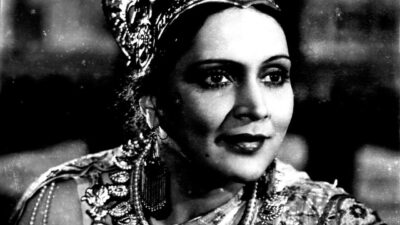
'श्याम सुंदर मदन मोहन' इंडियन आर्ट प्रोडक्शंस की आरंभिक भारतीय टॉकी फ़रेबी जाल (1931) में दुर्गा खोटे द्वारा कैमरे पर गाए तीन गीतों में से तीसरा है। कृष्ण को उनके शास्त्रीय उपनामों से संबोधित करता एक भक्ति-रोमांटिक भजन, खोटे के टॉकी-पदार्पण वर्ष में कैमरे के सामने सजीव गाया गया — हिंदी फ़िल्म में कृष्ण-भजन के सबसे आरंभिक दर्ज उदाहरणों में से एक।
अंग्रेज़ी में पढ़ें · Read in English
'Shaam Sundar Madan Mohan' is the third of three songs sung on camera by Durga Khote in Farebi Jaal (1931), an early Indian talkie by Indian Art Productions. A devotional-romantic bhajan addressing Krishna by his classical epithets, it was sung live on camera by Khote in her talkie debut year — one of the earliest documented instances of the Krishna bhajan in Hindi film.
संगीत The Music
'श्याम सुंदर मदन मोहन' उपनाम कृष्ण को उनके दोहरे रूप में पुकारते हैं — वृंदावन के सुंदर ग्वाले के रूप में और परम मोहन के रूप में — एक रजिस्टर जो भक्ति पदावली परम्परा और उस भजन-साहित्य से आता है जो पारसी रंगमंच युग से पहले और बाद भी उत्तर भारत में व्यापक रूप से प्रचलित था। इन उपनामों को दुर्गा खोटे के परदे पर प्रदर्शन के लिए एक फ़िल्मी गीत के रूप में मास्टर वसंत की रचना ने इस भक्ति-विरासत को सिंक्रोनाइज़्ड-ध्वनि के नए माध्यम में बुन दिया। खोटे की अपनी शास्त्रीय संगीत-पृष्ठभूमि — जिसमें उनके घर में भक्ति-संगीत का परिचय शामिल था — ने उन्हें इस अर्ध-भक्तिपूर्ण रजिस्टर के साथ स्वाभाविक सहजता दी होगी।
अंग्रेज़ी में पढ़ें · Read in English
The epithets 'Shyam Sundar Madan Mohan' call on Krishna in his dual aspect as the beautiful cowherd of Vrindavan and the supreme enchanter — a register drawn from the Bhakti padavali tradition and the bhajan literature that circulated widely in North India before and after the Parsi theatre era. Master Vasant's setting of these epithets as a filmi song for Durga Khote's on-screen performance would have woven this devotional lineage into the new medium of synchronized sound. Khote's own classical musical background — including her household's exposure to bhakti music — would have given her a natural ease with this semi-devotional register.
काव्य The Poetry
इस शीर्षक में प्रयुक्त कृष्ण के उपनाम — श्याम सुंदर और मदन मोहन — जयदेव के गीत गोविंद से मीराबाई, सूरदास और वृंदावन के पदावली कवियों तक फैली एक काव्य-परम्परा के हैं। आरंभिक टॉकी के संदर्भ में, एक फ़िल्मी गीत में कृष्ण का आह्वान दोहरे उद्देश्य की सेवा करता था: इसने गीत को भक्तिपूर्ण सम्मान दिया (उन दर्शकों के लिए इसे स्वीकार्य बनाते हुए जो अन्यथा एक रोमांटिक गीत को अशिष्ट मान सकते थे) और साथ ही भक्ति की आड़ में रोमांटिक भाव को उपलब्ध करा दिया। मास्टर वसंत की गीत-रचना इस तरह उसी सामाजिक भूभाग को नेविगेट करती है जिसे दुर्गा खोटे स्वयं नेविगेट कर रही थीं — एक ऐसे माध्यम में परिष्कृत संवेदनशीलता लाते हुए जो अभी अपनी सामाजिक वैधता खोज रहा था।
अंग्रेज़ी में पढ़ें · Read in English
The Krishna epithets used in this title — Shyam Sundar (beautiful dark one) and Madan Mohan (enchanter of the god of love) — belong to a poetic tradition stretching from Jayadeva's Gita Govinda through Mirabai, Surdas, and the Vrindavan padavali poets. In the early talkie context, addressing Krishna in a filmi song served a dual purpose: it gave the song devotional respectability (making it acceptable to audiences who might otherwise find a romantic song forward) while simultaneously making the romantic sentiment available under the cover of bhakti. Master Vasant's lyric thus navigates the social terrain that Durga Khote herself was navigating — bringing refined sensibility into a medium still finding its social legitimacy.
कहानी The Story
फ़रेबी जाल के नाटकीय संदर्भ में, कृष्ण को संबोधित एक भक्ति-रोमांटिक गीत आध्यात्मिक शरण के एक क्षण के रूप में काम कर सकता था — एक पात्र जो मानवीय धोखे के जाल से परे दिव्य की ओर मुड़ रहा है। दुर्गा खोटे के चरित्र के लिए, यह उस शुद्ध भक्ति-सार का प्रतिनिधित्व करता होगा जो उसके आसपास के मानवीय संबंधों के 'फ़रेबी जाल' से अछूता था। यही रजिस्टर — सांसारिक भ्रष्टाचार के बीच भक्तिपूर्ण पवित्रता — भक्ति की महानतम आख्यानों में बहता है, मीराबाई से आगे, और जिस पर भारतीय सिनेमा बार-बार लौटेगा।
अंग्रेज़ी में पढ़ें · Read in English
In Farebi Jaal's dramatic context, a devotional-romantic song addressing Krishna could have functioned as a moment of spiritual refuge — a character turning from the web of human deception toward the divine. For Durga Khote's character, it may have represented the pure devotional core untouched by the 'farebi jaal' of human relationships around it. This is the register — devotional purity amid worldly corruption — that runs through the greatest bhakti narratives, from Mirabai forward, and that Indian cinema would return to again and again.
विरासत The Legacy
फ़रेबी जाल में दुर्गा खोटे का 'श्याम सुंदर मदन मोहन' हिंदी फ़िल्म में भक्ति-रोमांटिक कृष्ण-भजन के सबसे आरंभिक दर्ज उदाहरणों में से एक है। उन्होंने जो परम्परा शुरू की — शिक्षित, शास्त्रीय रूप से प्रशिक्षित महिलाएं भक्ति-रजिस्टर को सिनेमा में लाती हुईं — उसे 1930 और 1940 के दशकों की अभिनेत्रियों ने आगे बढ़ाया, और भक्ति-रोमांटिक कृष्ण गीत मीरा (1945) के बाद से हिंदी फ़िल्म-संगीत का एक स्थायी तत्व बन गया। 1931 में यहाँ सुनी जाने वाली खोटे की आवाज़ — फ़िल्म के प्रिंट-उत्तरजीविता-पूर्व काल में — इस वंश के उद्गम-बिंदु पर खड़ी है।
अंग्रेज़ी में पढ़ें · Read in English
Durga Khote's singing of 'Shaam Sundar Madan Mohan' in Farebi Jaal is one of the earliest documented instances of the devotional-romantic Krishna bhajan in Hindi film. The tradition she initiated — educated, classically trained women bringing the bhakti register into cinema — would be taken forward by the actresses of the 1930s and 1940s, and the devotional-romantic Krishna song would become a permanent feature of Hindi film music from Meera (1945) onward. Khote's voice, heard here in 1931 in the film's pre-print-survival period, stands at the origin point of this lineage.
वर्गीकरण
ClassificationGenre
अन्य विवरण
More Details- Durga Khote — Wikipedia (filmography)
References
रोचक तथ्य
Margin Notes'श्याम सुंदर' और 'मदन मोहन' कृष्ण के ये उपनाम सूरदास, अष्टछाप कवियों और वृंदावन की पदावली परम्परा के माध्यम से ट्रेस होते हैं — दुर्गा खोटे का 1931 का फ़िल्मी प्रदर्शन इस प्राचीन वंश को सिंक्रोनाइज़्ड-ध्वनि के नए माध्यम में लाया।
अंग्रेज़ी में पढ़ें · Read in English
The epithets 'Shyam Sundar' and 'Madan Mohan' for Krishna trace back through Surdas, the Ashtachhap poets, and the Vrindavan padavali tradition — Durga Khote's 1931 film performance brought this ancient lineage into the new medium of synchronized sound.
दुर्गा खोटे के तीसरे गीत के लिए एक कृष्ण-भजन चुनकर, मास्टर वसंत ने उनकी भूमिका को एक आध्यात्मिक आयाम दिया — उन्हें मीराबाई की महिला भक्त-गायिकाओं की परम्परा में रखकर, सिनेमा में एक उच्च-कुलीन स्त्री की उपस्थिति को सूक्ष्मता से न्यायसंगत ठहराते हुए।
अंग्रेज़ी में पढ़ें · Read in English
By choosing a Krishna devotional for Durga Khote's third song, Master Vasant gave her role a spiritual dimension — subtly justifying the presence of a high-born woman in cinema by placing her in the Mirabai tradition of female devotional singers.
नमूना-पट्टी
The Specimen Table| शीर्षक | श्याम सुंदर मदन मोहन · Shaam Sundar Madan Mohan |
|---|---|
| फ़िल्म | फ़रेबी जाल · 1931 |
| वर्ष · युग | 1931 — Early Talkie Era |
| गायक | Durga Khote |
| गीतकार | Master Vasant |
| संगीतकार | Master Vasant |
| भाषा | Braj Bhasha · Sanskrit-influenced Hindi |
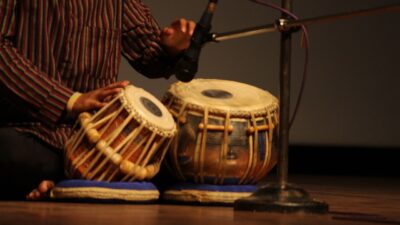
| वाद्य | harmonium · tabla · sarangi (probable) |
| भाव | भक्ति · रोमांटिक · आध्यात्मिक |
| बोल-स्थिति | सार्वजनिक |
जुड़े हुए पन्ने
Connected Plates · The Graph Made Visibleअटलस में कोई पन्ना अकेला नहीं — इस गीत से जुड़े गीत, कलाकार, फ़िल्म, राग-ताल-विधा, सब यहाँ से खुलते हैं।
मिलते-जुलते गीत · Related Songs
कलाकार · The Artists
फ़िल्म · The Film
साझा कीजिए · Share this Plate