गीत विंग · गीत-पट्टिका · Song Plate
आवाज़ दे कहाँ है
Awaz De Kahan Hai
नूरजहाँ अँधेरे में पुकारती हैं, और एक पल के लिए पूरा हिंदुस्तान सुनता है।
भावउदास · पुरानी यादें · रोमांटिक
भाषाurdu गतिधीमी
श्रेय
The Creditsबोल · The Lyrics
बोल — झलक · Lyrics Preview
आ मेरे आशियाने में, चाँद की रोशनी है।
aa mere aashiyane mein, chand ki roshni hai.
कॉपीराइट के कारण केवल झलक — पूरे बोल आधिकारिक मंचों पर।
सूत्र-वाक्य · The Hook
सूत्र-वाक्य
नूरजहाँ अँधेरे में पुकारती हैं, और एक पल के लिए पूरा हिंदुस्तान सुनता है।
In EnglishNoor Jehan calls across the dark, and for a moment all of India listens.
पट्टिका-लेख
The Monographपरिचय Overview
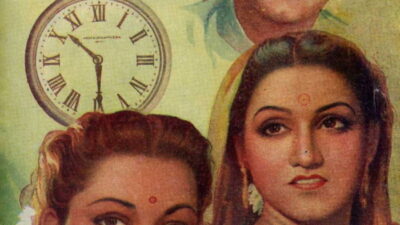
मेहबूब ख़ान की 'अनमोल घड़ी' (1946) में नौशाद ने तनवीर नक़वी की तड़पन-भरी रचना नूरजहाँ के लिए, उनकी शक्ति के शिखर पर, तैयार की। 'आवाज़ दे कहाँ है' दशक के परिभाषित गानों में से एक बन गया — ऑल इंडिया रेडियो पर अनंत बार बजा, और एक पीढ़ी की उस चीज़ के लिए तरस को ले कर चला जो बस पहुँच से परे थी। नूरजहाँ की गतिकी पर पकड़, किसी लंबे वाक्य को उठाने और छोड़ने की उनकी क्षमता, पूरी तरह दिखती है।
अंग्रेज़ी में पढ़ें · Read in English
In Mehboob Khan's Anmol Ghadi (1946), Naushad set Tanveer Naqvi's yearning lyric for Noor Jehan at the peak of her powers. 'Awaz De Kahan Hai' became one of the defining songs of the decade — played endlessly on All India Radio and carrying a generation's longing for something just out of reach. Noor Jehan's command of dynamics, her ability to make a long phrase swell and recede, is on full display.
संगीत The Music
नौशाद आर्केस्ट्रेशन को नूरजहाँ की आवाज़ के इर्द-गिर्द रचते हैं न कि उसके बराबर में — वायलिन केवल टिकाने के लिए आते हैं, तबला दिल की धड़कन-सी थाप देता है, और सारंगी उनके अलंकारों का अनुसरण करती है। नतीजा 1946 के हिंदी फ़िल्म-संगीत के लिए असामान्य अंतरंगता की बुनावट है।
अंग्रेज़ी में पढ़ें · Read in English
Naushad builds the orchestration around Noor Jehan's voice rather than alongside it — the violins enter only to sustain, the tabla keeps a heartbeat pulse, and the sarangi traces her ornaments. The result is a texture of unusual intimacy for a 1946 Hindi film score.
काव्य The Poetry
नक़वी की रचना दूरी और अनुपस्थिति के साथ काम करती है — महबूब को पुकारा, पर कहीं नहीं मिला, दुनिया जवान पर दिल भारी। भाषा की सादगी उसकी भावनात्मक सटीकता को छिपाती है।
अंग्रेज़ी में पढ़ें · Read in English
Naqvi's lyric works with distance and absence — the beloved called but nowhere found, the world young but the heart heavy. The simplicity of the language belies its emotional precision.
कहानी The Story
फ़िल्म में यह गाना ठहराव के एक क्षण के रूप में काम करता है — उपस्थिति और अनुपस्थिति के बीच, जवानी और उसके अपरिहार्य बीतने के बीच। मेहबूब ख़ान ने इसे बिना मेलोड्रामा के अधिकतम भावनात्मक भार के साथ रखा।
अंग्रेज़ी में पढ़ें · Read in English
The song functions in the film as a moment of suspension — between presence and absence, youth and its inevitable passing. Mehboob Khan placed it to carry maximum emotional weight without melodrama.
विरासत The Legacy
नूरजहाँ की सबसे प्रिय भारतीय रिकॉर्डिंग में से, 'आवाज़ दे कहाँ है' वह गाना है जिसे उनके प्रशंसक पहले उद्धृत करते हैं। विभाजन के बाद, यह उन गानों में से एक बन गया जिसने भारत में उनकी याद को जीवित रखा, जब वे पाकिस्तान में नया कैरियर बना रही थीं।
अंग्रेज़ी में पढ़ें · Read in English
Among Noor Jehan's most beloved Indian recordings, 'Awaz De Kahan Hai' is the song fans of her work cite first. After Partition, it became one of the songs that preserved her memory in India even as she built a new career in Pakistan.
वर्गीकरण
Classification- Tempo
- Slow
Genre
अन्य विवरण
More Details- Wikipedia: Anmol Ghadi (1946 film)
- Wikipedia: Noor Jehan
- Wikipedia: Naushad
- Wikipedia: Tanveer Naqvi
References
रोचक तथ्य
Margin Notes'अनमोल घड़ी' (निर्देशक महबूब ख़ान, 1946) 1946 की सर्वाधिक कमाई करने वाली हिंदी फ़िल्म थी, जिसमें उस दौर के तीन बड़े नाम — नूरजहाँ, सुरेंद्र और सुरैया — एक ही फ़िल्म में साथ नज़र आए।
अंग्रेज़ी में पढ़ें · Read in English
Anmol Ghadi (dir. Mehboob Khan, 1946) was the highest-grossing Hindi film of 1946 and starred three of the era's biggest names — Noor Jehan, Surendra, and Suraiya — in a single production.
नौशाद 'रतन' (1944) से ही बॉम्बे के अग्रणी संगीतकार के रूप में अपनी पहचान बना चुके थे; 'अनमोल घड़ी' ने इस स्थिति की पुष्टि की, और 'आवाज़ दे कहाँ है' इस फ़िल्म का सबसे प्रतिष्ठित गीत बन गया।
अंग्रेज़ी में पढ़ें · Read in English
Naushad had already established his standing as Bombay's foremost composer with Ratan (1944); Anmol Ghadi confirmed that position, and 'Awaz De Kahan Hai' became the film's signature piece.
तनवीर नक़वी (1918–1990) 1940 के दशक के सर्वाधिक विपुल उर्दू गीतकारों में से एक थे, जिन्होंने बॉम्बे की दर्जनों फ़िल्मों के लिए गीत लिखे; उनके निधन का वर्ष 1990 होने के कारण, भारतीय कॉपीराइट क़ानून के अंतर्गत यह गीत 2050 तक कॉपीराइट-संरक्षित रहेगा।
अंग्रेज़ी में पढ़ें · Read in English
Tanveer Naqvi (1918–1990) was one of the most prolific Urdu lyricists of the 1940s, writing for dozens of Bombay productions; his death year of 1990 means the lyric remains in copyright until 2050 under Indian law.
यह नूरजहाँ की भारत में बनी अंतिम प्रमुख फ़िल्मों में से एक थी; 1947 के विभाजन के बाद वे पाकिस्तान चली गईं और फिर कभी बॉम्बे फ़िल्म उद्योग में नहीं लौटीं, जिससे 'अनमोल घड़ी' की उनकी रिकॉर्डिंग्स एक अपरिवर्तनीय रूप से समाप्त हो चुके अध्याय का हिस्सा बन गई हैं।
अंग्रेज़ी में पढ़ें · Read in English
This was among Noor Jehan's final major Indian productions; she crossed to Pakistan after the Partition of 1947 and never returned to Bombay film industry, making her recordings from Anmol Ghadi part of an irreversibly closed chapter.
यह गीत 1940 के दशक के अंत में ऑल इंडिया रेडियो के आरंभिक प्रसारण वर्षों के दौरान सर्वाधिक फ़रमाइश किए जाने वाले गीतों में शामिल था, जिसने स्वतंत्रता के आरंभिक दौर की सार्वजनिक स्मृति में इसका स्थान सुदृढ़ कर दिया।
अंग्रेज़ी में पढ़ें · Read in English
The song was among the most-requested pieces on All India Radio during its inaugural broadcast years in the late 1940s, cementing its place in the public memory of the early Independence era.
नमूना-पट्टी
The Specimen Table| शीर्षक | आवाज़ दे कहाँ है · Awaz De Kahan Hai |
|---|---|
| फ़िल्म | अनमोल घड़ी · 1946 |
| वर्ष · युग | 1946 — pre independence |
| गायक | Noor Jehan |
| गीतकार | Tanveer Naqvi |
| संगीतकार | Naushad |
| गति | धीमी |
| भाषा | urdu |
| भाव | उदास · पुरानी यादें · रोमांटिक |
| लोकप्रियता | Very_popular |
| बोल-स्थिति | केवल झलक |
जुड़े हुए पन्ने
Connected Plates · The Graph Made Visibleअटलस में कोई पन्ना अकेला नहीं — इस गीत से जुड़े गीत, कलाकार, फ़िल्म, राग-ताल-विधा, सब यहाँ से खुलते हैं।
मिलते-जुलते गीत · Related Songs
कलाकार · The Artists
फ़िल्म · The Film
साझा कीजिए · Share this Plate