गीत विंग · गीत-पट्टिका · Song Plate
सैंयां तोरे राज में
Saiyan Tore Raj Mein
'कुल कलंक' में ललिता परुळकर का एकमात्र प्रलेखित गीत — पत्नी का पति से संबोधन, ब्रज-रंगी लोक-उलाहने की भाषा में।
भावचुलबुला · रोमांटिक
भाषाhindi गतिमध्यम स्वरूपएकल महिला
श्रेय
The Creditsसूत्र-वाक्य · The Hook
सूत्र-वाक्य
'कुल कलंक' में ललिता परुळकर का एकमात्र प्रलेखित गीत — पत्नी का पति से संबोधन, ब्रज-रंगी लोक-उलाहने की भाषा में।
In EnglishLalita Parulkar's only documented song in Kul Kalank — a wife's address to her husband in the braj-inflected register of folk complaint.
पट्टिका-लेख
The Monographपरिचय Overview
मराठी गायिका ललिता परुळकर 'कुल कलंक' में केवल एक रिकॉर्ड गाती हैं, और यही वह गीत है जिसका शीर्षक फ़िल्मी से अधिक लोक-भाषा में बैठता है। 'सैंयां' और 'तोरे' ब्रजभाषा के प्रयोग हैं, जो ठुमरी तथा गाँव की स्त्रियों के गीत-भंडार से हिंदी फ़िल्म-संगीत में आए, और 'तोरे राज में' पत्नी के उस अध-छेड़, अध-गंभीर बयान की चिर-परिचित शुरुआत है जिसमें वह पति के राज में अपनी ज़िंदगी का हिसाब देती है। इस रिकॉर्ड की कोई प्रति नहीं मिली; श्रेय हिंदी फ़िल्म गीत कोश से निकली सूचियों में सुरक्षित है।
अंग्रेज़ी में पढ़ें · Read in English
The Marathi singer Lalita Parulkar takes a single side in Kul Kalank, and it is the one song in the film whose title sits most clearly in a folk register rather than a filmi one. 'Saiyan' and the 'tore' possessive are braj-bhasha usages carried into Hindi film song from the thumri and the village women's repertoire, and the phrase 'in your kingdom' is the standard opening of the wife's half-teasing, half-serious account of life under her husband's rule. No recording of the side has been traced; the credit survives in the Hindi Film Geet Kosh-derived catalogues.
संगीत The Music
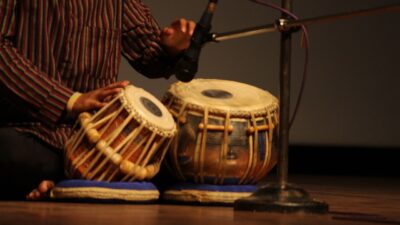
रिकॉर्डिंग की कोई प्रति ज्ञात नहीं है, इसलिए संगीत के बारे में जो कुछ कहा जाए वह संदर्भ के स्तर पर ही रहना चाहिए। 1945 के बंबई संगीत में लोक-भाषा वाले शीर्षक को सामान्यतः ढोलक या कहरवा की चाल पर बाँधा जाता, अंतरों के बीच छोटी वाद्य-टेक के साथ; और इस विशेष संगीत में वह चाल पंजाब घराने का एक शास्त्रीय तबला वादक फ़िल्मी छद्मनाम से लिख रहा था — ऐसा संगीतकार जिसका बचा हुआ फ़िल्मी काम धुन से अधिक लय में दिलचस्प है। संगत लोक-सादगी लिए थी या पर्दे के लिए सजाई गई थी, यह उपलब्ध दस्तावेज़ों से तय नहीं होता।
अंग्रेज़ी में पढ़ें · Read in English
No copy of the recording is known, so any account of the music has to stay at the level of context. A folk-register title in a 1945 Bombay score would ordinarily have been set to a dholak or keherwa pulse with a short instrumental refrain between stanzas, and in this particular score that pulse was being written by a classical tabla player of the Punjab gharana working under a film pseudonym — a composer whose surviving film work is consistently more interesting rhythmically than melodically. Whether the setting was folk-plain or dressed up for the screen cannot be determined from the surviving documentation.
काव्य The Poetry
रूपबानी की पंक्ति घर-गृहस्थी को राज्य की शब्दावली में रखती है: पति का एक 'राज' है, और पत्नी उस राज के भीतर के हालात बयान करती है। उत्तर भारत के स्त्री-गीतों की यह सबसे टिकाऊ बुनावटों में से एक है, क्योंकि इसमें शिकायत मज़ाक़ बनकर कही जा सकती है और मज़ाक़ शिकायत बनकर सुना जा सकता है — और क्योंकि यह घरेलू व्यवस्था को सत्ता का रूप बताती है, वह भी आवाज़ ऊँची किए बिना। जिस फ़िल्म का शीर्षक ही किसी परिवार पर कलंक छिपाने का आरोप है, वहाँ यह बुनावट सजावट नहीं — वही फ़िल्म का विषय है, एक ऐसे गीत में रख दिया गया जहाँ वह मिठास बनकर निकल जाए।
अंग्रेज़ी में पढ़ें · Read in English
Roopbani's line puts the household in the vocabulary of the state: the husband has a raj, a rule, and the wife reports on conditions inside it. It is one of the most durable framings in north Indian women's song, because it lets a complaint be made as a joke and a joke be heard as a complaint, and because it names the domestic arrangement as a form of power without ever raising its voice. In a film whose title accuses a family of harbouring a disgrace, that framing is not decoration — it is the film's subject, dropped into a song where it can pass as charm.
कहानी The Story
'कुल कलंक' सनराइज़ पिक्चर्स ने बनाई और इसका निर्देशन नानूभाई बी. वकील ने किया — उस दौर के सबसे व्यस्त पेशेवर निर्देशकों में से एक, जिनका काम 1929 की मूक फ़िल्मों से लेकर 1970 के दशक की शुरुआत तक फैला रहा। कलाकार दर्ज हैं — शांता हुबळीकर, मसूद, अमीरबाई कर्नाटकी, शहज़ादी, दुलारी, मजीद, प्रतिमा देवी और वज़ीर मोहम्मद ख़ान — पर कथा दर्ज नहीं है। यह रिकॉर्ड गाने वाली ललिता परुळकर 1940 के दशक में बंबई के हिंदी स्टूडियो में काम कर रही कई मराठी-प्रशिक्षित आवाज़ों में से एक थीं।
अंग्रेज़ी में पढ़ें · Read in English
Kul Kalank was made by Sunrise Pictures and directed by Nanubhai B. Vakil, one of the busiest journeyman directors of the period, whose career ran from the silent films of 1929 to the early 1970s. The cast — Shanta Hublikar, Masood, Amirbai Karnataki, Shahzadi, Dulari, Majid, Pratima Devi and Wazir Mohammed Khan — is documented; the plot is not. Lalita Parulkar, who sings this side, was one of several Marathi-trained voices working across Bombay's Hindi studios in the 1940s.
विरासत The Legacy
यह रिकॉर्ड सारेगामा की डिजिटल सूची तक नहीं पहुँचा और 1945 पर लिखे बाद के किसी लेखन में इसकी चर्चा नहीं है। इसका बचा हुआ मूल्य श्रेय के रूप में है: यह 1945 के एक हिंदी फ़िल्म-संगीत में ललिता परुळकर की उपस्थिति दर्ज करता है, और अल्ला रक्खा के उस फ़िल्मी जीवन का एक और काम गिनाता है जिसे वे आगे चलकर मंच के लिए छोड़ देने वाले थे।
अंग्रेज़ी में पढ़ें · Read in English
The side did not survive into the Saregama digital catalogue and is not discussed anywhere in the later writing on 1945. Its remaining value is as a credit: it fixes Lalita Parulkar's presence in a Hindi film score of 1945, and it records one more assignment in the film career that Allah Rakha would later leave behind for the concert stage.
वर्गीकरण
Classification- Tempo
- Medium
Genre
अन्य विवरण
More Details- https://www.hindigeetmala.net/movie/kul_kalank.htm
- https://myswar.co/album/kul-kalank-1945
- https://www.saregama.com/album/kul-kalank_107711
- https://en.wikipedia.org/wiki/List_of_Hindi_films_of_1945
- https://en.wikipedia.org/wiki/Alla_Rakha
- https://www.cinemaazi.com/people/alla-rakha-qureshi
- https://www.indianfilmhistory.com/movie/kul-kalank
- https://bombaymann2.blogspot.com/2020/08/film-kul-kalank1945.html
- https://indiancine.ma/EEQ/info
- https://www.songsofyore.com/the-evolution-of-mohammad-rafi-part-one-1944-55/
References
रोचक तथ्य
Margin Notes'कुल कलंक' में ललिता परुळकर सिर्फ़ यही एक गीत गाती हैं; फ़िल्म के अन्य नामांकित गायक हैं अमीरबाई कर्नाटकी (तीन गीत), मोहम्मद रफ़ी (एक युगल), मुमताज़ बेगम और राजकुमारी।
अंग्रेज़ी में पढ़ें · Read in English
Lalita Parulkar sings only this one side in Kul Kalank; the film's other named singers are Amirbai Karnataki (three songs), Mohammed Rafi (one duet), Mumtaz Begum and Rajkumari.
निर्देशक नानूभाई बी. वकील ने 1929 से 1973 तक काम किया और पहली गुजराती फ़ीचर फ़िल्म 'नरसिंह मेहता' (1932) बनाई; विकिपीडिया की उनकी फ़िल्मोग्राफ़ी में 'कुल कलंक' नहीं है — यह गीत-सूचियों और 1945 की फ़िल्म-सूची में दर्ज है।
अंग्रेज़ी में पढ़ें · Read in English
Director Nanubhai B. Vakil worked from 1929 to 1973 and directed Narsinh Mehta (1932), the first Gujarati feature film; Wikipedia's filmography for him omits Kul Kalank, which is documented in the song catalogues and the 1945 film list instead.
नमूना-पट्टी
The Specimen Table| शीर्षक | सैंयां तोरे राज में · Saiyan Tore Raj Mein |
|---|---|
| फ़िल्म | कुल कलंक · 1945 |
| वर्ष · युग | 1945 |
| गायक | Lalita Parulkar |
| गीतकार | Roopbani |
| संगीतकार | Allah Rakha |
| स्वरूप | एकल महिला |
| गति | मध्यम |
| भाषा | hindi |
| भाव | चुलबुला · रोमांटिक |
| लोकप्रियता | Obscure |
| बोल-स्थिति | केवल झलक |
जुड़े हुए पन्ने
Connected Plates · The Graph Made Visibleअटलस में कोई पन्ना अकेला नहीं — इस गीत से जुड़े गीत, कलाकार, फ़िल्म, राग-ताल-विधा, सब यहाँ से खुलते हैं।
मिलते-जुलते गीत · Related Songs
कलाकार · The Artists
फ़िल्म · The Film
साझा कीजिए · Share this Plate