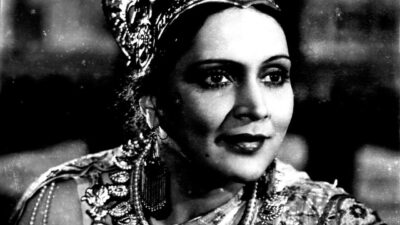
गीत विंग · गीत-पट्टिका · Song Plate
मैं तो चरण कमल पर वारी
Main To Charan Kamal Par Vaari
'पन्ना दाई' के संगीत का भजन — चरण-कमलों पर समर्पण, ख़ान मस्ताना की आवाज़ में।
भावभक्ति · शांत · आध्यात्मिक
भाषाhindi गतिधीमी स्वरूपएकल पुरुष
श्रेय
The Creditsसूत्र-वाक्य · The Hook
सूत्र-वाक्य
'पन्ना दाई' के संगीत का भजन — चरण-कमलों पर समर्पण, ख़ान मस्ताना की आवाज़ में।
In EnglishThe bhajan of Pannadai's score — surrender at the lotus feet, in Khan Mastana's voice.
पट्टिका-लेख
The Monographपरिचय Overview
'पन्ना दाई' के संगीत का भक्ति-गीत। हिंदीगीतमाला की प्रविष्टि में गायक का ख़ाना ख़ाली है, पर मिलेनियम पोस्ट में ज्ञान दत्त पर लिखे लेख में इस गीत की आवाज़ ख़ान मस्ताना बताई गई है, और यहाँ श्रेय उसी आधार पर दर्ज है। 'चरण कमल' और उन पर 'वारी' हो जाना — भक्ति में स्वयं को अर्पित कर देना — सीधे मीरा तथा संत कवियों की भक्ति-शब्दावली से आते हैं, और फ़िल्म का विषय स्वयं एक ऐसी स्त्री है जो अपना सबसे प्रिय अर्पित कर देती है।
अंग्रेज़ी में पढ़ें · Read in English
The devotional number of the Pannadai soundtrack. hindigeetmala's entry leaves the singer's column blank, but the Millennium Post's profile of Gyan Dutt names Khan Mastana as the voice on it, and the attribution is recorded here on that basis. 'Charan kamal' — the lotus feet — and the act of being vaari, offered up in devotion, come straight from the bhakti song vocabulary of Mira and the sant poets, and the film's own subject is a woman who gives up what is dearest to her.
संगीत The Music
1940 के दशक के मध्य की सीधी-सादी फ़िल्मी भजन-शैली में एक धीमा भक्ति-गीत — धुन इतनी सरल और दोहराने योग्य रखी गई कि श्रोता उसे सभागार से बाहर साथ ले जा सके; फ़िल्मी भजन का व्यावसायिक तर्क उसके भक्तिपरक तर्क जितना ही यही था। ज्ञान दत्त, जो सामाजिक फ़िल्मों जितनी ही सहजता से पौराणिक और वेशभूषा-प्रधान फ़िल्मों का संगीत देते थे, इस तेवर में धाराप्रवाह लिखते थे।
अंग्रेज़ी में पढ़ें · Read in English
A slow devotional in the plain film-bhajan manner of the mid-1940s — the melody kept simple and repeatable so an audience could carry it out of the hall, which was the commercial logic of the film bhajan as much as its devotional one. Gyan Dutt, who scored mythologicals and costume pictures as readily as socials, wrote this register fluently.
काव्य The Poetry
बोल भक्ति-काव्य की केंद्रीय चाल पर चलते हैं: भक्त कुछ माँगता नहीं, सब कुछ अर्पित कर देता है — और वही अर्पण पूरी प्रार्थना है। पन्ना दाई की कथा वाली फ़िल्म में इसकी अनुगूँज स्पष्ट है, क्योंकि राजपूत आख्यान में सबसे शाब्दिक अर्पण उन्हीं का है — यद्यपि उपलब्ध प्रलेखन में यह कहीं दर्ज नहीं कि गीत कथा में कहाँ आता था या किस पर फ़िल्माया गया था।
अंग्रेज़ी में पढ़ें · Read in English
The lyric works the central move of bhakti poetry: the devotee does not ask for anything but offers everything, and the offering is itself the whole of the prayer. Placed in a film about Panna Dhai, that has an obvious resonance — hers is the most literal act of offering in Rajput legend — though nothing in the surviving documentation confirms where in the narrative the song fell or whom it was picturised on.
कहानी The Story
'पन्ना दाई' (1945) का निर्माण कमलाबाई मंगलोरेकर ने प्रदीप पिक्चर्स, बंबई के लिए किया और निर्देशन राम दरयानी ने; शीर्षक भूमिका में दुर्गा खोटे थीं तथा चंद्रमोहन, मीनाक्षी शिरोडकर, मास्टर विट्ठल, मुबारक, एम. इस्माइल, गोप और नानासाहेब फाटक सहयोगी भूमिकाओं में। फ़िल्म सोलहवीं सदी के मेवाड़ के उस प्रसंग को कहती है जिसमें बालक उत्तराधिकारी उदय सिंह द्वितीय की धाय पन्ना दाई ने अपने ही पुत्र चंदन को राजकुमार की शय्या पर लिटा दिया ताकि हड़पने वाला बनवीर उसी को मार डाले, और फिर उत्तराधिकारी को कुम्भलगढ़ तक सुरक्षित पहुँचाया। ज्ञान दत्त ने इसके लिए दस गीत रचे, जिनके बोल डी.एन. माधोक और दीवान शरर के बीच बँटे थे।
अंग्रेज़ी में पढ़ें · Read in English
Pannadai (1945) was produced by Kamalabai Mangalorekar for Pradeep Pictures, Bombay, and directed by Ram Daryani, with Durga Khote in the title role and Chandra Mohan, Meenakshi Shirodkar, Master Vithal, Mubarak, M. Ismail, Gope and Nana Saheb Phatak in support. The film retells the sixteenth-century Mewar episode in which Panna Dhai, nursemaid to the child heir Udai Singh II, put her own son Chandan in the prince's bed so the usurper Banbir would kill him instead, then carried the heir to safety at Kumbhalgarh. Gyan Dutt wrote ten songs for it, with lyrics split between D.N. Madhok and Dewan Sharar.
विरासत The Legacy
यह उन दो ख़ान मस्ताना एकलों में से एक है जो 'पन्ना दाई' को उसकी पुरुष आवाज़ देते हैं, और ज्ञान दत्त पर लिखे बाद के लेखन में इसे इस फ़िल्म के लिए संगीतकार के काम के हिस्से के रूप में उद्धृत किया गया है। इसके आगे इसका निशान बहुत कम है: 'पन्ना दाई' की सारेगामा एलबम-सूची में यह नहीं है, और इसकी कोई रिकॉर्डिंग व्यापक प्रचलन में नहीं।
अंग्रेज़ी में पढ़ें · Read in English
The song is one of the two Khan Mastana solos that give Pannadai its male voice, and it is cited in later writing on Gyan Dutt as part of the composer's output for this film. Beyond that it has left little trace: it does not appear in the Saregama album listing for Pannadai, and no recording of it is in wide circulation.
वर्गीकरण
Classification- Tempo
- Slow
Genre
अन्य विवरण
More Details- https://www.hindigeetmala.net/movie/panna_dai.htm
- https://en.wikipedia.org/wiki/List_of_Hindi_films_of_1945
- https://atulsongaday.me/tag/panna-dai/
- https://www.millenniumpost.in/sundaypost/beacon/ahead-of-times-gyan-dutt-394310
References
नमूना-पट्टी
The Specimen Table| शीर्षक | मैं तो चरण कमल पर वारी · Main To Charan Kamal Par Vaari |
|---|---|
| फ़िल्म | पन्ना दाई · 1945 |
| वर्ष · युग | 1945 |
| गायक | Khan Mastana |
| गीतकार | D. N. Madhok |
| संगीतकार | Gyan Dutt |
| स्वरूप | एकल पुरुष |
| गति | धीमी |
| भाषा | hindi |
| भाव | भक्ति · शांत · आध्यात्मिक |
| लोकप्रियता | Obscure |
| बोल-स्थिति | केवल झलक |
जुड़े हुए पन्ने
Connected Plates · The Graph Made Visibleअटलस में कोई पन्ना अकेला नहीं — इस गीत से जुड़े गीत, कलाकार, फ़िल्म, राग-ताल-विधा, सब यहाँ से खुलते हैं।
मिलते-जुलते गीत · Related Songs
कलाकार · The Artists
फ़िल्म · The Film
साझा कीजिए · Share this Plate