गीत विंग · गीत-पट्टिका · Song Plate
मैं तो गिरधर आगे नाचूँगी
Main To Girdhar Aage Nachungi
एक फ़िल्मी गीत जो सीधे मीराबाई की शब्दावली में उतर जाता है — गिरधर के आगे नाचना, उसी के आगे जिसने पर्वत उठाया था।
भावभक्ति · आध्यात्मिक
भाषाhindi
श्रेय
The Creditsसूत्र-वाक्य · The Hook
सूत्र-वाक्य
एक फ़िल्मी गीत जो सीधे मीराबाई की शब्दावली में उतर जाता है — गिरधर के आगे नाचना, उसी के आगे जिसने पर्वत उठाया था।
In EnglishA film lyric that steps straight into Meera Bai's vocabulary — dancing before Girdhar, the one who lifted the mountain.
पट्टिका-लेख
The Monographपरिचय Overview
'मैं तो गिरधर आगे नाचूँगी' 'बचपन' के संगीत का भजन है, और इसका शीर्षक निस्संदेह मीराबाई की परंपरा का है: गिरधर यानी गिरिधर गोपाल, वह कृष्ण जिसने गोवर्धन पर्वत उँगली पर उठाया, और उनके आगे नाचना ठीक वही कर्म है जिससे मीरा की भक्ति याद की जाती है। हर स्रोत में श्रेय फ़िल्म के लेखक आई. सी. कपूर को है, यानी यह मीरा के रंग में लिखा फ़िल्मी गीत है, न कि संगीतबद्ध किया गया मीरा-पद — यह भेद स्रोत आगे नहीं सुलझाते। किसी गायक का नाम दर्ज नहीं हुआ और कोई रिकॉर्डिंग बची ज्ञात नहीं है।
अंग्रेज़ी में पढ़ें · Read in English
'Main To Girdhar Aage Nachungi' is the bhajan of Bachpan's score, and its title belongs unmistakably to the Meera Bai tradition: Girdhar is Giridhar Gopal, Krishna who lifted Mount Govardhan on a finger, and dancing before him is the specific act by which Meera's devotion is remembered. The credit in every source is to I. C. Kapoor, the film's writer, so this is a film lyric written in Meera's register rather than a Meera pad set to music — a distinction the sources do not resolve further. No singer was credited and no recording is known to survive.
संगीत The Music
1945 की फ़िल्म-संगीत रचना में भजन ही वह जगह थी जहाँ भातखंडे-प्रशिक्षित संगीतकार उस चीज़ के सबसे क़रीब लिख सकता था जो उसने वास्तव में पढ़ी थी, और एस. एन. त्रिपाठी अपने करियर का उत्तरार्ध — 'रानी रूपमती' (1957) के बाद से — लगभग पूरी तरह भक्ति और पौराणिक क्षेत्र में बिताने वाले थे। उन्होंने यहाँ वह अवसर लिया या नहीं, यह नहीं कहा जा सकता: रिकॉर्ड का कोई ट्रांसफ़र ज्ञात नहीं, और सूचियाँ केवल इतना दर्ज करती हैं कि संगीत उनका था और बोल आई. सी. कपूर के। राग, ताल और लय कभी दर्ज नहीं हुए।
अंग्रेज़ी में पढ़ें · Read in English
A bhajan was the one place in a 1945 film score where a Bhatkhande-trained composer could write closest to what he had actually studied, and S. N. Tripathi would spend the second half of his career — Rani Roopmati (1957) onward — working almost exclusively in the devotional and mythological space. Whether he took that opportunity here cannot be said: no transfer of the disc is known, and the catalogues record only that he composed it and I. C. Kapoor wrote it. Raag, taal and tempo were never documented.
काव्य The Poetry
मीरा की भक्ति इस अर्थ में असामान्य है कि उसका केंद्रीय कर्म सार्वजनिक और देहिक है: मौन चिंतन नहीं, बल्कि लोगों के सामने, मूर्ति के आगे नृत्य — वह कर्म जिसे उनकी अपनी सदी में कलंक पढ़ा गया और आज समर्पण का शुद्धतम रूप। इसलिए जो गीत गिरधर के आगे नाचने की घोषणा से शुरू होता है, वह कुछ विशिष्ट कर रहा है: वह मीरा के विद्रोह पर दावा कर रहा है, समाज की मर्यादा से शासित होने से इनकार पर। जिस फ़िल्म की पूरी बुनियाद ही यह है कि एक आदमी बेटे के अंतर्जातीय विवाह के बाद समाज के फ़ैसले से टूट जाता है, उसमें यह शब्दावली आकस्मिक नहीं है। गीत का कोई पाठ नहीं मिला, इसलिए उसकी वास्तविक अंतर्वस्तु यहाँ वर्णित नहीं है।
अंग्रेज़ी में पढ़ें · Read in English
Meera's bhakti is unusual in that its central gesture is public and physical: not silent contemplation but dancing, in front of people, before an image — an act that in her own century was read as scandal and is now read as the purest form of surrender. A lyric that opens by declaring the intention to dance before Girdhar is therefore doing something specific: it is claiming Meera's defiance, the refusal to be governed by what the community thinks proper. In a film whose entire premise is a man destroyed by community judgement after his son married outside their caste, that vocabulary is not incidental. No text of the lyric has been located, so its actual content is not described here.
कहानी The Story
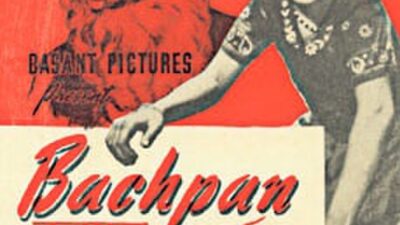
'बचपन' होमी वाडिया की बसंत पिक्चर्स की फ़िल्म थी — वही स्टूडियो जो तब फ़ियरलेस नाडिया की स्टंट फ़िल्मों के लिए जाना जाता था — पर यह एक सामाजिक पारिवारिक नाटक है: भैरव (मज़हर ख़ान), जो बेटे के अंतर्जातीय विवाह के बाद कड़वे होकर पहाड़ पर अकेले रहते हैं, अपनी छोटी भांजी मधु (बेबी माधुरी) के सान्निध्य से धीरे-धीरे पिघलते हैं। मधु का दो बार अपहरण होता है — एक बार मौसी द्वारा, जो उसे धनी विकलांग कमला (बेबी शकुंतला) की सहेली बनाकर बेच देती है, और एक बार कमला की ईर्ष्यालु गवर्नेस द्वारा — और फ़िल्म का अंत गाँव के अध्यापक रमेश (बी. नांदरेकर) तथा उनकी प्रेमिका (चंद्रप्रभा) द्वारा थाने में भैरव को निर्दोष सिद्ध करने पर होता है। कहानी, संवाद और दसों गीत आई. सी. कपूर ने लिखे; संगीत एस. एन. त्रिपाठी का था।
अंग्रेज़ी में पढ़ें · Read in English
Bachpan was made by Homi Wadia's Basant Pictures, a studio then known for Fearless Nadia stunt pictures, and it is a social family drama instead: Bhairav (Mazhar Khan), embittered and living alone on a mountainside after his son married outside their caste, is slowly softened by Madhu (Baby Madhuri), the young niece a relative sends to live with him. Madhu is twice abducted — once by the aunt, who sells her as a companion to the wealthy invalid Kamla (Baby Shakuntala), and once by Kamla's jealous governess — and the film ends with the village schoolteacher Ramesh (B. Nandrekar) and his beloved (Chandraprabha) clearing Bhairav's name at the police station. I. C. Kapoor wrote the story, the dialogue and all ten song lyrics; S. N. Tripathi composed the score.
विरासत The Legacy
मीरा की कविता हिंदी सिनेमा में सैकड़ों बार रिकॉर्ड हुई है — सबसे प्रसिद्ध रूप से एम. एस. सुब्बुलक्ष्मी द्वारा 'मीरा' (1945, तमिल; हिंदी संस्करण 1947) में, ठीक उसी वर्ष जब 'बचपन' बनी, और बाद में लता मंगेशकर द्वारा। उसके सामने बसंत पिक्चर्स की एक बाल-कथा का, मीरा के अंदाज़ में लिखा, बिना गायक-श्रेय वाला यह फ़िल्मी भजन कोई छाप नहीं छोड़ सका: न इसका पुनःप्रकाशन हुआ, न कोई ट्रांसफ़र ज्ञात है, न यह किसी भजन-संग्रह में मिलता है। यह एक गीत-सूची की पंक्ति भर के रूप में बचा है।
अंग्रेज़ी में पढ़ें · Read in English
Meera's poetry has been recorded in Hindi cinema hundreds of times, most famously by M. S. Subbulakshmi in Meera (1945, Tamil; Hindi version 1947) in the very same year Bachpan was made, and later by Lata Mangeshkar. Against that, an uncredited film bhajan in Meera's manner from a Basant Pictures children's drama left no mark: it was not reissued, no transfer is known, and it appears in no bhajan anthology. It survives as a line in a song list.
वर्गीकरण
ClassificationGenre
अन्य विवरण
More Details- https://en.wikipedia.org/wiki/Bachpan_(1945_film)
- https://www.hindigeetmala.net/movie/bachpan_1945.htm
- https://myswar.co/album/bachpan-1945
- https://atulsongaday.me/2019/05/28/bole-re-panchhi-bole/
- https://en.wikipedia.org/wiki/S._N._Tripathi
- https://en.wikipedia.org/wiki/Homi_Wadia
References
रोचक तथ्य
Margin Notesगिरधर — गिरिधर गोपाल, 'पर्वत उठाने वाला' — मीराबाई का कृष्ण के लिए अभ्यस्त नाम है, जो गोवर्धन प्रसंग से आता है जहाँ बालक कृष्ण इंद्र की वर्षा से ग्वालों को बचाने के लिए पहाड़ी को एक उँगली पर उठा लेते हैं।
अंग्रेज़ी में पढ़ें · Read in English
Girdhar — Giridhar Gopal, 'the one who lifted the mountain' — is Meera Bai's habitual name for Krishna, taken from the Govardhan episode in which the young god raises the hill on one finger to shelter the cowherds from Indra's storm.
एस. एन. त्रिपाठी ने लखनऊ के भातखंडे मॉरिस कॉलेज ऑफ़ म्यूज़िक में प्रशिक्षण लिया और 1935 में बंबई आकर बॉम्बे टॉकीज़ में सरस्वती देवी के सहायक वायलिन-वादक बने; 'बचपन' उनका आरंभिक काम है, 'चंदन' (1942) के पहले स्वतंत्र संगीत के तीन साल बाद।
अंग्रेज़ी में पढ़ें · Read in English
S. N. Tripathi trained at Bhatkhande's Morris College of Music in Lucknow and came to Bombay in 1935 as a violinist assisting Saraswati Devi at Bombay Talkies; Bachpan is early work, three years after his first independent score for Chandan (1942).
'बचपन' के दस में से नौ गीतों के गायकों के नाम कहीं दर्ज नहीं हुए। हिंदी फ़िल्म गीत कोश से निकली सूचियों में पूरे संगीत के लिए ठीक एक नाम मिलता है — 'गोकुल की एक नार छबीली' पर मुकेश।
अंग्रेज़ी में पढ़ें · Read in English
No singer credits were recorded for nine of Bachpan's ten songs. Catalogues derived from the Hindi Film Geet Kosh carry exactly one name for the whole soundtrack — Mukesh, on 'Gokul Ki Ek Naar Chhabili'.
नमूना-पट्टी
The Specimen Table| शीर्षक | मैं तो गिरधर आगे नाचूँगी · Main To Girdhar Aage Nachungi |
|---|---|
| फ़िल्म | बचपन · 1945 |
| वर्ष · युग | 1945 |
| गीतकार | I. C. Kapoor |
| संगीतकार | S. N. Tripathi |
| भाषा | hindi |
| भाव | भक्ति · आध्यात्मिक |
| लोकप्रियता | Obscure |
| बोल-स्थिति | केवल झलक |
जुड़े हुए पन्ने
Connected Plates · The Graph Made Visibleअटलस में कोई पन्ना अकेला नहीं — इस गीत से जुड़े गीत, कलाकार, फ़िल्म, राग-ताल-विधा, सब यहाँ से खुलते हैं।
कलाकार · The Artists
फ़िल्म · The Film
साझा कीजिए · Share this Plate