गीत विंग · गीत-पट्टिका · Song Plate
हरे मुरारे मधुकैटभारे
Hare Murare Madhukaitabhare
के.सी. डे कृष्ण के नामों की एक संस्कृत माला को स्वर देते हैं — और नाम लेना ही यहाँ उपासना बन जाता है।
भावभक्ति · तीव्र · आध्यात्मिक
भाषाhindi गतिमध्यम स्वरूपएकल पुरुष
श्रेय
The Creditsसूत्र-वाक्य · The Hook
सूत्र-वाक्य
के.सी. डे कृष्ण के नामों की एक संस्कृत माला को स्वर देते हैं — और नाम लेना ही यहाँ उपासना बन जाता है।
In EnglishK.C. Dey sets a Sanskrit roll-call of Krishna's names, and the naming itself becomes the act of worship.
पट्टिका-लेख
The Monographपरिचय Overview
'देवदासी' (1945) में के.सी. डे के गाए चार गीतों में सबसे गहरा। शीर्षक उस संस्कृत नाम-माला का आरंभ है जो भजन-कीर्तन की परंपरा में लंबे समय से प्रचलित रही है: 'हरे' (हरि), 'मुरारे' (मुर दैत्य का संहारक) और 'मधु-कैटभ-अरे' (मधु तथा कैटभ दैत्यों का शत्रु) — विष्णु-कृष्ण के तीन विशेषण एक ही साँस में पिरोए हुए। गीत का श्रेय नरोत्तम व्यास को और धुन का कृष्ण चंद्र डे को है; रिकॉर्ड ग्रामोफ़ोन कंपनी के एचएमवी कैटलॉग पर जारी हुआ।
अंग्रेज़ी में पढ़ें · Read in English
The heaviest of the four songs K.C. Dey sings in Devdasi (1945). The title is the opening of a Sanskrit naam-litany long current in bhajan and kirtan practice: 'Hare' (Hari), 'Murare' (slayer of the demon Mura) and 'Madhu-Kaitabh-are' (enemy of the demons Madhu and Kaitabha) are three epithets of Vishnu-Krishna strung in a single breath. Narottam Vyas is credited with the lyric and Krishna Chandra Dey with the tune; the record was issued on the Gramophone Company's HMV catalogue.
संगीत The Music
डे की रचना कीर्तन की उसी रीति को फ़िल्मी स्टूडियो पर उतार लाती है: खुले कंठ की, ऊँचे स्थान पर टिकी पुरुष आवाज़, जो फ़िल्मी गीत के मुखड़ा-अंतरा ढाँचे के बजाय छोटे दोहराए जाने वाले चक्रों में चलती है, और नीचे हारमोनियम तथा हल्का ताल-वाद्य एक समान गति थामे रहते हैं। धुन जानबूझकर सादी रखी गई है ताकि नामों के अक्षर पूरे सुनाई दें — 1945 की बंबई जिस अलंकृत, वाद्यवृंद-सज्जित फ़िल्मी शैली की ओर बढ़ रही थी, उसका ठीक उल्टा।
अंग्रेज़ी में पढ़ें · Read in English
Dey's setting is kirtan practice carried onto a film soundstage: an open-throated, high-placed male voice moving in short repeating cycles rather than in the verse-refrain architecture of the commercial film song, with harmonium and light percussion holding a steady pulse underneath. The melody stays deliberately plain so the syllables of the names can be heard whole — the opposite of the ornamented, orchestrally dressed film music that Bombay was moving towards in 1945.
काव्य The Poetry
यहाँ काव्य-रूप कथात्मक नहीं, गणनात्मक है। इस प्रकार की नाम-माला देवता का वर्णन नहीं करती, न उससे कुछ माँगती है; वह बस उसके नाम क्रम से लेती है — इस भक्ति-मान्यता पर कि नाम और नामी अलग नहीं, इसलिए नाम लेना ही उपस्थिति तक पहुँच जाना है। शीर्षक का हर विशेषण एक सिमटी हुई कथा भी है — मुर तथा मधु-कैटभ की जोड़ी, तीनों वे शत्रु हैं जिनका संहार भगवान ने किया — सो यह माला स्मरण की गई रक्षाओं का त्वरित पाठ भी है। नरोत्तम व्यास, जो उर्दू फ़िल्म-गीत परंपरा के बजाय ब्रज भक्ति परंपरा से आते हैं, स्वर को संस्कृतनिष्ठ और औपचारिक रखते हैं।
अंग्रेज़ी में पढ़ें · Read in English
The poetic form here is not narrative but enumeration. A naam-mala of this kind does not describe the deity or ask him for anything; it simply says his names in order, on the bhakti premise that the name and the named are not separable, so that to utter the name is already to have arrived at the presence. Each epithet in the title carries a compressed story — Mura and the demon-pair Madhu and Kaitabha are all adversaries the god destroyed — so the litany is also a quick recitation of remembered rescues. Narottam Vyas, writing out of the Braj devotional tradition rather than the Urdu film-lyric tradition, keeps the register Sanskritic and formal.
कहानी The Story
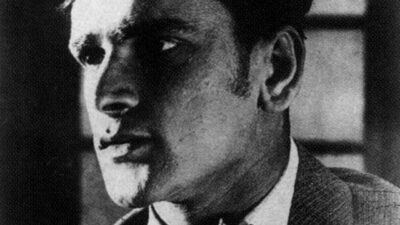
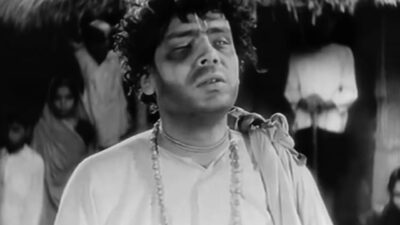
'देवदासी' बंबई में न्यू महाराष्ट्र प्रोडक्शंस ने बनाई, मुख्य भूमिकाओं में पृथ्वीराज कपूर और मोनिका देसाई थे, और के.सी. डे ने संगीत भी दिया और परदे पर भी आए। डे की परदे की छवि — गाता हुआ नेत्रहीन भक्त — एक दशक पहले कलकत्ता के न्यू थिएटर्स में तय हो चुकी थी, और ऐसा ही गीत वह जगह है जहाँ यह छवि और कथा मिलती हैं: परदे पर गायक वही कर रहा है जिसके लिए किरदार है। फ़िल्म का विस्तृत कथासार सुलभ सूचियों में नहीं बचा, इसलिए यह भजन किस दृश्य के साथ आता था, वह यहाँ दर्ज नहीं किया जा रहा।
अंग्रेज़ी में पढ़ें · Read in English
Devdasi was made in Bombay by New Maharashtra Productions with Prithviraj Kapoor and Monica Desai in the lead and K.C. Dey both scoring the film and appearing in it. Dey's screen persona — the blind devotee who sings — had been fixed a decade earlier at New Theatres in Calcutta, and a song like this one is where that persona and the plot meet: the singer on screen is doing what the character is for. No detailed plot summary of the film survives in the accessible catalogues, so the exact scene this bhajan accompanied is not documented here.
विरासत The Legacy
यह के.सी. डे का उत्तर-काल है — उस संगीतकार-गायक के अंतिम पूर्ण संकलनों में से एक, जो बंगाल के कीर्तन-मुहावरे को हिंदी टॉकी में लाए। उन्होंने जो भक्ति-धारा थामी, वह सीधे उनके भतीजे-शिष्य मन्ना डे तक और उनकी शिक्षा के ज़रिए एस.डी. बर्मन तक पहुँची; हिंदी सिनेमा में भजन सजावट नहीं बल्कि एक गंभीर विधा है — यह बात बहुत हद तक उन्हीं से शुरू होती है। फ़िल्म स्वयं अब सार्वजनिक रूप से उपलब्ध नहीं, और गीत एक दृश्य के बजाय एक सूची-प्रविष्टि तथा ग्रामोफ़ोन पार्श्व के रूप में बचा है।
अंग्रेज़ी में पढ़ें · Read in English
This is late K.C. Dey — one of the last full scores by the composer-singer who had brought Bengal's kirtan idiom into the Hindi talkie. The devotional line he carried passed directly to his nephew and pupil Manna Dey and, through his teaching, to S.D. Burman; the bhajan as a serious form in Hindi cinema, rather than as decoration, largely begins with him. The film itself is no longer in public circulation, and the song survives as a catalogue entry and a gramophone side rather than as a scene.
वर्गीकरण
Classification- Tempo
- Medium
Genre
अन्य विवरण
More Details- https://www.hindigeetmala.net/movie/devdasi.htm
- https://myswar.co/album/devdasi-1945
- https://en.wikipedia.org/wiki/List_of_Hindi_films_of_1945
- https://www.cinemaazi.com/film/devdasi
- https://en.wikipedia.org/wiki/BFJA_Award_for_Best_Actor_(Hindi)
References
रोचक तथ्य
Margin Notesके.सी. डे ने इस फ़िल्म का संगीत भी दिया और परदे पर भी आए। किशोरावस्था में उनकी दृष्टि चली गई थी, और 'देवदासी' में उन्होंने जो गाता हुआ नेत्रहीन भक्त निभाया, वह वही परदे की छवि थी जो उन्होंने एक दशक पहले न्यू थिएटर्स की 'पूरन भगत' (1933) और 'देवदास' (1935) में स्थापित की थी।
अंग्रेज़ी में पढ़ें · Read in English
K.C. Dey composed this score and appeared on screen in the film. He had lost his sight in adolescence, and the singing blind devotee he played in Devdasi was the same screen figure he had established a decade earlier at New Theatres in Puran Bhagat (1933) and Devdas (1935).
'देवदासी' के सभी ग्यारह गीत के.सी. डे के संगीतबद्ध और नरोत्तम व्यास के लिखे हैं — एक ही संगीतकार, एक ही गीतकार का संकलन, जो 1945 की किसी बंबइया फ़िल्म के लिए असामान्य है और यही कारण है कि यह एलबम आदि से अंत तक एक ही भक्ति-स्वर बनाए रखता है।
अंग्रेज़ी में पढ़ें · Read in English
All eleven songs of Devdasi were composed by K.C. Dey and written by Narottam Vyas — a single-composer, single-lyricist soundtrack, unusual for a 1945 Bombay production and the reason the album holds a single devotional tone end to end.
के.सी. डे मन्ना डे के चाचा और पहले गुरु थे, और एस.डी. बर्मन ने भी उनसे सीखा — इसलिए इस संगीत में सुनाई देती कीर्तन-मूलक भक्ति-धारा अगली पीढ़ी के दो सबसे बड़े नामों तक आगे बहती है।
अंग्रेज़ी में पढ़ें · Read in English
K.C. Dey was Manna Dey's uncle and first teacher, and S.D. Burman also studied with him — so the kirtan-rooted devotional line audible in this score runs forward into two of the biggest names of the next generation.
नमूना-पट्टी
The Specimen Table| शीर्षक | हरे मुरारे मधुकैटभारे · Hare Murare Madhukaitabhare |
|---|---|
| फ़िल्म | देवदासी · 1945 |
| वर्ष · युग | 1945 |
| गायक | K.C. Dey |
| गीतकार | Narottam Vyas |
| संगीतकार | K.C. Dey |
| स्वरूप | एकल पुरुष |
| गति | मध्यम |
| भाषा | hindi |
| भाव | भक्ति · तीव्र · आध्यात्मिक |
| लोकप्रियता | Known |
| बोल-स्थिति | केवल झलक |
जुड़े हुए पन्ने
Connected Plates · The Graph Made Visibleअटलस में कोई पन्ना अकेला नहीं — इस गीत से जुड़े गीत, कलाकार, फ़िल्म, राग-ताल-विधा, सब यहाँ से खुलते हैं।
मिलते-जुलते गीत · Related Songs
कलाकार · The Artists
फ़िल्म · The Film
साझा कीजिए · Share this Plate