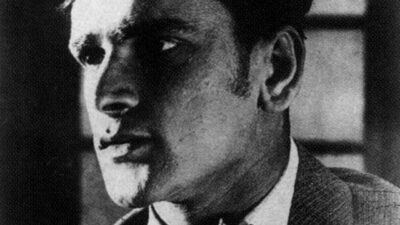
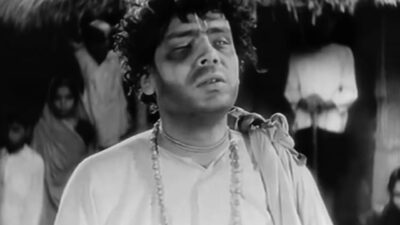
गीत विंग · गीत-पट्टिका · Song Plate
हरि के नाम बिना रे
Hari Ke Naam Bina Re
एक ही आधार पर टिका भजन — कि हरि के नाम बिना जीवन जो कुछ जोड़ता है, अंत में उसका कोई मोल नहीं।
भावभक्ति · दार्शनिक · आध्यात्मिक
भाषाhindi गतिधीमी स्वरूपएकल पुरुष
श्रेय
The Creditsसूत्र-वाक्य · The Hook
सूत्र-वाक्य
एक ही आधार पर टिका भजन — कि हरि के नाम बिना जीवन जो कुछ जोड़ता है, अंत में उसका कोई मोल नहीं।
In EnglishA bhajan built on a single premise — that without the name of Hari, nothing a life accumulates finally counts.
पट्टिका-लेख
The Monographपरिचय Overview
'देवदासी' (1945) के अपने ही संगीत में के.सी. डे के गाए चार गीतों में से एक — और वह जिसका शीर्षक नाम-महात्म्य के विषय को सबसे सीधे कहता है: 'हरि के नाम बिना…'। सूचियाँ इसे भजन के रूप में वर्गीकृत करती हैं। बोल नरोत्तम व्यास के, धुन और आवाज़ कृष्ण चंद्र डे की।
अंग्रेज़ी में पढ़ें · Read in English
One of the four songs K.C. Dey sings in his own score for Devdasi (1945), and the one whose title states the naam-mahatmya theme most directly: 'without the name of Hari...'. The catalogues classify it as a bhajan. Narottam Vyas wrote the lyric; Krishna Chandra Dey composed and sang it.
संगीत The Music
धीमी, भार उठाती स्वर-पंक्ति — उसी तरह की जो डे तब बरतते थे जब भाव स्तुति का नहीं, वैराग्य का हो: लंबे ठहरे स्वर, नीचे से शुरू होकर पंक्ति के मोड़ पर चढ़ता स्थान, और विरल संगत जो आवाज़ को खुला छोड़ देती है। डे की तालीम रंगमंच और कीर्तन की थी, संगीत-विद्यालय की नहीं — और ऐसे गीत में उसका असर निजी गायन से अधिक सार्वजनिक उद्बोधन जैसा है।
अंग्रेज़ी में पढ़ें · Read in English
A slow, weight-bearing melodic line of the kind Dey used when the sentiment was renunciation rather than praise — long held notes, a low starting register that climbs at the turn of the phrase, and a sparse accompaniment that leaves the voice exposed. Dey's technique was theatre-trained and kirtan-trained rather than conservatoire-trained, and the effect in a song like this is closer to public exhortation than to private singing.
काव्य The Poetry
नाम-महात्म्य — दिव्य नाम की महिमा का सिद्धांत — उत्तर भारतीय भक्ति-काव्य की सबसे पुरानी रचना-युक्तियों में है: कविता पहले गिनाती है कि संसार क्या-क्या देता है, फिर वह सब घटा देती है, और शेष केवल नाम बचता है। शीर्षक के अंत का 'रे' ब्रज का संबोधन है — कवि सीधे श्रोता की ओर मुड़ता है — इसीलिए इस आकार के भजन प्रार्थना से अधिक ऊँचे स्वर में दी गई सलाह लगते हैं। नरोत्तम व्यास ठीक उसी परंपरा के भीतर काम करते हैं, और सादगी ही यहाँ अभीष्ट है: इतना पुराना तर्क नयापन नहीं, दोहराव चाहता है।
अंग्रेज़ी में पढ़ें · Read in English
The naam-mahatmya — the doctrine of the greatness of the divine name — is one of the oldest structural devices in North Indian devotional poetry: the poem lists what the world offers, and then subtracts all of it, leaving the name as the only remainder. The 're' at the end of the title is the Braj vocative, the poet turning to address a listener directly, which is why bhajans of this shape feel less like prayer and more like counsel given aloud. Narottam Vyas works squarely inside that tradition, and the plainness is the point: an argument this old does not want novelty, it wants repetition.
कहानी The Story
'देवदासी' का विषय वही स्त्री है जो बचपन में मंदिर-सेवा को अर्पित कर दी जाती है, और उसकी गीत-सूची लगभग पूरी तरह वैष्णव भक्ति-सामग्री है — जिससे लगता है कि भजन बीच के विराम नहीं, फ़िल्म का कार्यरत पदार्थ थे। के.सी. डे पृथ्वीराज कपूर और मोनिका देसाई के साथ परदे पर थे, इसलिए ऐसे गीत संभवतः कथा पर पार्श्व-संगीत की तरह नहीं, प्रस्तुति की तरह फ़िल्माए गए होंगे — जैसा उनकी पहले की न्यू थिएटर्स फ़िल्मों में होता था। फ़िल्म का विस्तृत कथानक सुलभ स्रोतों में दर्ज नहीं है।
अंग्रेज़ी में पढ़ें · Read in English
Devdasi took as its subject the woman dedicated in childhood to temple service, and its song list is almost entirely Vaishnava devotional material — which suggests the bhajans were not interludes but the working substance of the film. K.C. Dey appeared on screen alongside Prithviraj Kapoor and Monica Desai, so songs like this one were most likely staged as performance rather than as playback over action, in the manner of his earlier New Theatres films. The film's detailed plot is not documented in accessible sources.
विरासत The Legacy
ठीक इसी आकार के गीत — नेत्रहीन या विरक्त गायक जो नाम के सिवा सब कुछ की व्यर्थता कहता है — हिंदी सिनेमा के टिकाऊ दृश्य-प्रसंगों में से एक बने, और यह साँचा के.सी. डे ने ही गढ़ा। इस विचार का उनका सबसे प्रसिद्ध रूप, 'धूप छाँव' (1935) का 'तेरी गठरी में लागा चोर', 'देवदासी' के बनने तक भी चलन में था। यह पिछला उदाहरण उसी तर्क को एक दशक बाद बंबई की फ़िल्म तक ले आता है — ठीक उस मोड़ पर जहाँ कलकत्ता का भक्ति-मुहावरा नई लोक-वाद्यवृंद शैली से विस्थापित हो रहा था।
अंग्रेज़ी में पढ़ें · Read in English
Songs of this exact shape — a blind or renunciate singer stating the futility of everything but the name — became one of the durable set-pieces of Hindi cinema, and K.C. Dey is the figure who established it. His most famous version of the idea, 'Teri Gathri Mein Laga Chor' from Dhoop Chhaon (1935), was still in circulation when Devdasi was made. This late example carries the same argument into a Bombay production a decade on, at the point where the Calcutta devotional idiom was being displaced by the newer folk-orchestral style.
वर्गीकरण
Classification- Tempo
- Slow
Genre
अन्य विवरण
More Details- https://www.hindigeetmala.net/movie/devdasi.htm
- https://myswar.co/album/devdasi-1945
- https://en.wikipedia.org/wiki/List_of_Hindi_films_of_1945
- https://www.cinemaazi.com/film/devdasi
- https://en.wikipedia.org/wiki/BFJA_Award_for_Best_Actor_(Hindi)
References
रोचक तथ्य
Margin Notes'देवदासी' के सभी ग्यारह गीत के.सी. डे के संगीतबद्ध और नरोत्तम व्यास के लिखे हैं — एक ही संगीतकार, एक ही गीतकार का संकलन, जो 1945 की किसी बंबइया फ़िल्म के लिए असामान्य है और यही कारण है कि यह एलबम आदि से अंत तक एक ही भक्ति-स्वर बनाए रखता है।
अंग्रेज़ी में पढ़ें · Read in English
All eleven songs of Devdasi were composed by K.C. Dey and written by Narottam Vyas — a single-composer, single-lyricist soundtrack, unusual for a 1945 Bombay production and the reason the album holds a single devotional tone end to end.
के.सी. डे मन्ना डे के चाचा और पहले गुरु थे, और एस.डी. बर्मन ने भी उनसे सीखा — इसलिए इस संगीत में सुनाई देती कीर्तन-मूलक भक्ति-धारा अगली पीढ़ी के दो सबसे बड़े नामों तक आगे बहती है।
अंग्रेज़ी में पढ़ें · Read in English
K.C. Dey was Manna Dey's uncle and first teacher, and S.D. Burman also studied with him — so the kirtan-rooted devotional line audible in this score runs forward into two of the biggest names of the next generation.
'देवदासी' का कोई प्रिंट सार्वजनिक रूप से उपलब्ध नहीं माना जाता; फ़िल्म मुख्यतः एचएमवी/सारेगामा कैटलॉग के अपने ग्यारह 78-आरपीएम पार्श्वों और अपने मुख्य अभिनेता की बीएफ़जेए प्रशस्ति के रूप में बची है।
अंग्रेज़ी में पढ़ें · Read in English
No print of Devdasi is known to circulate publicly; the film survives mainly as its eleven 78-rpm sides in the HMV/Saregama catalogue and as the BFJA citation for its lead actor.
नमूना-पट्टी
The Specimen Table| शीर्षक | हरि के नाम बिना रे · Hari Ke Naam Bina Re |
|---|---|
| फ़िल्म | देवदासी · 1945 |
| वर्ष · युग | 1945 |
| गायक | K.C. Dey |
| गीतकार | Narottam Vyas |
| संगीतकार | K.C. Dey |
| स्वरूप | एकल पुरुष |
| गति | धीमी |
| भाषा | hindi |
| भाव | भक्ति · दार्शनिक · आध्यात्मिक |
| लोकप्रियता | Known |
| बोल-स्थिति | केवल झलक |
जुड़े हुए पन्ने
Connected Plates · The Graph Made Visibleअटलस में कोई पन्ना अकेला नहीं — इस गीत से जुड़े गीत, कलाकार, फ़िल्म, राग-ताल-विधा, सब यहाँ से खुलते हैं।
मिलते-जुलते गीत · Related Songs
कलाकार · The Artists
फ़िल्म · The Film
साझा कीजिए · Share this Plate