गीत विंग · गीत-पट्टिका · Song Plate
घट घट की तुम जानते
Ghat Ghat Ki Tum Jante
तुम हर घट का भीतर जानते हो — कबीर-परंपरा से उतरा यह विचार मोहनतारा तलपड़े को सांत्वना की तरह गाने को मिलता है।
भावभक्ति · दार्शनिक · आध्यात्मिक
भाषाhindi गतिधीमी स्वरूपएकल महिला
श्रेय
The Creditsसूत्र-वाक्य · The Hook
सूत्र-वाक्य
तुम हर घट का भीतर जानते हो — कबीर-परंपरा से उतरा यह विचार मोहनतारा तलपड़े को सांत्वना की तरह गाने को मिलता है।
In EnglishYou know what is inside every vessel — a line of Kabir-descended theology handed to Mohantara Talpade to sing as consolation.
पट्टिका-लेख
The Monographपरिचय Overview
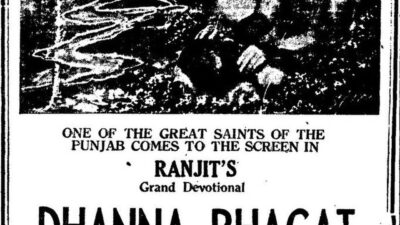
'धन्ना भगत' (1945) में मोहनतारा तलपड़े का तीसरा गीत। शीर्षक में 'घट' शब्द है — वह मिट्टी का घड़ा जो कबीर की शब्दावली में और आम तौर पर संत-परंपरा में मनुष्य-देह और उसके भीतर बसे स्व का प्रतीक है। यह कहना कि ईश्वर हर घट को जानता है, यह कहना है कि कोई भीतरी अवस्था छिपी नहीं — और भक्ति-फ़िल्म में यह निगरानी नहीं, राहत की तरह पेश होता है: भक्त की अनकही सच्चाई पहले ही दर्ज हो चुकी है।
अंग्रेज़ी में पढ़ें · Read in English
The third of Mohantara Talpade's songs in Dhanna Bhagat (1945). Its title uses ghat — the clay pot that stands, in Kabir's vocabulary and in the sant tradition generally, for the human body and the self inside it. To say that God knows every ghat is to say that no interior state is hidden, which in a devotional film is offered not as surveillance but as relief: the devotee's unspoken sincerity is already registered.
संगीत The Music
खेमचंद प्रकाश इसे धीमे और निचले स्वर में रचते हैं, ऐसे पदों के साथ जो ठहरे हुए स्वर से शुरू होकर नीचे उतरकर विश्राम पाते हैं — यह आकार याचना नहीं, स्वीकार की तरह पढ़ा जाता है, और उसी गायिका के लिए 'भूल न जाना हे गिरधारी' में लिखी चढ़ती हुई विनती-रेखा से अलग है। संगत विरल रहती है; रणजीत की भक्ति-फ़िल्मों में संगीतकार ने लगातार वाद्यवृंद को शब्दों के रास्ते से हटाए रखा।
अंग्रेज़ी में पढ़ें · Read in English
Khemchand Prakash sets it slow and low, with phrases that begin on a held note and resolve downward — a shape that reads as acceptance rather than appeal, and distinct from the rising plea-contours he wrote for the same singer in 'Bhool Na Jana Hey Girdhari'. Accompaniment stays sparse; in the Ranjit devotionals the composer consistently kept the orchestra out of the way of the words.
काव्य The Poetry
'घट घट' वाली रचना उसी निर्गुण संत-मुहावरे की है जिसे कबीर ने उत्तर भारतीय धार्मिक भाषा की साझी संपत्ति बना दिया, और उसकी ताक़त बराबरी में है: यदि वही उपस्थिति हर घट में है, तो पुरोहित और किसान, पढ़ा और अनपढ़ — सब एक ही वस्तु थामे हैं। एक जाट किसान-संत पर बनी फ़िल्म को अपने गीतों से ठीक यही दावा चाहिए, और यही कारण है कि यह संगीत मंदिर की संस्कृत के बजाय बार-बार कबीर-परंपरा की शब्दावली पर लौटता है। पंडित इंद्र इसे रोज़मर्रा की हिंदी में लिखते हैं, जो दर्शन को बिना घोषणा किए उठा लेती है।
अंग्रेज़ी में पढ़ें · Read in English
The ghat-ghat formulation belongs to the nirgun sant idiom that Kabir made the common property of North Indian religious speech, and its force is levelling: if the same presence occupies every vessel, then priest and farmer, literate and unlettered, hold the same thing. That is precisely the claim a film about a Jat farmer-saint needs its songs to make, and it is why the score keeps returning to Kabir-descended vocabulary rather than to temple Sanskrit. Pandit Indra writes in an everyday Hindi that carries the theology without announcing it.
कहानी The Story
केदार शर्मा ने यह फ़िल्म रणजीत मूवीटोन के लिए निर्देशित की — धन्ना के रूप में कमल ज़मींदार और मुन्नी के रूप में कमला चटर्जी। संगीत नायक के तीन गीतों के मुक़ाबले नायिका को चार देता है, जो संत-फ़िल्म के लिए असामान्य संतुलन है और फ़िल्म के भावनात्मक तर्क को कथा के स्त्री-पक्ष में रखे रहता है।
अंग्रेज़ी में पढ़ें · Read in English
Kidar Sharma directed the film for Ranjit Movietone with Kamal Zamindar as Dhanna and Kamla Chatterjee as Munni. The score gives its female lead four songs to the hero's three, an unusual weighting for a saint-film and one that keeps the emotional argument of the picture on the woman's side of the story.
विरासत The Legacy
इस रिकॉर्डिंग ने सूची-प्रविष्टि से आगे कोई दर्ज निशान नहीं छोड़ा। मोहनतारा तलपड़े का 1940 के दशक के मध्य का समूचा काम ठीक से पुनःप्रकाशित नहीं हुआ, और इसी तरह के गीत — भक्ति-प्रधान, बिना चमक के, ऐसी फ़िल्म से जिसे किसी ने सहेजा नहीं — उस दौर से खोई हुई सामग्री का बड़ा हिस्सा हैं।
अंग्रेज़ी में पढ़ें · Read in English
The recording has left no documented trace beyond the catalogue listing. Mohantara Talpade's mid-1940s output as a whole has been poorly reissued, and songs of this kind — devotional, unspectacular, from a film nobody preserved — are the bulk of what has been lost from the period.
वर्गीकरण
Classification- Tempo
- Slow
Genre
अन्य विवरण
More Details- https://en.wikipedia.org/wiki/Dhanna_Bhagat_(film)
- https://www.hindigeetmala.net/movie/dhanna_bhagat.htm
- https://en.wikipedia.org/wiki/List_of_Hindi_films_of_1945
- https://en.wikipedia.org/wiki/Dhanna
- https://www.cinemaazi.com/feature/bigger-than-sky-ranjit-studio
- https://en.wikipedia.org/wiki/Khemchand_Prakash
References
रोचक तथ्य
Margin Notesनिर्देशक केदार शर्मा ने अपने बंबई करियर की शुरुआत रणजीत की 'अरमान' (1942) से की थी; 'धन्ना भगत' के दो साल बाद उन्होंने 'नील कमल' (1947) बनाई, जिसने राज कपूर और मधुबाला को उनकी पहली नायक-नायिका भूमिकाएँ दीं।
अंग्रेज़ी में पढ़ें · Read in English
Director Kidar Sharma had begun his Bombay career at Ranjit with Arman (1942); two years after Dhanna Bhagat he made Neel Kamal (1947), which gave Raj Kapoor and Madhubala their first leading roles.
नमूना-पट्टी
The Specimen Table| शीर्षक | घट घट की तुम जानते · Ghat Ghat Ki Tum Jante |
|---|---|
| फ़िल्म | धन्ना भगत · 1945 |
| वर्ष · युग | 1945 — Pre-Independence (1931–1947) |
| गायक | मोहनतारा तलपड़े |
| गीतकार | Pandit Indra |
| संगीतकार | Khemchand Prakash |
| स्वरूप | एकल महिला |
| गति | धीमी |
| भाषा | hindi |
| भाव | भक्ति · दार्शनिक · आध्यात्मिक |
| लोकप्रियता | Obscure |
| बोल-स्थिति | केवल झलक |
जुड़े हुए पन्ने
Connected Plates · The Graph Made Visibleअटलस में कोई पन्ना अकेला नहीं — इस गीत से जुड़े गीत, कलाकार, फ़िल्म, राग-ताल-विधा, सब यहाँ से खुलते हैं।
मिलते-जुलते गीत · Related Songs
कलाकार · The Artists
फ़िल्म · The Film
साझा कीजिए · Share this Plate