गीत विंग · गीत-पट्टिका · Song Plate
बंसुरिया सुनूँगी
Bansuriya Sunungi
गोपी की शिकायत नहीं, उसका संकल्प: और चाहे जो न मिले, बाँसुरी वह सुनकर रहेगी।
भावभक्ति · शांत · Yearning
भाषाhindi गतिमध्यम स्वरूपएकल महिला
श्रेय
The Creditsसूत्र-वाक्य · The Hook
सूत्र-वाक्य
गोपी की शिकायत नहीं, उसका संकल्प: और चाहे जो न मिले, बाँसुरी वह सुनकर रहेगी।
In EnglishA gopi's resolve rather than her complaint: whatever else is refused her, she will hear the flute.
पट्टिका-लेख
The Monographपरिचय Overview
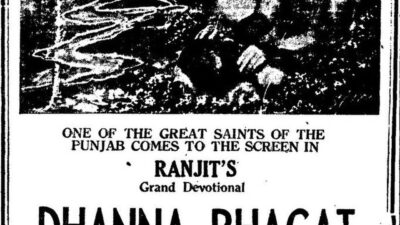
'धन्ना भगत' (1945) के लिए खेमचंद प्रकाश के संगीत में मोहनतारा तलपड़े के चार गीतों में से एक। शीर्षक एक संकल्प कहता है — मैं बाँसुरी सुनूँगी — जो गायिका को कृष्ण-कथा की गोपी की जगह पर बिठा देता है, उस ध्वनि की प्रतीक्षा में जो उसे गृहस्थी से निकालकर भक्ति में ले जाती है। इस रिकॉर्डिंग के बारे में श्रेय-पंक्ति से आगे बहुत कम बचा है; फ़िल्म की सूची में यह गायिका, संगीतकार और गीतकार के नाम के साथ दर्ज है, और उससे अधिक कुछ नहीं।
अंग्रेज़ी में पढ़ें · Read in English
One of the four Mohantara Talpade songs in Khemchand Prakash's score for Dhanna Bhagat (1945). The title states an intention — I shall hear the flute — which places the singer in the gopi's position of the Krishna cycle, waiting for the sound that summons her out of the household and into devotion. Very little beyond the credit line survives about this recording; it is listed in the film's catalogue entry with singer, composer and lyricist and nothing more.
संगीत The Music
इस संगीत के स्त्री-गीत एक साझा रंग-पट्टी साझा करते हैं — हारमोनियम, हल्का तबला या ढोलक, और जहाँ पंक्ति माँगे वहाँ बाँसुरी की संगत — और यही वह गीत है जहाँ बाँसुरी सजावट नहीं, विषय है: वह स्वर-पंक्ति का उत्तर उसी वस्तु की तरह देती है जिसकी प्रतीक्षा हो रही है। रणजीत की भक्ति-फ़िल्मों के लिए खेमचंद प्रकाश का लेखन उस विस्तार के बजाय धुन की सादगी को तरजीह देता था जो उन्होंने दो साल पहले 'तानसेन' में बरता था।
अंग्रेज़ी में पढ़ें · Read in English
The score's female songs share a common palette — harmonium, light tabla or dholak, a flute obbligato where the lyric calls for one — and this is the number where the flute is not decoration but subject, answering the vocal line as the thing being waited for. Khemchand Prakash's writing for Ranjit's devotionals favoured melodic simplicity over the elaboration he brought to Tansen two years earlier.
काव्य The Poetry
इस काव्य-भंडार में बाँसुरी कभी केवल वाद्य नहीं होती। वह वह ध्वनि है जो उस श्रोता तक पहुँचती है जो उसे खोज नहीं रहा था, जो घर के बाहर से आती है, और जो साधारण कर्तव्यों को अचानक टालने योग्य बना देती है — इसीलिए गोपी-काव्य उसे सुनने को सौंदर्य-सुख नहीं, जीवन-परिवर्तन का आरंभ मानता है। वाक्य को भविष्यकाल में — 'सुनूँगी' — रखना निष्क्रिय तड़प को निर्णय में बदल देता है, और यही बदलाव इस पंक्ति को उसी परंपरा के अधिक परिचित शिकायत-गीतों से अलग करता है।
अंग्रेज़ी में पढ़ें · Read in English
The flute in this repertoire is never only an instrument. It is the sound that reaches a listener who is not looking for it, arrives from outside the house, and makes ordinary obligations suddenly negotiable — which is why gopi poetry treats hearing it as the beginning of a life change rather than an aesthetic pleasure. Casting the sentence in the future tense, as a thing the speaker will do, turns a passive longing into a decision, and that shift is what distinguishes this lyric from the more familiar complaint songs of the same tradition.
कहानी The Story
'धन्ना भगत' खेमचंद प्रकाश के रणजीत मूवीटोन-काल की अंतिम फ़िल्मों में से थी, केदार शर्मा के निर्देशन में बनी और 1945 के अंतिम सप्ताहों में बंबई में रिलीज़ हुई। साउंडट्रैक के दस गीत चार गायकों में बँटे, जिनमें सबसे बड़ा अकेला हिस्सा मोहनतारा तलपड़े के पास रहा।
अंग्रेज़ी में पढ़ें · Read in English
Dhanna Bhagat was one of the last films of Khemchand Prakash's Ranjit Movietone period, made under Kidar Sharma's direction and released in Bombay in the closing weeks of 1945. The soundtrack's ten songs were split between four singers, with Mohantara Talpade carrying the largest single share.
विरासत The Legacy
इस गीत की प्रतिक्रिया के बारे में कुछ भी दर्ज नहीं है, और किसी पुनःप्रकाशन का पता नहीं। इसे यहाँ किसी प्रभाव के दावे के लिए नहीं, बल्कि एक पूरे साउंडट्रैक के अभिलेख के हिस्से के रूप में सहेजा गया है।
अंग्रेज़ी में पढ़ें · Read in English
Nothing is documented about this song's reception, and no reissue is known. It is preserved here as part of a complete soundtrack record rather than for any claim to influence.
वर्गीकरण
Classification- Tempo
- Medium
Genre
अन्य विवरण
More Details- https://en.wikipedia.org/wiki/Dhanna_Bhagat_(film)
- https://www.hindigeetmala.net/movie/dhanna_bhagat.htm
- https://en.wikipedia.org/wiki/List_of_Hindi_films_of_1945
- https://en.wikipedia.org/wiki/Dhanna
- https://www.cinemaazi.com/feature/bigger-than-sky-ranjit-studio
- https://en.wikipedia.org/wiki/Khemchand_Prakash
References
रोचक तथ्य
Margin Notesखेमचंद प्रकाश लगभग 1940 में रणजीत मूवीटोन से जुड़े और अगले पाँच वर्षों में इस बैनर की कई फ़िल्मों का संगीत रचा — जिनमें 'तानसेन' (1943) भी है; 'धन्ना भगत' उसी दौर के अंत के पास आई, 'महल' (1949) से चार साल पहले — वही संगीत जिसके लिए वे आज भी सबसे अधिक जाने जाते हैं।
अंग्रेज़ी में पढ़ें · Read in English
Khemchand Prakash was signed by Ranjit Movietone around 1940 and scored a long run of the banner's films over the next five years, Tansen (1943) among them; Dhanna Bhagat came near the end of that run, four years before Mahal (1949), the score he is still best known for.
नमूना-पट्टी
The Specimen Table| शीर्षक | बंसुरिया सुनूँगी · Bansuriya Sunungi |
|---|---|
| फ़िल्म | धन्ना भगत · 1945 |
| वर्ष · युग | 1945 — Pre-Independence (1931–1947) |
| गायक | मोहनतारा तलपड़े |
| गीतकार | Pandit Indra |
| संगीतकार | Khemchand Prakash |
| स्वरूप | एकल महिला |
| गति | मध्यम |
| भाषा | hindi |
| भाव | भक्ति · शांत · Yearning |
| लोकप्रियता | Obscure |
| बोल-स्थिति | केवल झलक |
जुड़े हुए पन्ने
Connected Plates · The Graph Made Visibleअटलस में कोई पन्ना अकेला नहीं — इस गीत से जुड़े गीत, कलाकार, फ़िल्म, राग-ताल-विधा, सब यहाँ से खुलते हैं।
मिलते-जुलते गीत · Related Songs
कलाकार · The Artists
फ़िल्म · The Film
साझा कीजिए · Share this Plate