गीत विंग · गीत-पट्टिका · Song Plate
आँखें तो हुईं बंद मगर दर्द जगाए
Aankhein To Hui Band Magar Dard Jagaye
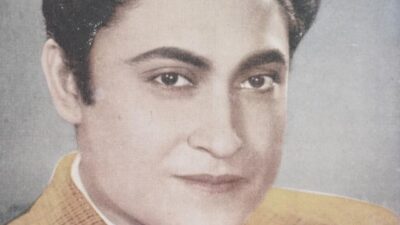
1945 में अशोक कुमार अपना गीत स्वयं गाते हुए — हिंदी के गायक-सितारे के छोटे-से इतिहास की एक पिछली कड़ी, ठीक उस समय दर्ज जब पार्श्वगायन उस युग को समेट रहा था।
भावअविस्मरणीय · उदास
भाषाhindi गतिधीमी स्वरूपएकल पुरुष
श्रेय
The Creditsसूत्र-वाक्य · The Hook
सूत्र-वाक्य
1945 में अशोक कुमार अपना गीत स्वयं गाते हुए — हिंदी के गायक-सितारे के छोटे-से इतिहास की एक पिछली कड़ी, ठीक उस समय दर्ज जब पार्श्वगायन उस युग को समेट रहा था।
In EnglishAshok Kumar singing his own song in 1945 — a late entry in the short history of the Hindi singing star, recorded just as playback was closing that era down.
पट्टिका-लेख
The Monographपरिचय Overview
'आँखें तो हुईं बंद मगर दर्द जगाए' बेगम (1945) का वह इकलौता गीत है जिसे अशोक कुमार ने गाया, जो दो वर्ष पहले किस्मत (1943) से भारतीय सिनेमा के सबसे बड़े सितारे बन चुके थे। अशोक कुमार हिंदी परदे के उन अभिनेताओं की पीढ़ी से थे जो साउंडट्रैक पर स्वयं गाते थे — 1940 के दशक के मध्य तक पेशेवर पार्श्वगायक इस प्रथा की जगह ले चुके थे — इसलिए यह गीत उस पुरानी पद्धति का ऐसे वर्ष तक बचे रहने का उदाहरण है जब वह लगभग समाप्त हो चुकी थी। संगीत हरि प्रसन्न दास, बोल गोपाल सिंह नेपाली।
अंग्रेज़ी में पढ़ें · Read in English
'Aankhein To Hui Band Magar Dard Jagaye' is the one song in Begum (1945) sung by Ashok Kumar, who had become the biggest star in Indian cinema two years earlier with Kismet (1943). Ashok Kumar belonged to the generation of Hindi screen actors who sang on the soundtrack themselves — a practice already being displaced by professional playback singers by the mid-1940s — which makes this an example of the older method surviving into a year when it was nearly over. Music by Hari Prasanna Das, lyrics by Gopal Singh Nepali.
संगीत The Music
इस गीत का कोई प्रचलित रिकॉर्ड नहीं मिला, इसलिए इसकी वाद्य-सज्जा के बारे में सुनकर कुछ नहीं कहा जा सकता। प्रासंगिक संगीत-तथ्य आवाज़ है: अशोक कुमार अप्रशिक्षित, बातचीत जैसी बैरिटोन में गाते थे — सीमित सुर-विस्तार और बिना शास्त्रीय अलंकरण के — और उनके लिए लिखने वाले संगीतकारों ने, जैसे अछूत कन्या (1936) में सरस्वती देवी और किस्मत (1943) में अनिल बिस्वास, सरल, पास-पास के स्वरों वाली धुनें बनाईं जो उस सीमा के विरुद्ध नहीं, उसके साथ काम करती थीं। 1945 में उन्हें स्वर देने वाले संगीतकार के सामने भी वही चुनौती रही होगी।
अंग्रेज़ी में पढ़ें · Read in English
No circulating pressing of the song has been located, so nothing can be said about its orchestration from listening. The relevant musical fact is the voice: Ashok Kumar sang in an untrained, conversational baritone with a narrow range and no classical ornament, and composers who wrote for him — Saraswati Devi in Achhut Kanya (1936), Anil Biswas in Kismet (1943) — built simple, closely-spaced melodies that worked with that limitation rather than against it. A composer setting him in 1945 would have been working to the same brief.
काव्य The Poetry
शीर्षक एक छोटा-सा विरोधाभास खड़ा करता है और उसे वहीं छोड़ देता है: आँखें बंद हुईं, पर ठीक तभी दर्द जागता है। नींद को शोक से बचने की स्पष्ट शरण के रूप में सामने रखकर तुरंत वापस ले लिया जाता है — आँखें मूँदने से देखना ख़त्म नहीं होता, बस वे ध्यान-भटकाव हट जाते हैं जो पीड़ा को दबाए हुए थे। यह हिंदी-उर्दू के 'शब-ए-हिज्र' काव्य की जानी-पहचानी चाल है, और गोपाल सिंह नेपाली इसे बिना सजावट के कहते हैं — वही स्वर जो वे पूरे बेगम-संगीत में बनाए रखते हैं।
अंग्रेज़ी में पढ़ें · Read in English
The title sets up a small paradox and lets it stand: the eyes have closed, but that is exactly when the pain wakes. Sleep is offered as the obvious refuge from grief and then withdrawn — closing the eyes does not end the seeing, it removes the distractions that were holding the ache down. It is a familiar movement in the Hindi-Urdu lyric of the sleepless night, and Gopal Singh Nepali states it without decoration, which is the register he keeps throughout the Begum score.
कहानी The Story
बेगम का निर्देशन सुशील मजूमदार ने ताजमहल पिक्चर्स के लिए किया और MySwar के अनुसार इसे सआदत हसन मंटो ने लिखा। मंटो 1942 में फ़िल्मिस्तान से जुड़े थे और वहीं अशोक कुमार से उनकी गहरी दोस्ती बनी; वे 'चल चल रे नौजवान' (1944) पहले ही लिख चुके थे, जिसमें अशोक कुमार और नसीम बानो आमने-सामने थे, और बेगम उसी सितारा-जोड़ी तथा उसी लेखक को फिर साथ लाई। अशोक कुमार की 1945 की दूसरी फ़िल्म महबूब ख़ान की 'हुमायूँ' थी।
अंग्रेज़ी में पढ़ें · Read in English
Begum was directed by Sushil Majumdar for Taj Mahal Pictures and, according to MySwar, written by Saadat Hasan Manto. Manto had joined Filmistan in 1942 and formed a close friendship with Ashok Kumar there; he had already written Chal Chal Re Naujawan (1944), in which Ashok Kumar and Naseem Banu played opposite each other, and Begum brought the same star pairing and the same writer together again. Ashok Kumar's other 1945 release was Mehboob Khan's Humayun.
विरासत The Legacy
अशोक कुमार के स्वयं गाए गीतों में जो बचे वे हैं — अछूत कन्या (1936) का देविका रानी के साथ 'मैं बन की चिड़िया' और किस्मत (1943) का 'धीरे धीरे आ रे बादल'; यह गीत नहीं बचा, और बेगम प्रचलन में नहीं है। इसका महत्व मुख्यतः एक आँकड़े के रूप में है: 1945 तक अपने गीत स्वयं गाने वाला सितारा अपवाद बन चुका था, और कुछ ही वर्षों में अशोक कुमार भी, हर दूसरे हिंदी नायक की तरह, किसी पेशेवर आवाज़ पर होंठ हिला रहे होते।
अंग्रेज़ी में पढ़ें · Read in English
Ashok Kumar's self-sung songs — 'Main Ban Ki Chidiya' from Achhut Kanya (1936) with Devika Rani, and 'Dheere Dheere Aa Re Badal' from Kismet (1943) — are the ones that survived; this one did not, and Begum is not in circulation. It matters mainly as a data point: by 1945 the star who sang his own songs was already an anomaly, and within a few years Ashok Kumar, like every other Hindi lead, would be lip-syncing to a professional voice.
वर्गीकरण
Classification- Tempo
- Slow
Genre
अन्य विवरण
More Details- https://www.hindigeetmala.net/movie/begum.htm
- https://myswar.co/album/begum-1945
- https://indiancine.ma/EDF/info
- https://en.wikipedia.org/wiki/List_of_Hindi_films_of_1945
- https://en.wikipedia.org/wiki/Gopal_Singh_Nepali
- https://en.wikipedia.org/wiki/Naseem_Banu
- https://en.wikipedia.org/wiki/Ashok_Kumar_filmography
- https://en.wikipedia.org/wiki/Saadat_Hasan_Manto
References
रोचक तथ्य
Margin Notesअशोक कुमार किस्मत (1943) से भारतीय सिनेमा के पहले बड़े सुपरस्टार बने, जो कलकत्ता में वर्षों चली; मंटो ने उस दौर में उनकी लोकप्रियता के पैमाने पर लिखा है।
अंग्रेज़ी में पढ़ें · Read in English
Ashok Kumar became Indian cinema's first major superstar with Kismet (1943), which ran for years in Calcutta; Manto wrote of the scale of his popularity at the time.
हिंदीगीतमाला की इस गीत की क्रेडिट-पंक्ति में केवल गायक और गीतकार दर्ज हैं; संगीतकार का विवरण फ़िल्म के समग्र श्रेय से लिया गया है — हरि प्रसन्न दास, जिन्होंने सभी नौ गीत रचे।
अंग्रेज़ी में पढ़ें · Read in English
Hindigeetmala's credit line for this song lists only the singer and lyricist; the music-director field is filled from the film's overall credit, Hari Prasanna Das, who composed all nine numbers.
नमूना-पट्टी
The Specimen Table| शीर्षक | आँखें तो हुईं बंद मगर दर्द जगाए · Aankhein To Hui Band Magar Dard Jagaye |
|---|---|
| फ़िल्म | बेगम · 1945 |
| वर्ष · युग | 1945 |
| गायक | Ashok Kumar |
| गीतकार | गोपाल सिंह नेपाली |
| संगीतकार | Hari Prasanna Das |
| स्वरूप | एकल पुरुष |
| गति | धीमी |
| भाषा | hindi |
| भाव | अविस्मरणीय · उदास |
| लोकप्रियता | Obscure |
| बोल-स्थिति | केवल झलक |
जुड़े हुए पन्ने
Connected Plates · The Graph Made Visibleअटलस में कोई पन्ना अकेला नहीं — इस गीत से जुड़े गीत, कलाकार, फ़िल्म, राग-ताल-विधा, सब यहाँ से खुलते हैं।
मिलते-जुलते गीत · Related Songs
कलाकार · The Artists
फ़िल्म · The Film
साझा कीजिए · Share this Plate