सिनेमा विंग · फ़िल्म-पट्टिका · Film Plate
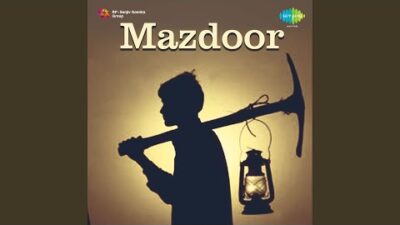
मज़दूर
Mazdoor
शैलीSocial · Drama
भाषाhindi प्रकारकथा-चित्र (फ़ीचर)
गीत6 — नीचे पूरी संगीत-सूची
कथा-सार
Synopsis'मज़दूर' फ़िल्मिस्तान की एक सामाजिक फ़िल्म है — एक गाँव के नौजवान की कहानी, जो अपनी प्रेमिका को पीछे छोड़कर काम की तलाश में शहर चला जाता है। सड़क दुर्घटना से मिल-मालिक की बेटी को बचाने के बाद उसे मिल में मैनेजर का पद मिल जाता है, और वह दो स्त्रियों के बीच खिंच जाता है — एक वह जिसकी कृतज्ञता ने उसे ऊपर उठाया, दूसरी वह गाँव की लड़की जो उसी मिल के दरवाज़े पर काम माँगने आ खड़ी होती है। जब कारख़ाने के हालात खुले मज़दूर-विवाद में बदल जाते हैं, तो मालिक और मज़दूरों के बीच उसकी जगह असंभव हो जाती है; अंत में वह मिल-मालिक का चेहरा बेनक़ाब करता है और मज़दूरों के — तथा उस लड़की के — साथ आ खड़ा होता है जिसे वह छोड़ आया था। समकालीन विवरणों के अनुसार यह कथा जॉन फ़ोर्ड की 'हाउ ग्रीन वॉज़ माय वैली' (1941) से प्रेरित थी, जिसमें वेल्स की कोयला-घाटी की जगह एक भारतीय मिल-कस्बा ले लेता है। यह नितिन बोस की फ़िल्मिस्तान के लिए पहली फ़िल्म थी और इसे लगभग पूरी तरह नए चेहरों ने सँभाला।
अंग्रेज़ी में पढ़ें · Read in English
Mazdoor is a Filmistan social drama about a village youth who leaves his sweetheart behind and goes to the city looking for work. After he rescues the mill owner's daughter from a road accident he is rewarded with a manager's post at the mill, and finds himself pulled between the young woman whose gratitude has raised him and the village girl who turns up at the same gate looking for a job. When conditions on the shop floor harden into an open labour dispute, his position between the owner and the workforce becomes untenable, and he ends by exposing the mill owner's conduct and taking his place alongside the workers — and alongside the girl he had left. Contemporary accounts describe the film as having been inspired by John Ford's How Green Was My Valley (1941), the Welsh coal valley of the original transposed to an Indian mill town. It was Nitin Bose's first film for Filmistan and was fronted almost entirely by newcomers.
संगीत-सूची
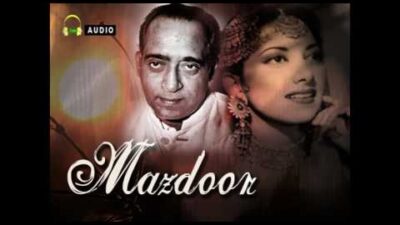
The Soundtrackछह गीत, सभी गोपाल सिंह नेपाली के लिखे और हरि प्रसन्न दास के संगीतबद्ध किए हुए। दास (1905–1989) का जन्म चटगाँव में हुआ था और हिंदी फ़िल्मों के इस दौर से पहले वे बांग्ला सिनेमा में गहरी जड़ें जमा चुके थे — लगभग छब्बीस बांग्ला फ़िल्में, पंकज मलिक के सहायक के रूप में काम, और वह संगीत-श्रेय जिसने हेमंत कुमार को उनका पहला बांग्ला फ़िल्मी गीत दिया। एल्बम तीन आवाज़ों में बँटा है: अमीरबाई कर्नाटकी, जो उस समय बंबई की सबसे अधिक रिकॉर्ड होने वाली गायिकाओं में थीं, दो एकल और युगल गाती हैं; बीनापानी मुखर्जी दो एकल; और मन्ना डे एक एकल तथा युगल। स्वर-रंग सावन की तसल्ली और मज़दूर-तराने से लेकर दो विरह-गीतों तक फैला है — ठीक वैसे ही जैसे कहानी गाँव के प्रेम और औद्योगिक संघर्ष के बीच आती-जाती है। सारेगामा/एचएमवी के पुनःप्रकाशन में मन्ना डे के एकल का नाम 'जीत हमारी है' दिया गया है, जबकि गीत कोश से बने सूचकांक उसी रिकॉर्ड को उसकी पहली पंक्ति से 'क्या ज़ुल्म कभी जीत गया' के नाम से दर्ज करते हैं।
अंग्रेज़ी में पढ़ें · Read in English
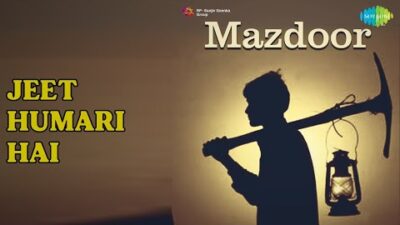
Six songs, all written by Gopal Singh Nepali and composed by Hari Prasanna Das. Das (1905–1989) was born in Chittagong and had built a substantial Bengali film career — some twenty-six Bengali films, assistant work under Pankaj Mullick, and the composer credit that gave Hemant Kumar his first Bengali film song — before his 1940s run of Hindi assignments, of which Mazdoor is one. The album divides between three voices: Amirbai Karnataki, then one of the most-recorded female singers in Bombay, takes two solos and the duet; Binapani Mukherjee takes two solos; and Manna Dey takes a solo and the duet. The tone ranges from a monsoon song of consolation and a labour anthem to two songs of loss, which matches a story that moves between village romance and industrial conflict. The Saregama/HMV reissue lists the Manna Dey solo as 'Jeet Hamari Hai', while song indexes derived from the Geet Kosh list the same track by its opening line as 'Kya Zulm Kabhi Jeet Gaya'.
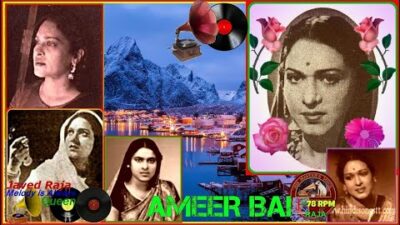
- छाए हैं काले मेघ तो बौछार भी होगी Chhaye Hain Kale Megh To Bauchhar Bhi Hogi स्वर: Amirbai Karnataki

- आबाद दिल की दुनिया बर्बाद हुई है Aabad Dil Ki Duniya Barbad Hui Hai स्वर: बीनापानी मुखर्जी
- हुई दिल की दुनिया झिलमिल रे Hui Dil Ki Duniya Jhilmil Re स्वर: बीनापानी मुखर्जी

- ये रंग बिरंगी डोर रे Ye Rang Birangi Dor Re स्वर: Amirbai Karnataki, Manna Dey
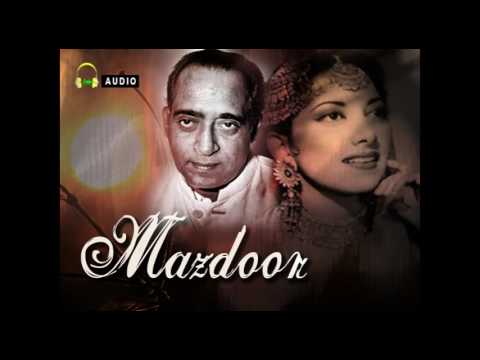
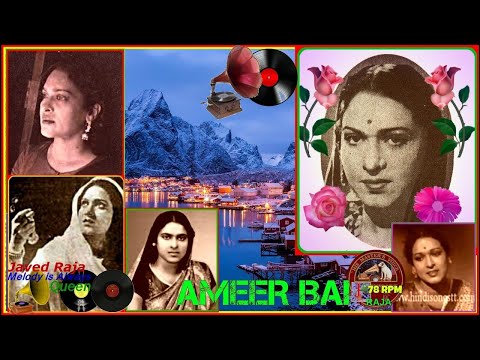
- क्या मुसीबत है जवानी Kya Musibat Hai Jawani स्वर: Amirbai Karnataki
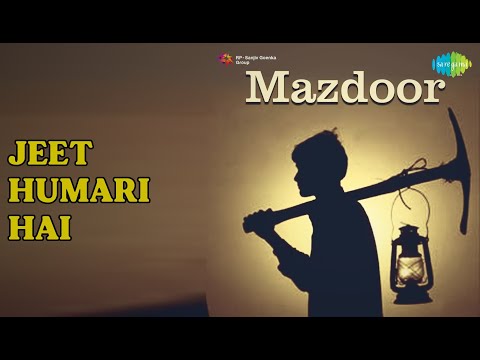
- क्या ज़ुल्म कभी जीत गया Kya Zulm Kabhi Jeet Gaya स्वर: Manna Dey
पट्टिका-लेख
The Monographपर्दे के पीछे Behind the Scenes
नितिन बोस (1897–1986) बी. एन. सरकार से कड़वे मतभेद के बाद कलकत्ता के न्यू थिएटर्स छोड़ चुके थे — इतने कड़वे कि, फ़िल्म-इतिहासकार अरुणकुमार देशमुख के विवरण के अनुसार, उन्होंने न्यू थिएटर्स के लिए बनाई अपनी आख़िरी फ़िल्म 'काशीनाथ' (1943) कभी अंत तक नहीं देखी। बंबई में उनका पहला काम वी. एम. व्यास की विष्णु सिनेटोन के लिए 'मुजरिम' (1944) था; फिर उनके परिचित बंगाली एस. मुखर्जी उन्हें फ़िल्मिस्तान ले आए, और 'मज़दूर' बनी — बंबई में उनकी दूसरी फ़िल्म। कलाकार लगभग सभी नए थे। नासिर ख़ान अपने बड़े भाई दिलीप कुमार के 'ज्वार भाटा' (1944) से पदार्पण के ठीक एक साल बाद परदे पर आए — और भाई की तरह ही, एक नवोदित नायिका के साथ। इंदुमती लेले (1927–2013), जो पृथ्वीराज कपूर के रंगमंच में काम कर चुकी थीं, यहाँ पहली और आख़िरी बार नायिका बनीं; इसके बाद वे स्थायी रूप से चरित्र भूमिकाओं में चली गईं। वीरा, अंकलेश्वर की एक पारसी लड़की, अपनी पहली ही फ़िल्म में दूसरी नायिका थीं; आगे उन्होंने लगभग बाईस फ़िल्में कीं और 1950 के दशक के मध्य में पाकिस्तान चली गईं। फ़िल्म बंबई के रॉक्सी सिनेमा में 18 मई 1946 को लगी, हालाँकि फ़िल्म-सूचियाँ और गीत-सूचकांक इसे 1945 के अंतर्गत रखते हैं।
अंग्रेज़ी में पढ़ें · Read in English
Nitin Bose (1897–1986) had left New Theatres, Calcutta after a bitter dispute with B. N. Sircar — so bitter, according to the account of Hindi-film historian Arunkumar Deshmukh, that he never watched his last New Theatres picture, Kashinath (1943), through to the end. His first Bombay assignment was Mujrim (1944) for V. M. Vyas's Vishnu Cinetone; S. Mukherjee, a fellow Bengali who knew him, then brought him to Filmistan, and Mazdoor was the result — his second Bombay film. The cast was made up almost entirely of newcomers. Nasir Khan was debuting a year after his elder brother Dilip Kumar's own debut in Jwar Bhata (1944), and — like his brother — opposite a debutante. Indumati Lele (1927–2013), who had acted in Prithviraj Kapoor's stage productions, played a lead for the first and last time here before moving permanently into character roles. Veera, a Parsi girl from Ankleshwar, was the second heroine on her first film; she went on to some twenty-two films before moving to Pakistan in the mid-1950s. The picture reached the Roxy theatre in Bombay on 18 May 1946, although film lists and song indexes place it under 1945.
महत्व Significance
'मज़दूर' 1940 के दशक के मध्य की उन गिनी-चुनी हिंदी फ़िल्मों में से है जिन्होंने औद्योगिक श्रम को पृष्ठभूमि नहीं, बल्कि कथा का केंद्र बनाया — मिल, हड़ताल और यह सवाल कि एक पढ़ा-लिखा आदमी किस ओर खड़ा होगा, यही इसकी कहानी है। यह एक साथ तीन कैरियरों का पड़ाव भी है: कलकत्ता के न्यू थिएटर्स से अलग होने के बाद नितिन बोस का फ़िल्मिस्तान में प्रवेश; मन्ना डे के आरंभिक हिंदी पार्श्वगायन श्रेयों में से एक, जब उनका गायकी-जीवन बस शुरू ही हुआ था; और वह फ़िल्म जिससे दिलीप कुमार के छोटे भाई नासिर ख़ान ने परदे पर पदार्पण किया — वह भी दो नवोदित नायिकाओं के साथ। गीतकार गोपाल सिंह नेपाली के लिए, जो हिंदी कवि के रूप में पहले ही स्थापित थे, यह बंबई के उनके पहले फ़िल्मी दौर का हिस्सा है।
अंग्रेज़ी में पढ़ें · Read in English
Mazdoor belongs to the small group of mid-1940s Hindi films that took industrial labour as their explicit subject rather than as scenery — the mill, the dispute and the question of which side an educated man stands on are the plot, not the backdrop. It is also a marker in three careers at once: it is Nitin Bose's entry into Filmistan after his break with New Theatres in Calcutta; it carries one of the earliest Hindi film playback credits of Manna Dey, then still at the very start of his singing life; and it is the film in which Nasir Khan — the younger brother of Dilip Kumar — made his screen debut, opposite two debutante heroines. For lyricist Gopal Singh Nepali, already established as a Hindi poet, it is part of his first run of Bombay film work.
विरासत Legacy
'मज़दूर' कालजयी फ़िल्मों में शामिल नहीं हुई, और आज इसका कोई प्रिंट आम प्रचलन में नहीं दिखता; जो पूरी तरह बचा रह गया वह इसका संगीत है, जो सारेगामा/एचएमवी की सूची में छह-गीतों के पुनःप्रकाशन के रूप में आज भी उपलब्ध है। इससे फ़िल्म को उस दौर की मध्यम-बजट फ़िल्मों वाली विशिष्ट परवर्ती ज़िंदगी मिलती है — फ़िल्म भुला दी गई, रिकॉर्ड अब भी बज रहा है। इसके दो गीत आज वह भार उठाते हैं जो 1945 में उनका नहीं था: ये मन्ना डे की सबसे आरंभिक बची हुई हिंदी फ़िल्मी रिकॉर्डिंग्स में हैं, 'मशाल' (1950) और राज कपूर की फ़िल्मों से उनकी पहचान बनने से कई साल पहले की। हिंदी सिनेमा की मज़दूर-फ़िल्म परंपरा के लिए — वह धारा जो इससे पहले महबूब की 'रोटी' (1942) से होकर आती है और बाद में 'दो बीघा ज़मीन' (1953) तक पहुँचती है — 'मज़दूर' एक छोटी लेकिन वास्तविक कड़ी है।
अंग्रेज़ी में पढ़ें · Read in English
Mazdoor did not enter the canon, and no print appears to be in general circulation today; what has survived intact is the soundtrack, which remains available as a six-track reissue in the Saregama/HMV catalogue. That gives the film an afterlife typical of the period's mid-budget productions — the picture forgotten, the record still playing. Two of its tracks now carry a weight they did not have in 1945: they are among Manna Dey's earliest surviving Hindi film recordings, made years before Mashaal (1950) and the Raj Kapoor films established him. For the labour-film strand in Hindi cinema — a line that runs on through Mehboob's Roti (1942) before it and reaches Do Bigha Zamin (1953) after it — Mazdoor is a small but real link.
अन्य विवरण
More Details- https://www.hindigeetmala.net/movie/mazdoor_1945.htm
- https://atulsongaday.me/2021/07/17/chaaye-hain-kaale-megh-to-bauchhaar-bhi-hogi/
- https://atulsongaday.me/2023/06/17/aabaad-dil-ki-duniya-barbaad-huyi-hai/
- https://atulsongaday.me/2014/02/21/ye-rang-birangi-dor-re/
- https://atulsongaday.me/tag/hari-prasanna-das/
- https://en.wikipedia.org/wiki/List_of_Hindi_films_of_1945
- https://en.wikipedia.org/wiki/Nitin_Bose
- https://www.jiosaavn.com/album/mazdoor/73BnbRweliM_
- https://letterboxd.com/film/mazdoor-1946/
- https://indiancine.ma/EEY/info
References
नमूना-पट्टी
The Specimen Table| शीर्षक | मज़दूर · Mazdoor |
|---|---|
| वर्ष · युग | 1945 — Pre Independence |
| निर्देशक | नितिन बोस · Nitin Bose |
| संगीत-निर्देशक | हरि प्रसन्न दास · Hari Prasanna Das |
| गीतकार | गोपाल सिंह नेपाली · Gopal Singh Nepali |
| कलाकार-मंडली | नासिर ख़ान · Nasir Khan · इंदुमती · Indumati · वीरा · Veera · के. एन. सिंह · K. N. Singh · राधाकृष्ण · Radhakrishan · एस. नज़ीर · S. Nazir · एस. एल. पुरी · S. L. Puri · मोतीबाई · Motibai |
| निर्माण-गृह | Filmistan, Bombay |
| शैली | Social · Drama |
| भाषा | hindi |
| प्रकार | कथा-चित्र (फ़ीचर) |
| गीत | 6 गीत — ऊपर पूरी संगीत-सूची |
जुड़े हुए पन्ने
Connected Plates · The Graph Made Visibleअटलस में कोई पन्ना अकेला नहीं — 'मज़दूर' से उसके गीत, कलाकार, राग और युग, सब जुड़े हैं।
इस फ़िल्म के गीत · Songs of this Film
कलाकार · Cast & Crew
युग · The Era
साझा कीजिए · Share this Plate