कहानियाँ विंग · कहानी · इतिहास · 1947
ग़ुलाम हैदर का वो जुमला जिसने इतिहास बनाया
Ghulam Haider's Prediction: The Man Who Gave India Its Singing Voice
जब मेहबूब ख़ान ने एक किशोरी की आवाज़ को 'बहुत पतली' कहकर अस्वीकार कर दिया, तो एक पंजाबी संगीतकार ने कहा — 'एक दिन पूरा हिंदुस्तान इनकी तारीफ़ करेगा।' वो सही निकले।
प्रकाशित3 July 2026 पाठ८ मिनट का पाठ
आमुख
1947 में बंबई में एक घटना हुई जिसने भारतीय संगीत का भविष्य बदल दिया। एक किशोर लड़की को एक बड़े निर्माता ने अस्वीकार किया। फिर एक पंजाबी संगीतकार ने उसका हाथ थाम लिया और एक भविष्यवाणी की। यह ग़ुलाम हैदर और लता मंगेशकर की कहानी है।
अंग्रेज़ी में पढ़ें · Read in English
In 1947 Bombay, an event occurred that changed the future of Indian music. A teenage girl was rejected by a powerful producer. Then a Punjabi composer took her under his wing and made a prediction. This is the story of Ghulam Haider and Lata Mangeshkar.
मेहबूब ख़ान का ना
Mehboob Khan's No1947 का बंबई — आज़ादी की हवाओं के साथ-साथ विभाजन की आशंका में डूबा हुआ। एक दिन मेहबूब ख़ान के ऑफ़िस में एक किशोरी आई — अठारह साल की लता दीनानाथ मंगेशकर, पंडित दीनानाथ मंगेशकर की बेटी, जो 1945 से मराठी फ़िल्मों में गा रही थी और हिंदी फ़िल्मों में क़दम रखना चाहती थी। मेहबूब ख़ान — जो उस वक़्त के सबसे शक्तिशाली फ़िल्म निर्माताओं में से एक थे — ने उनकी आवाज़ सुनी। फिर एक वाक्य बोला: 'बहुत पतली आवाज़ है। हिंदी फ़िल्मों के लिए नहीं चलेगी।'
अंग्रेज़ी में पढ़ें · Read in English
Bombay, 1947 — awash with the winds of freedom and the dread of Partition. One day, a teenager walked into Mehboob Khan's office: eighteen-year-old Lata Dinanath Mangeshkar, daughter of Pandit Dinanath Mangeshkar, who had been singing in Marathi films since 1945 and wanted to enter Hindi films. Mehboob Khan — one of the most powerful film producers of the era — listened to her voice. Then he said one sentence: 'The voice is too thin. It won't work for Hindi films.'
ग़ुलाम हैदर का हाँ
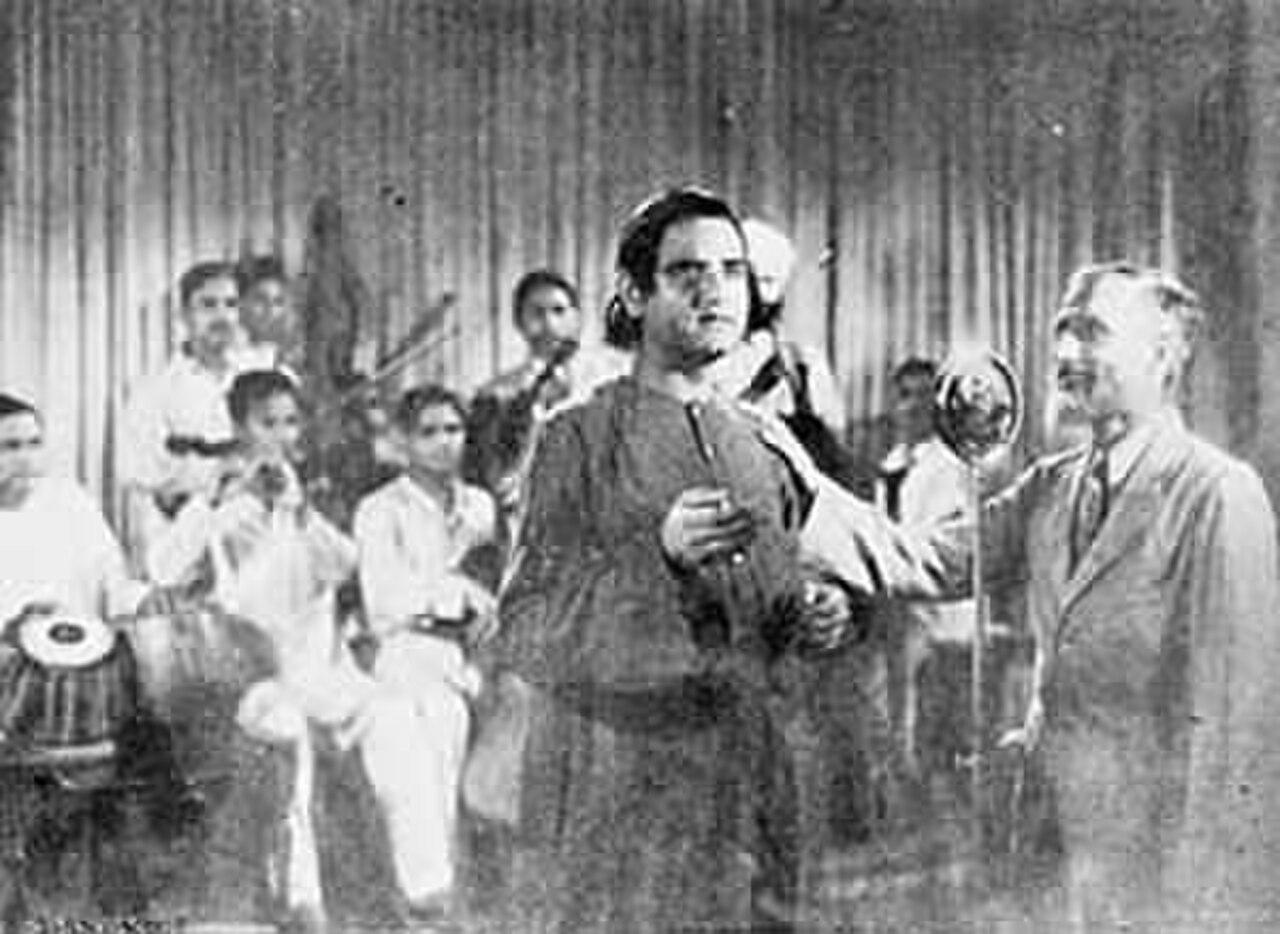
Ghulam Haider's Yesवहीं मौजूद था एक दूसरा शख़्स — ग़ुलाम हैदर, लाहौर के पंजाबी संगीतकार जो बंबई में अपना करियर बना रहे थे। उन्होंने भी वही आवाज़ सुनी जो मेहबूब ख़ान ने 'पतली' कही थी। लेकिन ग़ुलाम हैदर ने उसमें कुछ और सुना — एक ऐसी शुद्धता जो उत्तर भारत की शास्त्रीय गायन परंपरा में आदर्श मानी जाती थी। उन्होंने मेहबूब ख़ान से कहा: 'आप इस लड़की को अस्वीकार कर रहे हैं? एक दिन पूरा हिंदुस्तान इनकी तारीफ़ करेगा।' फिर उन्होंने लता मंगेशकर को 'आप की सेवा में' (1947) के गाने दिए।
अंग्रेज़ी में पढ़ें · Read in English
Present in that meeting was another person — Ghulam Haider, a Punjabi composer from Lahore who was building his career in Bombay. He too heard the same voice that Mehboob Khan had called 'thin'. But Ghulam Haider heard something else in it — a purity that was considered ideal in North India's classical vocal tradition. He told Mehboob Khan: 'You are rejecting this girl? One day the whole of India will sing her praises.' Then he gave Lata Mangeshkar songs in Aap Ki Seva Mein (1947).
पंजाब से बंबई तक
From Punjab to Bombayग़ुलाम हैदर (1908-1953) लाहौर के थे — पंजाब का वो शहर जो अपनी संगीत परंपरा के लिए उतना ही मशहूर था जितना अपने खाने और अपनी शायरी के लिए। उन्होंने 1930-40 के दशक में लाहौर की फ़िल्मों में संगीत दिया और फिर बंबई आए। उनकी संगीत-शैली पंजाबी लोक संगीत, ठुमरी और उत्तर भारतीय शास्त्रीय परंपराओं का एक अनोखा मेल था। वे संगीत में रंग-रस का जश्न मनाने वाले थे — और उन्होंने लता मंगेशकर की आवाज़ में वो रंग और वो रस देखा जो दूसरों को नहीं दिखा।
अंग्रेज़ी में पढ़ें · Read in English
Ghulam Haider (1908-1953) was from Lahore — that city of Punjab as famous for its musical traditions as for its food and poetry. He had composed for Lahore films in the 1930s-40s and then came to Bombay. His musical style was a unique synthesis of Punjabi folk music, thumri and North Indian classical traditions. He was someone who celebrated colour and essence in music — and he saw in Lata Mangeshkar's voice the colour and essence others had missed.
आप की सेवा में: एक शुरुआत
Aap Ki Seva Mein: A Beginning'आप की सेवा में' (1947) एक भक्ति-रंगी फ़िल्म थी जिसके लिए ग़ुलाम हैदर ने संगीत दिया। लता ने इस फ़िल्म में गाया — और वो गीत उनके हिंदी फ़िल्म करियर की शुरुआत बन गए। जो आवाज़ मेहबूब ख़ान को 'पतली' लगी थी, वो इन गीतों में एक ऐसी शुद्धता के साथ गूंजी जो दर्शकों के कानों और दिलों में उतर गई। ग़ुलाम हैदर की भविष्यवाणी सच होने लगी थी।
अंग्रेज़ी में पढ़ें · Read in English
Aap Ki Seva Mein (1947) was a devotional-flavoured film for which Ghulam Haider composed. Lata sang in this film — and those songs became the beginning of her Hindi film career. The voice Mehboob Khan had found 'too thin' resonated through these songs with a purity that penetrated the ears and hearts of audiences. Ghulam Haider's prediction was beginning to come true.
विभाजन और एक अनोखी विदाई
Partition and a Unique Farewell1947 के विभाजन ने ग़ुलाम हैदर को एक असाध्य विडंबना में डाल दिया। लाहौर से उनका संबंध था, इसलिए वे पाकिस्तान चले गए। जो करियर उन्होंने बंबई में बनाया था, जो लता मंगेशकर को उन्होंने हिंदी फ़िल्मों से परिचित कराया था — वो सब भारत में रह गया। पाकिस्तान में उन्होंने अपना करियर जारी रखा और पाकिस्तानी फ़िल्म संगीत के अग्रदूतों में से एक बने। लेकिन जो पौधा उन्होंने 1947 के बंबई में लगाया था — लता मंगेशकर की आवाज़ — उसे भारत में ही बढ़ने का मौका मिला।
अंग्रेज़ी में पढ़ें · Read in English
The 1947 Partition placed Ghulam Haider in an irresolvable irony. His connection was to Lahore, so he went to Pakistan. The career he had built in Bombay, the Lata Mangeshkar he had introduced to Hindi films — all of that remained in India. In Pakistan he continued his career and became one of the pioneers of Pakistani film music. But the plant he had sown in 1947 Bombay — Lata Mangeshkar's voice — was allowed to grow only in India.
परिचय
IdentityEpithet
जब मेहबूब ख़ान ने एक किशोरी की आवाज़ को 'बहुत पतली' कहकर अस्वीकार कर दिया, तो एक पंजाबी संगीतकार ने कहा — 'एक दिन पूरा हिंदुस्तान इनकी तारीफ़ करेगा।' वो सही निकले।
When a powerful director rejected a teenage girl's voice as 'too thin', a Punjabi composer made a prediction that would prove to be the most accurate in Indian music history.
अन्य विवरण
More Details- Ghulam Haider to Mehboob Khan, 1947: 'You are rejecting this girl? One day the whole of India will sing her praises.'
- ग़ुलाम हैदर
- लता मंगेशकर
- मेहबूब ख़ान
- 1929 — Lata Mangeshkar born in Indore — लता मंगेशकर का जन्म इंदौर में
- 1945 — Lata begins singing in Marathi films — लता ने मराठी फ़िल्मों में गाना शुरू किया
- 1947 — Mehboob Khan rejects Lata's voice; Ghulam Haider gives her songs in Aap Ki Seva Mein — मेहबूब ख़ान ने लता को अस्वीकार किया; ग़ुलाम हैदर ने 'आप की सेवा में' में गाने दिए
- August 1947 — Partition; Ghulam Haider migrates to Pakistan — विभाजन; ग़ुलाम हैदर पाकिस्तान चले गए
- 1949 — Lata's 'Aayega Aane Wala' from Mahal becomes a pan-India sensation — महल का 'आयेगा आने वाला' पूरे भारत में धमाका
- 2001 — Lata Mangeshkar receives Bharat Ratna — Ghulam Haider's prediction confirmed — लता मंगेशकर को भारत रत्न — ग़ुलाम हैदर की भविष्यवाणी सच हुई
- February 6, 2022 — Lata Mangeshkar passes away at age 92 — लता मंगेशकर का 92 वर्ष की आयु में निधन
- Wikipedia: Lata Mangeshkar — https://en.wikipedia.org/wiki/Lata_Mangeshkar
- Wikipedia: Ghulam Haider (composer) — https://en.wikipedia.org/wiki/Ghulam_Haider_(composer)
- Harish Bhimani, In Search of Lata Mangeshkar (Indus/HarperCollins, 1995)
- Nasreen Munni Kabir, Lata Mangeshkar: In Her Own Voice (Niyogi Books, 2009)
- Wikipedia: Mehboob Khan — https://en.wikipedia.org/wiki/Mehboob_Khan
Pull Quotes
Key Figures
Timeline Within Story
References
कहानी-नमूना
The Story Specimen| शीर्षक | ग़ुलाम हैदर का वो जुमला जिसने इतिहास बनाया · Ghulam Haider's Prediction: The Man Who Gave India Its Singing Voice |
|---|---|
| श्रेणी | इतिहास |
| प्रकार | विशेष लेख |
| पाठ-समय | ८ मिनट का पाठ |
| प्रकाशित | 3 July 2026 — admin |
| वर्ष | 1947 |
| टैग | Lata Mangeshkar · Ghulam Haider · Mehboob Khan · Aap Ki Seva Mein 1947 · discovery · Partition · Punjabi music · Hindi film genesis |
इस कहानी में
In This Story · The Cast & Its Platesकहानी में आए नामों के अटलस में अपने पन्ने हैं — यहीं से यात्रा जारी रखिए।
कलाकार-सूत्र · Artists
और कहानियाँ
More Stories from the Atlas

साझा कीजिए · Share this Plate
यह पन्ना आगे बढ़ाइए
सवाल-जवाब
Questions & Answersक्या मेहबूब ख़ान ने सच में लता मंगेशकर को अस्वीकार किया था? · Did Mehboob Khan really reject Lata Mangeshkar?
हाँ, यह हिंदी फ़िल्म इतिहास की सबसे प्रलेखित कहानियों में से एक है। मेहबूब ख़ान ने कथित रूप से लता मंगेशकर से कहा कि उनकी आवाज़ हिंदी फ़िल्मों के लिए 'बहुत पतली' है, जबकि ग़ुलाम हैदर ने भविष्यवाणी की कि वे भारत की सबसे बड़ी गायिका बनेंगी। यह कहानी लता मंगेशकर की कई जीवनियों में उल्लिखित है।
Yes, this is one of the well-documented stories in Hindi film history. Mehboob Khan reportedly told Lata Mangeshkar her voice was 'too thin' for Hindi films, while Ghulam Haider predicted she would become India's greatest singer. The story is cited in multiple biographies of Lata Mangeshkar.
विभाजन के बाद ग़ुलाम हैदर का क्या हुआ? · What happened to Ghulam Haider after Partition?
1947 के विभाजन के बाद ग़ुलाम हैदर पाकिस्तान चले गए जहाँ उन्होंने संगीत बनाना जारी रखा और पाकिस्तानी फ़िल्म संगीत के अग्रदूतों में से एक बने। 1953 में 45 वर्ष की आयु में उनका निधन हो गया — लता मंगेशकर के उस करियर का पूरा विकास देखे बिना जिसकी शुरुआत करने में उन्होंने मदद की थी।
After the 1947 Partition, Ghulam Haider migrated to Pakistan, where he continued composing and became one of the pioneers of Pakistani film music. He died in 1953 at age 45, never seeing the full flowering of the career he had helped launch for Lata Mangeshkar.