गीत विंग · गीत-पट्टिका · Song Plate
दो नैन तुम्हारे
Do Nain Tumhare
परदेसी के लिए खेमचंद प्रकाश के संगीत में ख़ुर्शीद–कांतिलाल का एक प्रेम-युगल।
भावरोमांटिक
भाषाhindi गतिमध्यम स्वरूपयुगल
श्रेय
The Creditsसूत्र-वाक्य · The Hook
सूत्र-वाक्य
परदेसी के लिए खेमचंद प्रकाश के संगीत में ख़ुर्शीद–कांतिलाल का एक प्रेम-युगल।
In EnglishA Khursheed–Kantilal romantic duet from Khemchand Prakash's score for Pardesi.
पट्टिका-लेख
The Monographपरिचय Overview
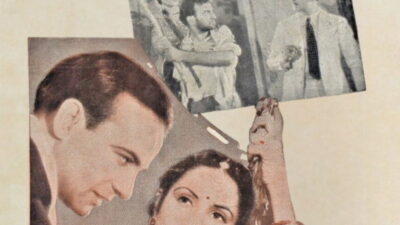
परदेसी (1941) का एक प्रेम-युगल, जिसमें स्टूडियो की प्रमुख गायिका ख़ुर्शीद और कांतिलाल की जोड़ी है, संगीत खेमचंद प्रकाश का। 'दो नैन तुम्हारे' का संबोधन इसे 1940 के दशक के आरंभ के रणजीत मूवीटोन मुहावरे का एक गीतात्मक प्रेम-गीत बनाता है।
अंग्रेज़ी में पढ़ें · Read in English
A romantic duet from Pardesi (1941) pairing the studio's leading singer Khursheed with Kantilal, set to music by Khemchand Prakash. The 'do nain tumhare' (your two eyes) address marks it as a lyrical love song in the Ranjit Movietone idiom of the early 1940s.
काव्य The Poetry
'दो नैन तुम्हारे' हिंदी-उर्दू काव्य की सबसे शास्त्रीय लक्षणाओं में से एक से शुरू होता है: महबूब को — और उसके ज़रिए महबूब को उत्कृष्ट बनाते हुए — केवल आँखों तक समेट देना। उर्दू प्रेम-गीत परंपरा में आँखें महबूब का सबसे आवेशित अंग हैं: वे हृदय की आंतरिक दशा का बाहरी प्रक्षेपण भी हैं और सबसे ख़तरनाक हथियार भी (वह 'नज़र' जो घायल करती है, वशीभूत करती है)। इस संबोधन पर बना एक युगल — दो गायक, हर एक दूसरे की आँखों को संबोधित — असुरक्षा का एक सममित आदान-प्रदान बनाता है। आँखें 'देखती' हैं और 'देखी जाती' हैं; महबूब एक साथ कर्ता और कर्म है। रणजीत मूवीटोन में खेमचंद प्रकाश की शास्त्रीय जड़ों का अर्थ था कि इस तरह के गीत प्रायः अर्ध-शास्त्रीय राग-ढाँचे में बनते थे, जिससे सुर-पंक्ति को तीन मिनट के फ़िल्मी-गीत प्रारूप में ढली ठुमरी या ख़याल का चरित्र मिलता था।
अंग्रेज़ी में पढ़ें · Read in English
'Do nain tumhare' (your two eyes) opens the song with one of Hindi-Urdu poetry's most classical synecdoches: the beloved reduced to — and simultaneously elevated through — the eyes alone. In the Urdu love-lyric tradition, the eyes are the most charged feature of the beloved: they are both the outward projection of the heart's inner state and the most dangerous weapon (the 'nazar', the gaze that wounds and enchants). A duet built on this address — two singers, each addressing the other's eyes — creates a symmetrical exchange of vulnerability. The eyes 'look at' and are 'looked at'; the beloved is simultaneously subject and object. Khemchand Prakash's classical musical grounding at Ranjit Movietone meant that songs like this were typically set in a semi-classical raga framework, giving the melodic line the character of a thumri or a khayal adapted to the three-minute film song format.
कहानी The Story
परदेसी (1941) रणजीत मूवीटोन की उस साल की व्यावसायिक सफलताओं में से एक थी, जिसने खेमचंद प्रकाश को स्टूडियो के प्रमुख संगीतकार और ख़ुर्शीद को इसकी परिभाषित रोमांटिक आवाज़ के रूप में और मज़बूती से स्थापित किया। स्टूडियो — हल्के रोमांटिक मनोरंजन के लिए मशहूर — ने ख़ुर्शीद और कांतिलाल को इस प्रेम-युगल में जोड़ा, उस आह्वान-प्रतिक्रिया मुहावरे में जिससे स्टूडियो प्रेम-प्रगाढ़ता का खेल दिखाते थे। ख़ुर्शीद ने 1939 में खेमचंद प्रकाश के ही निर्देशन में अपना फ़िल्मी पदार्पण किया था (मेरी आँखें), और 1941 तक उनकी जोड़ी कई हिट दे चुकी थी। 'दो नैन तुम्हारे' — महबूब की दोनों आँखों को संबोधित — स्टूडियो के विशिष्ट ढाँचे का एक गीतात्मक प्रेम-गीत है: शास्त्रीय रूपों में जड़ें जमाई राग-रचना, भावनात्मक स्तर पर सीधा, और दो अलग आवाज़ों के अंतःक्रियात्मक प्रदर्शन के लिए रचा गया।
अंग्रेज़ी में पढ़ें · Read in English
Pardesi (1941) was a Ranjit Movietone production that became one of the studio's commercial successes of the year, consolidating Khemchand Prakash's position as its leading composer and Khursheed's as its defining romantic voice. The studio — famous for light romantic entertainers — paired Khursheed with Kantilal for this romantic duet, in the call-and-response idiom that studios used to enact the push-and-pull of courtship. Khursheed had made her film debut under Khemchand Prakash in 1939 (Meri Aankhen), and by 1941 their partnership had generated multiple hits. 'Do Nain Tumhare' — addressed to the beloved's two eyes — is a lyrical love song in the studio's characteristic mode: melodically grounded in classical forms, emotionally direct, and designed to showcase the interplay of two distinct voices.
विरासत The Legacy
परदेसी (1941) रणजीत मूवीटोन में खेमचंद प्रकाश के शिखर-उत्पादन के काल की है — एक करियर जिसने बाद में महल (1949) से 'आएगा आनेवाला' रचा, वह गीत जिसने लता मंगेशकर को रातोंरात राष्ट्रीय प्रसिद्धि दिलाई और जिसे हिंदी फ़िल्म संगीत की सबसे प्रभावशाली रचनाओं में से एक माना जाता है। खेमचंद प्रकाश का श्रेय किशोर कुमार को उद्योग से परिचित कराने के लिए भी दिया जाता है। ख़ुर्शीद, इन वर्षों में उनकी प्रमुख आवाज़, 1940 के दशक की सबसे प्रसिद्ध गायिका-अभिनेत्रियों में से एक बनीं। परदेसी की संगीत-पट्टी खेमचंद और ख़ुर्शीद दोनों के करियर के एक निर्माणकारी क्षण को दर्शाती है।
अंग्रेज़ी में पढ़ें · Read in English
Pardesi (1941) belongs to the period of Khemchand Prakash's peak output at Ranjit Movietone, a career that later produced 'Aayega Aanewala' from Mahal (1949) — the song that launched Lata Mangeshkar to national prominence and is widely considered one of the most influential compositions in Hindi film music. Khemchand Prakash is additionally credited with introducing Kishore Kumar to the industry. Khursheed, his leading voice through these years, became one of the most celebrated singing-actresses of the 1940s. The Pardesi soundtrack represents Khemchand and Khursheed at a formative moment in both their careers.
वर्गीकरण
Classification- Tempo
- Medium
Genre
अन्य विवरण
More Details- https://en.wikipedia.org/wiki/Khemchand_Prakash
- https://www.hindigeetmala.net/movie/pardesi.htm
- https://www.songsofyore.com/best-songs-of-khemchand-prakash/
References
रोचक तथ्य
Margin Notesपरदेसी (1941) को रणजीत मूवीटोन की एक व्यावसायिक सफलता के रूप में दर्ज किया गया है, जिसने ख़ुर्शीद को 1940 के दशक की शुरुआत की अग्रणी अभिनेत्रियों में से एक बनाने में मदद की।
अंग्रेज़ी में पढ़ें · Read in English
Pardesi (1941) is documented as a commercial success for Ranjit Movietone that helped make Khursheed one of the leading female stars of the early 1940s.
ख़ुर्शीद ने खेमचंद प्रकाश की 1939 की फ़िल्म 'मेरी आँखें' से अपनी फ़िल्मी शुरुआत की — जिससे परदेसी संगीतकार और गायिका के बीच वर्षों तक चले सहयोग का ही एक हिस्सा बन जाती है।
अंग्रेज़ी में पढ़ें · Read in English
Khursheed made her film debut in Khemchand Prakash's 1939 film Meri Aankhen — making Pardesi part of a multi-year collaboration between composer and singer.
खेमचंद प्रकाश ने बाद में लता मंगेशकर और किशोर कुमार दोनों को हिंदी फ़िल्म उद्योग से परिचित कराया; महल फ़िल्म के लिए उनकी 1949 की रचना 'आएगा आनेवाला' हिंदी फ़िल्म संगीत की सबसे प्रशंसित रचनाओं में गिनी जाती है।
अंग्रेज़ी में पढ़ें · Read in English
Khemchand Prakash later introduced both Lata Mangeshkar and Kishore Kumar to the Hindi film industry; his 1949 composition 'Aayega Aanewala' from Mahal is among the most celebrated in Hindi film music.
इस युगल गीत में पुरुष स्वर देने वाले कांतिलाल, 1940 के दशक की शुरुआत में रणजीत मूवीटोन की सक्रिय पुरुष आवाज़ों में से एक थे।
अंग्रेज़ी में पढ़ें · Read in English
Kantilal, who sang the male part in this duet, was one of Ranjit Movietone's active male voices in the early 1940s.
नमूना-पट्टी
The Specimen Table| शीर्षक | दो नैन तुम्हारे · Do Nain Tumhare |
|---|---|
| फ़िल्म | परदेसी · 1941 |
| वर्ष · युग | 1941 |
| गायक | Khursheed, Kantilal |
| संगीतकार | Khemchand Prakash |
| स्वरूप | युगल |
| गति | मध्यम |
| भाषा | hindi |
| भाव | रोमांटिक |
| लोकप्रियता | Known |
| बोल-स्थिति | केवल झलक |
जुड़े हुए पन्ने
Connected Plates · The Graph Made Visibleअटलस में कोई पन्ना अकेला नहीं — इस गीत से जुड़े गीत, कलाकार, फ़िल्म, राग-ताल-विधा, सब यहाँ से खुलते हैं।
मिलते-जुलते गीत · Related Songs
कलाकार · The Artists
फ़िल्म · The Film
साझा कीजिए · Share this Plate