कहानियाँ विंग · कहानी
अलंकार: भारतीय संगीत के गहने
Ornaments: The Jewelry of Indian Music
स्वरों को सजाने वाली तकनीकें जो संगीत को जीवंत करती हैं
प्रकाशित31 March 2026
आमुख
अलंकार भारतीय शास्त्रीय संगीत का हृदय है। ये केवल सजावटी तकनीकें नहीं हैं, बल्कि भावनाओं को व्यक्त करने का माध्यम हैं। प्रत्येक अलंकार का अपना चरित्र है, अपना उद्देश्य है, अपनी सुंदरता है।
अंग्रेज़ी में पढ़ें · Read in English
Ornaments are the heart of Indian classical music. They are not mere decorative techniques, but vehicles for expressing emotions. Each ornament has its own character, its own purpose, its own beauty.
अलंकार का परिचय: ध्वनि के गहने
Introduction to Ornaments: The Jewelry of Soundभारतीय शास्त्रीय संगीत में, अलंकार (संस्कृत से 'अलंकार' जिसका अर्थ है सजाना या सजाना) ऐसी तकनीकें हैं जो संगीतात्मक नोटों को सुशोभित और बढ़ाती हैं। पश्चिमी शास्त्रीय संगीत के विपरीत जहाँ अलंकार (ट्रिल और ग्रेस नोट्स जैसे) मुख्य रूप से सजावटी कार्य करते हैं, भारतीय संगीतात्मक अलंकार राग चरित्र और भावनात्मक सामग्री की अभिव्यक्ति के लिए अभिन्न हैं।
अंग्रेज़ी में पढ़ें · Read in English
In Indian classical music, ornaments ('alankar' from Sanskrit meaning to adorn or decorate) are techniques that embellish and enhance musical notes. Unlike Western classical music where ornaments (like trills and grace notes) serve primarily decorative functions, Indian musical ornaments are integral to the expression of raag character and emotional content. They are as essential to Indian music as melody itself. The core difference lies in philosophy: Western ornaments are additions to a primary melodic line; Indian ornaments are manifestations of the raag's essential character. A note in Indian music is not merely a single frequency; it is a complex entity that can be approached, departed from, sustained, and colored in numerous ways. These different approaches to a single note constitute the vast array of Indian ornaments. Mastering ornaments is not about technical display but about developing the sensitivity to understand when, where, and why a particular ornament is appropriate. Each ornament communicates specific emotional or aesthetic information. Meend (glide) suggests a long journey between two notes, creating smoothness and flow. Gamak (rapid oscillation) creates intensity and assertion. Krintan (rapid bending) creates a kind of hesitation or delicate uncertainty. The choice of ornament shapes the listener's emotional response even before conscious analysis occurs. This is why studying ornaments is central to the study of Indian classical music.
मौलिक अलंकार: अभिव्यक्ति की नींव
The Fundamental Ornaments: Foundation of Expressionकई अलंकार सभी भारतीय शास्त्रीय संगीत की नींव बनाते हैं। मीड़ (स्लाइड) शायद सबसे विशिष्ट भारतीय अलंकार है। यह एक नोट से दूसरे तक एक सुगम, निरंतर गति है, बीच के सभी सूक्ष्मटोन को कवर करता है। मीड़ आरोही (निचले नोट से उच्च तक जाना) या अवरोही हो सकता है।
अंग्रेज़ी में पढ़ें · Read in English
Several ornaments form the foundation of all Indian classical music. Meend (glide/slide) is perhaps the most characteristic Indian ornament. It is a smooth, continuous movement from one note to another, covering all the microtones in between. Meend can be ascending (moving from a lower note to a higher one) or descending. The character changes based on speed and intent—a slow meend is lyrical and romantic, while a fast meend can be dramatic. Khatka is a sudden, deliberate jump from one note to another, creating a punctuation-like effect. It's the opposite of meend's smoothness and is used to create surprise, emphasis, or structural clarity. Kan is a grace note approach—briefly touching a note before the main target note. It's delicate and can pass almost unnoticed unless specifically highlighted. Murki is a rapid grouping of notes, typically executed in a single breath or phrase. It adds texture and ornamentation without changing the essential melodic movement. Gamak, as discussed earlier, is a rapid oscillation within a note, creating intensity. These five ornaments form the core vocabulary of ornamental techniques. Every classical musician learns these first, as they are essential for basic raag expression. The distinction between these ornaments and variations creates the framework within which all more complex ornamental techniques fit.
मध्यवर्ती अलंकार: परिष्कार का विकास
Intermediate Ornaments: Developing Sophisticationजैसे-जैसे संगीतकार प्रगति करते हैं, वे अधिक जटिलता के अलंकार सीखते हैं। ज़मज़ामा एक सूक्ष्म, कंपकंपाने वाली भिन्नता एक निरंतर नोट पर है, एक तरह की कोमल लहराहट बनाता है बिना कंपन के। यह गमक से अधिक परिष्कृत है और सूक्ष्मता की माँग करने वाली स्थितियों में उपयोग किया जाता है।
अंग्रेज़ी में पढ़ें · Read in English
As musicians progress, they learn ornaments of greater complexity. Zamzama is a subtle, tremulous variation on a sustained note, creating a kind of gentle wavering without oscillation. It's more refined than gamak and is used in situations demanding subtlety. Andolan (as discussed in an earlier section) is a slow, gentle swaying within a sustained note. Kipanam is a complex ornament involving rapid movement between nearby notes in a specific sequence. Gitkiri is the rapid exchange between two notes, creating a kind of musical stuttering effect. These intermediate ornaments require both technical precision and artistic sensitivity. They cannot be executed mechanically; they must emerge naturally from the raag's context and the emotional intent of the performance. Different raags favor different ornaments. Some raags, by their nature, demand extensive use of meend and gamak. Others, by contrast, are best served by subtle ornaments like andolan or delicate khatka. Understanding the relationship between specific raags and their characteristic ornaments is part of the deeper raag knowledge that students develop over years of practice.
उन्नत अलंकार: सूक्ष्मता की कला
Advanced Ornaments: The Art of Subtletyसबसे परिष्कृत अलंकार विकास के वर्षों की आवश्यकता हैं और आमतौर पर केवल उन्नत छात्रों को पेश किए जाते हैं। कृंतन, जैसा कि संकोच के संदर्भ में उल्लेख किया गया है, विशिष्ट लयात्मक पैटर्न के साथ एक नोट को तेज़ी से झुकाने में शामिल एक उन्नत तकनीक है।
अंग्रेज़ी में पढ़ें · Read in English
The most sophisticated ornaments require years of development and are typically introduced only to advanced students. Krintan, as mentioned in context of hesitation, is an advanced technique involving rapid bending of a note with specific rhythmic patterns. Murkis in various configurations—simple, complex, in sequence—constitute an advanced vocabulary. Bhangla, a sudden dynamic shift on a note without pitch change, creates emphasis through volume manipulation. Chikari, while primarily associated with instrumental technique on sitar, involves the sympathetic use of strings to create resonance. These advanced ornaments are rarely performed in isolation but are typically integrated into broader musical phrases. A great performance might contain dozens of ornaments, each placed precisely where it's needed, each contributing to the overall narrative of the raag. The mastery of advanced ornaments is not about quantity but quality—knowing which ornament, executed with perfect timing and sensitivity, will create maximum artistic impact. Master musicians often speak of how, after years of performing the same raag, they discover new ornamental possibilities, new ways of connecting notes that weren't apparent earlier. This continuous exploration and refinement is what distinguishes a mere competent musician from a great artist. The ornaments become so natural that they seem to arise spontaneously from the music rather than being deliberately applied techniques.
विभिन्न वाद्य यंत्रों पर अलंकार: अभिव्यक्ति में भिन्नता
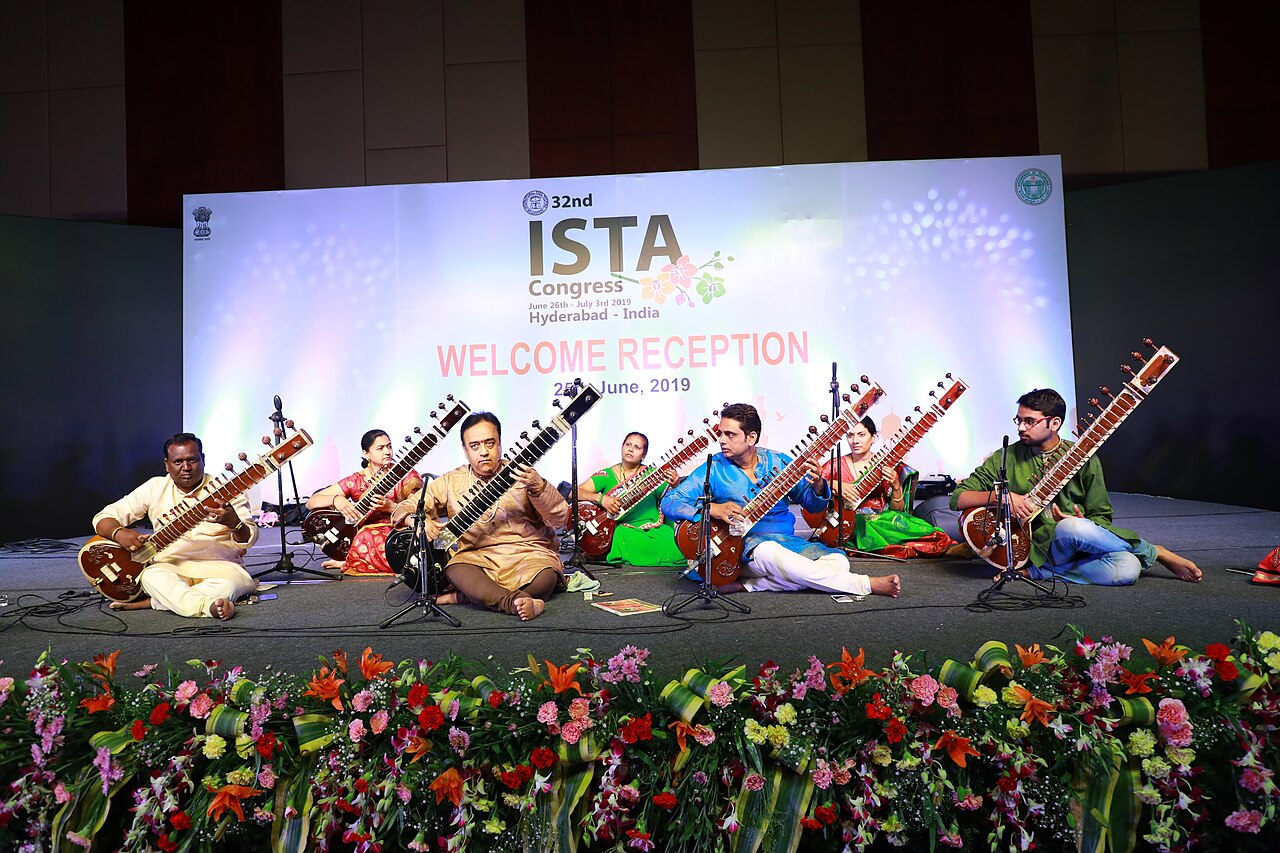
Ornaments on Different Instruments: Variations in Expressionजबकि मौलिक अलंकार वाद्य यंत्रों में सामान्य हैं, उनका निष्पादन और विशेषता दृष्टिकोण भिन्न हैं। सितार पर, मीड़ फ्रेटबोर्ड पर उँगली स्लाइडिंग के माध्यम से निष्पादित होता है, और सहानुभूतिपूर्ण चिकारी तार गूँजते हैं, एक विशिष्ट ध्वनि गुणवत्ता बनाते हैं।
अंग्रेज़ी में पढ़ें · Read in English
While the fundamental ornaments are common across instruments, their execution and characteristic approaches vary. On the sitar, meend is executed through finger sliding on the fingerboard, and the sympathetic chikari strings resonate, creating a distinctive sonic quality. On the sarod, where there is no sympathetic string system, meend is created through pure bending of the main strings, creating a slightly different tonal quality. On wind instruments like the bansuri (flute), ornaments are created through finger technique and breath control. Meend is produced through subtle pitch variation via finger holes and breath modulation. Gamak is achieved through rapid finger trills. On stringed instruments like the sarangi (bowed), ornaments are created through sophisticated bow control combined with finger work. The bowing of sarangi allows for extremely subtle expression of ornaments, making it particularly suited for delicate, introspective raags. In vocal music, ornaments are created through purely physiological means—throat control, breath management, and pitch manipulation. Vocal ornaments have a purity and directness that instrumental ornaments, even when sophisticated, cannot quite match. Each instrument, through its unique construction and physics, brings distinct qualities to the ornament vocabulary. A meend on sitar has a different quality than a meend on voice, not because of technical difference but because of the instrument's inherent sonic characteristics. Master musicians understand these instrument-specific qualities and use them to maximum artistic effect.
अलंकार की पदानुक्रम और रणनीतिक प्लेसमेंट
The Hierarchy and Strategic Placement of Ornamentsसभी अलंकार महत्व या उपयोग की आवृत्ति में समान नहीं हैं। कुछ मौलिक हैं और लगभग हर राग प्रदर्शन में नियमित रूप से दिखाई देते हैं। गमक भी आम है लेकिन विशिष्ट राग संदर्भों की आवश्यकता है। अधिक विदेशी अलंकार जैसे जटिल मुड़की अनुक्रम या उन्नत गिटकीरी पैटर्न कम बार दिखाई देते हैं, आमतौर पर विशिष्ट राग संदर्भों में या तकनीकी कौशल प्रदर्शन के लिए डिज़ाइन किए गए अनुच्छेदों में।
अंग्रेज़ी में पढ़ें · Read in English
Not all ornaments are equal in importance or frequency of use. Some are fundamental and appear regularly; others are used sparingly for special effect. Meend and khatka are so fundamental that they appear multiple times in almost every raag performance. Gamak is also common but requires specific raag contexts. More exotic ornaments like complex murki sequences or advanced gitkiri patterns appear less frequently, typically in specific raag contexts or in passages designed to showcase technical virtuosity. The strategic placement of ornaments creates artistic structure. A performer might hold back from using ornaments early in a raag performance, allowing the raag to establish itself with relative simplicity. As the performance progresses, ornaments gradually increase in frequency and sophistication, creating a sense of development and increasing energy. Conversely, a sudden reduction in ornamental activity can create a moment of calm or introspection—the musical equivalent of taking a breath. The greatest classical musicians understand these larger structures of ornamental usage. They deploy ornaments not constantly but strategically, understanding that the absence of ornaments—pure, unadorned notes—can be as powerful as ornamental elaboration. The contrast between highly ornamental passages and simpler, more direct passages creates the musical drama that captivates audiences. Additionally, different raags have traditional associations with specific ornaments. Devotional raags like Bhairav typically feature prominent meend and gamak, creating intensity and spiritual fervor. Romantic raags like Yaman favor more delicate ornaments like kan and subtle andolan. Learning these raag-ornament associations is part of the classical music education that creates musicians who understand not just technique but tradition.
अलंकार सीखना: क्रमबद्ध महारत
Learning Ornaments: Progressive Masteryअलंकार की सीख आमतौर पर एक प्रगति का अनुसरण करती है। शुरुआती सबसे मौलिक अलंकार से शुरू करते हैं—मीड़ और खटका—धीरे-धीरे और सावधानी से निष्पादित, सटीकता और स्वरगत गुणवत्ता पर ध्यान केंद्रित करते हैं।
अंग्रेज़ी में पढ़ें · Read in English
The learning of ornaments typically follows a progression. Beginners start with the most fundamental ornaments—meend and khatka—executed slowly and carefully, focusing on accuracy and tonal quality. A student might spend weeks or months practicing a single meend, varying its speed and character, ensuring it sounds pure and intentional rather than accidental or sloppy. Intermediate students learn to execute ornaments at normal tempos, in the context of actual raags and compositions. They study how master musicians use specific ornaments and begin to develop understanding of raag-ornament associations. Advanced students develop the ability to execute ornaments extemporaneously, improvising ornamental variations while maintaining raag integrity. They learn to balance ornamental elaboration with restraint, understanding that not every note needs ornamentation. The development of ornamental sensitivity often happens through deep listening to recorded performances and live concerts. A student might identify a particular meend in a recording, rewind, listen multiple times, and try to understand how it was executed, what made it effective, how it contributed to the larger musical context. This analytical listening, combined with practical execution, gradually builds the ornamental vocabulary. Throughout the learning process, teachers emphasize that ornaments are not technical tricks but vehicles for emotional and artistic expression. A meend executed without understanding its emotional function is merely mechanical finger movement; a meend executed with understanding of what it communicates becomes a vehicle for genuine musical expression. This is why great teachers spend significant time discussing not just how to execute ornaments but when and why to use them.
अलंकार और भावना: गहरा उद्देश्य
Ornaments and Emotion: The Deeper Purposeसबसे गहरे स्तर पर, अलंकार भावना और सौंदर्यात्मक अनुभव को संवाद करने के लिए मौजूद हैं। प्रत्येक अलंकार के पास जो संगीतकार 'रस' कहते हैं—एक भावनात्मक या सौंदर्यात्मक गुणवत्ता। मीड़ प्रवाह, यात्रा, लालसा, और सुगम संक्रमण को संवाद करता है।
अंग्रेज़ी में पढ़ें · Read in English
At the deepest level, ornaments exist to communicate emotion and aesthetic experience. Each ornament has what musicians call a 'rasa'—an emotional or aesthetic quality. Meend communicates flow, journey, longing, and smooth transition. It's the ornament of connection and continuity. Gamak communicates power, intensity, urgency, and emotional assertion. It's the ornament of passion and force. Khatka communicates punctuation, surprise, and structural clarity. Kan communicates delicacy and grace, while murki communicates texture and embellishment. When musicians practice ornaments, they are ultimately training themselves to be vehicles for these emotional and aesthetic qualities. Over years of practice, the connection between the technical execution and the emotional communication becomes so natural that audiences don't consciously hear the technique—they simply feel the emotion. This is the goal of all classical training: to make the technical so transparent that it serves the music rather than calling attention to itself. The ornaments that audiences remember most are not those executed with the most technical brilliance but those executed with such musical sensitivity that they seem to express something ineffable—something that words cannot capture but that the ornament conveys perfectly. These moments, when a performer executes an ornament so perfectly that audiences lose themselves in the music, represent the highest achievement of classical music performance. The ornament has served its true purpose: not to display the musician's technical prowess but to communicate something profound about the human experience of music and emotion.
परिचय
Identity- Epithet
- स्वरों को सजाने वाली तकनीकें जो संगीत को जीवंत करती हैं · Techniques that adorn notes and bring music to life
श्रवण-कक्ष · The Listening Room
इस कहानी के वीडियो
सभी अलंकार समझाए गए
सितार कान ज़मज़ामा कृंतन
कहानी-नमूना
The Story Specimen| शीर्षक | अलंकार: भारतीय संगीत के गहने · Ornaments: The Jewelry of Indian Music |
|---|---|
| प्रकाशित | 31 March 2026 — admin |
और कहानियाँ
More Stories from the Atlas

साझा कीजिए · Share this Plate