कहानियाँ विंग · कहानी · Music Theory
खमाज थाट: रोमांटिक रात — प्रेम और आकांक्षा के गीत
Khamaj Thaat: The Romantic Night — Songs of Love and Longing
एक समतल नोट दुनिया को नरम करता है — फिल्म, ग़ज़ल, और अंतरंग मध्यरात्रि बातचीत का थाट बनाता है।
प्रकाशित31 March 2026 पाठ७ मिनट का पाठ
आमुख
बिलावल स्पष्ट दिन है और कल्याण सुनहरी संध्या है, तो खमाज गहरी रात है—वह पल जब दुनिया नरम हो जाती है। खमाज थाट की विशिष्ट विशेषता एक एकल परिवर्तन है: सातवां नोट (नी) कोमल बन जाता है।
नरमाई: जब रोमांस पैमाने में प्रवेश करता है
The Softening: When Romance Enters the Scaleबिलावल स्पष्ट दिन है और कल्याण सुनहरी संध्या है, तो खमाज गहरी रात है—वह पल जब दुनिया नरम हो जाती है। खमाज थाट की विशिष्ट विशेषता एक एकल परिवर्तन है: सातवां नोट (नी) कोमल बन जाता है। 'खमाज' शब्द का फारसी मूल है और इसका चरित्र ईस्लामिक संगीत परंपरा, विशेष रूप से गज़ल कला से प्रभावित है। खमाज वह पैमाना है जो शास्त्रीय संगीत और पेरो-इस्लामिक संभावनाओं के बीच एक पुल है।
अंग्रेज़ी में पढ़ें · Read in English
If Bilawal is the clear daylight and Kalyan is the golden evening, then Khamaj is the deepening night — the moment when the world softens, when defenses lower, and when the heart speaks more freely. The defining characteristic of the Khamaj thaat is a single alteration: the seventh note (Ni) becomes komal (flattened, lowered). This single change — from Bilawal's Ni to Khamaj's Komal Ni — creates a world where sweetness replaces clarity, where intimacy replaces grandeur. The word 'Khamaj' itself has Persian origins (from 'Khame' meaning 'the fifth'), and its character is distinctly influenced by Islamic musical traditions, particularly the art of Ghazal. This thaat is the bridge between the purely classical world of ancient Sanskrit traditions and the Indo-Islamic synthesis that shaped medieval and modern Indian music. In the universe of Hindustani classical music, Khamaj holds a special place: it is the thaat most beloved by common people, the thaat of film songs, the thaat of romantic evenings, the thaat of longing and yearning. While Bilawal is technically 'purer' and more fundamental, Khamaj is more emotionally immediate. When a listener hears Khamaj, they don't need years of training to recognize its character — they instantly feel the warmth, the intimacy, the romantic tension. The komal Ni is the key that unlocks this emotional directness. It removes the bright, almost assertive quality of the natural seventh and replaces it with a softer, more questioning sound. This creates a yearning quality that is unique among the thaats. Musicians describe komal Ni as 'the note that asks for more' — it never fully resolves, never fully satisfies, always leaves the listener wanting just a bit more. This is why Khamaj is the thaat of classical romantic poetry set to music, of ghazals that speak of separation and longing, of film songs that capture the ache of love.
राग खमाज: फिल्म और गज़ल की प्रिय
Raga Khamaj: The Beloved of Film and Ghazal Traditionयदि एक राग है जो हिंदी सिनेमा की रोमांटिक स्वर्ण युग को परिभाषित करता है, तो यह खमाज है। 'जब कोई बात बिगड़ जाए' से सुनें, और आप खमाज की संपूर्ण रोमांटिक महिमा सुनेंगे। गज़ल परंपरा में, खमाज अपना सबसे सही अभिव्यक्ति पाता है। भावना को सीधे संगीत के माध्यम से व्यक्त करने का यह तरीका बंदिशों, फिल्मों और लोकप्रिय संगीत का दिल है।
अंग्रेज़ी में पढ़ें · Read in English
If there is one raag that defines the sound of Hindi cinema's romantic golden age, it is Khamaj. This raag — with its emphasis on the upper tetrachord (Pa, Dha, Komal Ni, Sa) and its characteristic swing in the lower notes (Re and Ga) — became the default scale for expressing romantic longing in the 1950s and 1960s. Listen to 'Jab Koi Baat Bigad Jaye' from the 1957 film 'Ek Thi Ladki,' and you will hear Khamaj in its full romantic glory. The raag creates a space where a male voice can express vulnerability, where a female voice can express desire, where two voices can meet in a space of mutual longing. The character of Raga Khamaj is evening to night — typically performed from 6 PM onwards, though it can extend into the late night hours. The raag has a natural fluidity, a conversational quality, as if two lovers are speaking to each other across the darkness. The traditional performance practice emphasizes the movements from Dha to Komal Ni — that falling movement that captures the sensation of a heart dropping, of love overcoming rational thought. In the ghazal tradition, Khamaj found its perfect expression. The ghazal, as a poetic form, is built on the same principle as Khamaj: each couplet stands alone but connects to others, creating a web of related meanings and emotions. When a great ghazal singer like Ustad Nusrat Fateh Ali Khan or Abida Parveen performs raag Khamaj, they are not merely singing notes — they are using the raag as a mirror for the complex emotional landscape of the ghazal text. 'Lag Jaa Gale' — that immortal song from 'Woh Kaun Thi' — though technically in Yaman, carries strong Khamaj influences in its emotional color, particularly in how the lower notes are ornamented. This demonstrates the fluid boundaries between raags in film music: composers often drew from multiple raag traditions to create emotionally precise soundtracks. Khamaj in film music reached its apex with composers like Madan Mohan, who used the raag's natural melancholic warmth to express some of Hindi cinema's deepest romantic sentiments. Songs like 'Chali Aa Raat Bhar Sajna' and 'Kahin Deep Jale Kahin Diye Bujhe' showcase how Khamaj can express not just romance, but the full complexity of love — longing, separation, reunion, and eternal connection.
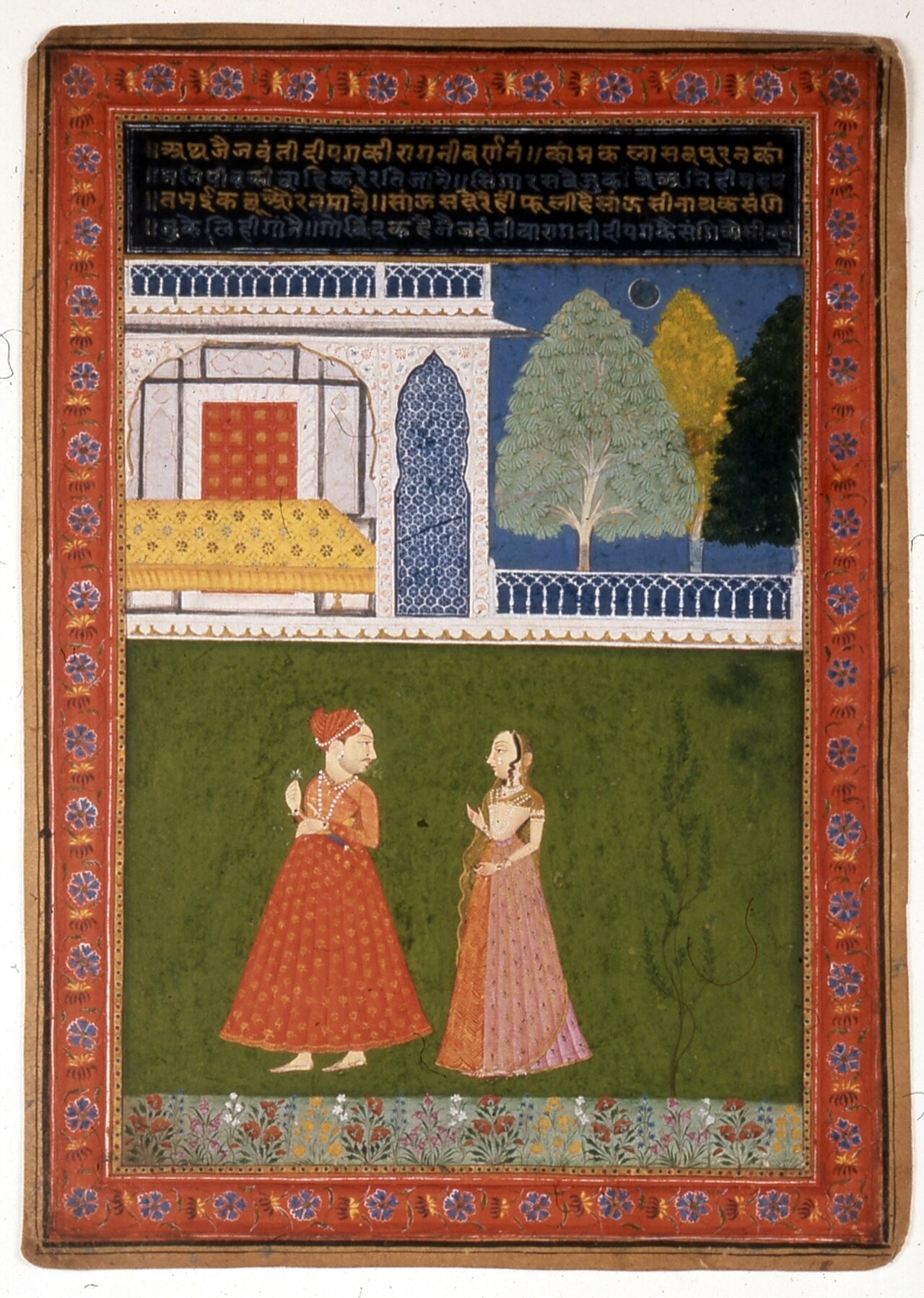
खमाज परिवार: देश, तिलक कामोद, झिंझोटी
The Khamaj Family: Desh, Tilak Kamod, Jhinjhoti, and the People's Raagsखमाज थाट देश, तिलक कामोद, झिंझोटी जैसे राग का परिवार देता है। ये राग केवल प्रदर्शन कक्ष तक सीमित नहीं हैं—वे लोगों के घरों में गाए जाते हैं, सड़कों पर, हर जगह जहाँ भारत गाता है। राग दिन के दौरान विभिन्न समयों में प्रदर्शित किए जाते हैं, हमेशा एक उत्सव या आंतरिक संदर्भ के साथ।
अंग्रेज़ी में पढ़ें · Read in English
The Khamaj thaat gives birth to a remarkable family of raags that have become woven into the fabric of Indian popular consciousness. These are not raags confined to the concert hall — they are raags that people sing in their homes, that taxi drivers hum, that children learn as lullabies. Raga Desh is perhaps the most accessible — its name means 'nation' or 'country,' and indeed, it has served as the soundtrack to the Indian experience for generations. Desh emphasizes the lower tetrachord (Sa-Re-Ga-Ma) with a characteristic forward-leaning energy. It is traditionally a daytime raag, performed in the early afternoon, and has a celebratory, almost folk-like character despite its classical pedigree. In Hindi film music, Desh provided the foundation for some of the most iconic patriotic and celebratory songs. Raga Tilak Kamod is another jewel of the Khamaj family — named after the forehead mark (tilak) worn during festive occasions, this raag is traditionally performed in the late morning or early afternoon, and carries a festive, almost playful character. The emphasis on the upper register (particularly Dha and Komal Ni) gives it a soaring quality that is both joyful and romantic. This raag has been extensively used in film music for celebration and wedding-related songs. Jhinjhoti is the evening expression of the Khamaj family — more introspective than Desh, more intimate than Tilak Kamod. This raag emphasizes the swing between lower and upper registers, creating a conversational quality. The name itself suggests bells or the tinkling sound of jewelry, and indeed, the raag has a delicate, almost dancing quality. Raga Khamaj itself, alongside these family members, demonstrates the principle that the most profound raags are those most loved by ordinary people. While classical ragas like Darbari Kanada or Bhairav represent the heights of technical refinement, the raags of the Khamaj family represent the heights of emotional accessibility. They prove that popularity and profundity are not mutually exclusive — a raag can be both deeply moving and widely cherished.
खमाज महत्वपूर्ण क्यों है: भारतीय रोमांस की आत्मा
Why Khamaj Matters: The Soul of Indian Romanceखमाज का महत्व इसके तकनीकी गुणों के परे है। खमाज भारतीय संगीत संवेदनशीलता में कुछ मौलिक प्रतिनिधित्व करता है: समझ कि संगीत अमूर्त बौद्धिक व्यायाम नहीं है बल्कि मानव हृदय की सीधी अभिव्यक्ति है। यह व्यक्तिगत संयोग, प्रेम, और अंतरंग मानव अनुभव का पैमाना है।
अंग्रेज़ी में पढ़ें · Read in English
The significance of Khamaj extends far beyond its technical musical properties or its historical importance. Khamaj represents something fundamental about the Indian musical sensibility: the understanding that music is not an abstract intellectual exercise, but a direct expression of the human heart. When you study Bilawal, you study the foundation. When you study Kalyan, you study the grand romantic gesture. But when you study Khamaj, you study the everyday miracle of human connection. The komal Ni — that single flattened note — is the most emotionally direct of all scale degrees. It doesn't ask for interpretation or lengthy analysis. It simply creates a feeling of wanting, of reaching, of almost but not quite. This is why Khamaj has been so important to film music: cinema, more than any other art form, demands emotional immediacy. A film score cannot afford to be obscure or require scholarly understanding. It must hit the heart directly, and Khamaj, with its yearning komal Ni, does exactly that. In the broader context of Indian musical evolution, Khamaj also represents the fusion of Indian classical traditions with the emotional vocabulary of Perso-Islamic music. The ghazal, that supreme art form of emotional expression, found in Khamaj a perfect musical mirror. When the boundaries between classical concert music and popular music became blurred in the 20th century, it was largely through the vehicle of Khamaj raags and their film music adaptations. The raags of the Khamaj thaat are also profoundly democratic. Unlike raags that require specialized knowledge or specific time contexts, Khamaj raags can be appreciated and performed by anyone with a musical inclination. This democratization of classical music — making it accessible to the masses without diminishing its artistic value — is one of Khamaj's greatest gifts to Indian culture. When you listen to a Khamaj raag, whether in a classical concert or a film song, you are hearing music that speaks to a universal human experience: the experience of longing, of love, of connection across the space between two hearts. This is why Khamaj has endured for centuries and continues to be performed with passion and sincerity by musicians of all levels.
परिचय
IdentityEpithet
एक समतल नोट दुनिया को नरम करता है — फिल्म, ग़ज़ल, और अंतरंग मध्यरात्रि बातचीत का थाट बनाता है।
One flattened note softens the world — creating the thaat of film, ghazal, and intimate midnight conversations.
कहानी-नमूना
The Story Specimen| शीर्षक | खमाज थाट: रोमांटिक रात — प्रेम और आकांक्षा के गीत · Khamaj Thaat: The Romantic Night — Songs of Love and Longing |
|---|---|
| श्रेणी | Music Theory |
| प्रकार | विशेष लेख |
| पाठ-समय | ७ मिनट का पाठ |
| प्रकाशित | 31 March 2026 — admin |
| टैग | thaat · khamaj · raga-khamaj · film_music · ghazal · hindustani_classical · love_songs |
इस कहानी में
In This Story · The Cast & Its Platesकहानी में आए नामों के अटलस में अपने पन्ने हैं — यहीं से यात्रा जारी रखिए।
राग-सूत्र · Raags
विधाएँ-सूत्र · Vidhas
और कहानियाँ
More Stories from the Atlas
साझा कीजिए · Share this Plate