गीत विंग · गीत-पट्टिका · Song Plate
उड़ते हुए पंछी
Udte Hue Panchhi
'उड़ते हुए पंछी कौन इनको बताये?' — संजोग का सबसे यादगार युगल, जो सुरैया को नूर मोहम्मद चार्ली के साथ जोड़ता है।
भावदार्शनिक · रोमांटिक
भाषाhindi गतिमध्यम स्वरूपयुगल
श्रेय
The Creditsसूत्र-वाक्य · The Hook
सूत्र-वाक्य
'उड़ते हुए पंछी कौन इनको बताये?' — संजोग का सबसे यादगार युगल, जो सुरैया को नूर मोहम्मद चार्ली के साथ जोड़ता है।
In English'Who can tell where the flying birds will go?' — the best-remembered duet of Sanjog, pairing Suraiya with Noor Mohammed Charlie.
पट्टिका-लेख
The Monographपरिचय Overview
'उड़ते हुए पंछी' (पूरा शीर्षक 'उड़ते हुए पंछी कौन इनको बताये') संजोग (1943) के सबसे अधिक उल्लिखित गीतों में से एक है — किशोरी सुरैया और हास्य-गायक नूर मोहम्मद चार्ली का एक युगल। उड़ते पक्षियों की छवि इस गीत को एक अन्यथा हास्य फ़िल्म के भीतर एक कोमल, चिंतनशील रंग देती है, और यह सुरैया की एक प्रायः उल्लिखित आरंभिक रिकॉर्डिंग है।
अंग्रेज़ी में पढ़ें · Read in English
'Udte Hue Panchhi' (full title 'Udte Hue Panchhi Kaun Inko Bataye') is among the most-cited songs of Sanjog (1943), a duet by the teenaged Suraiya and the comedian-singer Noor Mohammed Charlie. The flying-birds image gives the number a gentle, reflective cast within an otherwise comic film, and it is a frequently noted early Suraiya recording.
संगीत The Music
नौशाद उड़ते पक्षियों की कल्पना को एक बहती, मध्यम-गति की धुन पर बाँधते हैं जो दोनों स्वरों को बारी-बारी से और जवाबी ढंग से गाने देती है। यह कॉमेडी के लिए बनी एक संगीत-पट्टी में अधिक धुन-स्मरणीय टुकड़ों में से एक है, जो नौशाद के शास्त्रीय-आधारित दशक-मध्य काम से पहले की सुलभ 1940-दशकीय शैली में लिखा गया है।
अंग्रेज़ी में पढ़ें · Read in English
Naushad sets the birds-in-flight conceit to a flowing, mid-tempo melody that lets the two voices alternate and answer. It is one of the more melodically memorable pieces in a score otherwise built for comedy, written in the accessible early-1940s style that preceded Naushad's classically grounded mid-decade work.
काव्य The Poetry
पूरा शीर्षक — 'उड़ते हुए पंछी कौन इन्हें बताए' — गीत को एक ऐसे प्रश्न के रूप में रखता है जिसका कोई उत्तर नहीं, जो डी.एन. माधोक के अधिक चिंतनशील कार्य का दार्शनिक हस्ताक्षर है। उड़ता पंछी भारतीय शास्त्रीय साहित्य में मुक्त आत्मा का प्रतीक है: सूफ़ी परम्परा में (रूमी और अत्तार की 'रूह' की छवियाँ) पक्षी अपने उद्गम और गंतव्य को खोजता है; लोक-काव्य में प्रवासी पक्षी विरह में प्रेमी का दूत है; उपनिषदों में एक ही शाखा पर बैठे दो पक्षी आत्मा और साक्षी का प्रतीक हैं। माधोक ने इन सभी अनुगूंजों को सचेत रखा हो या नहीं — गीत उन पर खुलता है। 'कौन इन्हें बताए?' अनिश्चितता को पक्षियों पर प्रक्षेपित करता है: यह वास्तव में वक्ता की अपनी असमंजस है। नौशाद की प्रवाहमान, मध्यम-गति की धुन और दो एकांतर आवाज़ें — सुरैया और नूर मोहम्मद चार्ली — एक कोमल, वार्तालापी द्विता रचती हैं।
अंग्रेज़ी में पढ़ें · Read in English
The full title — 'Udte Hue Panchhi Kaun Inko Bataye' (Flying birds — who will tell them?) — frames the lyric as a question without an answer, which is the philosophical signature of D.N. Madhok's more reflective work. The flying bird (panchhi) is a classical Indian symbol for the free soul and the unmoored self: in the Sufi tradition (especially the Ruhr/Quddus imagery from Rumi and Attar), the bird seeks its origin and destination; in the folk tradition (the migratory bird of separation poetry), the bird carries the message of the lover across distances; in the Upanishadic tradition, two birds on the same branch symbolize the self and the witness. Madhok may or may not have held all of these resonances consciously, but the lyric opens onto them. 'Kaun inko bataye' (who will tell them?) projects the question onto the birds as a displaced address to the speaker's own uncertainty. Naushad's flowing, mid-tempo melody and the two alternating voices — Suraiya and Noor Mohammed Charlie — create a gentle, conversational duality that suits the song's reflective mood without overloading it.
कहानी The Story
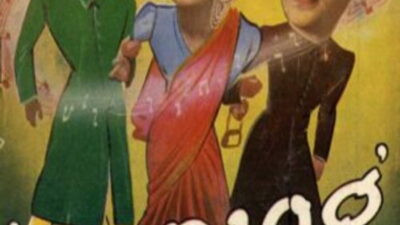
'संजोग' (1943) का निर्देशन ए.आर. कारदार ने अपने कारदार प्रोडक्शंस बैनर के अंतर्गत किया, नौशाद संगीत निर्देशक थे — हिंदी सिनेमा की सबसे उत्पादक निर्देशक-संगीतकार साझेदारियों में से एक की शुरुआत, जो 'गीत' (1944), 'जीवन' (1944), 'पहले आप' (1944) और 'दिल्लगी' (1949) तक चली। फ़िल्म में मेहताब (नायिका) और हास्य-अभिनेता नूर मोहम्मद चार्ली (सूत्रों के अनुसार 'प्रभावशाली मुख्य भूमिका' में) थे, सुरैया ने मेहताब के लिए महिला पार्श्वगान किया। ग़ुलाम मोहम्मद, जो बाद में स्वयं एक संगीत निर्देशक बने ('मिर्ज़ा ग़ालिब', 1954), इसी फ़िल्म से नौशाद के सहायक के रूप में अपनी आठ-वर्षीय सेवा आरम्भ की — नौशाद की जीवनियों में दर्ज तथ्य।
अंग्रेज़ी में पढ़ें · Read in English
Sanjog (1943) was directed by A.R. Kardar under his Kardar Productions banner, with Naushad as music director — the beginning of one of Hindi cinema's most productive director-composer partnerships, which continued through films including Geet (1944), Jeevan (1944), Pehle Aap (1944), and Dillagi (1949). The film starred Mehtab (as the heroine) and comedian Noor Mohammed Charlie (in what the sources describe as a 'dominating leading role'), with Suraiya providing the female playback voice for Mehtab. Ghulam Mohammed, who later became a music director in his own right (Mirza Ghalib, 1954), began his eight-year assistantship under Naushad on this film — a fact documented in Naushad biographies. 'Udte Hue Panchhi' is among the film's most cited songs, praised in retrospectives for its melodic memorability and for the chemistry between the two vocal characters.
विरासत The Legacy
'संजोग' (1943) नौशाद-कारदार सहयोग के दर्ज प्रारम्भिक अध्याय से संबंधित है, जिसे नौशाद के करियर के प्रायः हर विवरण में 'रत्तन' (1944) की नींव रखने वाले काल के रूप में उद्धृत किया जाता है — वह फ़िल्म जिसने नौशाद को हिंदी सिनेमा का सर्वोच्च-पारिश्रमिक संगीत निर्देशक बनाया। ग़ुलाम मोहम्मद का 'संजोग' पर सहायकता आरम्भ करना फ़िल्म को एक अतिरिक्त ऐतिहासिक पाद-टिप्पणी देता है। 'उड़ते हुए पंछी' पूर्वावलोकन वृत्तांतों में 'संजोग' के सर्वाधिक चर्चित गीत के रूप में है। सुरैया का यहाँ पार्श्वगान — एक प्रमुख अभिनेत्री के लिए युवावस्था में गाना — उनके पार्श्वगायिका से पर्दे की अभिनेत्री बनने की दर्ज यात्रा का हिस्सा है।
अंग्रेज़ी में पढ़ें · Read in English
Sanjog (1943) belongs to the documented early chapter of the Naushad-Kardar collaboration, which is cited in virtually every account of Naushad's career as the period that laid the groundwork for Rattan (1944) — the film that made Naushad the highest-paid music director in Hindi cinema. Ghulam Mohammed's commencement of his assistantship on Sanjog gives the film a further historical footnote: it is the beginning of an eight-year collaboration that produced some of the finest studio-era music. 'Udte Hue Panchhi' is the most discussed song from the Sanjog soundtrack in retrospective accounts, valued for its integration of philosophical lyric, flowing melody, and dual vocal characterization. Suraiya's playback work here — singing as a young child for a leading actress — is part of the documented arc of her rise from playback singer to screen actress.
वर्गीकरण
Classification- Tempo
- Medium
Genre
अन्य विवरण
More Details- https://en.wikipedia.org/wiki/Sanjog_(1943_film)
- https://madhulikaliddle.com/2024/08/13/sanjog-1943/
- https://en.wikipedia.org/wiki/Naushad
- https://www.songsofyore.com/naushads-early-best-songs/
- https://en.wikipedia.org/wiki/Suraiya
References
रोचक तथ्य
Margin Notesनौशाद और ए.आर. कारदार के सांजोग (1943) पर सहयोग ने हिंदी सिनेमा की सबसे प्रशंसित निर्देशक-संगीतकार साझेदारियों में से एक की शुरुआत की, जिसने रतन (1944), दिल्लगी (1949) और अन्य प्रमुख हिट फ़िल्में दीं।
अंग्रेज़ी में पढ़ें · Read in English
Naushad and A.R. Kardar's collaboration on Sanjog (1943) launched one of Hindi cinema's most celebrated director-composer partnerships, producing Rattan (1944), Dillagi (1949), and other major hits.
ग़ुलाम मोहम्मद, जिन्होंने बाद में मिर्ज़ा ग़ालिब (1954) का प्रतिष्ठित संगीत रचा, ने सांजोग (1943) के साउंडट्रैक पर नौशाद के अधीन अपनी आठ वर्ष लंबी सहायक की भूमिका की शुरुआत की थी।
अंग्रेज़ी में पढ़ें · Read in English
Ghulam Mohammed, who later composed the iconic score for Mirza Ghalib (1954), began his eight-year assistantship under Naushad on the Sanjog (1943) soundtrack.
सुरैया ने सांजोग (1943) में अभिनेत्री मेहताब के लिए महिला पार्श्वस्वर दिया था; उस समय, सुरैया मुख्यतः एक पार्श्वगायिका के रूप में ही जानी जाती थीं, न कि पर्दा अभिनेत्री के रूप में।
अंग्रेज़ी में पढ़ें · Read in English
Suraiya sang the female playback voice for actress Mehtab in Sanjog (1943); at the time, Suraiya was still primarily known as a playback singer rather than a screen actress.
अगले वर्ष की रतन (1944), जिसका संगीत भी नौशाद ने रचा था और निर्देशन कारदार ने किया था, 1944 की सबसे अधिक कमाई करने वाली भारतीय फ़िल्म बनी और इसने नौशाद को एक सितारा संगीत निर्देशक में बदल दिया।
अंग्रेज़ी में पढ़ें · Read in English
The following year's Rattan (1944), also composed by Naushad and directed by Kardar, became the highest-grossing Indian film of 1944 and transformed Naushad into a star music director.
नमूना-पट्टी
The Specimen Table| शीर्षक | उड़ते हुए पंछी · Udte Hue Panchhi |
|---|---|
| फ़िल्म | संजोग · 1943 |
| वर्ष · युग | 1943 |
| गायक | Noor Mohammad Charlie, Suraiya |
| गीतकार | D. N. Madhok |
| संगीतकार | Naushad |
| स्वरूप | युगल |
| गति | मध्यम |
| भाषा | hindi |
| भाव | दार्शनिक · रोमांटिक |
| लोकप्रियता | Popular |
| बोल-स्थिति | केवल झलक |
जुड़े हुए पन्ने
Connected Plates · The Graph Made Visibleअटलस में कोई पन्ना अकेला नहीं — इस गीत से जुड़े गीत, कलाकार, फ़िल्म, राग-ताल-विधा, सब यहाँ से खुलते हैं।
मिलते-जुलते गीत · Related Songs
कलाकार · The Artists
फ़िल्म · The Film
साझा कीजिए · Share this Plate