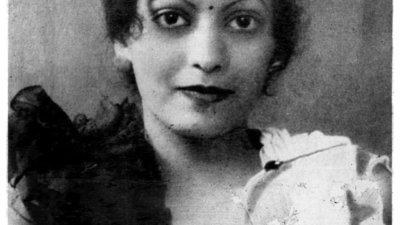
गीत विंग · गीत-पट्टिका · Song Plate
ऐ जान अपने होंठों के फाटक खोलिये
Ae Jaan Apne Honton Ke Phaatak Kholiye
फ़िल्म का हास्य-गीत — नूर मोहम्मद चार्ली प्रेम-शब्दावली के सबसे ऊँचे संबोधन को एक 'फाटक' से जोड़ देते हैं, और इसी टकराव से हँसी निकाल लाते हैं।
भावचुलबुला · रोमांटिक
भाषाhindi गतिमध्यम स्वरूपएकल पुरुष
श्रेय
The Creditsसूत्र-वाक्य · The Hook
सूत्र-वाक्य
फ़िल्म का हास्य-गीत — नूर मोहम्मद चार्ली प्रेम-शब्दावली के सबसे ऊँचे संबोधन को एक 'फाटक' से जोड़ देते हैं, और इसी टकराव से हँसी निकाल लाते हैं।
In EnglishThe film's comic turn — Noor Mohammad Charlie yoking the loftiest word in the love lexicon to a farmyard gate, and getting a laugh out of the collision.
पट्टिका-लेख
The Monographपरिचय Overview
'ग़ज़ल' (1945) का इकलौता खुले तौर पर हास्य गीत, जिसे नूर मोहम्मद चार्ली ने गाया — उस वर्ष हिंदी सिनेमा के सबसे लोकप्रिय हास्य-अभिनेता, जो इस फ़िल्म में लीला चिटणीस के सामने नायक थे। चुटकुला शीर्षक में ही बुना है: गायक अपनी प्रिया को 'ऐ जान' कहकर पुकारता है — उर्दू प्रेम-शब्दावली का सबसे उदात्त संबोधन — और फिर उससे होंठ नहीं, होंठों का 'फाटक' खोलने को कहता है। सूचीपत्रों में यह गीत संक्षिप्त रूप 'ऐ जान अपने होंटो के' के नाम से दर्ज है।
अंग्रेज़ी में पढ़ें · Read in English
The one openly comic number in Ghazal (1945), sung by Noor Mohammad Charlie, who was the reigning comedian of Hindi cinema in that year and played the film's hero opposite Leela Chitnis. The joke is built into the title: the singer addresses his beloved with 'ae jaan' — the most exalted vocative in the Urdu love lexicon — and then asks her to open not her lips but the phaatak, the gate, of her lips. Catalogues list the song in the shortened form 'Ae Jaan Apne Honto Ke'.
संगीत The Music
चालीस के दशक के मध्य के हास्य गीत बाक़ी संगीत से अलग विशिष्टियों पर लिखे जाते थे: धुन को शब्दों के रास्ते से हट जाना पड़ता है, क्योंकि असली माल शाब्दिक होता है। चार्ली गायक नहीं, अभिनेता-हास्यकार थे, और उनके विशेष गीतों की जो रीत बची है वह यह है — हल्की लय पर तेज़, बोलचाल से सटी पंक्ति, जिसकी बंदिश इस हिसाब से गढ़ी जाती थी कि हँसी कहाँ गिरनी है। इसे उर्दू की सबसे नफ़ीस काव्य-विधा के नाम पर बनी फ़िल्म के भीतर रखना ही इस विरोधाभास का मक़सद है। ज्ञान दत्त रणजीत मूवीटोन के स्टाफ़-संगीतकार रह चुके थे — 'संत तुलसीदास' (1939) और के. एल. सैगल वाली पंद्रह-गीतों की 'भक्त सूरदास' (1942) के रचयिता — और 1937 से 1965 के बीच उन्होंने लगभग 58 फ़िल्मों के लिए क़रीब 600 गीत लिखे। 1945 तक वे राजा मूवीटोन जैसे छोटे स्वतंत्र निर्माताओं के लिए स्वतंत्र रूप से काम कर रहे थे, और कुछ ही वर्षों में नौशाद, सी. रामचंद्र और एस. डी. बर्मन के आगमन ने उन्हें उसी उद्योग के हाशिये पर धकेल दिया जिसे बनाने में उनका हाथ था।
अंग्रेज़ी में पढ़ें · Read in English
Comic songs of the mid-forties were written to a different specification from the rest of a score: the melody has to stay out of the way of the diction, because the payload is verbal. Charlie was an actor-comedian rather than a singer, and the surviving practice for his special numbers was a brisk, speech-adjacent line over a light rhythm, with the phrasing shaped around where the laugh falls. Placing it inside a film named after the most refined of Urdu verse forms is the point of the contrast. Gyan Dutt had been Ranjit Movietone's house composer, the man behind Sant Tulsidas (1939) and the fifteen-song Bhakt Surdas (1942) with K. L. Saigal, and across 1937-1965 he wrote some 600 songs for around 58 films. By 1945 he was working freelance for small independents like Raja Movietone, and within a few years the arrival of Naushad, C. Ramchandra and S. D. Burman had pushed him to the margins of an industry he had helped build.
काव्य The Poetry
यह पंक्ति एक छोटी, सटीक पैरोडी है। 'जान' का अर्थ है प्राण, और संबोधन के रूप में यह वह शब्द है जो प्रेमी तब कहता है जब इससे कम कुछ काम न आए; 'होंठ' भी उसी ऊँचे स्तर की शब्दावली का हिस्सा है। 'फाटक' नहीं है। यह अहाते के दरवाज़े, रेलवे क्रॉसिंग या कारख़ाने के प्रवेश का शब्द है — पक्का नगरपालिका-सा, बिलकुल अकाव्यात्मक, और इसे बोलते ही आगे के दोनों शब्दों की हवा निकल जाती है। तरकीब उर्दू हास्य-कविता की मानक तरकीब है: शेर को ऊँची शैली में खड़ा करो और फिर ग़लत शब्दकोश के एक ही शब्द से उसे उड़ा दो। 'ग़ज़ल' नाम की फ़िल्म में यह चुटकुला ख़ुद विधा पर भी जा बैठता है।
अंग्रेज़ी में पढ़ें · Read in English
The line is a small, precise piece of parody. 'Jaan' means life, and as a vocative it is what a lover says when no lesser word will do; 'honth', lips, belongs to the same elevated register. 'Phaatak' does not. It is the word for the gate of a compound, a level crossing, a factory entrance — solidly municipal, entirely unpoetic, and impossible to say without deflating the two words in front of it. The technique is the standard one of Urdu comic verse: build a couplet in the high style and then detonate it with a single word from the wrong vocabulary. In a film called Ghazal, the joke also lands on the form itself.
कहानी The Story
'ग़ज़ल' का निर्माण और निर्देशन ज़हूर राजा ने अपनी ही राजा मूवीटोन के लिए किया — वह बंबई का बैनर जो उन्होंने 1943 में, ईस्टर्न पिक्चर्स में संपादक और सहायक के रूप में हुनर सीखने के बाद, खड़ा किया था। समकालीन विवरण इस फ़िल्म को हल्के हास्य-पुट वाली मुस्लिम सामाजिक फ़िल्म बताते हैं: 1945 के सबसे लोकप्रिय हास्य-अभिनेता नूर मोहम्मद चार्ली लीला चिटणीस के सामने नायक थे, जबकि राजा स्वयं राधारानी के साथ जोड़ी में थे। आठों गीत ज्ञान दत्त ने रचे, और चारों गीतकारों को सामूहिक श्रेय मिला है — किसी सूचीपत्र में गीतों का उनके बीच विभाजन दर्ज नहीं है। 1945 चार्ली के कैरियर का शिखर था — वह वर्ष जब वे जिस भी फ़िल्म में दिखते, उन्हें अपना एक विशेष हास्य गीत नियमित रूप से मिलता था — और 'ग़ज़ल' में वे कथानक के हाशिये से जुड़े हास्य-कलाकार नहीं, स्वयं नायक थे। यह कास्टिंग इस बात का सबसे साफ़ प्रमाण है कि राजा मूवीटोन ख़ुद को किस तरह की फ़िल्म बनाता हुआ समझ रहा था।
अंग्रेज़ी में पढ़ें · Read in English
Ghazal was produced and directed by Zahoor Raja for Raja Movietone, the Bombay banner he founded in 1943 after learning the craft as an editor and assistant at Eastern Pictures. Contemporary accounts describe the picture as a Muslim social with a light comedy touch: Noor Mohammad Charlie — the reigning screen comedian of 1945 — played hero opposite Leela Chitnis, while Raja himself was paired with Radharani. Gyan Dutt composed all eight songs, and the four lyricists are credited collectively, with no catalogue splitting the titles between them. 1945 was the peak of Charlie's career, the year in which he was regularly given a special comedy song of his own in whatever film he appeared in, and in Ghazal he was not the comic relief attached to the plot's margins but the hero himself. That casting is the clearest evidence of what kind of picture Raja Movietone thought it was making.
विरासत The Legacy
चार्ली का क़द अपने युग के बाद नहीं बचा: 1940 के दशक के मध्य में वे हिंदी सिनेमा के सबसे बड़े नामों में थे और आज उस दौर की लोकस्मृति से लगभग पूरी तरह ग़ायब हैं — कुछ इसलिए कि इस क़िस्म का हास्य वह पहली चीज़ है जिसे कोई भी प्रतिष्ठित सूची फेंक देती है, और कुछ इसलिए कि बँटवारे के बाद वे भी पाकिस्तान चले गए। यह गीत उनके सर्वश्रेष्ठ वर्ष के उन गिने-चुने विशेष गीतों में से एक है जिनका शीर्षक और श्रेय दोनों साथ बचे हैं, और इसी कारण यह उस विधा का उपयोगी नमूना है — स्टार हास्य-अभिनेता का विशेष गीत — जिसे 1940 के दशक के फ़िल्म संगीत के मानक इतिहास मुश्किल से ही स्वीकार करते हैं।
अंग्रेज़ी में पढ़ें · Read in English
Charlie's stature has not survived his era: he was among the biggest names in Hindi cinema in the mid-1940s and is now almost entirely absent from popular memory of it, partly because comedy of this kind is the first thing a canon discards and partly because he too left for Pakistan after Partition. This song is one of the few of his special numbers from his best year for which both a title and an attribution survive together, which makes it a useful specimen of a genre — the star comedian's set-piece song — that the standard histories of 1940s film music barely acknowledge.
वर्गीकरण
Classification- Tempo
- Medium
Genre
अन्य विवरण
More Details- https://www.hindigeetmala.net/movie/ghazal_1945.htm
- https://www.hindilyrics4u.com/movie/ghazal_1945.htm
- https://en.wikipedia.org/wiki/List_of_Hindi_films_of_1945
- https://en.wikipedia.org/wiki/Zahur_Raja
- https://en.wikipedia.org/wiki/Gyan_Dutt
- https://hamraaz.org/cineplot/zahoor-raja/index.html
- https://atulsongaday.me/2023/04/11/ae-jaan-apne-honthhon-ka-phaatak-to-kholiye/
- https://grokipedia.com/page/Noor_Mohammed_Charlie
References
रोचक तथ्य
Margin Notes'ग़ज़ल' में नूर मोहम्मद चार्ली को लीला चिटणीस के सामने नायक के रूप में लिया गया था, केवल हास्य-राहत के तौर पर नहीं — किसी हास्य-अभिनेता के लिए, अपनी प्रसिद्धि के शिखर पर भी, यह असामान्य पदोन्नति थी।
अंग्रेज़ी में पढ़ें · Read in English
Noor Mohammad Charlie was cast as the hero opposite Leela Chitnis in Ghazal, not merely as comic relief — an unusual promotion for a comedian even at the height of his fame.
इस गीत का शीर्षक दो रूपों में दर्ज है: सूचीपत्र इसे छोटा करके 'ऐ जान अपने होंटो के' लिखते हैं, जबकि पूरी दर्ज पंक्ति है 'ऐ जान अपने होंठों का फाटक तो खोलिये'।
अंग्रेज़ी में पढ़ें · Read in English
The song's title is recorded in two forms: the catalogues shorten it to 'Ae Jaan Apne Honto Ke', while the fuller documented line runs 'Ae Jaan Apne Honthhon Ka Phaatak To Kholiye'.
फ़िल्म के कलाकारों में रज़िया बानो भी थीं, जो गायिका-अभिनेत्री सुरैया की बहन थीं, और नूरजहाँ (सीनियर) — 'ज़ीनत' (1945) वाली मलिका-ए-तरन्नुम नूरजहाँ से अलग एक अभिनेत्री।
अंग्रेज़ी में पढ़ें · Read in English
The film's cast also included Razia Bano, a sister of the singer-actress Suraiya, and the senior Noor Jehan — an actress distinct from the Malika-e-Tarannum Noor Jehan of Zeenat (1945).
नमूना-पट्टी
The Specimen Table| शीर्षक | ऐ जान अपने होंठों के फाटक खोलिये · Ae Jaan Apne Honton Ke Phaatak Kholiye |
|---|---|
| फ़िल्म | ग़ज़ल · 1945 |
| वर्ष · युग | 1945 |
| गायक | Noor Mohammad Charlie |
| गीतकार | D. N. Madhok, Abid Gulrez, शांत अरोड़ा, ख़ावर ज़मान |
| संगीतकार | Gyan Dutt |
| स्वरूप | एकल पुरुष |
| गति | मध्यम |
| भाषा | hindi |
| भाव | चुलबुला · रोमांटिक |
| लोकप्रियता | Obscure |
| बोल-स्थिति | केवल झलक |
जुड़े हुए पन्ने
Connected Plates · The Graph Made Visibleअटलस में कोई पन्ना अकेला नहीं — इस गीत से जुड़े गीत, कलाकार, फ़िल्म, राग-ताल-विधा, सब यहाँ से खुलते हैं।
मिलते-जुलते गीत · Related Songs
कलाकार · The Artists
फ़िल्म · The Film
साझा कीजिए · Share this Plate