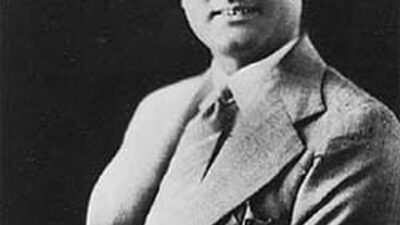
गीत विंग · गीत-पट्टिका · Song Plate
रुमझुम रुमझुम चाल तिहारी
Rumjhum Rumjhum Chaal Tihari
सहगल प्रिया की चाल को ध्वनि में चित्रित करते हैं — रुमझुम, रुमझुम — राग शंकरा में बँधा गति का एक चित्र।
भावउत्सव · चुलबुला · रोमांटिक
भाषाhindi गतिमध्यम स्वरूपएकल पुरुष
श्रेय
The Creditsसूत्र-वाक्य · The Hook
सूत्र-वाक्य
सहगल प्रिया की चाल को ध्वनि में चित्रित करते हैं — रुमझुम, रुमझुम — राग शंकरा में बँधा गति का एक चित्र।
In EnglishSaigal paints the beloved's gait in sound — rumjhum, rumjhum — a portrait of motion set to Raag Shankara.
पट्टिका-लेख
The Monographपरिचय Overview
'तानसेन' (1943) का सहगल का एकल गीत, खेमचंद प्रकाश द्वारा रचा गया और राग शंकरा में बँधा बताया जाता है। जहाँ फ़िल्म की राग-प्रस्तुतियाँ गंभीर हैं, वहीं यह हल्के क़दमों वाला है — महान दरबारी गायक पर बनी इस ऐतिहासिक संगीतमय फ़िल्म में सहगल के लिए खेमचंद प्रकाश के लेखन का हल्का, गेय पक्ष दिखाता है।
अंग्रेज़ी में पढ़ें · Read in English
A Saigal solo from Tansen (1943), composed by Khemchand Prakash and reported to be set in Raag Shankara. Light-footed where the film's raag-showpieces are grave, it shows the lighter, lyrical side of Khemchand Prakash's writing for Saigal in this landmark biographical musical about the legendary court singer.
संगीत The Music
खेमचंद प्रकाश राग शंकरा की उजली, खुली रूपरेखा का प्रयोग सुंदर गति के एक गीत के लिए करते हैं, तबला बोल के रुमझुम-रुमझुम को प्रतिबिम्बित करता है। फ़िल्म के केंद्रीय गीतों की ध्रुपद-गुरुता के सामने यह संगीतकार का विस्तार प्रदर्शन है — कि वही शास्त्रीय अनुशासन राग-व्याकरण छोड़े बिना एक उल्लासमय, रोमानी गीत भी दे सकता है।
अंग्रेज़ी में पढ़ें · Read in English
Khemchand Prakash uses Raag Shankara's bright, open contour for a song about graceful movement, the tabla mirroring the rumjhum-rumjhum of the lyric. Against the dhrupad weight of the film's centrepieces, this is the composer demonstrating range — that the same classical discipline could yield a buoyant, romantic number without abandoning raag grammar.
काव्य The Poetry
'रुमझुम रुमझुम' की उद्घाटन ध्वनि एक दृश्य-चित्र का काम करती है — यह शब्द पायलों की झनझनाहट जैसा लगता है और इसकी पुनरावृत्ति प्रिया की चाल की सम, सम्मोहक लय को दुहराती है। पण्डित इन्द्र चन्द्र ने 'तानसेन' (1943) के हल्के गीतों में ब्रज-मिश्रित भाषा का प्रयोग किया जो बोधगम्य भी थी और दरबारी शिष्टता से भी भरी थी। यह ध्वन्यात्मकता — जहाँ शब्द उसी को ध्वनित करता है जिसका वह वर्णन करता है — उत्तर भारतीय शास्त्रीय काव्य की पुरानी परम्परा है: ध्रुपद की बंदिशें इसी उपकरण को संजोती थीं, और ठुमरी ने इसे श्रृंगारिक धरातल तक फैलाया। राग शंकरा — उजला, खुले स्वभाव का संध्याकालीन राग — इस गीत की उल्लासमय मनोदशा को पुष्ट करता है। खेमचंद प्रकाश ने तबले की ठेका बोल की लय से इस प्रकार मिलाई कि ताल स्वयं रुमझुम की छवि की दूसरी परत बन जाती है। परिणाम एक ऐसा गीत है जिसमें रूप और अर्थ अभिन्न हैं — यह गति का वर्णन भी है और उसका अभिनय भी।
अंग्रेज़ी में पढ़ें · Read in English
The onomatopoeic opening, 'rumjhum rumjhum,' performs a visual portrait: the words sound like anklet-bells, and their repetition mimics the even, hypnotic rhythm of a beloved's walk. Pandit Indra Chandra, who wrote the lighter songs of the Tansen (1943) soundtrack alongside D.N. Madhok's graver classical texts, favored a Braj-inflected diction that kept the lyric accessible while retaining courtly decorum. This kind of sound-portrait — where a phrase imitates what it describes — belongs to a long tradition of aural imagery in North Indian classical poetry: dhrupad bandish texts employed such devices, and thumri lyrics extended the practice into romantic territory. The choice of Raag Shankara, a bright evening raag, reinforces the mood of playful admiration. Khemchand Prakash matched the tabla pattern to the text's rhythmic conceit so the percussion becomes a second layer of the rumjhum image. The result is a lyric-music fusion where form and content are inseparable — the song is both a description of graceful movement and an enactment of it.
कहानी The Story
'तानसेन' (1943) का निर्माण रणजीत मूवीटोन ने किया और निर्देशन जयंत देसाई ने — यह फ़िल्म 16वीं सदी के महान दरबारी संगीतज्ञ मियाँ तानसेन पर आधारित थी, जो अकबर के नवरत्नों में थे। के.एल. सहगल का चुनाव स्वाभाविक था — उनकी अनगढ़ आवाज़ और शास्त्रीय गरिमा ने उन्हें गायक-नायक की भूमिका के लिए अपरिहार्य बनाया, और यह भूमिका उनके करियर की सर्वश्रेष्ठ पहचान बनी। खेमचंद प्रकाश ने तेरह गीत बनाए, सभी शास्त्रीय रागों पर आधारित। 'सप्त सुरन तीन ग्राम' (जिसकी ध्रुपद प्रामाणिकता की अनिल बिस्वास ने प्रशंसा की) और 'दीया जलाओ' (राग दीपक) जैसी भारी रचनाओं के बीच 'रुमझुम रुमझुम' एक हल्का स्वर प्रस्तुत करता है — राग शंकरा की उल्लासभरी भूमि पर प्रिया की चाल से अभिभूत प्रेमी का रोमानी गीत। पण्डित इन्द्र और डी.एन. माधोक ने गीत-दायित्व बाँटा: माधोक ने गंभीर रचनाएँ संभालीं, इन्द्र ने अंतरंग और चुलबुले गीत लिखे। यह गीत उसी हल्के वर्ग में आता है — एक महान संगीतकार की जीवनगाथा के मध्य प्रेम की एक सहज-निश्चल झलक।
अंग्रेज़ी में पढ़ें · Read in English
Tansen (1943) was produced by Ranjit Movietone and directed by Jayant Desai, dramatizing the life of the legendary 16th-century court musician Mian Tansen — one of Akbar's nine gems. K.L. Saigal's casting was inspired: his natural voice and classical bearing made him the inevitable choice for a singer-hero, and the role became the defining screen performance of his career. Khemchand Prakash composed thirteen songs, all anchored in classical raags. Among the grander, dhrupad-weighted centrepieces — 'Sapt Suran Teen Gram' (praised by Anil Biswas for its dhrupad authenticity) and 'Diya Jalao' in Raag Deepak — 'Rumjhum Rumjhum' provides a lighter register: the romantic song of a man moved by his beloved's gait, using Raag Shankara's buoyant contour. Pandit Indra and D.N. Madhok divided the lyric duties, with Madhok handling the weightier numbers and Indra writing the more intimate, playful songs. This song sits squarely in the lighter half of the score — a moment of romantic levity within a film otherwise devoted to musical grandeur.
विरासत The Legacy
'तानसेन' (1943) को सहगल के फ़िल्मी जीवन का शीर्ष और भारतीय सिनेमा के पहले सौ वर्षों में शास्त्रीय संगीत का सबसे महत्त्वाकांक्षी साउंडट्रैक माना जाता है। अनिल बिस्वास ने रेडियो पर खेमचंद प्रकाश की विशेष रूप से प्रशंसा की — कि उन्होंने ध्रुपद की प्रामाणिकता पर अडिग रहकर वह काम किया जो तानसेन पर बनी अन्य फ़िल्मों ने नहीं किया था। 'सप्त सुरन तीन ग्राम', 'दीया जलाओ', 'बरसो रे' — ये रचनाएँ संगीत-इतिहास में राग-निष्ठा के व्यावसायिक माध्यम में अनुकरणीय उदाहरण के रूप में उद्धृत होती हैं। 'रुमझुम रुमझुम' फ़िल्म के सर्वाधिक चर्चित गीतों में तो नहीं है, किंतु यह उस एकसूत्रता की विरासत का हिस्सा है जिसमें प्रत्येक गीत — हल्का हो या भारी — महान संगीतकार की जीवनगाथा को साधता है। यह गीत प्रारम्भिक हिंदी फ़िल्म संगीत के संग्रहकर्ताओं के बीच उपलब्ध है और पूर्ण तानसेन स्कोर के एक दस्तावेज़ के रूप में सुरक्षित है।
अंग्रेज़ी में पढ़ें · Read in English
Tansen (1943) is consistently cited as the pinnacle of Saigal's film career and among the most ambitious classical soundtracks in Indian cinema's first century. Composer Anil Biswas praised the score in recorded radio tributes, specifically crediting Khemchand Prakash for insisting on dhrupad authenticity — an accuracy other films about Tansen had abandoned. The film's most celebrated numbers — 'Sapt Suran Teen Gram,' 'Diya Jalao,' 'Barso Re' — are held up in music histories as models of raag fidelity in a commercial medium. 'Rumjhum Rumjhum' is not among the film's most discussed individual songs, but it belongs to the coherent legacy of a soundtrack in which every piece, light or grave, serves the musician's biographical arc. The song circulates among collectors of early Hindi film music and is accessible on archival platforms, preserved as part of the complete Tansen score — a document of what Hindi film music attempted, at its highest, in 1943.
वर्गीकरण
Classification- Tempo
- Medium
Genre
अन्य विवरण
More Details- https://en.wikipedia.org/wiki/Tansen_(film)
- https://www.cinemaazi.com/feature/movie-memories-tansen-1943
- https://mehfilmeinmeri.wordpress.com/2022/08/10/aayega-aanewala-remembering-khemchand-prakash/
- https://en.wikipedia.org/wiki/Pandit_Indra_Chandra
- https://vintagebollyfun.wordpress.com/2010/09/23/tansen-1943-songs/
References
रोचक तथ्य
Margin Notesतानसेन (1943) उस वर्ष की दूसरी सबसे अधिक कमाई करने वाली भारतीय फ़िल्म थी; इससे आगे केवल किस्मत (1943) थी — जिसने उस समय एक सर्वकालिक बॉक्स-ऑफ़िस रिकॉर्ड स्थापित किया था।
अंग्रेज़ी में पढ़ें · Read in English
Tansen (1943) was the second highest-grossing Indian film of the year; only Kismet (1943) — which set an all-time box-office record at the time — surpassed it.
खेमचंद प्रकाश ने तानसेन के साउंडट्रैक के सभी तेरह गीतों को विशिष्ट शास्त्रीय रागों में आधारित किया — यह 1940 के दशक के सबसे कठोरता से राग-प्रामाणिक व्यावसायिक संगीत में से एक है।
अंग्रेज़ी में पढ़ें · Read in English
Khemchand Prakash anchored all thirteen songs of the Tansen soundtrack in specific classical raags — one of the most rigorously raag-authenticated commercial scores of the 1940s.
अनिल बिस्वास ने एक रिकॉर्ड की गई रेडियो श्रद्धांजलि में खेमचंद प्रकाश की प्रशंसा की, कि उन्होंने सहगल से 'सप्त सुरन तीन ग्राम' को ध्रुपद शैली में गवाया, और यह उल्लेख किया कि अन्य तानसेन फ़िल्मों ने इस विधा के साथ ऐतिहासिक स्वतंत्रताएं ली थीं।
अंग्रेज़ी में पढ़ें · Read in English
Anil Biswas praised Khemchand Prakash in a recorded radio tribute for making Saigal sing 'Sapt Suran Teen Gram' in the dhrupad style, noting that other Tansen films had taken historical liberties with the genre.
इस गीत में प्रयुक्त राग शंकरा एक उज्ज्वल, खुला हुआ देर-शाम का राग है — जो फ़िल्म में अन्यत्र प्रयुक्त भारी रागों, जिनमें दीपक और मेघ मल्हार शामिल हैं, से एक सुनियोजित स्वर-वैषम्य प्रस्तुत करता है।
अंग्रेज़ी में पढ़ें · Read in English
Raag Shankara, used for this song, is a bright, open late-evening raag — a deliberate tonal contrast to the heavier raags deployed elsewhere in the film, including Deepak and Megh Malhar.
राजस्थान के चूरू ज़िले के पंडित इंद्र चंद्र ने अपने तीन दशक लंबे करियर में 128 हिंदी फ़िल्मों में 875 से अधिक गीत लिखे।
अंग्रेज़ी में पढ़ें · Read in English
Pandit Indra Chandra, from Churu district in Rajasthan, wrote over 875 songs across 128 Hindi films during his three-decade career.
नमूना-पट्टी
The Specimen Table| शीर्षक | रुमझुम रुमझुम चाल तिहारी · Rumjhum Rumjhum Chaal Tihari |
|---|---|
| फ़िल्म | तानसेन · 1943 |
| वर्ष · युग | 1943 |
| गायक | K.L. Saigal |
| गीतकार | Pandit Indra |
| संगीतकार | Khemchand Prakash |
| स्वरूप | एकल पुरुष |
| गति | मध्यम |
| भाषा | hindi |
| भाव | उत्सव · चुलबुला · रोमांटिक |
| लोकप्रियता | Popular |
| बोल-स्थिति | केवल झलक |
जुड़े हुए पन्ने
Connected Plates · The Graph Made Visibleअटलस में कोई पन्ना अकेला नहीं — इस गीत से जुड़े गीत, कलाकार, फ़िल्म, राग-ताल-विधा, सब यहाँ से खुलते हैं।
मिलते-जुलते गीत · Related Songs
कलाकार · The Artists
फ़िल्म · The Film
साझा कीजिए · Share this Plate