गीत विंग · गीत-पट्टिका · Song Plate
फूलों से सीखेंगे हम
Phoolon Se Seekhenge Hum
फूलों से लिया गया एक पाठ — एल्बम का इकलौता खुला उपदेश-पद, और सबसे कोमल।
भावप्रेरणादायक · शांत · दार्शनिक
भाषाhindi
श्रेय
The Creditsसूत्र-वाक्य · The Hook
सूत्र-वाक्य
फूलों से लिया गया एक पाठ — एल्बम का इकलौता खुला उपदेश-पद, और सबसे कोमल।
In EnglishA lesson taken from flowers — the album's one openly didactic verse, and its gentlest.
पट्टिका-लेख
The Monographपरिचय Overview
'फूलों से सीखेंगे हम' — 'तारामती' के नौ दर्ज गीतों में उपदेश-पद है। हिंदीगीतमाला इसे 'फुलो से सिखेंगे हम' लिखती है और माईस्वर 'फूलों से सीखेंगे हम'; दोनों एक ही गीत हैं। फ़िल्म के लिए दर्ज नौ गीतों पर श्रेय-पंक्ति एक ही है: संगीत रामचंद्र पाल और केशवराव भोले का संयुक्त रूप से, बोल मुखराम शर्मा 'अशांत' के। किसी भी गीत के साथ गायक का नाम नहीं है। इसकी कोई रिकॉर्डिंग प्रचलन में नहीं है और कोई बोल-पाठ नहीं मिला।
अंग्रेज़ी में पढ़ें · Read in English
'Phoolon Se Seekhenge Hum' — 'we shall learn from the flowers' — is the didactic verse among Taramati's nine documented songs. HindiGeetMala spells it 'Phulo Se Sikhenge Hum' and MySwar 'Phoolon Se Seekhenge Hum'; the two are the same track. The credit line is identical on all nine songs documented for the film: music by Ramchandra Pal and Keshavrao Bhole jointly, lyric by Mukhram Sharma 'Ashant'. No singer is named for any of them. No recording of it is in circulation and no lyric text has been found.
संगीत The Music
उपदेश-गीत को सबसे पहले याद रह जाने योग्य होना पड़ता है, और व्यवहार में इसका अर्थ है छोटी, संतुलित धुन जिसे सुनने वाला एक ही बार सुनकर साथ ले जा सके — वही शर्त जो किसी प्रार्थना-सभा के गीत या बाल-गीत पर लागू होती है। यह गीत बच्चों के स्वरों के लिए लिखा गया था, किसी एक वयस्क कंठ के लिए, या समूह के लिए — यह तय नहीं किया जा सकता: कहीं कोई गायक दर्ज नहीं, कोई तवा नहीं मिला, और रिकॉर्डिंग का कोई विवरण नहीं बचा। इसकी लय, स्वर या संगत के बारे में यहाँ कुछ भी दावा नहीं किया गया।
अंग्रेज़ी में पढ़ें · Read in English
A teaching song has to be memorable before it is anything else, which in practice means a short, symmetrical tune that a listener can carry away after one hearing — the same requirement that governs a school prayer or a nursery rhyme. Whether this song was written for children's voices, for a single adult voice, or for a group cannot be established: no singer is credited anywhere, no disc has been traced, and no description of the recording survives. Nothing about its tempo, scale or accompaniment is asserted here.
काव्य The Poetry
फूल को शिक्षक बनाना भारतीय भक्ति और उपदेश-काव्य की सबसे पुरानी युक्तियों में है, और इसकी शक्ति उसी से आती है जो फूल बिना कहे करते माने जाते हैं: जहाँ रखे जाएँ वहीं खिलना, हर आने-जाने वाले को गंध देना, और समय आने पर बिना शिकायत झर जाना। इसलिए उनसे सीखने का प्रस्ताव रखने वाला गीत एक विशेष नीति का प्रस्ताव रख रहा है — स्वीकार, बिना भेद के सेवा, और क्षति में समता। हरिश्चंद्र-कथा पर बनी फ़िल्म में, जहाँ पूरा कथानक बिना विरोध स्वीकारी गई क्षतियों की शृंखला है, यह नीति सजावट नहीं, बनावट है। यह संबंध यहाँ शीर्षक और कथा से जोड़ा गया है; किसी स्रोत ने गीत के छंदों या फ़िल्म में उसके स्थान का वर्णन नहीं किया, और कोई बोल उद्धृत नहीं किया गया।
अंग्रेज़ी में पढ़ें · Read in English
The flower-as-teacher is one of the oldest moves in Indian devotional and didactic verse, and its force comes from what flowers are held to do without being asked: bloom where they are put, give scent to whoever passes, and fall without complaint when their time comes. A lyric that proposes to learn from them is therefore proposing a specific ethic — acceptance, service without discrimination, and equanimity in loss. Placed in a film about the Harishchandra legend, where the whole plot is a series of losses accepted without protest, that ethic is not decorative but structural. That connection is drawn here from the title and the story; no source describes the song's verses or its place in the film, and no lyric is reproduced.
कहानी The Story
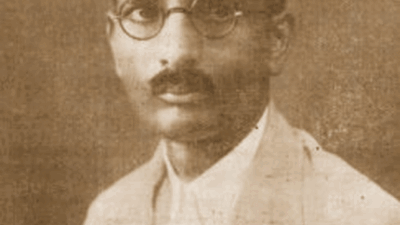
फ़िल्म का निर्माण रामनिक प्रोडक्शंस ने और निर्देशन राजा नेने ने किया, और नौ में से हर गीत के बोल मुखराम शर्मा 'अशांत' के हैं — मेरठ ज़िले के पूठी गाँव के संस्कृत और हिंदी शिक्षक, जो 'दस बजे' (1942) के बोल और संवाद लिखने का अवसर मिलने से पहले चालीस रुपये महीने पर प्रभात में मराठी सिखाने का काम कर चुके थे। पाठ की तरह गढ़ा गया पद उस पृष्ठभूमि के निकट है, यद्यपि पेशे के संयोग से आगे दोनों को कुछ नहीं जोड़ता। फ़िल्म की सामग्री का कुछ नहीं बचा जो दिखा सके कि यह गीत कैसे रचा गया था।
अंग्रेज़ी में पढ़ें · Read in English
The film was produced by Ramnik Productions and directed by Raja Nene, with lyrics for all nine songs by Mukhram Sharma 'Ashant' — a Sanskrit and Hindi teacher from Poothi in Meerut district who had joined Prabhat as a Marathi tutor at forty rupees a month before getting his break writing the lyrics and dialogue of Das Baje (1942). A verse built as a lesson is close to that background, though nothing connects the two beyond the coincidence of profession. Nothing of the film's content survives to show how the song was staged.
विरासत The Legacy
मुखराम शर्मा इन नौ गीतों से आगे बढ़कर कहानीकार के रूप में एक बड़ा करियर बनाते हैं — 'औलाद' के लिए सर्वश्रेष्ठ कहानी का पहला फ़िल्मफ़ेयर पुरस्कार जीतते हैं और बाद में 'साधना', 'तलाक़' तथा 'धूल का फूल' लिखते हैं। इसके उलट 'तारामती' के उनके बोल केवल दो गीत-सूचियों में नौ शीर्षकों के रूप में बचे हैं — न पाठ, न रिकॉर्डिंग, न गायक। फूलों से लिया गया यह पाठ भी बाक़ी सबकी तरह उतना ही पूरी तरह खोया हुआ है।
अंग्रेज़ी में पढ़ें · Read in English
Mukhram Sharma went on from these nine lyrics to a substantial career as a story-writer, winning the first Filmfare Award for Best Story for Aulad and later writing Sadhna, Talaq and Dhool Ka Phool. His Taramati lyrics, by contrast, survive only as nine titles in two song indexes — no text, no recordings, no singers. This one, a lesson drawn from flowers, is as complete a loss as the rest of them.
वर्गीकरण
ClassificationGenre
अन्य विवरण
More Details- https://www.hindigeetmala.net/song/phulo_se_sikhenge_hum.htm
- https://www.hindigeetmala.net/movie/taramati.htm
- https://myswar.co/album/taramati-1945
- https://en.wikipedia.org/wiki/List_of_Hindi_films_of_1945
- https://en.wikipedia.org/wiki/List_of_Marathi_films_of_1945
- https://indiancine.ma/EGL/info
References
रोचक तथ्य
Margin Notesमुखराम शर्मा, जिन्होंने 'तारामती' के नौ में से हर गीत के बोल लिखे, आगे चलकर सर्वश्रेष्ठ कहानी का पहला फ़िल्मफ़ेयर पुरस्कार जीते — 1955 में दूसरे फ़िल्मफ़ेयर समारोह में, 1954 की फ़िल्म 'औलाद' के लिए। उन्होंने आगे 'साधना' (1958), 'तलाक़' (1958) और 'धूल का फूल' (1959) लिखीं।
अंग्रेज़ी में पढ़ें · Read in English
Mukhram Sharma, who wrote all nine Taramati lyrics, later won the first Filmfare Award for Best Story — presented at the 2nd Filmfare Awards in 1955 for the 1954 film Aulad. He went on to write Sadhna (1958), Talaq (1958) and Dhool Ka Phool (1959).
'तारामती' के नौ में से किसी भी गीत के साथ गायक का श्रेय दर्ज नहीं है। हिंदीगीतमाला हर शीर्षक को उसका अपना पृष्ठ देती है और गीतकार तथा दोनों संगीतकारों के नाम भरती है, पर गायक का ख़ाना हर बार ख़ाली छोड़ देती है; माईस्वर की सूची भी यही करती है। इसीलिए इस फ़िल्म की हर गीत-फ़ाइल में गायकों की सूची अनुमान के बजाय ख़ाली रखी गई है।
अंग्रेज़ी में पढ़ें · Read in English
Not one of Taramati's nine songs carries a singer credit. HindiGeetMala gives each title its own page and fills in the lyricist and both music directors, but leaves the singer column empty on every one; MySwar's track listing does the same. Every song file for this film therefore has an empty singers array rather than a guess.
फ़िल्म अपना नाम राजा से नहीं, रानी से लेती है: तारामती राजा हरिश्चंद्र की पत्नी हैं, जिन्हें अपने पुत्र के साथ दासी बनकर बिकना पड़ता है, क्योंकि उनके पति वचन तोड़ने के बजाय अपना सब कुछ दे देते हैं। इसी कथा पर दादासाहेब फाल्के की 'राजा हरिश्चंद्र' (1913) बनी थी, जिसे प्रायः भारत की पहली पूर्ण-लंबाई फ़ीचर फ़िल्म माना जाता है — यद्यपि इस स्थान पर बहस रही है और कुछ इतिहासकार दादासाहेब तोरणे की 'श्री पुंडलिक' (1912) को पहले रखते हैं।
अंग्रेज़ी में पढ़ें · Read in English
The film takes its title from the queen rather than the king: Taramati is the wife of Raja Harishchandra, who is sold into servitude along with her son when her husband gives away everything he has rather than break a promise. The same legend was the subject of Dadasaheb Phalke's Raja Harishchandra (1913), generally regarded as the first full-length Indian feature film — though that status has been debated, with some historians putting Dadasaheb Torne's Shree Pundalik (1912) first.
नमूना-पट्टी
The Specimen Table| शीर्षक | फूलों से सीखेंगे हम · Phoolon Se Seekhenge Hum |
|---|---|
| फ़िल्म | तारामती · 1945 |
| वर्ष · युग | 1945 — pre independence |
| गीतकार | Mukhram Sharma |
| संगीतकार | Ramchandra Pal, Keshavrao Bhole |
| भाषा | hindi |
| भाव | प्रेरणादायक · शांत · दार्शनिक |
| लोकप्रियता | Obscure |
| बोल-स्थिति | केवल झलक |
जुड़े हुए पन्ने
Connected Plates · The Graph Made Visibleअटलस में कोई पन्ना अकेला नहीं — इस गीत से जुड़े गीत, कलाकार, फ़िल्म, राग-ताल-विधा, सब यहाँ से खुलते हैं।
कलाकार · The Artists
फ़िल्म · The Film
साझा कीजिए · Share this Plate