गीत विंग · गीत-पट्टिका · Song Plate
पी और पिला पिला मेरे साक़ी
Pee Aur Pila Pila Mere Saaki
'कुल कलंक' के एक बचे हुए रिकॉर्ड पर अमीरबाई कर्नाटकी उर्दू काव्य का सबसे पुराना दृश्य साधती हैं — साक़ी को संबोधन।
भावतीव्र · चुलबुला
भाषाhindi गतिमध्यम स्वरूपएकल महिला
श्रेय
The Creditsसूत्र-वाक्य · The Hook
सूत्र-वाक्य
'कुल कलंक' के एक बचे हुए रिकॉर्ड पर अमीरबाई कर्नाटकी उर्दू काव्य का सबसे पुराना दृश्य साधती हैं — साक़ी को संबोधन।
In EnglishAmirbai Karnataki works the oldest set-piece in Urdu poetry — the address to the cup-bearer — on one of the surviving sides from Kul Kalank.
पट्टिका-लेख
The Monographपरिचय Overview
'कुल कलंक' में अमीरबाई कर्नाटकी के तीन गीतों में से एक, और फ़िल्म के उन चार रिकॉर्डों में से एक जो अब भी सारेगामा के पास हैं। साक़ी-गीत — गायिका का साक़ी को संबोधन, प्याले पर प्याले का आदेश — उर्दू-हिंदुस्तानी फ़िल्मी काव्य की सबसे अधिक दोहराई गई स्थिति है, और 1945 तक बंबई सिनेमा में यह एक पूरे परिवेश का संकेत बन चुकी थी: महफ़िल, तवायफ़ का कमरा, वह क्षण जब कोई पात्र शराफ़त की चौहद्दी छोड़ देता है। 'कुल कलंक' नाम की फ़िल्म में यह संयोग शायद ही रहा होगा।
अंग्रेज़ी में पढ़ें · Read in English
One of three Amirbai Karnataki songs in Kul Kalank and one of the four sides from the film still held by Saregama. The saqi song — the singer addressing the cup-bearer, ordering the wine to keep coming — is the single most reused situation in Urdu-Hindustani film lyric, and by 1945 it functioned in Bombay cinema as shorthand for a whole setting: the mehfil, the courtesan's room, the moment when a character stops behaving respectably. In a film called 'the stain on the family name', that is unlikely to be incidental.
संगीत The Music
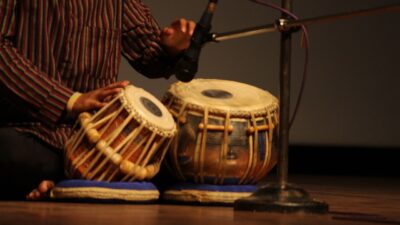
1945 के किसी स्टूडियो-संगीत में साक़ी-गीत सबसे पहले लय का टुकड़ा होता है: यह रूप एक झूमती, आगे झुकती चाल माँगता है जो कमरे के धीरे-धीरे ऊँचा होते जाने का आभास दे, और वह चाल प्रायः ढोलक या तबले से आती है, जबकि धुन-वाद्य आवाज़ को पंक्ति-दर-पंक्ति जवाब देते हैं। फ़िल्म-संगीत का यही हिस्सा अल्ला रक्खा के सबसे अनुकूल था — अपने असली नाम से वे उस समय के जीवित श्रेष्ठतम तबला वादकों में थे — और महफ़िल के गीत ही वे स्थल हैं जहाँ उनका फ़िल्मी काम और शास्त्रीय प्रशिक्षण एक ही कमरे में सबसे पास आते हैं। अमीरबाई कर्नाटकी की नीची, हल्की खुरदरी आवाज़ उन वर्षों की बंबई में सबसे पहचानी जाने वाली आवाज़ों में थी और ऐसी सामग्री को बिना उस लजाहट के उठाती थी जो बाद की पार्श्व-गायन शैली इसमें ले आई।
अंग्रेज़ी में पढ़ें · Read in English
A saqi number in a 1945 studio score is a rhythm piece before it is anything else: the form wants a swaying, forward-leaning pulse that suggests a room getting louder, and it usually gets one from the dholak or tabla with the melody instruments answering the voice line for line. That is the part of film scoring Allah Rakha was best equipped for — he was, under his own name, one of the finest tabla players alive — and the mehfil numbers are where his film work and his classical training come closest to the same room. Amirbai Karnataki's low, slightly grainy voice was among the most identifiable in Bombay in these years and carried this kind of material without any of the coyness that later playback style would bring to it.
काव्य The Poetry
शीर्षक का साक़ी उतना कोई व्यक्ति नहीं जितना एक छूट है। साक़ी को संबोधित करना गीत को वह कहने देता है जो सीधे नहीं कहा जा सकता — इच्छा के बारे में, बर्बादी के बारे में, रात के ख़त्म न होने की चाह के बारे में — क्योंकि यह पूरी परंपरा फ़ारसी और उर्दू काव्य से भरी-भराई आती है, जहाँ शराब हमेशा हर दूसरे नशे का पर्याय भी रही है। रूपबानी की पंक्ति आदि से अंत तक आज्ञार्थ में है: पी, और पिलाती रह। 1945 में स्त्री-स्वर पर इसकी ख़ास बात यह है कि माँग उसकी अपनी है। और फ़िल्म का शीर्षक बता देता है कि कहानी के बाक़ी लोग ऐसी स्त्री की उस शाम को किस तरह पढ़ने वाले थे।
अंग्रेज़ी में पढ़ें · Read in English
The saqi of the title is not a person so much as a licence. Addressing the cup-bearer lets a lyric say things it could not say directly — about desire, about ruin, about not wanting the night to end — because the whole convention comes pre-loaded from Persian and Urdu poetry, where wine has always doubled as intoxication of every other kind. Roopbani's line is in the imperative throughout: drink, and keep pouring. What makes that interesting on a woman's voice in 1945 is that the demand is hers. The film's title tells us how such a woman's evening was expected to be read by everyone else in the story.
कहानी The Story
अमीरबाई कर्नाटकी 'कुल कलंक' के साउंडट्रैक में ही नहीं, कलाकारों में भी थीं — उनके लिए यह आम बात थी, क्योंकि उन्होंने 1930 के दशक में अभिनेत्री-गायिका के रूप में शुरुआत की थी और 'किस्मत' (1943) के 'धीरे धीरे आ रे बादल' के बाद ही एक आवाज़ के रूप में देशव्यापी प्रसिद्धि पाई। फ़िल्म सनराइज़ पिक्चर्स ने बनाई और नानूभाई बी. वकील ने निर्देशित की; पर्दे के अन्य नामों में शांता हुबळीकर, मसूद, शहज़ादी, दुलारी, मजीद, प्रतिमा देवी और वज़ीर मोहम्मद ख़ान हैं। कोई प्रिंट नहीं बचा और विस्तृत कथा कहीं दर्ज नहीं है — इसलिए गीत ही व्यावहारिक रूप से इस बात के एकमात्र बचे प्रमाण हैं कि फ़िल्म किस बारे में थी।
अंग्रेज़ी में पढ़ें · Read in English
Amirbai Karnataki was in the cast of Kul Kalank as well as on its soundtrack — a common arrangement for her, since she had begun as an actress-singer in the 1930s and only became nationally famous as a voice after 'Dheere Dheere Aa Re Badal' in Kismet (1943). The film was produced by Sunrise Pictures and directed by Nanubhai B. Vakil; its other on-screen names include Shanta Hublikar, Masood, Shahzadi, Dulari, Majid, Pratima Devi and Wazir Mohammed Khan. No print survives and no detailed plot has been recorded, so the songs are effectively the only surviving evidence of what the film was about.
विरासत The Legacy
रिकॉर्ड फ़िल्म से ज़्यादा जिया। यह सारेगामा की सूची में 'कुल कलंक' के चार रिकॉर्डों में से एक है और इसलिए अल्ला रक्खा की उन गिनी-चुनी फ़िल्मी रिकॉर्डिंग में से एक जो आज सुनी भी जा सकती हैं — 1943 से 1960 के दशक के मध्य तक के उनके लगभग दो दर्जन संगीत-संकलन अन्यथा लगभग पूरी तरह लुप्त हैं, और उन्होंने स्वयं फ़िल्म संगीत छोड़कर मंच चुना, जहाँ वे दुनिया के सबसे प्रसिद्ध भारतीय ताल-वादक बने। अमीरबाई कर्नाटकी की अपनी ख्याति कहीं और टिकी है — 'किस्मत' पर और 1940 के दशक के उनके एकल काम पर; यह रिकॉर्ड उसका एक पाद-टिप्पणी भर है, पर बचा हुआ पाद-टिप्पणी।
अंग्रेज़ी में पढ़ें · Read in English
The record outlived the film. It is one of the four Kul Kalank sides in the Saregama catalogue and therefore one of the small number of Allah Rakha film recordings that can still be heard at all — his roughly two dozen scores between 1943 and the mid-1960s are otherwise almost entirely lost, and he himself walked away from film music for the concert stage, where he would become the best-known Indian percussionist in the world. Amirbai Karnataki's own reputation rests elsewhere, on Kismet and on her 1940s solo work; this side is a footnote to it, but a surviving one.
वर्गीकरण
Classification- Tempo
- Medium
Genre
अन्य विवरण
More Details- https://www.hindigeetmala.net/movie/kul_kalank.htm
- https://myswar.co/album/kul-kalank-1945
- https://www.saregama.com/album/kul-kalank_107711
- https://en.wikipedia.org/wiki/List_of_Hindi_films_of_1945
- https://en.wikipedia.org/wiki/Alla_Rakha
- https://www.cinemaazi.com/people/alla-rakha-qureshi
- https://www.indianfilmhistory.com/movie/kul-kalank
- https://bombaymann2.blogspot.com/2020/08/film-kul-kalank1945.html
- https://indiancine.ma/EEQ/info
- https://www.songsofyore.com/the-evolution-of-mohammad-rafi-part-one-1944-55/
References
रोचक तथ्य
Margin Notes'कुल कलंक' के ग्यारह गीतों में से तीन अमीरबाई कर्नाटकी गाती हैं — फ़िल्म की किसी भी दूसरी आवाज़ से अधिक — और वे इसके कलाकारों में भी हैं।
अंग्रेज़ी में पढ़ें · Read in English
Amirbai Karnataki sings three of Kul Kalank's eleven songs — more than any other voice in the film — and also appears in its cast.
फ़िल्म के ग्यारह रिकॉर्डों में से चार सारेगामा की डिजिटल सूची में पहुँचे, और यह उन्हीं में से एक है।
अंग्रेज़ी में पढ़ें · Read in English
Four of the film's eleven sides passed into the Saregama digital catalogue, and this is one of them.
नमूना-पट्टी
The Specimen Table| शीर्षक | पी और पिला पिला मेरे साक़ी · Pee Aur Pila Pila Mere Saaki |
|---|---|
| फ़िल्म | कुल कलंक · 1945 |
| वर्ष · युग | 1945 |
| गायक | Amirbai Karnataki |
| गीतकार | Roopbani |
| संगीतकार | Allah Rakha |
| स्वरूप | एकल महिला |
| गति | मध्यम |
| भाषा | hindi |
| भाव | तीव्र · चुलबुला |
| लोकप्रियता | Obscure |
| बोल-स्थिति | केवल झलक |
जुड़े हुए पन्ने
Connected Plates · The Graph Made Visibleअटलस में कोई पन्ना अकेला नहीं — इस गीत से जुड़े गीत, कलाकार, फ़िल्म, राग-ताल-विधा, सब यहाँ से खुलते हैं।
मिलते-जुलते गीत · Related Songs
कलाकार · The Artists
फ़िल्म · The Film
साझा कीजिए · Share this Plate